Bee Feeder Types: Complete Guide to Styles and Setup
A complete guide to bee feeder types, comparing entrance, frame, top, bucket, and open feeders to help beekeepers choose the right setup for their hives.

On this page
Top picks at a glance
As an Amazon Associate I earn from qualifying purchases.
- 1
 AOIT Rapid Round Hive Top Feeder for 8 or 10 Frame Beehives9.7/10View on Amazon
- 2
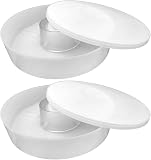 Aukbeefun 2 Pcs Rapid Round Bee Feeder White Bee Hive Top9.6/10View on Amazon
- 3
 Hive Top Feeder9.6/10View on Amazon
Bee feeder types include entrance feeders, internal frame feeders, hive top feeders, bucket feeders, and open feeding stations. Choosing between these bee feeder types depends on colony strength, season, weather conditions, and robbing risks in your apiary. Each feeder style positions syrup or solid feed in a specific location relative to the brood nest, affecting how readily bees take feed and whether neighboring colonies can access it. Each section below breaks down how these feeders work, where they sit, and when to use them.
HiveKeeperGear earns a commission when you buy through links on this site, at no extra cost to you. As an Amazon Associate I earn from qualifying purchases. Affiliate disclosure.
Before you feed: colony needs and robbing risks
Supplemental feeding provides carbohydrates when natural nectar sources are scarce. New colonies started from packaged bees or nucleus colonies often require syrup while workers draw fresh wax comb on foundation. Established colonies may also require supplemental feeding during early spring or in autumn before cold weather sets in.
However, feeding liquid syrup requires care. Exposed syrup or leaking reservoirs can attract robber bees and wasps, which can overwhelm smaller hives. Placing feed directly within the hive where guard bees can defend it reduces this risk. In addition, ambient temperature dictates when liquid syrup can be used. During cold conditions, bees cannot break cluster to consume liquid feed, making solid feed a practical alternative when emergency winter calories are needed.
Overview of bee feeder types and where they fit
| Type | Placement | Key advantage | Our guide |
|---|---|---|---|
| Entrance feeder | Front hive entrance | Quick checks without opening boxes | Entrance feeders |
| Frame feeder | Inside brood chamber | Protected feeding next to the cluster | Beehive feeders |
| Hive top feeder | Top of hive stack | Large capacity for rapid syrup uptake | Bee feeders |
| Bucket feeder | Over inner cover hole | Inverted vacuum seal reduces drowning | Bucket feeders |
| Mason jar feeder | Entrance slot or top board | Small-batch syrup and water station | Mason jar feeders |
1. Entrance feeders
Entrance feeders, often known as Boardman feeders, sit at the front landing board of the hive. The unit consists of a wooden or plastic base that slides directly into the bottom entrance, holding an inverted jar of syrup outside the hive body.
The main advantage of an entrance feeder is convenience. Beekeepers can monitor syrup levels at a glance from outside the hive and replace empty jars without opening boxes or disturbing bees. However, the primary drawback is robbing. Because the sugar source sits directly at the main entrance, foraging bees from other colonies and wasps can detect the syrup scent. If the colony is small, robber bees can overwhelm the entrance. In cool weather, bees also cluster away from the cold entrance and cannot reach the jar. When using an entrance feeder, installing an entrance reducer helps guard bees protect the opening.
2. Internal frame feeders
Internal frame feeders, sometimes called division board feeders, hang directly inside the hive body in place of standard frames. They consist of a narrow, open-top plastic reservoir that matches the profile of standard brood frames.
Placing syrup directly inside the hive body keeps the reservoir warm from colony heat, allowing bees to access syrup during cool weather. Guard bees defend the feed from external pests, substantially reducing the robbing risks common with front entrance designs. Refilling requires opening the hive, and bees can drown if the feeder lacks climbing ladders.
Manufacturer listings provide specific capacities for these internal units. Maker Aetwhy lists deep frame feeders occupying the position of 1-2 frames in a deep beehive box. Aetwhy lists a 3.5 liters capacity model measuring 18.9 by 1.46 by 8.74 inches and weighing 3.66 pounds, as well as a 6.5 liters capacity model measuring 19.09 by 2.32 by 9.17 inches and weighing 4.84 pounds. Both models feature two internal ladders with grooves to assist bees while drinking. Similarly, BeeQuestify lists a deep frame feeder with two internal inclined ladders and 100% wax coating, listing a 3.5 liters capacity, dimensions of 19 by 2 by 9 inches, and a weight of 4.82 pounds. Frame feeders provide reliable internal feeding during early brood rearing while keeping syrup safe from robbing.
3. Hive top feeders
Hive top feeders sit directly above the uppermost hive body, resting over the inner cover or directly on top of the brood chamber beneath the outer telescoping roof. These feeders include large-volume rectangular pans that span the entire box footprint, as well as compact round dishes positioned over the central inner cover opening.
Top feeders provide substantial syrup capacity, making them ideal for autumn feeding when colonies need to store stores rapidly before cold weather. Because the reservoir is enclosed beneath the outer cover, outside bees cannot easily reach the syrup. Refilling is straightforward: beekeepers lift the outer cover and pour syrup directly into the reservoir without manipulating brood frames.
Manufacturer specifications show typical top feeder dimensions and features. Maker BEEXTM lists a 10-frame Langstroth hive top feeder with a 1.2 Gallon capacity, dimensions of 9 by 4 by 4 inches, and a weight of 6.49 pounds, featuring six feeding entrances with built-in steps and transparent covers to support two bee groups with water or sugar cake. For smaller round setups, AOIT lists a round hive top feeder holding 1/2 gallon (also noted as 4 pints, with 2 pints in spec details) measuring 2.16 inches high with a maximum diameter of 10 inches. The AOIT feeder (on Amazon) fits 8-frame and 10-frame beehives and features a textured cup and cone design under a transparent cover. Top feeders are an efficient option when colonies must take down high volumes of syrup quickly.
4. Bucket and pail feeders
Bucket feeders, also called inverted pail feeders, rely on atmospheric vacuum pressure to dispense liquid syrup. A plastic container is fitted with a tight lid containing a fine wire mesh screen or small holes. When filled with syrup and turned upside down, a slight vacuum forms inside the container, preventing liquid from pouring out while allowing bees to lap syrup droplets through the mesh.
These feeders sit directly over the center hole of an inner cover. An empty hive body is placed around the bucket, and the telescoping outer lid sits on top to enclose the assembly. This setup protects syrup from robbing and prevents drowning. Inverted pails remain a dependable apiary standard for minimal syrup disturbance.
5. Open feeding and watering stations
Open feeding involves placing syrup or water in community containers outside the hive for all flying foragers to visit. Beekeepers avoid open syrup feeding in backyard settings because it triggers chaotic foraging frenzies, spreads competition, and encourages robbing near weaker colonies.
However, providing clean water through outdoor stations is helpful during warm weather. Bees collect water to cool the hive and dilute stored honey. Dedicated watering stations keep bees from visiting swimming pools or pet bowls.
Manufacturer listings detail silicone watering stations designed for canning jars. Maker Reallnaive lists a silicone bee water feeder measuring 6.3 by 0.8 inches with two card slots compatible with regular and wide mouth jars. Brand Generic and maker VisidgeB2C list silicone bee watering trays featuring small-hole honeycomb patterns, weighing 7.4 ounces and 8.1 ounces respectively, designed to fit regular and wide-mouth standard canning jars. These textured platforms allow bees to drink without drowning. Providing fresh water in shallow containers supports hive cooling and hydration during hot weather.
Seasonal feeding: spring, fall, and winter
Feeding strategy changes through the season depending on colony needs and weather conditions.
During early spring, colonies expand their brood nest and require carbohydrates to draw fresh foundation. Internal frame feeders work well in cool weather because cluster warmth keeps the adjacent syrup accessible, while top feeders become effective once daytime temperatures rise enough for bees to travel above the brood box.
In autumn, beekeepers feed colonies that need supplemental stores before cold weather. Large top feeders allow workers to store substantial syrup rapidly while warm daytime temperatures persist. Once freezing temperatures arrive, liquid syrup feeding is discontinued.
During freezing winter conditions, bees form a tight cluster to maintain warmth. They cannot consume cold liquid syrup, and moisture evaporated from syrup can condense on the inner cover and chill the cluster. Emergency winter feeding therefore relies on solid sugar cakes or fondant placed directly over the cluster frames when colonies run low on stored honey. For example, manufacturer HIVE ALIVE lists 2.2 pounds bee food fondant packages sold in a 6-Pack for winter and early spring feeding. HIVE ALIVE notes that this semi-solid fondant contains less moisture than sugar syrup to avoid excess hive humidity, and specifies that unused fondant can be melted with water for 1:1 syrup feed during warm weather.
Key feeder accessories to consider
- Empty hive boxes: Inverted bucket pails and rapid round feeders require an empty deep or medium box placed over the inner cover to enclose the feeder beneath the outer lid. Full-width top feeders typically incorporate their own rim and sit directly on the upper hive body. See our reviews of the 8 frame beehive and Langstroth beehive kit for compatible box setups.
- Inner covers with center holes: A standard inner cover provides a barrier between the brood box and the feeder, allowing bees to access inverted pails or round feeders while keeping the colony contained.
- Entrance reducers: When using entrance feeders, placing a wooden entrance reducer restricts the hive opening to a small gap, helping guard bees repel wasps and robber bees.
- Textured ladders and floats: Open trough feeders require grooved ladders or textured cones to prevent bees from falling into syrup.
- Perforated lids and silicone jar bases: Mason jar systems require precise perforated lids or silicone trays to regulate vacuum flow.
What is not on this list
We do not provide veterinary, mite treatment, or medication advice. Feeders should be used for supplemental sugar syrup, clean water, or winter fondant as appropriate for colony survival. For colony health questions or disease management, contact your local extension office or state apiary inspector.
FAQs for beekeepers
Which bee feeder type is best for a beginner?
An internal frame feeder or an enclosed hive top feeder is generally recommended for beginners. These designs position feed inside the hive enclosure where guard bees can readily defend it from robbing, while frame feeders keep syrup close to colony warmth.
Why are entrance feeders risky during a nectar dearth?
Entrance feeders position sweet syrup directly at the front landing board, where the scent attracts wasps and robber bees from other colonies. Weaker colonies can be overwhelmed by robber bees entering the hive opening.
How much syrup do frame feeders hold?
Capacity varies by model and width. Manufacturer Aetwhy lists deep frame feeders with a 3.5 liters capacity measuring 18.9 by 1.46 by 8.74 inches, as well as a 6.5 liters capacity model measuring 19.09 by 2.32 by 9.17 inches, both designed to occupy 1-2 frames in a deep hive box.
Can liquid syrup be fed in freezing winter weather?
No, liquid syrup should not be fed during freezing winter weather because bees cannot break cluster to consume cold liquid, and liquid syrup introduces excess hive moisture. Solid fondant, such as HIVE ALIVE 2.2 pounds packages, provides nutrition directly over the winter cluster without adding the excess moisture of liquid syrup.
What is a rapid round hive top feeder?
A rapid round hive top feeder rests over the center hole of an inner cover. As listed by AOIT for its 1/2 gallon model measuring 10 inches in diameter, a clear center cup and textured cone allow bees to access syrup while remaining contained below the cover.
More hive guides
Browse every guide by category: bee feeders, hive tools, beehives, protective gear, and honey harvesting.
More picks: Explore our guides to the best beehive feeder, best bee feeder, entrance feeder for bees, bucket feeder for bees, and bee feeder for mason jar. New to beekeeping? Start with our beekeeping equipment list for beginners.