Types of Bee Boxes for Hobby Beekeepers
Deep brood boxes, medium honey supers and the other boxes in a Langstroth hive stack, explained for hobby beekeepers.

On this page
Top picks at a glance
As an Amazon Associate I earn from qualifying purchases.
- 1
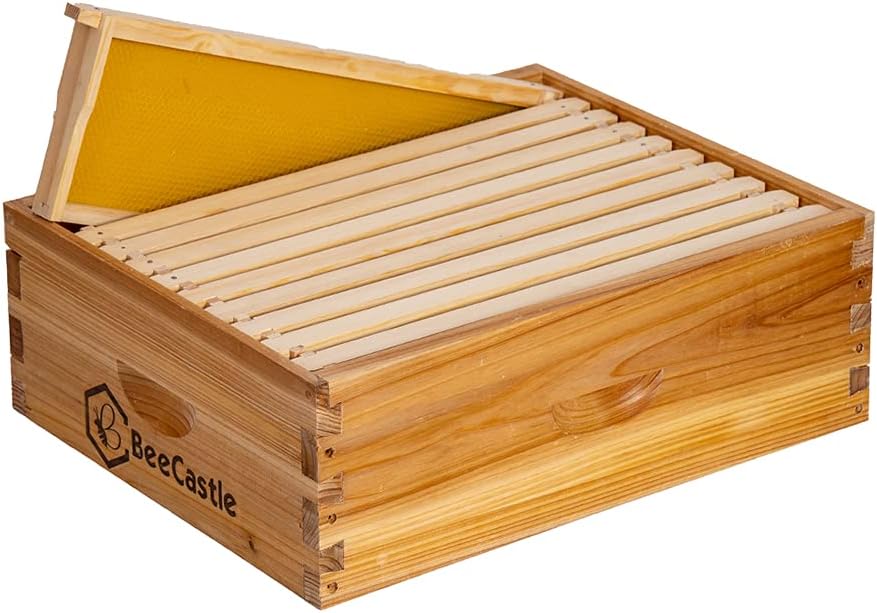 BeeCastle 10 Frame Medium Super Bee Hive Box with 10 Wooden9.7/10View on Amazon
- 2
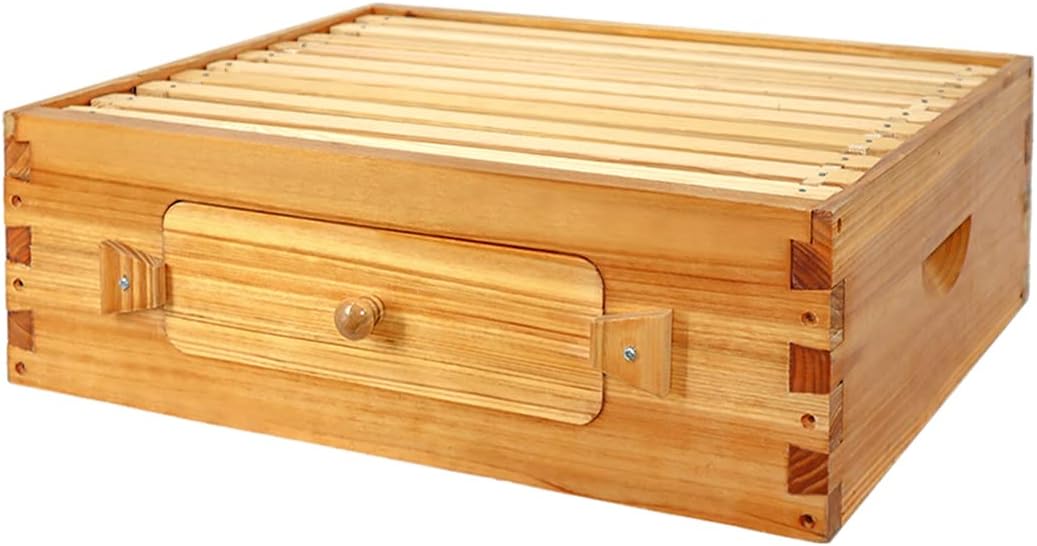 BeeCastle 10 Frame Medium Bee Hive Box with Acrylic9.6/10View on Amazon
- 3
 witbee 3 Pack Bee Hive Winter Quilt Box for 10 Frame9.6/10View on Amazon
- 4
 BeeCastle 8 Frame Medium Super Bee Hive BoxView on Amazon
- 5
 8-Frame Beehive Box Langstroth Medium Super Bee Box for SaleView on Amazon
- 6
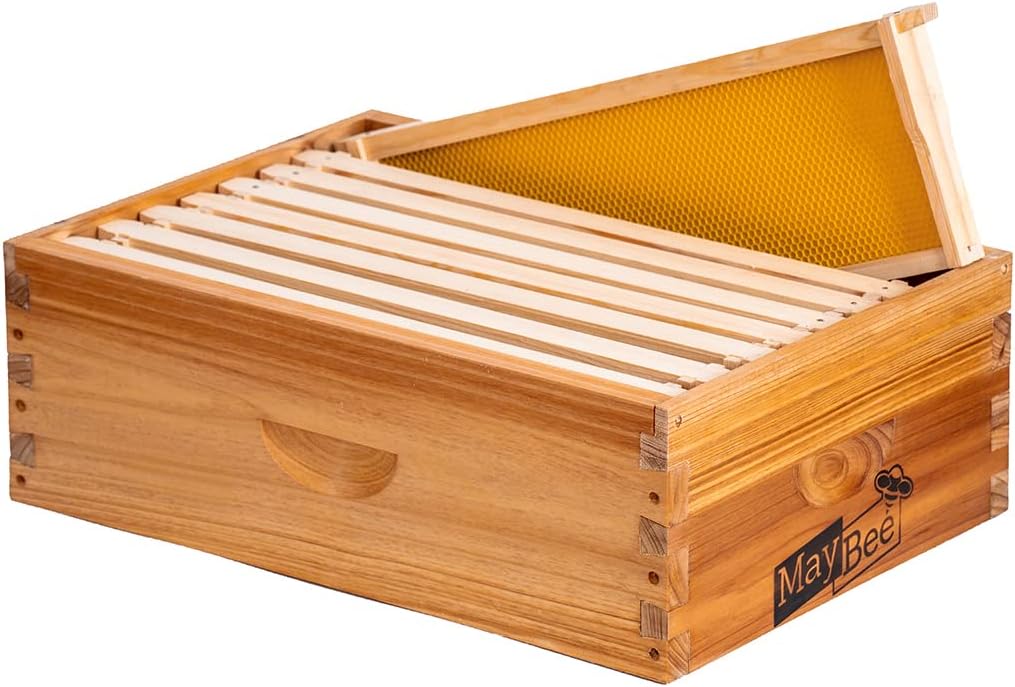
 MayBee 10-Frame Beehive Box Langstroth Medium Super Bee BoxView on Amazon
- 7
 2 Pack Beehive Quilt Box Beeswaxed CoatedView on Amazon
Standing beside a hive on a calm morning, with bees moving in and out of the entrance, makes the stack of boxes above the bottom board look simple from the outside. Each box in that stack has a job, and the types of bee boxes in a hive differ mainly in depth and in what the bees store inside them. This guide explains each box type and how the boxes fit together.
Other hives and gear to compare
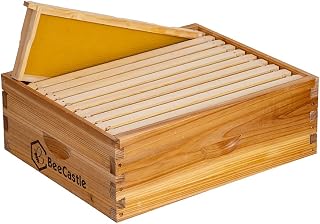 BeeCastle 10 Frame Medium Super Bee Hive BoxCheck price on Amazon
 BeeCastle 8 Frame Medium Super Bee Hive BoxCheck price on Amazon
 8-Frame Beehive Box Langstroth Medium Super Bee Box for SaleCheck price on Amazon
 MayBee 10-Frame Beehive Box Langstroth Medium Super Bee BoxCheck price on Amazon
 2 Pack Beehive Quilt Box Beeswaxed CoatedCheck price on Amazon
HiveKeeperGear earns a commission when you buy through links on this site, at no extra cost to you. As an Amazon Associate I earn from qualifying purchases. Affiliate disclosure.
Before you choose: check local rules
Many states ask beekeepers to register hives, and many cities and homeowner associations set limits on hives and how far they must sit from property lines. A state apiary program or local extension office can say what applies in an area, and a local beekeeping club can advise which box styles keepers nearby use most.
The types of bee boxes, at a glance
In a Langstroth hive, boxes stack in a column, and each box holds frames that hang from the top edge. The table below gives a short view of the main box types.
| Box | Main use | What goes inside |
|---|---|---|
| Deep box | Brood nest, where the queen lays and the colony raises young | Frames with foundation |
| Medium box | Honey super, where bees store surplus honey | Frames with foundation |
| Shallow box | Honey super, lighter to lift at harvest | Frames with foundation |
| Nucleus box | Small hive for a nucleus colony or a split | Frames with foundation |
Deep and medium boxes make up most Langstroth stacks. The bee hive box diagram shows where each box sits in the stack.
Deep boxes
A deep box is the tallest box in a Langstroth stack, and it usually forms the brood nest at the bottom of the hive. The queen lays eggs in the comb built on the frames inside, and the colony raises young bees and stores pollen there. The brood nest usually stays in place through the season, while honey comes from the supers above it.
All the boxes in a stack share the same width. The NUOMIC Langstroth kit (on Amazon) in the listings is a 10-frame kit that includes 2 deep boxes and 1 medium box, with 30 frames and foundations. The kit lists cedar wood with a beeswax coating, pine frames, and black food-grade plastic foundation, with pre-cut dovetail joints and pre-drilled holes. The kit as listed measures 16.25 inches x 22.0 inches x 25.8 inches and weighs 66.0 pounds, which covers the full kit rather than a box on its own.
Medium boxes and honey supers
A medium box is shorter than a deep box, and it usually serves as a honey super above the brood nest. Bees fill the frames inside with honey, and the keeper lifts the super off at harvest. A medium super is easier to lift and carry than a deep box full of honey, and a keeper can add supers as the colony fills them during a nectar flow.
The listings include a 10-frame medium super bee hive box, sold unassembled. A queen excluder often sits between the brood nest and the honey supers, keeping the queen below while worker bees pass through to store honey above. The deep hive body dimensions guide covers the brood box side of the pairing.
Other hive styles and their boxes
Not every hive uses Langstroth boxes. A Warre hive stacks smaller square boxes, and the keeper adds a box at the bottom as the colony grows, rather than adding supers on top. A top-bar hive uses a long horizontal box with bars across the top instead of stacked boxes, so there is no column of deep and medium boxes at all. The Langstroth vs Warre hive guide compares the stacked styles, and the long Langstroth hive vs top bar guide covers the horizontal form.
A Flow hive keeps the Langstroth box shape and adds a super with frames that drain honey through a tap. The Flow hive set up guide walks through assembly of that super.
Frames and foundation
Every box in a Langstroth stack holds frames, and the frames hold the comb. A frame hangs from the top edge of the box, and foundation is the sheet set inside the frame that guides the bees to build straight comb. The NUOMIC kit lists pine frames with black food-grade plastic foundation, and the maker notes that the foundation arrives unwaxed, so a keeper can apply a beeswax coating of their own choice. The types of bee hive frames guide explains frame sizes and materials in full.
Frames come in sizes that match the box depth, so deep frames go in deep boxes and medium frames go in medium boxes. A deep frame will not fit in a medium box, and a medium frame in a deep box leaves a gap below it.
Covers, bottom boards and small parts
A hive stack needs more than boxes. The bottom board forms the floor of the hive, with an entrance at the front, and an entrance reducer narrows that opening when the colony is small. Above the top box sits the inner cover, then the outer cover, which sheds rain and keeps the hive dry. The NUOMIC kit includes an outer cover, an inner cover, a queen excluder, a bottom board and an entrance reducer alongside its boxes and frames.
Inner covers also come in sets. The luxlead listing is a 3-pack of inner covers for 10-frame Langstroth hive boxes, each measuring 16.34 x 19.88 x 0.8 inches, or 41.5 x 50.5 x 1.9 cm, with side notches for airflow and a central hole for feeding. The Langstroth hive setup guide shows how the parts fit together, and the how big are bee hives guide gives a sense of the finished stack.
How to build a stack
Build the stack from the ground up. Set the hive stand on level ground in a sunny spot with a water source nearby, then set the bottom board on the stand, the deep boxes for the brood nest above it, the queen excluder, the medium supers for honey, the inner cover and the outer cover on top. Check that each box sits flat on the box below, since a gap between boxes lets in rain and robbing bees.
Add supers when the colony fills the boxes below, rather than all at once at the start of the season. Keep the parts of the same hive width together, since boxes and frames made for different widths do not fit the same stack. The how to start a bee hive guide covers the steps in order
What is not a bee box
Some garden products look like small hives but hold no honey bee colony. A mason bee house is a shelter with tubes or holes for solitary mason bees, and a bumble bee house is a small box for a bumble bee nest, and neither takes Langstroth frames or a honey bee colony. The what is a mason bee guide explains the solitary bee, and the are bee houses a good idea guide covers whether such a shelter suits a garden.
FAQs for beekeepers
What are bee boxes called?
Bee boxes are usually called hive boxes, or hive bodies, and the tall brood boxes are called deep boxes while the shorter honey boxes are called medium or shallow supers. The what are bee boxes called guide lists the terms keepers use.
What is the difference between a deep box and a medium box?
A deep box is taller and usually holds the brood nest, while a medium box is shorter and usually serves as a honey super above the brood nest. The NUOMIC kit in the listings includes 2 deep boxes and 1 medium box, which shows the usual pairing in a starter kit.
How many boxes does a hive need?
There is no set count, since a hive starts with brood boxes and gains supers as the colony grows and fills them with honey. A starter kit such as the NUOMIC kit in the listings, with 2 deep boxes and 1 medium box, gives a colony room to build up and store honey.
Can boxes from different hive styles be mixed?
Boxes made for different hive styles do not fit the same stack, so Langstroth boxes, Warre boxes and top-bar parts stay with their own hive type. Keep the same width and style through a hive, and check that new boxes match the frames already in use.
Do bee boxes need a coating?
Wooden boxes need a protective coating against the weather, and the NUOMIC kit in the listings uses cedar wood with a beeswax coating, while its plastic foundation arrives unwaxed for the keeper to coat as they choose. Check the listing for each box to see what coating, if any, the maker has already applied.
More hive guides
Browse the guides for Langstroth hives and hive frames, the hive tools guides, and the beehives to buy guide.