Can Hornets Sting Through a Bee Suit?
How hornet stingers penetrate standard bee suits when fabric rests against skin, and why thick 3-layer ventilated mesh and proper clearance improve protection.

On this page
Top picks at a glance
As an Amazon Associate I earn from qualifying purchases.
- 1
 LOVJOYSE Full Body Bee Suit with Detachable Round Veil and9.6/10View on Amazon
- 2
 Brutul Bee 3 Layer Ventilated Beekeeping Suit with Fencing9.5/10View on Amazon
- 3
 Brutul Bee 3 Layer Ventilated Beekeeping Suit with Fencing9.4/10View on Amazon
- 4
 3 Layer Ventilated Bee Suit for Men & WomenView on Amazon
- 5
 Flexzion Bee SuitView on Amazon
- 6
 Prorofessional Bee Suit for Men & Women Sting ProofView on Amazon
- 7
 Ultra-Ventilated Beekeeping SuitView on Amazon
- 8
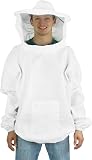 VIVO Professional XL Beekeeping Suit JacketView on Amazon
- 9VIVO Professional L Beekeeping Suit WhiteView on Amazon
Late in the season when the nectar flow slows and floral sources dry up, yellow jackets and hornets often scout the apiary perimeter for weak colonies. At this time of year, beekeepers frequently ask: can hornets sting through a bee suit? The direct answer is yes: hornets can sting through standard single-layer cotton bee suits, especially wherever fabric pulls tight against skin. While a 3-layer ventilated suit provides greater thickness and spacing than single-layer cotton, no standard bee suit guarantees complete protection against large hornets if the fabric is compressed against your body. Inspecting safely requires understanding how stinger reach, fabric thickness, and loose garment clearance work together.
Other hives and gear to compare
 3 Layer Ventilated Bee Suit for Men & WomenCheck price on Amazon
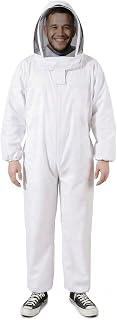 Flexzion Bee SuitCheck price on Amazon
 Prorofessional Bee Suit for Men & Women Sting ProofCheck price on Amazon
 Ultra-Ventilated Beekeeping SuitCheck price on Amazon
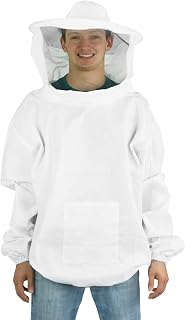 VIVO Professional XL Beekeeping Suit JacketCheck price on Amazon
- VIVO Professional L Beekeeping Suit WhiteCheck price on Amazon
HiveKeeperGear earns a commission when you buy through links on this site, at no extra cost to you. As an Amazon Associate I earn from qualifying purchases. Affiliate disclosure.
Before you inspect: understanding hornet defense
Working around honey bees requires gentle handling and calm movements, but encountering hornets and yellow jackets near the apiary introduces different risks. Honey bees defend their brood and food stores with barbed stingers that pull free after a sting. Hornets, yellow jackets, and paper wasps have smooth stingers, allowing an individual insect to deliver multiple stings without losing its stinger. During the main nectar flow, hornets rarely bother strong hives. As autumn approaches and floral nectar sources dry up, hornets actively hunt for protein and carbohydrates, scouting around hive entrances and extracting sheds.
When hornets forage near an apiary, they are primarily hunting worker bees rather than targeting you. If you swat at them, crush an insect accidentally, or disturb an active hornet nest concealed near the hive stand, they shift immediately into aggressive defense. Entering the bee yard with reliable protective gear ensures that occasional defensive encounters do not lead to painful stings.
Can hornets sting through a bee suit? Key risk factors
Whether a hornet can sting through your suit depends on key physical factors: stinger length relative to fabric thickness, garment tension across your body, and the clearance maintained by internal spacers or loose cuts. Standard cotton suits rely on tightly woven fabric that honey bees struggle to pierce. Because hornet stingers are thicker and longer than honey bee stingers, a single layer of cotton fabric does not provide an impenetrable barrier if the insect can press its abdomen flat against the weave.
Manufacturers address this challenge by introducing thicker multi-layer fabrics and engineered spacers. For example, GAIACOLMEIA lists a patented 70% cotton and 30% polyester fabric designed to maintain a 4.5mm safety gap between cloth and skin. Calfca lists a 3-layer interwoven mesh structure using polyester-cotton outer and lining layers with a middle EVA mesh layer, designed to keep insects off skin. Similarly, benefitbee lists a 3-layer ventilated suit constructed with 65% cotton and 35% nylon to provide sting resistance with airflow.
| Protective gear | Fabric design | Hornet protection level | Recommended guide |
|---|---|---|---|
| Standard cotton suit | Single-layer woven cotton | Vulnerable where fabric pulls tight against skin | Bee suits |
| 3-layer ventilated suit | 3 layers with middle spacer mesh | High protection due to fabric thickness and clearance | Ventilated bee suits |
| Ventilated bee jacket | 3-layer mesh upper body with attached veil | High upper-body protection when paired with loose pants | Bee jackets |
| Goatskin gloves with long gauntlets | Goatskin leather with ventilated canvas sleeves | Durable hand protection with sealed elastic cuffs | Beekeeping gloves |
1. Hornet stinger reach and mechanics
The biological differences between hornets and honey bees explain why basic bee suits sometimes fail against wasps. A honey bee stinger has fine backward-facing barbs that anchor into mammalian skin, pulling the venom apparatus from the bee’s abdomen. A hornet stinger is smooth, lancet-shaped, and structurally sturdier. This smooth shape allows the insect to drive the stinger rapidly through fabric, withdraw it, and sting repeatedly in quick succession.
Because hornet stingers are substantially longer than honey bee stingers, they easily bridge the depth of a single sheet of lightweight cotton or polycotton fabric. If that fabric is pressed flat against your arm, back, or thigh, the stinger extends completely through the weave and enters the skin. However, if the fabric is held away from your body, the stinger penetrates only empty air, leaving you unhurt.
2. Fabric thickness and 3-layer mesh
Fabric thickness and clearance provide the primary physical barrier against stings. This is why many beekeepers choose 3-layer ventilated gear when working around aggressive wasps. Instead of relying on a single sheet of woven cotton, a 3-layer suit sandwiches an open spacer layer between sheets of breathable mesh.
Air passes through the porous mesh freely during warm inspections, while the internal spacer helps maintain distance between the outer surface and your skin. For example, GAIACOLMEIA lists its 3-layer ventilated jacket as a barrier against bees, wasps, and hornets. However, beekeepers should remember that 3-layer mesh is not an absolute barrier against all hornets under all conditions. If fabric is compressed against your body, large hornets may still reach skin. For beekeepers seeking extra protection during late-season inspections, choosing gear from our best bee suit for hornets guide provides valuable added defense.
3. Garment fit and fabric tension points
Even thick suit material can fail if the garment fits too tightly. When you bend over a brood box, kneel on the grass to inspect a bottom board, or lift a heavy honey super, the suit fabric stretches taut across your shoulders, elbows, lower back, and knees. Tension flattens the fabric against your skin and compresses spacer layers, reducing the protective distance.
To preserve maximum protection, always size your bee suit generously. A loose, relaxed fit allows the cloth to drape in natural folds, keeping the material separated from your skin as you move. Consult our bee suit size chart before purchasing to ensure sufficient torso length and chest room. Wearing loose-fitting work trousers and a long-sleeve cotton shirt underneath your suit provides an additional buffer that prevents direct skin contact at joint flex points.
4. Veil design and face clearance
The head, face, and neck require careful protection, as defensive hornets frequently target visual movement and exhaled breath when agitated. Whether you prefer a fencing veil or a round veil, the critical safety feature is structured support that keeps the mesh suspended away from your nose, ears, and cheeks.
If a gust of wind or an awkward head movement pushes soft veil mesh against your face, an insect landing on the outside can sting straight through the screen. Quality suits feature rigid steel or composite hoops that maintain veil shape under all working conditions. These structured hoops keep mesh off the face, while zipper neck closures prevent crawling insects from slipping beneath the collar. If you prefer working in a lighter garment, pair heavy work pants with an option from our best bee jacket with veil guide.
5. Sealing cuffs, zippers and entry points
When hornets encounter impenetrable fabric, their natural instinct is to crawl along seams, folds, and edges searching for small gaps. A suit with protective fabric cannot help if an insect crawls past a loose ankle hem or an unsealed zipper track.
Ensure that all elastic cuffs fit snugly against your wrists and ankles. Tuck pant legs securely into thick work socks or tall beekeeping boots to block ground-level entry. At the neck, look for suits with wide hook-and-loop cover flaps that fold over the zipper junction where the veil sliders meet. Combine your suit with sturdy goatskin gauntlets from our beekeeping gloves guide, pulling the long leather sleeves well up your forearms over the suit wrists.
Yard practices when hornets are active
Wearing proper protective clothing is your physical safety net, but practicing calm apiary management reduces the likelihood of defensive hornet encounters in the apiary.
Inspect with care late in the season: Be aware that hornet foraging peaks in late summer and early autumn when natural nectar dries up. Keep honey supers covered with damp cloths during inspections to avoid attracting opportunistic scavengers.
Move deliberately: Fast movements, swatting hands, and running encourage pursuit. If a hornet hovers near your veil, stay calm, close the hive calmly, and walk steadily away into shaded brush or trees.
Check your gear before opening hives: Inspect your suit for torn mesh, broken zipper teeth, or stretched-out elastic before lighting your smoker. Making sure your gear is intact takes only a moment and prevents unpleasant surprises.
Manage open honey and syrup: Avoid spilling sugar syrup or leaving comb scraps near hive stands. Uncovered sweets attract hungry yellow jackets and hornets directly into your workspace.
Gear features to check before hive inspections
- High-density 3-layer ventilated mesh that provides physical separation between outer fabric and skin.
- Reinforced round or fencing veils with rigid support rings that keep mesh away from your face and ears.
- Heavy-duty zippers with overlapping hook-and-loop flap covers at the neck closure to block crawling insects.
- Thick goatskin or sheepskin gloves with long gauntlet sleeves that overlap your suit wrists.
- Elastic ankle cuffs secured inside protective boots to stop ground-level pests.
Taking time to check these key closure points before each yard visit ensures that your gear functions as a complete protective system, keeping defensive insects safely on the outside.
What this guide does not cover
This guide focuses exclusively on protective beekeeping clothing and physical sting prevention for apiary inspections. We do not provide instructions on hornet nest eradication, trapping methods, or chemical pesticide applications. We also do not provide medical advice, allergy guidance, or sting treatment recommendations. If you discover a hazardous hornet nest near your apiary or home, contact a licensed pest control professional. For guidance on colony health and regional pest activity, reach out to your local beekeeping club or state agricultural extension service.
FAQs for beekeepers
Can hornets sting through a bee suit?
Yes. Hornets can sting through standard single-layer cotton bee suits whenever the cloth rests tightly against the skin. A 3-layer ventilated suit adds thickness and space that significantly reduces sting risk, though no lightweight bee suit guarantees complete protection if the fabric is compressed.
Why are hornets able to sting through clothing that stops honey bees?
Hornet stingers are longer, thicker, and smoother than the barbed stingers of honey bees. This gives them greater penetration reach through thin woven fabric, and allows them to sting repeatedly without losing their stinger.
Are 3-layer ventilated suits better for hornet protection?
Yes. A 3-layer ventilated suit uses an open middle spacer layer between inner and outer mesh. This multi-layer construction adds physical distance that helps keep stingers away from skin, provided the suit fits loosely and is not pulled tight against the body.
Can hornets sting through beekeeping gloves?
Standard goatskin and cowhide beekeeping gloves offer strong sting resistance across the hands and fingers. However, thin canvas sleeves or stretched leather seams can be vulnerable if pulled tight over knuckles or wrists.
What should you wear under a bee suit for extra protection?
Wearing loose-fitting cotton clothing, such as a long-sleeve work shirt and relaxed pants, adds an extra physical barrier beneath your suit. Avoid tight garments that press suit fabric directly against your body.
More hive guides
See every bee suits guide and all protective gear guides.
More guides: Compare top options in our best bee suit for hornets roundup, browse our ventilated bee suit guide, or explore the best bee suit picks. New to beekeeping? Start with our beekeeping equipment list for beginners.