Flow Hive vs Apimaye Hive: Which One Should You Buy?
A direct comparison of Flow Hive and Apimaye hive systems, contrasting tap-harvesting convenience with high-insulation colony protection for backyard beekeepers.

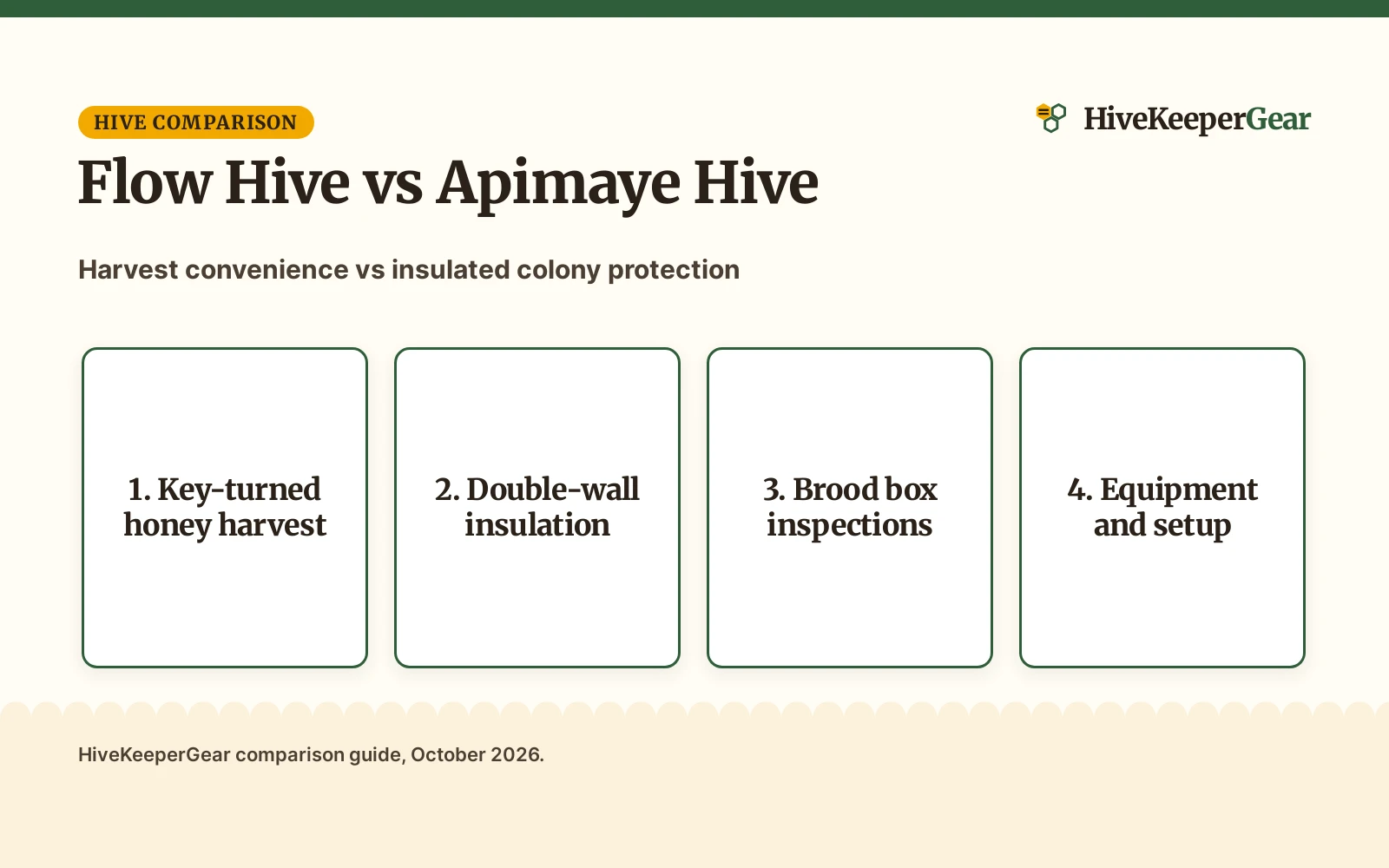
On this page
Top picks at a glance
As an Amazon Associate I earn from qualifying purchases.
- 1
 Hicarer Stainless Steel Bee Hive Mouse Guard and Entrance9.5/10View on Amazon
- 2
 Apimaye Ergo Insulated 10 Frame Bee Hive Set9.5/10View on Amazon
- 3
 Apimaye Ergo Insulated 10 Frame Bee Hive Set [NO FramesView on Amazon
- 4
 Apimaye Ergo Insulated Bee Hive Set with Plastic PRO FramesView on Amazon
Choosing between a flow hive vs apimaye hive comes down to whether you prioritize effortless key-turned honey harvesting or year-round thermal insulation for your colony. Buy a Flow Hive if your primary goal is tapping honey directly from the comb into jars with minimal harvest equipment and less disruption to the bees during extraction. Buy an Apimaye hive if you keep bees in regions with harsh winter freezes or intense summer heat where insulated double-walled protection, built-in ventilation, and durable plastic matter far more than automated harvesting. Both systems build on the movable-frame Langstroth principle, but they solve completely different apiary challenges.
Other hives and gear to compare
 Apimaye Ergo Insulated 10 Frame Bee Hive Set [NO FramesCheck price on Amazon
 Apimaye Ergo Insulated Bee Hive Set with Plastic PRO FramesCheck price on Amazon
HiveKeeperGear earns a commission when you buy through links on this site, at no extra cost to you. As an Amazon Associate I earn from qualifying purchases. Affiliate disclosure.
Before you buy: understand the two design philosophies
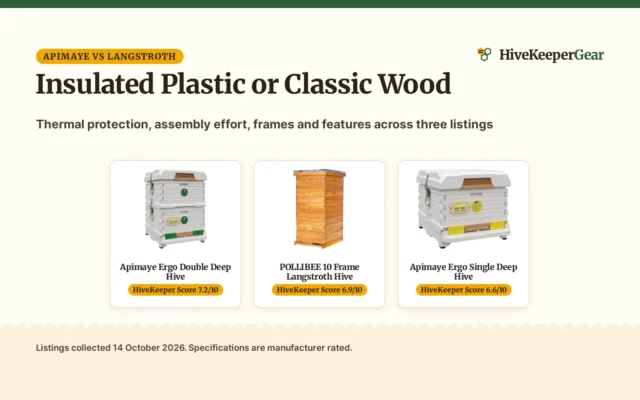
While modern apiary equipment generally builds upon movable-frame designs, Flow Hive and Apimaye take opposite approaches to improving the keeper’s workload. The Flow Hive focuses entirely on the honey harvest: split plastic comb cells allow honey to drain directly into jars when turned with a key, eliminating the need to pull supers and uncap frames. The Apimaye hive focuses on colony climate control: dual-walled food-grade plastic filled with thermal insulation shields the colony from temperature extremes while built-in top feeders and screened bottom boards streamline maintenance. For more on conventional versus insulated equipment, see our guide on insulated beehive vs wooden beehive setups.
Flow Hive vs Apimaye Hive: core differences compared
| Feature | Flow Hive Style | Apimaye Hive | Apiary Consideration |
|---|---|---|---|
| Honey harvest method | Key-turned flow frames into jars | Centrifugal extractor and uncapping | Flow eliminates spinning; Apimaye uses standard extractors |
| Colony insulation | Single-wall wooden boxes | Insulated double-wall plastic | Apimaye reduces the need for external winter insulation |
| Inspection requirements | Full brood box frame inspections | Full brood box frame inspections | Both hive designs require regular brood nest checks |
| Harvest equipment needed | Tubes, jars, and operating key | Uncapping tools, extractor, and strainer | Flow avoids separate extractor gear; Apimaye uses standard extractors |
| Hive material | Cedar, fir, or wax-coated wood | UV-resistant food-grade plastic | Wood requires exterior upkeep; plastic resists weather rot |
| Feeding system | Add-on internal or top feeder | Integrated top division feeder | Apimaye includes built-in syrup and candy feeding chambers |
| Frame compatibility | Standard brood frames with flow super frames | Standard Langstroth deep and medium frames | Both hold movable Langstroth-style frames internally |
1. Honey harvesting and extraction mechanics
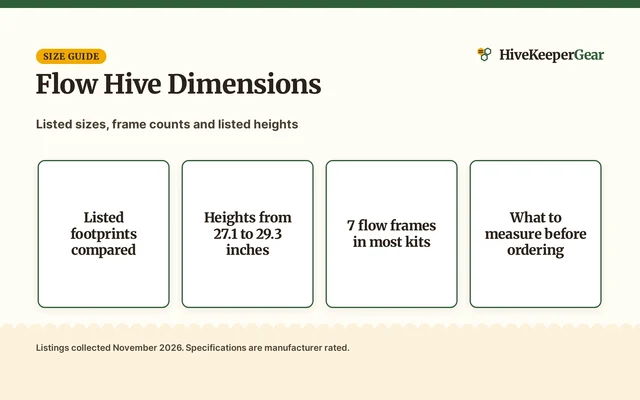
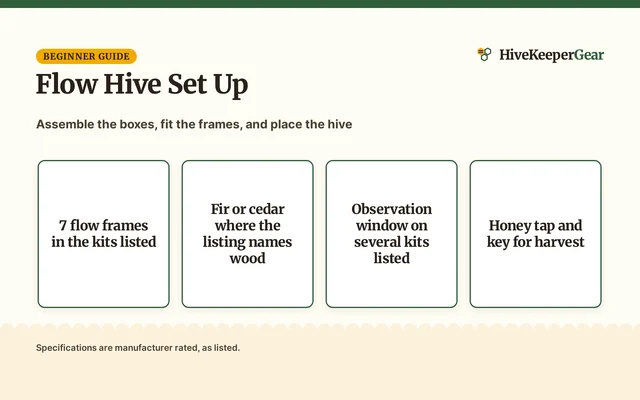
The defining appeal of a Flow Hive is the key-operated harvest mechanism. Turning an insertion key splits internal plastic comb channels vertically, allowing liquid honey to flow by gravity through tubes into jars without opening the hive or disturbing the bees. For flow-style supers, listing specifications from BeeHoneyFlow publish a set of 7 auto super frames supplied with 7 tubes and 1 key. Complete hive listings from housappk show configurations with 7 self-flow frames or a smaller 4 self-flow frame arrangement with 6 brood frames.
An Apimaye hive uses standard wooden or plastic frames, meaning honey harvesting requires traditional apiary equipment. You must remove capped honey supers, slice off wax cappings with uncapping tools, spin the frames in honey extractors, and filter the yield through honey strainers. If you want to avoid sticky harvest days and bulky extraction machinery, the Flow Hive provides an obvious advantage. If you plan to harvest cut comb or prefer traditional extraction, Apimaye accommodates standard frames.
2. Thermal insulation and climate regulation
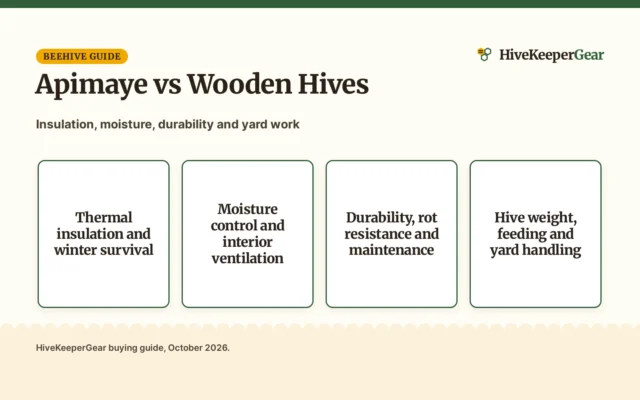
Apimaye hives are engineered specifically for colony climate control. Dual-walled food-grade plastic filled with insulation material shields the colony against sub-zero winter chills and scorching summer heat. The insulated ceiling prevents warm hive moisture from condensing into cold droplets above the cluster, while adjustable top vents allow humid air to escape. In cold northern apiaries, this high insulation level often removes the need for an external bee hive winter wrap.
By contrast, flow hives are generally housed in traditional wooden boxes crafted from fir or cedar. Some wooden kits, such as housappk listings, publish solid wood treated with high-temperature beeswax immersion at 482°F for 30 minutes to protect the timber against moisture. However, whether wood is wax-dipped, painted, or left natural, single-layer timber boxes offer modest thermal buffering compared to insulated walls. In severe winter climates, wooden hives often require auxiliary wraps or insulation boards to help colonies regulate internal cluster temperatures.
3. Colony inspections and brood management
A frequent beginner misconception is that a Flow Hive eliminates the need to open the hive. The flow mechanism applies solely to the honey super; the brood box below houses standard frames that must be pulled and inspected regularly. Beekeepers must inspect brood patterns, monitor queen performance, check honey reserves, and look for swarm preparations just as they would in any Langstroth hive.
Inspections in an Apimaye hive follow the same biological routine, but the hardware includes practical convenience features. Latches secure each box together without ratchet straps, though you still need a hive tool and a bee smoker to loosen propolis seals between frames. Apimaye bottom boards also feature a slide-out rear debris tray that allows you to inspect hive drops and monitor bottom board cleanliness without opening the brood chamber.
4. Materials, weather resistance, and maintenance
Flow hives rely on wooden outerware, such as fir or cedar, which provides a natural, classic look in a garden apiary. Assembly methods vary across makers: while BeeHoneyFlow lists mortise-and-tenon joints assembled without nails or screws, housappk publishes dovetail joints with an estimated assembly time of about 10 minutes for its 55.1-pound complete kit. However, exterior timber naturally expands, contracts, and weathers over seasons, requiring periodic resealing or maintenance.
Apimaye hives are molded from heavy-duty UV-stabilized plastic. Plastic will never rot, warp, splinter, or absorb standing rainwater, eliminating the need for exterior painting or wax dipping. The hard plastic surfaces can be washed down and sanitized between seasons. While some beekeepers find plastic boxes less visually charming than traditional woodcraft, the material offers exceptional structural longevity in harsh weather.
5. Required harvesting equipment and accessories
Investing in a Flow Hive reduces your downstream gear purchases. Because honey drains straight into collection jars, you do not need to purchase an extractor, uncapping tank, or straining bucket. However, you will still need standard protective wear, a hive tool, a smoker, and a dedicated feeder when establishing a colony. Our guides to the best beekeeping starter kit and best beehive feeder compare those core tools.
An Apimaye hive includes extensive built-in accessories, including an integrated dual-compartment top feeder that holds syrup and solid candy without opening the hive, along with entrance reducers and queen excluders. However, you must budget separately for harvesting machinery when the honey flow arrives. For apiaries using standard frames, see our breakdown of 10-frame kits and 8-frame kits.
Seasonal apiary timeline
Spring buildup: In early spring, check food stores and begin supplemental feeding. The Apimaye top feeder allows syrup feeding without breaking the hive seal, while wooden flow hives use standard top or frame feeders. Summer flow: Add honey supers as the brood chamber fills. Flow frames require bees to wax the plastic cells before storing honey; once filled, keepers can check honey readiness by inspecting the outer frame ends or opening the rear super access panel. Late summer harvest: Insert the flow key and drain ripe honey directly into jars on a warm afternoon. For Apimaye hives, pull honey supers and extract indoors using standard centrifugal equipment. Fall and winter prep: Remove flow supers entirely before cold weather sets in. Apimaye hives simply require adjusting top ventilation vents and closing the bottom tray for winter, whereas wooden flow hives in cold regions benefit from external insulation wraps.
Summary: which hive should you choose?
Choose a Flow Hive if your main priority is simple, low-mess honey harvesting without buying or storing centrifugal extraction equipment. It is well suited for backyard hobbyists maintaining a home apiary who want the enjoyment of tapping honey directly from the hive in mild to moderate climates.
Choose an Apimaye hive if you keep bees in regions with harsh freezing winters or intense summer heat where insulated walls and condensation management protect colony vitality. It is also ideal for beekeepers who prefer rot-proof, low-maintenance plastic equipment and are comfortable using traditional frame extraction methods.
What neither hive changes about beekeeping
Neither hive design makes beekeeping completely hands-off. Honey bees are living animals that require attentive stewardship, regular inspections, and seasonal adjustments. Both hive styles still require protective veils and calm handling. Choosing between them simply decides whether you want mechanical convenience at honey harvest or thermal climate protection throughout the rest of the year.
FAQs for beekeepers
Can you put Flow frames into an Apimaye hive?
Flow frames are designed for standard rectangular wooden Langstroth supers, whereas Apimaye super boxes feature molded plastic frame rests and proprietary latches. Because Apimaye boxes have internal spacing and rim profiles engineered for traditional frames, flow frames do not fit into an Apimaye super without custom modifications.
Do bees readily fill plastic Flow frames?
Bees will readily fill and cap Flow frames during a steady nectar flow, especially if you roll a light layer of melted beeswax over the plastic comb surfaces first. The colony must also fully establish its brood nest before storing surplus honey above.
Does an Apimaye hive need winter wraps in freezing regions?
The insulated double-walled plastic construction provides substantial thermal protection, eliminating the need for external fabric or foam winter wraps in most cold climates. Keepers adjust the top ventilation slits, insert the bottom tray to prevent cold updrafts, and install entrance reducers for winter conditions.
Is honey harvested from a Flow Hive ready for consumption?
Honey harvested through flow tubes into clean jars is raw, unheated, and ready to eat immediately. Because the honey drains directly from internal comb channels without uncapping wax, it contains very little comb debris.
Which hive is easier to manage for a beginner?
Flow hives simplify the honey harvest by eliminating centrifugal extractors, while Apimaye hives simplify colony care with built-in top feeders, bottom monitoring trays, and thermal insulation. Both systems still require learning the same core fundamentals of brood nest inspections and seasonal colony management.
More hive guides
Browse every guide by category: beehives, protective gear, hive tools and honey harvesting.
For more hive comparisons, see our guides on Apimaye hive vs wooden hive, Apimaye hive vs Langstroth hive, and insulated beehive vs wooden beehive.