Insulated Beehive vs Wooden Beehive: Which One Should You Buy?
A comparison of insulated and wooden beehives, examining thermal performance across seasons, winter cluster survival, moisture control, maintenance, and hive yard durability.

On this page
Top picks at a glance
As an Amazon Associate I earn from qualifying purchases.
- 1
 Neorexon Adjustable Metal Hive Stand9.5/10View on Amazon
- 2
 BeeCastle 20 Pack Beehive Frames and Waxed Foundations forView on Amazon
- 3
 BeeCastle 10 Pack Beehive Frames and Wax Foundations for DeepView on Amazon
- 4
 MayBee 10 Pack Beehive Frames with Wax Foundations for DeepView on Amazon
- 5
 BeeCastle 20 Pack Medium Beehive Frames and Waxed FoundationsView on Amazon
- 6
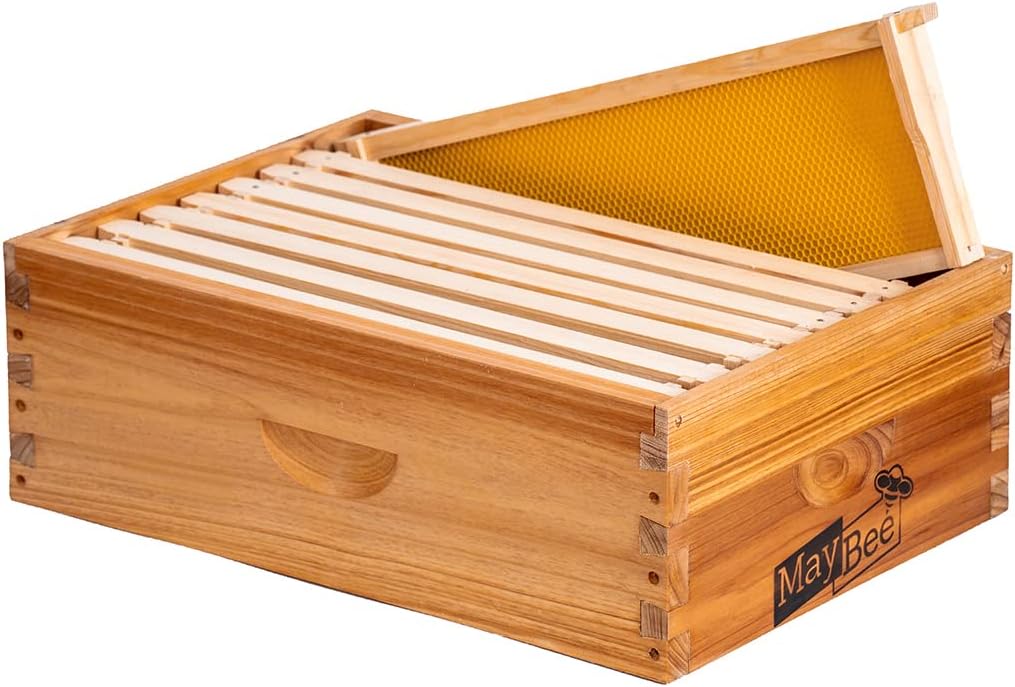 8-Frame Beehive Box Langstroth Medium Super Bee Box for SaleView on Amazon
- 7
 MayBee 10-Frame Beehive Box Langstroth Medium Super Bee BoxView on Amazon
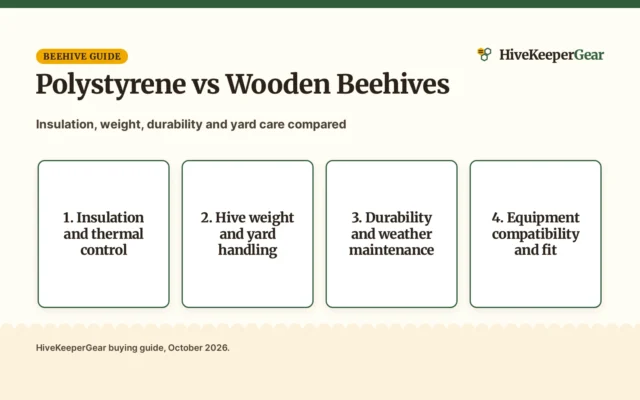
When evaluating an insulated beehive vs wooden beehive, beekeepers must weigh winter thermal buffering against traditional versatility and upfront cost. An insulated beehive provides built-in thermal resistance that helps colonies conserve honey stores during cold snaps and shields brood from extreme summer heat, while a traditional wooden beehive provides proven reliability, lower initial expense, and seamless compatibility with standard apiary equipment. Choosing the right hive style depends on your regional climate, seasonal inspection routines, and long-term apiary management goals.
Other hives and gear to compare
 BeeCastle 20 Pack Beehive Frames and Waxed Foundations forCheck price on Amazon
 BeeCastle 10 Pack Beehive Frames and Wax Foundations for DeepCheck price on Amazon
 MayBee 10 Pack Beehive Frames with Wax Foundations for DeepCheck price on Amazon
 BeeCastle 20 Pack Medium Beehive Frames and Waxed FoundationsCheck price on Amazon
 8-Frame Beehive Box Langstroth Medium Super Bee Box for SaleCheck price on Amazon
 MayBee 10-Frame Beehive Box Langstroth Medium Super Bee BoxCheck price on Amazon
HiveKeeperGear earns a commission when you buy through links on this site, at no extra cost to you. As an Amazon Associate I earn from qualifying purchases. Affiliate disclosure.
Seasonal thermal demands in the apiary
During winter, honeybees cluster tightly around the queen, flexing their thoracic flight muscles to generate warmth and sharing honey stores across the cluster. In an uninsulated wooden box, heat radiates outward rapidly through the thin wooden walls, causing the surrounding cavity air to drop close to ambient outside temperatures. When freezing weather arrives, the cluster contracts tightly to conserve its core warmth. If hive walls provide little thermal resistance, bees must consume stored honey at an accelerated rate to sustain that metabolic heat.
In high summer, the challenge reverses. Brood nests require stable temperatures for larval development. On scorching afternoons, worker bees must divert foraging labor toward hauling water droplets into the hive and fanning their wings to create evaporative cooling currents. Hive walls that absorb and transfer intense solar radiation force colonies to spend vital resources on climate defense rather than honey production and comb building.
Insulated beehive vs wooden beehive: key differences
The choice between modern insulated structures and traditional wooden boxes affects seasonal survival, internal moisture, and box handling. The reference comparison below outlines how each hive construction performs across primary apiary demands.
| Feature | Insulated Beehive | Wooden Beehive | Beekeeper Considerations |
|---|---|---|---|
| Thermal Insulation | Engineered thermal barrier (~6.93 R-value listed by Apimaye) | Uninsulated solid wood boards with natural thermal transfer | Insulated walls buffer cold snaps; wooden hives often require added wraps in freezing climates |
| Winter Honey Consumption | Bees consume less stored honey to maintain cluster warmth | Higher honey consumption to generate metabolic heat during freezes | Heavy winter consumption in uninsulated hives increases the risk of early starvation |
| Moisture and Condensation | Warm interior surfaces reduce ceiling condensation; requires planned ventilation | Porous wood absorbs some moisture but uninsulated ceilings risk cold dripping | In cold weather, warm hive air condenses rapidly against cold, uninsulated roofs |
| Exterior Maintenance | Molded synthetic materials resist rot and do not require exterior paint | Requires exterior primer, paint, or wax dipping to resist rot | Wooden boxes require periodic scraping, repainting, and joint repair over seasons |
| Weight and Handling | Weight varies by material; assembled 10-frame set lists at 34.3 pounds (Apimaye) | Pine or cedar deep boxes offer familiar handling per empty shell | Double-walled plastic sets add bulk; high-density foam models are lighter than wood |
| Equipment Compatibility | Fits standard Langstroth frames; box stacking uses brand latches | Universal Langstroth dimensions fit standard boxes across makers | Wooden hives allow mixing boxes and supers from different manufacturers |
Thermal performance across winter and summer
Thermal regulation is the primary reason beekeepers consider insulated equipment. Traditional wooden hives constructed from milled pine or cedar provide a classic look and workable shelter, but solid lumber offers minimal insulation against steep temperature drops. In regions with prolonged freezing spells, colonies in uninsulated wooden boxes burn through their honey frames quickly to generate heat. When cold weather locks the cluster in place away from nearby honey stores, starvation can occur even with frames of honey nearby on outer combs. To counter this, keepers of wooden equipment frequently wrap their hives in external insulation, as detailed in our guide to the bee hive winter wrap options available for cold yards.
By contrast, an insulated hive incorporates engineered thermal barriers. For example, Apimaye lists a ~6.93 R-value for its double-walled insulated 10-frame hive set. This double-walled construction dampens sudden temperature swings, helping the winter cluster maintain internal temperatures while expending less metabolic energy. The colony consumes less honey across the winter months, leaving greater reserves for early spring brood rearing. During summer heatwaves, the same thermal barrier shields the brood nest from blazing ambient temperatures, reducing the need for emergency fanning and water collection.
Moisture management and internal condensation
Moisture is often a greater hazard to wintering honeybees than cold air alone. As a colony consumes honey, it respires warm water vapor into the hive atmosphere. In an uninsulated wooden hive, this warm, humid air rises until it encounters a cold inner cover or uninsulated roof. The vapor condenses into liquid droplets that can drip directly down onto the clustering bees. Wet bees chilled by freezing air quickly succumb to cold stress.
Wooden hives offer a small degree of moisture absorption through the wood grain, but without proper airflow, damp wood can harbor mold and accelerate timber rot. Insulated hives address condensation through thermal buffering. Because insulated ceilings remain warm from the colony’s rising heat, water vapor does not condense directly overhead to drip onto the cluster. However, because synthetic hive materials do not absorb water vapor, moisture must still leave the hive. Insulated hive designs manage this through controlled ventilation channels and bottom airflow rather than wide-open top drafts that would dump colony heat. Pairing proper ventilation with a screened vs solid bottom board helps manage airflow regardless of box material.
Durability, maintenance, and weather resistance
Hive maintenance is an ongoing chore in any apiary. Wooden beehives require preparation before their first season in the bee yard. Raw pine boxes must be primed and coated with exterior paint or thoroughly dipped in hot paraffin and microcrystalline wax to prevent rainwater from penetrating the wood grain. Over seasons of exposure to sun, rain, and snow, paint peels, wood grain checks, and corners can separate where bees have glued joints with propolis. Scraping propolis and wax from wooden box rebates can gouge soft lumber over time, requiring wood filler or component replacement.
Insulated hives manufactured from molded plastics or high-density synthetics eliminate routine rot repairs. The listing for Apimaye insulated supers highlights durable food-grade plastic construction built tough against outdoor impacts, backed by a 1-year manufacturer warranty. Plastic components can be scrubbed clean with hot water and apiary-safe washing solutions without swelling or rotting. For beekeepers who prefer to spend inspection days working with bees rather than maintaining wooden hive hardware, molded synthetic equipment offers clear upkeep advantages.
Weight, box handling, and equipment compatibility
Working in the bee yard involves regular lifting of heavy boxes full of brood, honey, and bees. An empty wooden deep box is relatively light to carry, allowing beekeepers to transport several shells at once when staging equipment. However, once filled with drawn comb, brood, and honey, any deep box becomes heavy. The empty weight of an insulated hive depends on its construction. Heavy-duty double-walled plastic models can be substantial; for example, Apimaye lists an assembled weight of 34.3 pounds for its 10-frame hive set, and its 7-frame nuc deep super lists at 16 pounds with outer dimensions of 15 by 11 by 22 inches. Conversely, high-density molded foam hives are often lighter than standard pine boxes.
Handling also differs in how boxes connect. Wooden boxes rest directly on wooden rebates, held together by gravity and bee propolis. Prying them apart requires a sturdy hive tool to break the propolis seal. Many insulated hives feature built-in latches and molded side handles that lock boxes securely together for transport or windy apiary sites. On the compatibility front, insulated Langstroth hives accept standard wooden or plastic frames, adhering to standard 10-frame beehive dimensions. However, mixing an insulated super onto a wooden brood box can be awkward because exterior latching systems and alignment rims do not always match standard wooden Langstroth dimensions. If you manage a yard of traditional wooden equipment, starter packages like those in our 10-frame kits guide provide uniform stacking across all hive bodies.
How to choose between insulated and wooden hives
Both hive styles successfully house productive colonies when managed with sound apiary practices. Your choice should align with your local climate, budget, and equipment preferences.
Choose an insulated beehive if:
- You keep bees in northern regions with severe, prolonged winter freezes or southern regions with extreme summer heatwaves.
- You want to eliminate routine wooden box maintenance such as exterior priming, painting, and rot repair.
- You value built-in mechanical latches, integrated hive handles, and specialized top feeding compartments.
- You want to reduce winter honey consumption and give small colonies or splits extra thermal assistance.
Choose a wooden beehive if:
- You prefer the classic appearance, feel, and natural renewable origin of pine or cedar apiary lumber.
- You want the flexibility to source interchangeable boxes, covers, and supers from multiple commercial suppliers.
- You manage a large apiary where initial equipment purchase costs outweigh thermal benefits.
- You enjoy assembling, painting, and customizing your own hive woodenware, starting from a solid beginner bee hive setup.
For most beginner beekeepers, standard wooden boxes remain the most accessible starting point, supported by widespread club knowledge and interchangeable parts. Keepers facing harsh winter climates, however, often find the thermal security of an insulated system well worth the investment. To explore complete wooden setups, visit our review of the Langstroth hive options.
FAQs for beekeepers
Do insulated beehives prevent winter colony losses?
Insulation buffers colonies against rapid temperature swings and conserves cluster energy, which lowers winter honey consumption. However, insulation alone cannot prevent losses caused by queen failure, starvation, or excessive moisture accumulation. Sound fall feeding and ventilation remain essential.
Can standard wooden frames fit inside an insulated beehive?
Yes. Insulated Langstroth hives are designed to accommodate standard wooden and plastic frames. Deep and medium frames hang securely inside insulated bodies, allowing beekeepers to transfer comb between wooden and insulated hives freely.
Do wooden beehives require insulation wraps in cold climates?
In regions with sustained sub-freezing winters, many beekeepers add external foam boards, tar paper wraps, or commercial winter covers to wooden hives. This added layer reduces heat loss through the thin wooden walls and helps prevent internal condensation over the cluster.
Do insulated beehives cause excess moisture buildup?
Because synthetic hive walls do not absorb moisture, proper ventilation is essential. Insulated hives use engineered airflow channels and screened bases to move humid air out before it condenses, while insulated ceilings prevent cold droplets from dripping onto bees.
How does the weight of an insulated hive compare to a wooden hive?
Weight depends on the materials used. An Apimaye 10-frame hive set lists at 34.3 pounds assembled, whereas an Apimaye 7-frame nuc deep super lists at 16 pounds with dimensions of 15 by 11 by 22 inches. Some foam-molded insulated boxes weigh less than pine shells, while double-walled plastic sets are heavier.
More hive guides
Browse every guide by category: beehives, protective gear, hive tools and honey harvesting, or see our safety disclaimer.
More picks: Explore our guides to Langstroth hives, screened bottom boards, and winter hive wraps.