Apimaye Hive vs Wooden Hive: Which One Should You Buy?
Compare Apimaye insulated hives and traditional wooden hives across thermal insulation, moisture control, feeding options, durability, and routine colony inspections.

On this page
Top picks at a glance
As an Amazon Associate I earn from qualifying purchases.
- 1
 Apimaye Ergo Insulated 10 Frame Bee Hive Set9.5/10View on Amazon
- 2
 Neorexon Adjustable Metal Hive Stand9.5/10View on Amazon
- 3
 Apimaye Ergo Insulated 10 Frame Bee Hive Set [NO FramesView on Amazon
- 4
 Apimaye Ergo Insulated Bee Hive Set with Plastic PRO FramesView on Amazon
- 5
 Amyhill Beehive Entrance Reducer 10 Frame Wooden Hive DoorView on Amazon
- 6
 Hoover Hives Beeswax Coated Deep Hive BoxView on Amazon
- 7
 Mason Bee House for GardenView on Amazon
- 8
 DECYOOL 6 Pack Wooden Bee Hive Entrance Reducer FrameView on Amazon
As spring inspections begin and colonies build comb, choosing an apimaye hive vs wooden hive comes down to built-in thermal insulation versus classic wooden construction. Apimaye double-walled insulated hives protect colonies with a ~6.93 R-value in harsh winter cold and summer heat, while standard wooden hives offer cedar construction, lower upfront cost, and broad interchangeability. We compared both systems across insulation, moisture control, durability, feeding, and yard handling.
Other hives and gear to compare
 Apimaye Ergo Insulated 10 Frame Bee Hive Set [NO FramesCheck price on Amazon
 Apimaye Ergo Insulated Bee Hive Set with Plastic PRO FramesCheck price on Amazon
 Amyhill Beehive Entrance Reducer 10 Frame Wooden Hive DoorCheck price on Amazon
 Hoover Hives Beeswax Coated Deep Hive BoxCheck price on Amazon
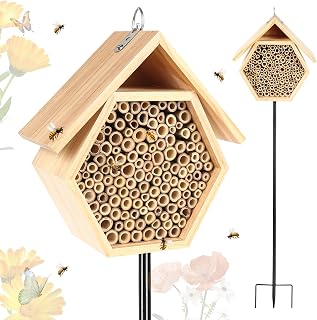 Mason Bee House for GardenCheck price on Amazon
 DECYOOL 6 Pack Wooden Bee Hive Entrance Reducer FrameCheck price on Amazon
HiveKeeperGear earns a commission when you buy through links on this site, at no extra cost to you. As an Amazon Associate I earn from qualifying purchases. Affiliate disclosure.
Before you choose: climate and apiary goals
Apiary conditions vary widely by region. Northern yards face freezing winds and snow, southern locations endure extended summer heatwaves, and damp areas struggle with moisture. Choosing between plastic and wooden equipment balances these climate demands against budget and handling preferences. An insulated hive buffers colonies against rapid weather swings, while a wooden hive provides natural timber that is easily modified and repaired.
Apimaye hive vs wooden hive: core differences
Apimaye builds hives from molded food grade plastic with integrated insulation, while traditional wooden hives use milled timber joined with dovetails. Our insulated beehive vs wooden beehive comparison details how these materials impact colony management.
| Design Feature | Apimaye Hive | Wooden Hive | Related Guide |
|---|---|---|---|
| Insulation Rating | ~6.93 R-value double-walled shell (stated on 10 frame sets) | Not stated (uninsulated timber walls) | Insulated hives |
| Primary Material | Food grade plastic | Selected cedar wood (POLLIBEE listing) | 10-frame kits |
| Hive Configurations | 10 frame standard sets and 7 frame NUC | 10 frame sets (POLLIBEE includes 2 deep boxes and 2 medium boxes) | Deep box sizes |
| Bare Hive Weight | 33.7 to 34.9 pounds (single hive) | Not stated on listing | Starter hives |
| Ventilation & Bottom | Screened bottom board with pollen trap and drawer | Screened or solid bottom board (POLLIBEE includes solid) | Bottom boards |
| Feeding Hardware | Built-in top feeder with division chambers | Separate feeder required | Feeder types |
| Weather Maintenance | No painting required | Beeswax coated on listing (periodic maintenance required) | Hive comparison |
| Manufacturer Warranty | 1 Year Manufacturer (stated on 7 frame super listing) | Not stated on listing | Starter gear |
Thermal insulation and colony temperature regulation
Honeybees cluster together in winter to maintain core warmth, consuming honey to generate heat. The Apimaye system incorporates double-walled insulation with a maker stated ~6.93 R-value on its 10 frame hive listings. This thermal barrier reduces heat loss through hive walls, helping colonies consume less winter honey while shielding brood from summer heat.
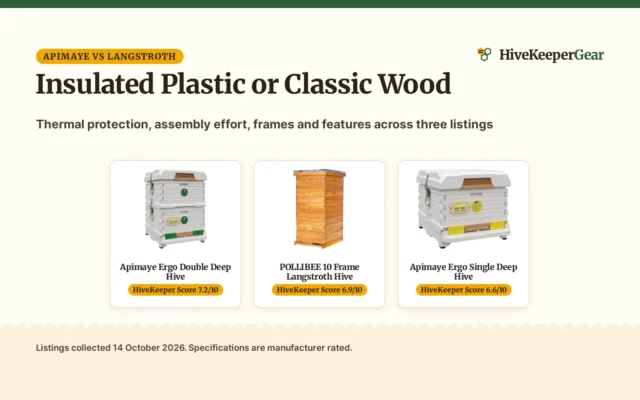
Standard wooden hives rely on natural lumber. The POLLIBEE 10 frame hive uses selected cedar wood, but does not state a formal R-value. In freezing winter regions, wooden hive keepers often add external wraps. Compare cold-weather covers in our guide to the best bee hive winter wrap options.
Moisture control and interior ventilation
Winter moisture is a major hazard for honeybees. Warm respiration air rises, and if it hits a cold ceiling, condensation drips onto the cluster. Apimaye manages condensation with insulated ceilings that stay warmer than the dew point, along with top vents and a screened bottom board with an adjustable drawer.
Wooden hives manage moisture through timber breathability and added ventilation. In wet conditions, keepers use notched covers or screens. Learn more about bottom airflow in our screened vs solid bottom board guide and overhead mitigation in our inner cover vs quilt box comparison.
Durability, rot resistance and maintenance
Apimaye hives use food grade plastic that does not rot, crack from dampness, or require exterior painting. Hive bodies arrive assembled, and propolis scrapes clean from plastic walls. Apimaye lists a 1 Year Manufacturer warranty on its 7 frame deep super listing, while warranty terms are not stated on 10 frame sets.
Wooden hives require assembly and periodic care. The POLLIBEE 10 frame kit provides beeswax coated cedar wood with pre-cut dovetail joints, screws, and nails. Cedar resists decay, but unsealed joints can warp over time. Unlike plastic, damaged wood is easily patched with standard tools.
Hive weight and routine yard handling
Apimaye hives carry notable structural mass from double-walled molding and integrated hardware. A single Apimaye 10 frame set weighs 33.7 to 34.9 pounds empty (individual listings state 33.7, 33.9, 34.3, or 34.9 pounds), and a double deep set weighs 44.9 to 48 pounds measuring 19 x 23 x 28 inches. Its 7 frame NUC deep super measures 15 x 11 x 22 inches at 16 pounds. Molded handles and latches help secure boxes.
POLLIBEE lists wooden deep boxes at 19-7/8″ x 16″ x 9-5/8″ and medium supers at 19-7/8″ x 16″ x 6-5/8″, without stating bare weight. When full of honey, frame weight dominates both styles. Compare box sizing in our 10 frame beehive dimensions guide and our review of the best Langstroth hive picks.
Integrated feeding and hardware components
Apimaye includes an integrated top feeder beneath the outer cover with division chambers for syrup or solid feed, allowing feeding without opening the brood nest. Standard features also include an entrance reducer, queen excluder, and division boards.
Wooden hives use separate feeders. The POLLIBEE kit includes 40 frames with beeswax coated foundations, metal top cover, inner cover, solid bottom board, entrance reducer, and queen excluder across 2 deep boxes and 2 medium boxes, but no feeder. Compare feeder options in our best beehive feeder guide and guards in our best hive entrance reducer guide.
Seasonal apiary management
Management needs shift across the beekeeping year:
Early Spring: Insulated Apimaye hives retain cluster heat overnight, helping colonies expand brood earlier without chilling. Wooden hives warm during sunny days but lose heat on cold nights, requiring close monitoring of food stores.
Main Nectar Flow: Both systems take standard Langstroth frames. Wooden hives accept standard supers from any maker, while Apimaye hives use frame spacers and matching supers or adapted wooden boxes.
Late Summer and Fall: Feeding for winter is simplified with Apimaye built-in top feeders. Wooden hives take internal frame feeders or top pails. Both use entrance reducers against robbing.
Winter: Apimaye hives provide continuous thermal buffering and overhead moisture venting. Wooden hives rely on timber respiration, often paired with windbreaks or winter wraps in cold zones.
Choosing between an apimaye hive vs wooden hive
Selecting between an apimaye hive vs wooden hive depends on climate, budget, and yard layout.
Choose an Apimaye hive if:
- You face harsh freezing winters or hot summers where ~6.93 R-value insulation protects colony stability.
- You want an assembled setup that never needs painting or rot repair.
- You keep bees in damp sites where wood rot and condensation are chronic issues.
- You prefer integrated top feeders, latching boxes, and screened bottom boards.
Choose a wooden hive if:
- You prefer classic cedar timber aesthetics and standard Langstroth woodworking.
- You want lower initial equipment costs when buying multiple hives.
- You value mixing boxes, lids, and frames freely across any manufacturer.
- You enjoy assembling, finishing, and repairing wooden equipment.
FAQs for beekeepers
Can you mix standard wooden Langstroth supers with an Apimaye hive?
Yes. Apimaye hives use standard 10 frame Langstroth dimensions, so wooden supers sit directly on top. Outer latches will not connect to wood, so boxes rest in place like traditional supers.
Does an Apimaye hive completely eliminate winter moisture condensation?
Insulated ceilings reduce condensation risk by staying warmer than the dew point, but colonies still require upper ventilation so exhaled moisture escapes.
Do Apimaye plastic hives require painting or weatherproofing?
No. Apimaye hive bodies are molded from food grade plastic that does not absorb moisture or rot, arriving assembled and ready for bees without painting.
Are wooden beehives warmer or colder than insulated plastic hives?
Wooden listings like POLLIBEE do not state an insulation rating, while Apimaye lists ~6.93 R-value insulation on 10 frame bodies, reducing winter heat loss.
How does hive weight compare during routine inspections?
Apimaye single 10 frame sets weigh 33.7 to 34.9 pounds empty, and double deeps weigh 44.9 to 48 pounds. Wooden listings do not state bare weights, though full honey frames dominate weight in both.
More hive guides
Browse every guide by category: beehives, protective gear, hive tools, and honey harvesting.
More comparisons: explore our Apimaye hive vs Langstroth hive analysis, compare screened vs solid bottom boards, or review starter hardware with our beekeeping supplies for beginners checklist.