Plastic Hive Body vs Wooden Hive Body: Which One Should You Buy?
Plastic vs wooden hive body: insulated Apimaye hives compared with pine, cedar and fir Langstroth boxes on weight, insulation, upkeep and compatibility.

On this page
Top picks at a glance
As an Amazon Associate I earn from qualifying purchases.
- 1
 VIVO Plastic Beehive Stand for 10 Frame Langstroth Hives with9.5/10View on Amazon
- 2
 Neorexon Adjustable Metal Hive Stand9.5/10View on Amazon
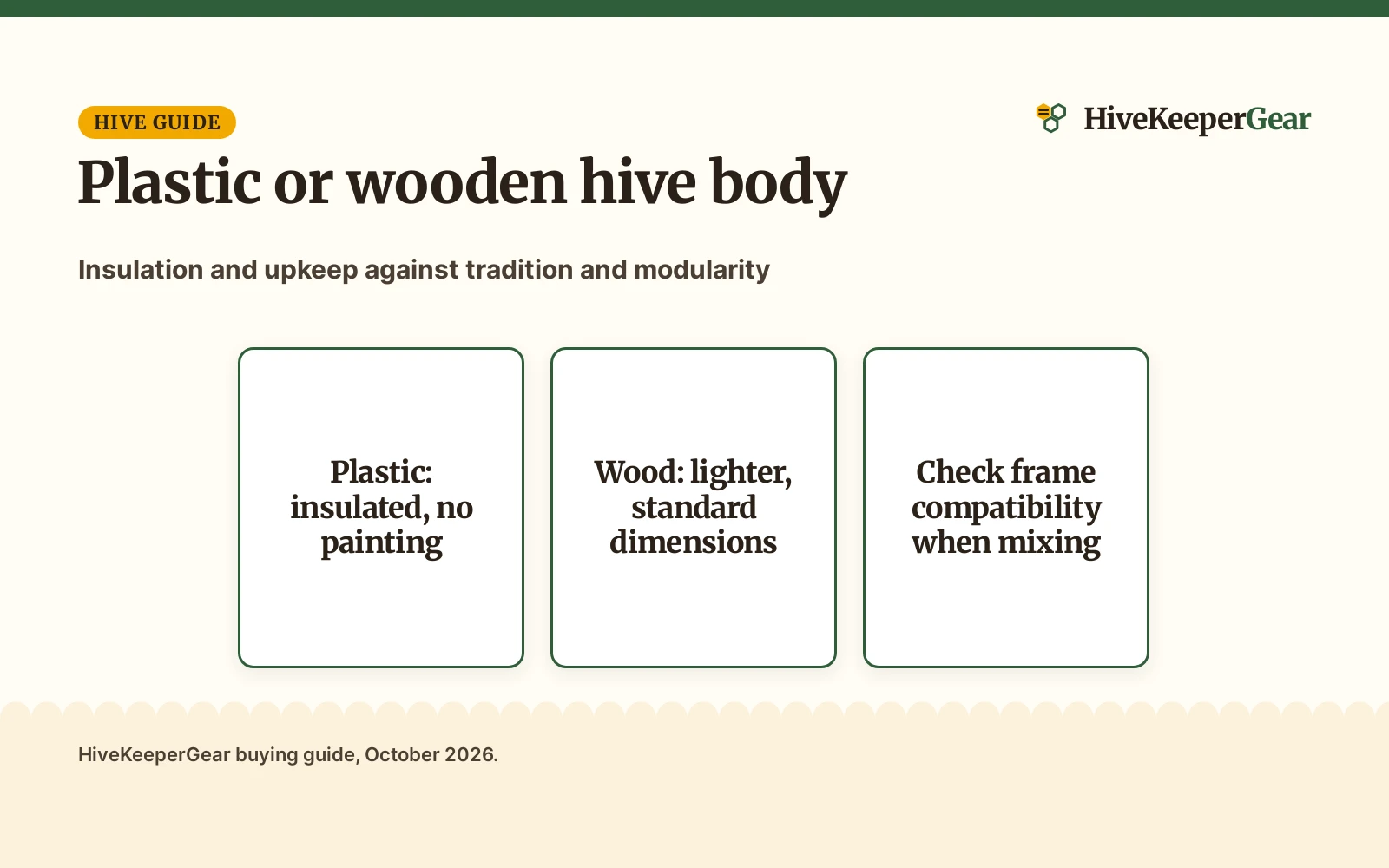
Plastic hive body vs wooden hive body comes down to insulation and maintenance against tradition and modularity. A plastic body, like the insulated Apimaye listings here, arrives assembled, needs no painting, and insulates against heat and cold. A wooden body, pine, cedar or fir, is the Langstroth standard: lighter per box, endlessly modular, but it needs paint and periodic upkeep. For most beginners starting one or two hives, wood is the simpler first buy; plastic earns its place where winters are harsh or maintenance time is short.
HiveKeeperGear earns a commission when you buy through links on this page, at no extra cost to you. Affiliate disclosure.
Most reference listings for this guide are wooden hive bodies and kits; two are insulated plastic Apimaye listings. Every number below comes from the listings cited by brand, and where no figure is available we explain without one.
Plastic hive body vs wooden hive body: the short answer
Choose wood if you want the standard Langstroth box that every frame, feeder and accessory is built for, at the lowest per-box weight: the listings show wooden boxes from 10.14 pounds for the BeeCastle 8-frame medium super to 15.65 pounds for the fully assembled Mann Lake HK180 10-frame deep. Choose insulated plastic if you want a hive that needs no painting and buffers temperature swings: the Apimaye Ergo 10-frame set lists 33.9 pounds at 19 by 23 by 17 inches, insulated to withstand extreme weather and designed to prevent moisture buildup inside.
What a wooden hive body gives you
Wood is the Langstroth standard, and the listings show why it stays that way: choice. Pine is the workhorse, the Little Giant 10-frame medium super arrives pre-assembled in unfinished pine at 11.2 pounds with wax-coated plastic foundation, and the Mann Lake HK160 deep kit builds a full hive in New Zealand Radiata pine with reinforced finger joints. Cedar costs more but resists rot: the MayBee 10-frame deep brood box is cedarwood dipped in beeswax with dovetail joints at 9.63 by 19.88 by 9.63 inches, and the ThxBees 8-frame medium super is cedar at 10.81 pounds, also beeswax-dipped. Fir sits in the middle: the BeeCastle 8-frame medium super is solid fir at 10.14 pounds with dovetail joints the listing says resist shrinking and warping.
The trade is maintenance. Unfinished pine must be painted or it weathers: the Little Giant spec table lists its water resistance as not water resistant. Even wax-dipped boxes eventually need recoating, and wooden boxes swell, shrink and need repainting over the years. What you get in return is modularity: every wooden box here fits standard Langstroth dimensions, so frames, feeders and supers from any maker interchange.
What a plastic hive body gives you
The Apimaye listings describe a different philosophy: insulation instead of tradition. The Ergo 10-frame set arrives assembled and never needs painting, with insulation the listing says withstands extreme weather and prevents moisture buildup inside the hive, so bees consume less honey over winter. The set bundles what wooden kits sell separately: a screened bottom board with pollen trap and drawer, entrance reducer, queen excluder, division board and top feeder. The insulated deep super adds handles for lifting and latches that lock supers together.
The trade is weight and price of entry. At 33.9 pounds for the set, the Apimaye is more than twice the 15.65 pounds of the assembled Mann Lake HK180 wooden deep, though the Apimaye figure includes the bottom board, feeder and fittings. Plastic is also a closed system: Apimaye supers latch to Apimaye covers, while wooden boxes follow the open Langstroth standard.
Plastic vs wooden hive bodies compared
| Feature | Wooden hive body | Plastic hive body |
|---|---|---|
| Insulation | None stated; wood breathes | Insulated; rated for extreme weather per Apimaye |
| Painting | Required, especially unfinished pine | Never needs painting |
| Box weight cited | 10.14 to 15.65 lb | 33.9 lb for the full set |
| Assembly | Pre-assembled or flat-pack options | Arrives assembled |
| Compatibility | Standard Langstroth dimensions | Brand system with latching supers |
| Extras in the box | Frames and foundation typical | Bottom board, feeder, excluder included |
Which one should you buy?
Buy wooden if you are starting out, expanding an existing Langstroth apiary, or want the widest choice of boxes, frames and accessories. Pine keeps the per-box weight down: the Little Giant medium super is 11.2 pounds and the Mann Lake HK180 deep is 15.65 pounds assembled. If rot worries you, the beeswax-dipped cedar options from MayBee and ThxBees add durability the makers claim resists warping.
Buy insulated plastic if your winters are harsh, your summers brutal, or you want to skip painting and assembly entirely. The Apimaye set’s insulation and moisture control are its whole argument, and the bundled bottom board, feeder and excluder mean one purchase covers the hive.
Mix them if you run both: wooden supers on an insulated plastic brood box is a combination some beekeepers use, since the brood nest is where temperature stability matters most. Check frame compatibility first, since the Apimaye deep super works with standard deep frames.
Common mistakes to avoid
- Leaving pine unpainted. The Little Giant spec table is blunt: not water resistant. Paint or dip every unfinished wooden box before it sees weather.
- Comparing set weight to box weight. The Apimaye 33.9 pounds is a full set with bottom board and feeder; the wooden 10 to 16 pound figures are boxes alone. Compare like with like.
- Assuming all plastic is insulated. These listings show insulated plastic; plain molded plastic boxes exist elsewhere and behave differently. The insulation is the feature, not the plastic.
- Forgetting the frames. The Apimaye set and deep super ship with no frames included, while every wooden listing here includes frames and foundation. Budget frames separately for the plastic route.
FAQs for beekeepers
Do plastic hives need painting?
The Apimaye listings state the hives arrive assembled and do not need to be painted. Wooden boxes, especially unfinished pine, must be painted or coated; the Little Giant listing rates its unfinished box as not water resistant.
Are plastic hives heavier than wooden ones?
The full Apimaye set lists 33.9 pounds including bottom board, feeder and fittings, against 10.14 to 15.65 pounds for the wooden boxes alone. Per box, wood is lighter; per complete hive, the gap narrows once you add wooden accessories.
Do bees accept plastic hives?
The Apimaye listing claims its design won a beehive innovation award and describes features like frame spacers and a top feeder aimed at colony acceptance. The listings do not publish colony performance figures, so treat acceptance claims as the maker’s.
Can I mix plastic and wooden boxes?
The Apimaye deep super works with standard deep-sized wooden and plastic frames, per its listing, so mixing is possible where dimensions match. Check that covers and bottom boards mate before committing a hive to a mixed stack.
Which lasts longer?
The listings do not state service life figures. Wooden boxes last with repainting and repair; the MayBee and ThxBees listings claim their beeswax coating resists warping. Plastic does not rot, but the listings give no UV or lifespan rating. Ask the seller for one if longevity decides your purchase.
More hive guides
Related: our polystyrene beehive vs wooden beehive, Apimaye hive vs wooden hive, insulated beehive vs wooden beehive and plastic bottom board vs wooden bottom board comparisons.