Plastic Bottom Board vs Wooden Bottom Board: Which One Should You Buy?
Compare plastic and wooden bottom boards to choose the right hive floor for your apiary, balancing rot resistance, moisture handling, and yard maintenance.

On this page
During spring hive inspection, lifting the brood chamber often reveals whether the hive floor survived wet ground or rotted through the winter months. When deciding between a plastic bottom board vs wooden bottom board, choose a plastic bottom board if you want rot resistance, quick cleaning, and long service without painting, while a wooden bottom board is better if you prefer traditional timber construction, natural moisture absorption, and standard hive yard compatibility. Neither floor changes how the colony gathers honey, but the material affects maintenance, weather resistance, and winter moisture.
HiveKeeperGear earns a commission when you buy through links on this site, at no extra cost to you. As an Amazon Associate I earn from qualifying purchases. Affiliate disclosure.
Before you choose: understand hive floor functions
The bottom board serves as the foundation for the entire hive stack. Every box, frame, wax comb, honey store, and bee rests directly upon this single base piece. Because the floor sits lowest in the yard stack, it absorbs the harshest outdoor conditions in the apiary. Rain splashing off soil, morning dew from tall weeds, and damp ground vapors constantly bathe the underside of the floor.
Beyond supporting structural weight, the bottom board forms the entrance threshold where foragers land and guard bees defend the colony. It directs airflow across the brood nest, catches falling hive debris, and provides a barrier against crawling pests. Elevating the hive on a stable platform, such as a sturdy stand compared in our wooden hive stand vs metal hive stand guide, helps lift the floor away from standing puddles, but the board itself still bears continuous weather exposure.
Plastic bottom board vs wooden bottom board: direct comparison
Choosing between plastic and wood comes down to how you balance outdoor weather resistance against traditional timber construction. Both materials support heavy brood boxes, but they respond differently to rain, hive tool scraping, moisture, and apiary maintenance.
| Feature | Plastic bottom board | Wooden bottom board | Practical takeaway |
|---|---|---|---|
| Rot resistance | Immune to fungal decay and ground moisture rot; UV exposure can weather plastic over years | Susceptible to fungal rot and softening over seasons unless sealed | Plastic avoids moisture rot without requiring protective coatings |
| Moisture handling | Non-porous polymer does not absorb moisture; water drains outward when tilted | Absorbs ambient hive humidity naturally until saturated | Wood buffers minor humidity; plastic sheds liquid water |
| Maintenance | Wash with soapy water; requires no exterior paint or sealers | Requires periodic sanding, exterior paint, or wax dipping | Plastic saves maintenance labor across seasons in humid yards |
| Hive tool durability | Withstands scraping without splintering wood fibers or checking | Sharp tool edges can gouge soft wood, leaving rough spots | Plastic avoids splintering during propolis cleanup |
| Yard appearance | Molded utilitarian finish with modern profile | Matches classic wooden hive boxes and traditional yards | Wood delivers a uniform, traditional apiary aesthetic |
| Pest hiding spots | Solid molded surface minimizes seams and joint gaps | Wood grain checks, knots, and joint seams can harbor debris | Smooth plastic leaves fewer cracks for debris and pests |
Rot resistance and ground contact
Rot resistance represents the most noticeable practical difference between plastic and wooden hive floors. Wooden bottom boards are traditionally milled from pine, cedar, or cypress. While cedar and cypress offer natural resistance to decay, common pine boards soften rapidly when resting near moist ground. Constant exposure to wet soil, dripping rainfall, and damp vegetation causes untreated timber to split, rot, and delaminate along annual rings.
To keep wooden floors sound, beekeepers protect the timber with exterior coatings. As discussed in our review of wax-coated hives, dipping or painting wooden hive components seals the grain against water intrusion. Even with careful painting, moisture eventually penetrates joints and screw holes, requiring periodic repainting or replacement. In contrast, plastic bottom boards are molded from heavy, high-density polymers that cannot rot, absorb ground water, or harbor wood-decay fungi. Even when exposed to damp yards, wet grass, and rain splash, a plastic floor resists moisture breakdown season after season.
Moisture control and winter condensation
Winter colony losses often stem from cold moisture dripping onto dormant clusters rather than cold temperatures alone. Bees generate heat and respire water vapor throughout winter, and how the floor interacts with that humidity matters for hive health.
Wooden bottom boards possess natural porosity. Unpainted interior wood surfaces breathe, absorbing small amounts of ambient vapor from the hive atmosphere without creating standing droplets. This natural buffering can prevent minor condensation from immediately puddling beneath brood frames. However, if ambient moisture remains high throughout prolonged rainy stretches, the wood becomes waterlogged, fostering mold growth across the floor board and bottom bars.
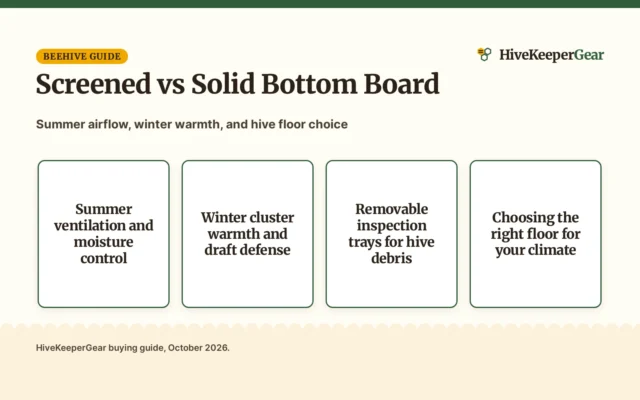
Plastic bottom boards are non-porous and cannot absorb moisture. Internal condensation runs down the hive walls and reaches the floor, where it can pool on flat surfaces unless drained. For both wooden and plastic floors, beekeepers tilt the entire hive slightly forward so running condensation drains outward through the entrance opening rather than collecting beneath the frames. Exploring our comparison of screened vs solid bottom boards explains how open mesh floors alter winter airflow and moisture drainage.
Hive cleaning, propolis removal, and maintenance
During active nectar flows, honey bees glue hive components together with sticky propolis and build burr comb across the floor. Cleaning this buildup during annual spring maintenance requires firm scraping with a metal hive tool.
When working on wooden bottom boards, sharp hive tool edges frequently shave wood fibers, dig into soft grain, and create rough gouges. These damaged spots provide crevices where debris accumulates out of reach of worker bees. Furthermore, cleaning wooden boards requires care to avoid soaking the wood in liquid cleaners, which can lead to swelling or warping.
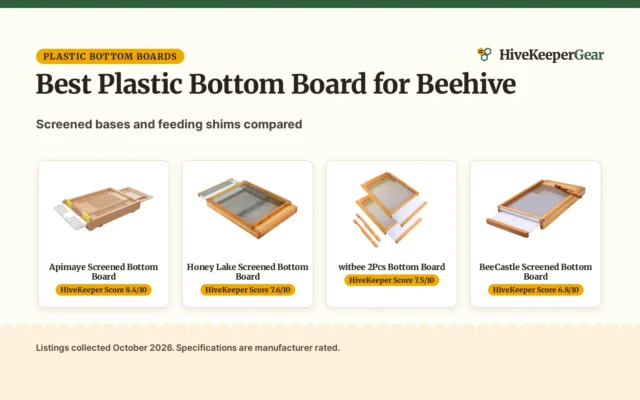
Plastic bottom boards tolerate firm scraping without splintering or grain separation. The dense polymer withstands pressure from scraper blades and stiff scrubbing brushes. When sanitizing equipment between seasons, beekeepers can wash plastic floors with warm soapy water, scrub them clean, and let them dry without fear of swelling, checking, or rot. Keepers who inspect options in our guide to plastic bottom boards often prioritize this effortless cleaning routine.
Weight, hive handling, and stand stability
Handling hive components throughout the active season requires evaluating equipment weight and structural rigidity. Moving brood boxes during splits or rearranging yard layouts demands a floor that stays rigid under shifting loads.
Wooden bottom boards provide solid, rigid weight that anchors the hive base securely. Quality wooden construction, such as timber compared in our cedar beehive vs pine beehive guide, sits flat on hive rails and resists shifting under heavy honey supers. However, when wood absorbs moisture during wet seasons, it gains noticeable weight, making transport more cumbersome.
Plastic bottom boards remain consistent in weight regardless of rain or humidity. Seamless molding eliminates loose nails, shifting side rails, and separated floor cleats. Because the polymer maintains precise factory dimensions, quality plastic floors align cleanly beneath standard wooden brood chambers. Placing plastic floors on fully supported rails with a slight forward pitch is essential for long-term apiary stability and proper drainage.
Seasonal hive floor management
Managing hive floors requires specific attention as seasonal conditions change throughout the beekeeping year. Adapting your maintenance routine ensures healthy airflow and dry brood conditions across every inspection period.
Spring: Lift the bottom brood chamber to scrape winter mortality, dead bees, wax flakes, and propolis from the floor. Check wooden boards for soft spots, fungal rot, or peeling paint, and verify that plastic floors and entrance gaps remain clear of accumulated debris.
Summer: Ensure maximum entrance ventilation during heavy nectar flows. Check that foraging traffic moves smoothly across landing thresholds without bottlenecks, and monitor bottom boards for signs of pest intrusion or debris accumulation.
Fall: Install entrance reducers and hardware guards to keep mice from seeking winter shelter inside warm hives. Confirm that the forward tilt of the hive remains intact so autumn rains drain outward away from the cluster.
Winter: Leave the hive undisturbed during freezing temperatures. Ensure entrance openings stay clear of heavy snow accumulation that could block ventilation, and allow condensation to drain freely without pooling.
Practical tips for apiary setup
- Elevate hive stands well above damp ground using cinder blocks or sturdy timbers to reduce moisture splash against bottom boards.
- Keep grass, weeds, and brush trimmed short around hive entrances to encourage steady airflow and prevent damp vegetation from contacting floor components.
- Tilt the hive slightly forward by elevating the rear of the stand, allowing rainwater and condensation to drain naturally through the entrance opening.
- Keep a spare clean bottom board in the yard storage shed so you can swap soiled boards quickly during early spring inspections without disrupting the brood nest.
What this comparison does not cover
The choice between plastic and wooden bottom boards influences durability and maintenance, but it does not determine colony survival or honey production. Foraging success, honey yields, and brood rearing depend primarily on queen quality, worker population, floral nectar availability, and weather conditions rather than floor material.
Additionally, this guide covers physical hive equipment and does not provide veterinary, chemical, or disease treatment instructions. For guidance on colony health, brood diseases, or local regulations, consult your state apiary inspector or local agricultural extension office.
FAQs for beekeepers
Does a plastic bottom board cause condensation inside the hive?
A plastic bottom board does not generate condensation; hive moisture comes from bee respiration and weather humidity. Because plastic does not absorb moisture, internal condensation runs down to the floor, where a slight forward hive tilt allows it to drain outward through the front entrance.
Can bees chew through a plastic bottom board?
Honey bees cannot chew through the rigid, high-density polymers used in molded plastic bottom boards. The smooth plastic surface provides no purchase for chewing and withstands regular hive tool scraping during hive inspections.
Do wooden bottom boards rot faster than plastic?
Wooden bottom boards exposed to damp soil, wet vegetation, and rain splash soften and rot over seasons unless regularly painted or wax dipped. Plastic bottom boards do not rot from fungal decay or moisture contact, although extended sun exposure can eventually weather outdoor polymers.
Can you use a plastic bottom board with wooden hive boxes?
Plastic bottom boards are molded to standard Langstroth hive dimensions and fit cleanly beneath standard wooden brood chambers and supers. You can mix plastic floors with wooden boxes without fitting issues.
Should I choose a screened or solid bottom board?
Screened bottom boards provide enhanced summer ventilation and allow debris to fall away from the colony, while solid bottom boards block cold wind drafts during harsh winters. Both screened and solid styles are available in plastic and wood.
More hive guides
Browse every guide by category: beehives, protective gear, hive tools and honey harvesting.
Related comparisons: compare screened vs solid bottom boards, explore plastic bottom boards, or read our guide on cedar vs pine beehives.