Wax Coated Hive vs Unpainted Hive: Which One Should You Buy?
Compare wax coated hives and unpainted wooden hives by weather resistance, assembly time, maintenance needs, and wood durability for your apiary.

On this page
Top picks at a glance
As an Amazon Associate I earn from qualifying purchases.
- 1
 BeeCastle 10 Frame Langstroth Bee Hive Coated with Beeswax9.7/10View on Amazon
- 2
 20 Pcs Bee Hive Foundation Beehive Waxed Coated FoundationView on Amazon
- 3
 Mann Lake Hive Body BundleView on Amazon
- 4
 BeeCastle 8 Frame Langstroth Bee Hive Coated with BeeswaxView on Amazon
- 5
 BeeCastle 8 Frame Medium Super Bee Hive BoxView on Amazon
- 6
 BeeCastle 10 Frame Langstroth Bee Hive Coated with 100%View on Amazon
During early spring inspections, as melting snow and seasonal rains soak the apiary, checking wooden boxes for moisture damage is a routine chore. Choosing between a wax coated hive vs unpainted hive determines how much preparation you must do before housing a colony and how well your wooden boxes resist damp weather over the seasons. A wax coated hive arrives ready for bees with wax boiled or dipped deep into the wood grain, repelling water immediately. An unpainted hive arrives as bare, raw wood that you can leave untreated for an all-natural setup or paint to your own specifications. Deciding between them comes down to whether you prefer factory weatherproofing straight out of the box or want the flexibility to finish your own wooden supers.
Other hives and gear to compare
 20 Pcs Bee Hive Foundation Beehive Waxed Coated FoundationCheck price on Amazon
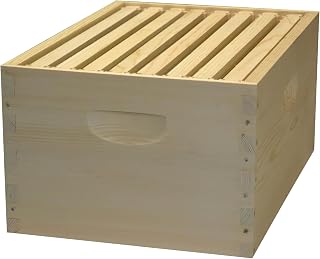 Mann Lake Hive Body BundleCheck price on Amazon
 BeeCastle 10 Frame Langstroth Bee Hive Coated with BeeswaxCheck price on Amazon
 BeeCastle 8 Frame Langstroth Bee Hive Coated with BeeswaxCheck price on Amazon
 BeeCastle 8 Frame Medium Super Bee Hive BoxCheck price on Amazon
 BeeCastle 10 Frame Langstroth Bee Hive Coated with 100%Check price on Amazon
HiveKeeperGear earns a commission when you buy through links on this site, at no extra cost to you. As an Amazon Associate I earn from qualifying purchases. Affiliate disclosure.
At a glance: wax coated hive vs unpainted hive
Both hive styles house standard Langstroth frames and protect colonies during the flow and winter cluster. The difference lies entirely in exterior wood protection, out-of-box readiness, and how you manage weather exposure over multiple seasons.
| Feature | Wax Coated Hive | Unpainted Hive |
|---|---|---|
| Exterior protection | Beeswax or wax blend dipped into outer wood pores | Raw bare wood; can be left natural or painted |
| Setup readiness | Ready to house bees immediately after box assembly | Ready immediately if left natural, or requires painting and drying |
| Interior hive walls | Natural wood fibers or bee-safe wax; bees apply propolis | Bare untreated wood; bees apply propolis |
| Joint protection | Wax penetrates pre-cut dovetail seams and end grain | Raw joints absorb moisture unless sheltered or painted |
| Custom appearance | Natural amber or golden wood grain showing through wax | Can be left to weather naturally or painted any custom color |
| Maintenance over time | Can be re-waxed with molten wax or painted once weathered | Maintained bare or repainted periodically if painted |
Moisture protection and wood preservation
Moisture from rain, melting snow, and humid weather is the primary threat to exterior wooden apiary equipment. When raw lumber absorbs rainwater, the timber expands across the grain. This seasonal swelling stresses joints, loosens fasteners, and causes box corners to gap. Over extended exposure, moisture trapped inside unsealed wood allows rot fungi to soften box walls.
A wax coated hive protects against exterior wetness by saturating wood pores with molten beeswax or a high-temperature wax blend. Because wax naturally repels water, rain beads on outer surfaces and runs off rather than soaking into the grain. The wax treatment seals corners, handle recesses, and dovetail joints where water typically penetrates, reducing swelling and wood decay from outdoor exposure.
An unpainted hive provides no exterior water barrier. Raw wood absorbs rain directly, leading to surface weathering, joint movement, and faster decay unless protected. Beekeepers who choose unpainted equipment can leave it bare for an all-natural hive or apply exterior primer and outdoor paint to create a moisture-resistant protective barrier on outer surfaces.
Assembly and preparation effort
Timing matters when ordering apiary gear before packages or nucleus colonies arrive. Assembling equipment and preparing boxes must be finished before pickup day.
A wax coated hive provides an immediate advantage in setup time. Once the dovetail joints are fastened with screws or nails, the boxes can go straight onto a hive stand in the bee yard. There is no waiting for paint to dry, no sanding rough spots, and no paint fumes to dissipate. For beekeepers installing colonies on short notice or expanding an apiary during spring buildup, wax dipping eliminates preparation delay.
An unpainted hive offers different preparation paths. If you plan to leave the wood bare, you can assemble the panels and place the boxes directly into service. However, if you choose to paint your boxes for extra weather protection, you must account for prep time. Painting involves wiping away sawdust, applying an exterior wood primer to seal porous end grain, and applying durable exterior latex paint. Each coat requires time to dry completely, and freshly painted boxes must air out so odors disperse before bees move into the brood chamber. Beekeepers who plan to paint unpainted boxes must assemble and paint their gear well ahead of arrival day.
Hive interior: why neither hive is painted inside
Regardless of whether you select a wax coated hive or an unpainted hive, the interior walls of your brood boxes and honey supers should never be painted or treated with chemical preservatives. Bees thrive in a hive environment where they regulate internal microclimates and seal gaps with propolis. Propolis contains antimicrobial compounds gathered from tree resins that help sanitize hive walls.
Never apply paint, stain, or chemical wood preservatives to the interior surfaces of a beehive. Paint inside a hive traps humidity inside the colony, prevents propolis adhesion, and exposes bees to chemical off-gassing. For wax-coated hives, natural beeswax on interior surfaces is bee-friendly and safe for the colony. For unpainted hives, interior wood remains completely bare so bees can interact directly with the timber.
Standard Langstroth dimensions and kit configurations
Both wax-coated and unpainted boxes adhere to standard Langstroth specifications. This sizing consistency allows beekeepers to mix components across different brands without worrying about frame spacing or box alignment.
Commercial wax-coated kits demonstrate how manufacturer dimensions align with standard Langstroth sizing. For example, ThxBees lists its wax-coated 10-frame hive setup with a deep brood box measuring 16-1/4 by 19-7/8 by 9-5/8 inches and a medium super measuring 16-1/4 by 19-7/8 by 6-5/8 inches, with the complete kit weighing 44 pounds. That kit includes 1 top cover, 1 inner cover, 1 medium honey super box, 1 queen excluder, 1 deep brood box, 1 solid bottom board, 1 entrance reducer, 10 deep frames, and 10 medium frames with beeswax-coated plastic foundation sheets. Precision dovetail joints and pre-drilled holes ensure square, tight box corners.
For individual supers, MayBee lists an assembled wax-coated 10-frame medium super measuring 19.9 by 16.3 by 6.6 inches made of fir with dovetail joints, accompanied by 10 New Zealand pine frames and 10 food grade plastic foundation sheets dipped in beeswax, with a package weight of 12.8 pounds. Standard 10-frame Langstroth boxes, whether wax-coated or unpainted, share compatible exterior dimensions, meaning an unpainted medium super fits neatly on top of a wax-coated brood chamber. Beekeepers can use beehive frames and foundation sheets interchangeably across both types.
Wax coated hive vs unpainted hive: which one should you buy?
Choosing between these two options depends on your available preparation time, aesthetic preference, and long-term maintenance approach.
Choose a wax coated hive if:
- You want equipment ready for bees immediately with built-in moisture protection.
- You appreciate the natural golden look of wood grain in the apiary rather than painted boxes.
- You want deep wax penetration into joints and end grain where moisture damage usually starts.
- You have packages or nucleus colonies arriving soon and need functional boxes assembled right away.
Choose an unpainted hive if:
- You want an all-natural wooden hive with no coatings or treatments on the exterior.
- You enjoy woodworking and want to paint your own hives in distinctive colors or patterns.
- You manage multiple colonies and use colored box fronts to help returning foragers and queens navigate.
- You already have quality exterior latex paint available and want full control over the exterior coating.
Long-term durability and maintenance
All apiary equipment degrades over years of outdoor exposure to solar ultraviolet rays, rain, and winter frost. Understanding how each finish ages helps plan maintenance routines between seasons.
Wax coatings slowly weather on south-facing box walls exposed to direct sunlight and driving rain. The surface wax gradually thins over multiple seasons, but the wax impregnated into the wood pores continues to repel moisture. When recoating is eventually needed, beekeepers can brush molten beeswax over dry surfaces or paint directly over the weathered timber once surface wax has oxidized.
Unpainted hives left bare weather to a natural silver-gray patina over time. Without a coating, the wood breathes freely, but seasonal rain cycles will cause surface checking and gradual joint wear. If you choose to paint an unpainted hive, the paint provides a durable barrier against moisture as long as the film stays intact. However, painted boxes require ongoing maintenance, including scraping and repainting when paint blisters or flakes.
What is not included with hive boxes
Whether you purchase a wax-coated kit or unpainted boxes, standalone boxes do not make a complete working apiary. You must also plan for a sturdy hive stand to keep bottom boards off damp ground and away from crawling pests. Check our guides on 10-frame kits and 8-frame kits to compare complete configurations. In addition, you will need protective gear, a smoker, hive tools, and feeding equipment before installing bees.
FAQs for beekeepers
Can you leave an unpainted beehive outside without painting it?
You can keep an unpainted hive bare if you prefer an untreated setup, though raw wood absorbs rain and weathers faster than wax-treated timber. Many beekeepers paint the exterior to extend the lifespan of unpainted boxes.
Should you paint the inside of a beehive?
Never paint the inside of a beehive or apply chemical wood sealants. Interior walls should remain bare wood or bee-safe natural wax, allowing bees to regulate humidity and coat surfaces with propolis.
Can you paint over a wax coated beehive later?
Fresh wax prevents paint from adhering properly to the wood surface. Once a wax-coated hive has weathered outdoors for multiple seasons and the surface wax oxidizes, exterior latex paint can adhere to the dry timber.
Does beeswax coating melt in hot summer weather?
High-temperature dipping penetrates deep into the cellular structure of the wood rather than sitting as a thick topical layer. While intense summer sun softens surface wax slightly, the coating remains bonded inside the wood pores.
How does a wax coated hive compare to an unpainted hive for moisture protection?
A wax-coated hive sheds exterior rain and melting snow because wax fills the wood pores. An unpainted hive allows raw wood to absorb rain directly, making ventilation and dry placement especially important to prevent damp wood and rot.
More hive guides
Browse every guide by category: beehives, Langstroth hives, 8-frame hives, and hive frames.
More comparisons: see our guides on wax dipped vs painted beehives, assembled vs unassembled bee hives, cedar vs pine beehives, and Langstroth beehive kits.