Wax Coated vs Bare Plastic Foundation: Which One Should You Buy?
Wax coated vs bare plastic foundation compared on comb acceptance, hive durability and preparation effort to help beekeepers choose the right sheets for honey supers and brood boxes.

On this page
Top picks at a glance
As an Amazon Associate I earn from qualifying purchases.
- 1
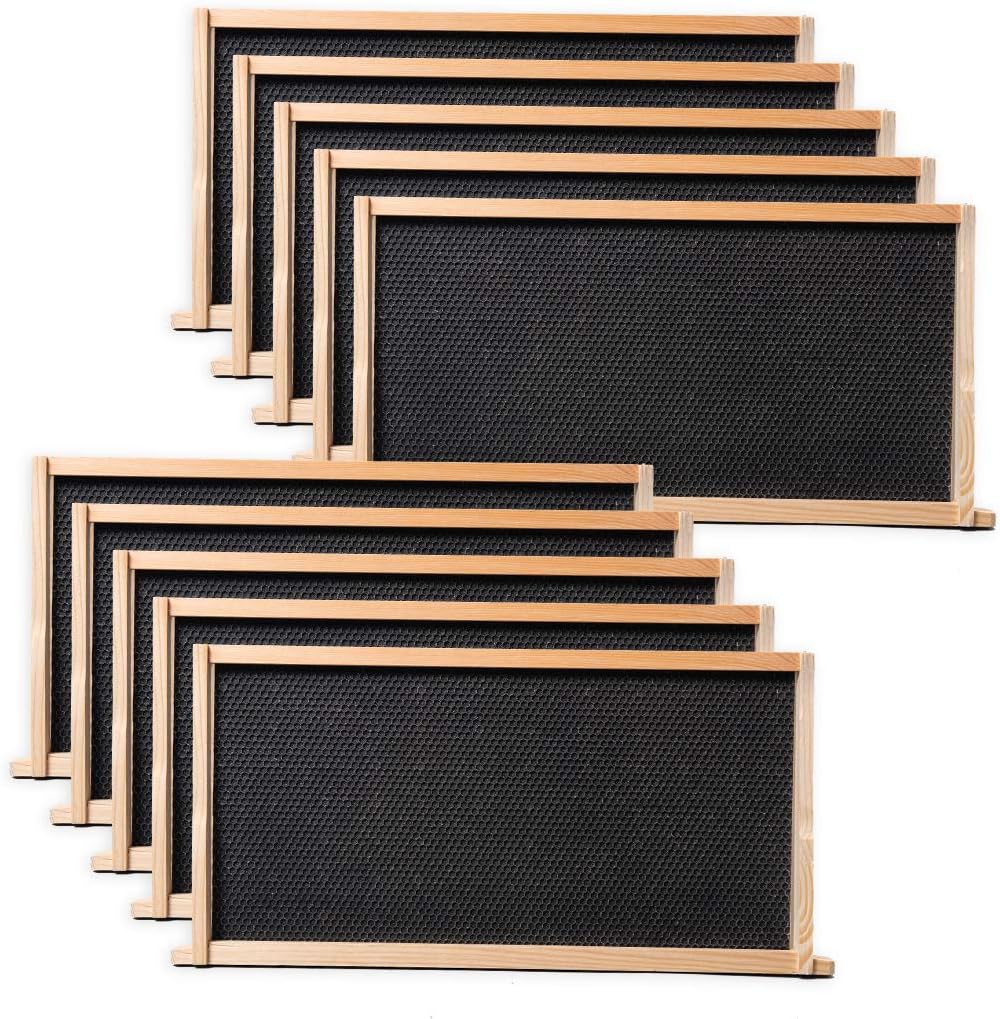 BeeCastle 10 Pack Beehive Frames and Wax Foundations for Deep9.7/10View on Amazon
- 2
 Honey Lake 20 Pack Deep Beehive Frames Kit with Durable9.6/10View on Amazon
- 3
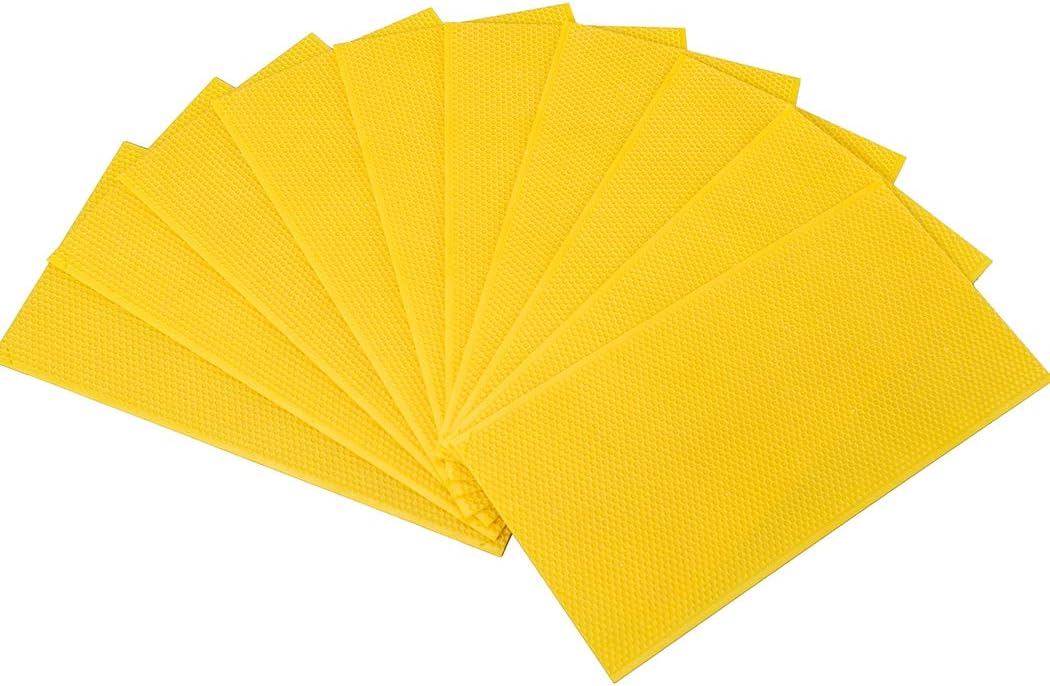 BeeCastle 10-Pack Beeswax Coated Plastic Foundation Sheets9.5/10View on Amazon
- 4
 POLLIBEE Beehive Foundation SheetsView on Amazon
- 5
 20Pcs Beehive Foundation Sheet Beehive Beeswax CoatedView on Amazon
- 6
 BeeCastle Heavy Wax Coated Unassembled Langstroth Deep/BroodView on Amazon
- 7
 BeeCastle Heavy Wax Coated Langstroth Unassembled Deep/BroodView on Amazon
- 8
 BeeCastle 20pcs Yellow Beehive Beeswax Coated FoundationView on Amazon
During spring hive inspections as colonies expand and require new space for brood and honey storage, choosing between wax coated vs bare plastic foundation determines how smoothly bees draw out new comb. You should buy wax-coated plastic foundation for almost every hive setup because honeybees readily accept plastic sheets pre-coated with natural beeswax, whereas bees frequently reject bare plastic foundation or draw irregular, messy burr comb across the frame unless you apply beeswax by hand. Investing in pre-waxed foundation saves substantial preparation effort and helps worker bees build straight, uniform comb that aligns properly within Langstroth hive equipment.
Other hives and gear to compare
 POLLIBEE Beehive Foundation SheetsCheck price on Amazon
 20Pcs Beehive Foundation Sheet Beehive Beeswax CoatedCheck price on Amazon
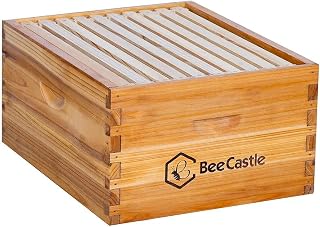 BeeCastle Heavy Wax Coated Unassembled Langstroth Deep/BroodCheck price on Amazon
 BeeCastle Heavy Wax Coated Langstroth Unassembled Deep/BroodCheck price on Amazon
 BeeCastle Yellow Beehive Wax Coated Foundation SheetCheck price on Amazon
 BeeCastle 20pcs Yellow Beehive Beeswax Coated FoundationCheck price on Amazon
HiveKeeperGear earns a commission when you buy through links on this site, at no extra cost to you. As an Amazon Associate I earn from qualifying purchases. Affiliate disclosure.
Before you buy: how foundation works in the hive
Foundation sheets sit inside wooden or plastic frames to provide a straight central midrib with embossed hexagonal cell bases. In nature, honeybees produce wax from abdominal wax glands to construct comb. Drawing comb requires substantial nectar consumption and colony energy. When beekeepers install foundation, the embossed pattern directs the bees to build orderly worker cells. The central debate between wax coated and bare plastic foundation comes down to how bees perceive the surface: while colonies under a heavy nectar flow can sometimes draw comb on bare plastic, bees frequently hesitate, stall, or build irregular comb on synthetic plastic unless they detect the familiar scent and texture of natural beeswax.
Wax coated vs bare plastic foundation: key differences
| Comparison Factor | Wax Coated Plastic Foundation | Bare Plastic Foundation |
|---|---|---|
| Bee acceptance | High; bees recognize natural beeswax coating immediately | Poor; bees hesitate or refuse to draw on bare plastic |
| Comb structure | Straight, uniform worker comb aligned with frame bars | Frequent burr comb, bridge comb, or irregular drone comb |
| Installation effort | Ready to snap into grooved frames directly from the package | Recommended to coat with molten beeswax before installation |
| Extraction durability | Rigid plastic core resists blowout under centrifugal force | Rigid plastic core resists blowout under centrifugal force |
| Material base | Rigid plastic sheet coated with natural beeswax | Rigid plastic sheet without beeswax coating |
| Reusability | Can be scraped clean and recoated with wax for reuse | Can be cleaned and recoated with wax before reuse |
1. Comb acceptance and bee behavior
The primary challenge with plastic foundation in backyard beekeeping is comb acceptance. Honeybees naturally construct wax comb from scratch or build upon existing wax. When presented with bare plastic, worker bees often treat the smooth polymer surface as a barrier rather than a foundation. Under weak nectar flows, colonies placed on bare plastic sheets may refuse to draw comb entirely, clustering on the frame without building or constructing bridge comb that connects adjacent frames. In contrast, pre-coated foundation features a layer of natural beeswax bonded directly to the embossed cell walls, ranging from light factory coatings to thicker applications. The wax scent signals to comb-building worker bees that the sheet is an active building site. Worker bees quickly anchor fresh wax scales to the coated ridges and draw uniform cells. To compare plastic and pure wax alternatives, see our guide to plastic vs wax foundation.
2. Durability and extraction strength
Both bare and wax-coated foundations share the same underlying mechanical structure: a rigid sheet molded from durable plastic. In high-speed motorized or manual extractors, pure wax foundation without reinforcement risks tearing or blowing out from centrifugal force and honey weight. Plastic foundation addresses this vulnerability by providing a rigid, deformation-resistant backbone. Because the plastic sheet does not deform or stretch, beekeepers can extract dense honey supers efficiently without blowing out the comb foundation. Furthermore, plastic foundation resists damage from wax moth larvae, which tunnel through wax comb but cannot penetrate the solid plastic center. For an overview of frame options, consult our review of beehive frames.
3. Dimensions and frame compatibility
Plastic foundation sheets are engineered to match standard Langstroth hive boxes, which come in deep brood bodies and medium honey supers. Manufacturer listings publish specific dimensions to fit into standard grooved top and bottom frame bars without requiring support pins or wiring.
In medium frames, BeeCastle lists its 10-pack of 5-5/8-inch medium foundation at 16.65 by 5.51 inches with a package weight of 3.34 pounds, suited for medium frames. NUOMIC publishes dimensions of 16.73 by 5.5 by 3 inches for its 20-pack of medium foundation weighing 4.84 pounds, noting compatibility with both 8-frame and 10-frame medium supers.
For deep brood boxes, POLLIBEE lists its 10-pack of 8-1/2-inch deep foundation at 16.65 by 8.26 inches with an item weight of 4.16 pounds, matching deep frames. BEEINN publishes dimensions of 16.65 by 8.26 inches for its pack of 10 deep foundation sheets designed to fit deep frames. BeeCastle lists a 20-pack of deep sheets measuring 16.65 by 8.26 inches (42.2 by 20.98 cm) weighing 7.96 pounds for Langstroth deep frames. Additional deep listings include witbee, which publishes deep sheets measuring 16.73 by 8.35 inches (42.5 by 21.2 cm) weighing 7.39 pounds with a 20-sheet pack for 9-inch deep frames, and Seeloowy, which lists deep sheets at 16.73 by 8.35 by 0.12 inches (42.5 by 21.2 by 0.3 cm) weighing 7.94 pounds in a 20-pack. NUOMIC lists its 20-pack of deep foundation at 16.73 by 8.35 by 3 inches weighing 7.04 pounds, built for 8-frame and 10-frame deep Langstroth hive frames. To learn more about box depths, read our comparison of deep vs medium frames and our guide to types of bee hive frames.
4. Sheet color for brood and honey
Plastic foundation sheets are commonly manufactured in distinct colors, primarily black and yellow.
Black foundation is widely favored for deep brood boxes. The dark background creates high visual contrast against pearly white honeybee eggs and young larvae, allowing beekeepers during inspections to confirm the queen is laying without straining their eyes in bright sunlight.
Yellow foundation mirrors the color of natural wax and is widely favored in medium honey supers. The lighter hue resembles natural comb and maintains a bright, traditional appearance during the honey flow. When replacing older foundation, beekeepers often clean old wax down to the plastic midrib; learn more in our walkthrough on cleaning bee frames for reuse.
5. Wax coating and hive preparation
The wax coating applied at the factory varies between suppliers. Listing details from witbee note an upgraded 100% pure natural beeswax coating that thickens the wax layer to increase bee attraction. Pre-waxed listings across manufacturers specify plastic sheets with natural beeswax coating to encourage rapid building.
If you purchase bare plastic foundation, coating the sheets with beeswax before hive installation is strongly recommended for dependable comb acceptance. Beekeepers coat bare sheets by melting pure cappings beeswax in a double boiler and applying an even layer across the embossed cell bases using a foam paint roller. The wax must be warm enough to bond with the plastic ridges without pooling in the cell bottoms. Even with pre-waxed foundation, some beekeepers choose to apply an extra layer of wax to encourage bees to draw comb without hesitation during periods of light forage.
Season timing for drawing foundation
Honeybees draw fresh foundation most effectively when favorable conditions are met: warm hive temperatures and an abundant nectar flow. Wax glands produce wax scales only when worker bees consume surplus nectar or sugar syrup.
During spring buildup and the main summer flow, worker bees readily draw out wax-coated foundation sheets in brood boxes and supers. If foundation is introduced during a nectar dearth or late in autumn, bees will ignore the sheets or chew away the factory wax coating, leaving bare plastic exposed. In the brood chamber, placing a wax-coated frame between drawn brood frames during an active nectar flow encourages the colony to draw flat, uniform comb across the sheet. In honey supers, adding a full box of foundation at once prevents bees from bulging adjacent drawn honey frames into the empty space.
Practical tips for straight comb
- Install foundation firmly into grooved top and bottom frame bars to prevent sheet bowing or sagging under the weight of bees and honey.
- Feed light sugar syrup to newly installed colonies or swarms on foundation until the brood nest is drawn out.
- Keep frames pushed tightly together in the center of the hive box to maintain standard bee space and prevent wild comb between top bars.
- When adding foundation to honey supers, install a full super of foundation rather than alternating single sheets with drawn honey frames, which prevents bees from expanding adjacent comb extra deep.
- Store spare waxed foundation sheets flat in a cool, dry area away from direct heat to prevent the beeswax coating from melting or cracking.
What is not covered in this guide
This guide compares wax coated and bare plastic foundation sheets for standard hive frames. It does not cover frame assembly hardware, nails, or pneumatic staplers. For medical, pest management, and mite treatment advice, consult your state apiary inspection program or local agricultural extension office.
FAQs for beekeepers
Can honeybees draw comb on bare plastic foundation?
Honeybees can occasionally draw comb on bare plastic during an intense nectar flow, but they frequently hesitate, stall, or build irregular burr comb. Pre-waxed foundation provides the familiar scent and wax base needed for dependable comb building.
Why do manufacturers sell bare plastic foundation?
Bare plastic foundation is sold for beekeepers who prefer to apply their own local cappings wax with a foam roller. Coating bare sheets by hand requires extra preparation time and clean beeswax before installation.
What is the difference between black and yellow plastic foundation?
Black foundation provides high contrast for spotting white eggs and larvae in brood frames. Yellow foundation resembles natural beeswax and is widely used in honey supers to maintain a bright, traditional comb appearance.
What frame sizes do plastic foundation sheets fit?
Listing specifications show deep foundation sheets measuring 16.65 by 8.26 inches or 16.73 by 8.35 inches (listed as 8-1/2-inch or 9-inch deep foundation) to fit deep frames, while medium foundation sheets measure 16.65 by 5.51 inches or 16.73 by 5.5 inches (listed as 5-5/8-inch medium foundation) to fit medium frames in 8-frame and 10-frame Langstroth equipment.
Can plastic foundation be reused after old comb is damaged?
Yes. Plastic foundation features a rigid plastic core that resists deformation. Beekeepers can scrape damaged comb down to the embossed plastic base and apply a fresh coat of beeswax to reuse the sheet.
More hive guides
See every hive frames guide and all beehives guides.
More picks: Compare plastic foundation for bee frames, explore beehive frames with wax foundation, review deep frames for brood rearing, and check medium frames for honey supers.