Deep vs Medium Frames: Which One Should You Buy?
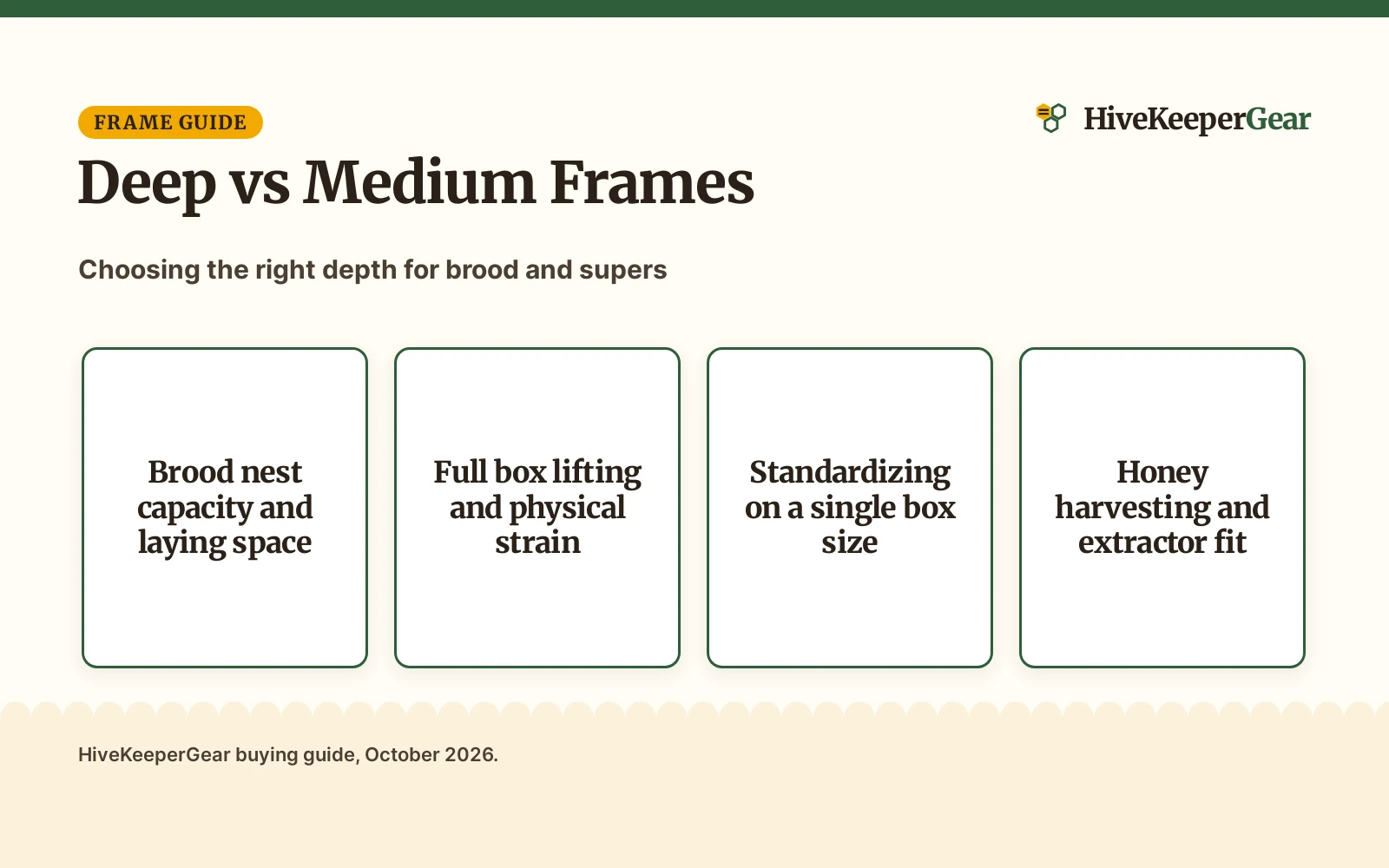
A practical comparison of deep and medium frames, covering brood space, honey super lifting weights, and equipment uniformity for backyard hives.

On this page
Top picks at a glance
As an Amazon Associate I earn from qualifying purchases.
- 1
 BeeCastle Heavy Wax Coated Langstroth Unassembled Deep/Brood9.6/10View on Amazon
- 2
 Hoover Hives Wooden Deep FramesView on Amazon
- 3
 Deep Frames Langstroth Size Deep Brood Beehive Frames with 65View on Amazon
- 4
 BeeCastle Heavy Wax Coated Unassembled Langstroth Deep/BroodView on Amazon
- 5
 Mann Lake 9 1/8" Deep Unassembled Beekeeping FramesView on Amazon
- 6
 Mann Lake 6 1/4" Deep Unassembled Beekeeping FramesView on Amazon
During a routine spring inspection, lifting a full hive body off the bottom board quickly reminds every beekeeper why the choice between deep vs medium frames matters. For most backyard beekeepers, deciding between these frame depths comes down to a balance between uninterrupted brood area and manageable lifting weight. Deep frames provide large, continuous sheets of comb ideal for brood rearing, while shallower medium frames keep full honey supers manageable and prevent back strain. In this guide, we compare brood development, lifting weight, equipment interchangeability, and extractor compatibility to help you choose the right frame setup for your apiary.
Other hives and gear to compare
 Hoover Hives Wooden Deep FramesCheck price on Amazon
 Deep Frames Langstroth Size Deep Brood Beehive Frames with 65Check price on Amazon
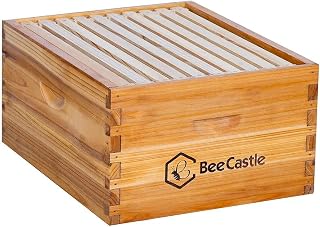 BeeCastle Heavy Wax Coated Unassembled Langstroth Deep/BroodCheck price on Amazon
 BeeCastle Heavy Wax Coated Langstroth Unassembled Deep/BroodCheck price on Amazon
 Mann Lake 9 1/8" Deep Unassembled Beekeeping FramesCheck price on Amazon
 Mann Lake 6 1/4" Deep Unassembled Beekeeping FramesCheck price on Amazon
HiveKeeperGear earns a commission when you buy through links on this site, at no extra cost to you. As an Amazon Associate I earn from qualifying purchases. Affiliate disclosure.
Deep vs medium frames: how they compare
Choosing frame equipment determines the physical routine of your bee yard across every season, from spring buildup through summer nectar flows and autumn winter preparations. Langstroth hives rely on standardized wooden or plastic frames suspended inside rectangular boxes, but the vertical depth of those frames changes how bees arrange their nest and how much weight you must lift during hive checks. The comparison below outlines how deep and medium frames function across core apiary tasks.
| Feature | Deep frames | Medium frames | Our guide |
|---|---|---|---|
| Primary hive role | Brood nest chambers and winter cluster area | Honey supers or entire hive standardization | Deep frames for brood rearing |
| Lifting strain | Heavy box weight requiring strong physical effort | Moderate box weight suitable for solo lifting | Deep vs medium hive boxes |
| Comb surface area | Large continuous face for uninterrupted laying | Smaller comb face split across stacked boxes | Types of bee hive frames |
| Interchangeability | Limited to deep brood boxes | Swappable between brood boxes and honey supers | Medium frames for honey supers |
| Extractor fit | Requires extractors designed for deep frame height | Fits most standard radial, tangential, and manual extractors | Honey extractors |
| Foundation choices | Wired wax or plastic coated with beeswax | Wax foundation, plastic foundation, or cut comb | Beehive frames |
Brood rearing and queen laying patterns
The queen honey bee lays eggs in an expanding pattern from the center of the comb outward in broad circular sweeps, forming a spherical brood cluster across neighboring frames. Deep frames accommodate this natural pattern with ease because their vertical height provides a generous, uninterrupted surface of comb. A queen working on a deep frame can lay across an expansive sheet of wax without encountering wooden obstacles, surrounded by a natural crescent of pollen stores and capped honey along the top bar.
In contrast, using medium frames for brood rearing requires dividing the brood nest across stacked boxes. Between each box tier, the colony encounters the bottom bar of the upper frame, the top bar of the lower frame, and the empty bee space between boxes. This wooden barrier creates a physical gap in the brood comb. During spring buildup, prolific queens must walk across this gap to continue laying in the box above or below. While bees handle this division readily once nectar flows begin, colonies often expand upward slightly more slowly across wooden breaks than they do across continuous deep wax comb.
For beekeepers who prioritize maximizing brood volume with fewer frame manipulations, deep boxes remain the traditional choice for the brood chamber. A queen laying across deep brood boxes has ample room to maintain strong colony population without forcing the beekeeper to pry apart extra box seams during weekly brood evaluations.
Box weight and physical lifting strain
Beekeeping is rewarding work, but lifting boxes filled with capped honey, dense brood, and propolis places substantial strain on the body. Lifting a deep box filled with capped honey or dense brood and propolis represents among the heaviest lifting tasks in the apiary. Prying a propolis-glued deep box loose with a hive tool, twisting to clear the hive stack, and setting that weight aside during an inspection can quickly lead to fatigue or back strain. Even checking the bottom brood box during spring requires removing and setting aside every box stacked above it.
Medium boxes resolve this physical challenge by reducing the overall volume of comb per box. Because medium frames are significantly shallower than deep frames, a full medium box holds far less honey and comb mass than a deep box of identical width. This reduced volume transforms a grueling lift into a manageable task that a solo beekeeper can handle comfortably throughout an afternoon in the apiary. For beekeepers managing back discomfort or anyone working without a lifting partner, medium boxes provide the leverage and safety needed to sustain the craft across many seasons.
When planning your hive setup, consider your physical comfort honestly. While a colony thrives in either configuration, an apiary built around manageable lifting weight ensures that hive inspections remain a pleasure rather than a physical chore.
Equipment uniformity and interchangeability
A significant decision in setting up an apiary is whether to maintain different frame sizes or standardize on uniform frame height throughout every hive. The conventional Langstroth configuration combines deep boxes for the brood nest with medium boxes for honey supers. This hybrid arrangement offers distinct advantages: the bees enjoy deep combs for egg laying and winter clustering, while the beekeeper lifts lighter medium supers when harvesting surplus honey. The downside is that deep frames and medium frames cannot swap places. A deep frame brimming with nectar cannot hang inside a medium honey super, and moving brood upward to relieve congestion requires specialized box shuffling.
Standardizing entirely on medium equipment solves this dilemma completely. When every box in your storage shed and bee yard shares identical medium height, every frame fits everywhere. If a colony in spring needs extra honey stores, you can pull a medium honey frame from another hive and place it directly into the brood nest. If you discover a swarm cell or want to make a hive split, you can move frames freely between boxes without worrying about bottom bars hitting the box floor or frames hanging past the bottom rim.
The trade-off with an all-medium setup is equipment volume. Because medium frames hold less comb than deep frames, providing equivalent brood and storage space requires adding extra boxes and assembling more total frames. An inspection of an all-medium colony involves lifting and examining more individual wooden frames to evaluate the queen and monitor stores. For many keepers, however, the convenience of universal parts and lighter lifting far outweighs the effort of handling additional frames.
Honey harvesting and extractor compatibility
When the main nectar flow concludes and supers fill with golden honey, the frame size you chose dictates how smoothly the harvest proceeds. Medium frames represent the overwhelming standard for honey supers across backyard apiaries. Beyond their lighter lifting weight, medium combs are structurally sturdier during processing. Because the wax sheet inside a medium frame is shorter, it resists sagging and withstands the rotational forces of centrifugal honey extractors far better than tall deep combs.
Extracting deep frames presents logistical hurdles for hobbyists. While some extractors accommodate deep frames, many compact manual extractors accept medium and shallow frames only, or require turning deep frames individually to spin each side. Furthermore, uncapping a deep frame requires longer strokes with an uncapping knife, increasing the chance of gouging fresh comb. Beekeepers interested in harvesting cut comb honey also find medium frames practical, as shallower comb built on thin surplus wax or foundationless frames holds its shape well when sliced into comb sections. You can review manual and powered options in our guide to honey extractors, alongside our overview of uncapping tools.
Winter clustering and cold climate management
As autumn temperatures drop, honey bees cease foraging and gather into a tight cluster to conserve warmth within the hive. The cluster centers over empty cells in the lower comb and slowly shifts upward through capped honey stores as winter progresses. In a hive configured with deep brood boxes, the taller frames provide generous vertical bands of continuous honey within each box, reducing the number of wooden frame gaps the cluster must navigate during winter. This taller comb area helps bees reach food reserves steadily, even during prolonged sub-freezing spells when the cluster moves upward.
Colonies wintering in stacked medium boxes must negotiate additional wooden frame bars and bee space between tiers as they move upward through multiple box seams toward honey reserves. In cold northern climates, a small cluster can occasionally hesitate to bridge the chilly gap between stacked boxes during severe cold snaps. Strong colonies with ample autumn feeding bridge these seams routinely, particularly when the beekeeper leaves full medium honey supers directly above the cluster. For box construction details, explore our guide to Langstroth hives.
FAQs for beekeepers
Can you put medium frames into a deep hive box?
Medium frames can physically hang from the frame rests of a deep box, but the empty space beneath the bottom bar creates serious problems. Bees instinctively draw wild comb and drone cells downward from the bottom bar into the vacant void, bridging comb to the frames or surface below and making routine hive inspections difficult.
Can you put deep frames into a medium hive box?
Deep frames cannot hang inside a medium box because the wooden side bars are too tall for the box depth. A deep frame placed into a medium box protrudes past the bottom rim, preventing the box from resting flush on the hive body or bottom board below.
Why do many beekeepers choose an all-medium hive setup?
An all-medium configuration eliminates heavy box lifting and ensures that every box, frame, and sheet of foundation in the apiary is completely interchangeable. This allows beekeepers to move honey frames or brood frames anywhere across colonies without equipment mismatches.
Are deep frames better for wintering bees than medium frames?
Deep frames provide continuous sheets of comb with fewer wooden seams across the winter cluster path, allowing bees to move smoothly upward through honey stores during extended freezing weather. Medium boxes winter successfully as well, provided colonies are strong and enter autumn with full stores above the cluster.
Which frame size is easier to harvest with a honey extractor?
Medium frames are significantly easier to harvest because their shorter comb face holds up securely against centrifugal force in the extractor basket. They fit standard extractors without clearance issues and uncap quickly with standard apiary knives.
More hive guides
Browse our guides by category: hive frames, beehives, hive tools, and honey harvesting.
More comparisons: see our guides to deep vs medium hive boxes, plastic vs wood bee frames, and types of bee hive frames.