Wax Dipped vs Painted Beehive: Which One Should You Buy?
Compare wax dipped and painted beehives across wood rot protection, paint drying time, long-term maintenance, and thermal performance to choose the right hive.

On this page
Top picks at a glance
As an Amazon Associate I earn from qualifying purchases.
- 1
 8-Frame Beehive Starter Kit9.7/10View on Amazon
- 2
 POLLIBEE 10 Pack Beehive Frames with Wax Dipped PlasticView on Amazon
- 3
 Hoover Hives 10-Frame Medium Super BoxView on Amazon
- 4
 BeeCastle 2 Pcs Beehive Screened Bottom Board Dipped inView on Amazon
- 5
 BeeCastle Beehive Screened Bottom Board Dipped in 100% BeeswaxView on Amazon
- 6
 MayBee 10-Frame Langstroth Beehive Dipped in BeeswaxView on Amazon
- 7
 8-Frame Beehive Box Langstroth Deep Brood Box Dipped inView on Amazon
When preparing woodenware ahead of spring colony arrival, deciding between a wax dipped vs painted beehive comes down to immediate readiness and deep rot prevention versus custom heat reflection and simple brush touch-ups. A wax dipped beehive arrives sealed through hot wax immersion that penetrates deep into the wood grain, creating a durable moisture barrier that requires no paint drying time before bees are installed. In contrast, a painted beehive uses exterior latex paint over primer, protecting outer surfaces while allowing beekeepers to choose light colors that reflect summer sunlight. For apiaries where wet ground causes wood rot, wax dipping provides thorough protection without ongoing painting, whereas beekeepers in hot, sunny regions who want light-colored boxes often choose painted hives.
Other hives and gear to compare
 POLLIBEE 10 Pack Beehive Frames with Wax Dipped PlasticCheck price on Amazon
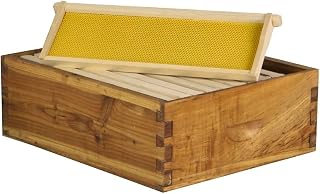 Hoover Hives 10-Frame Medium Super BoxCheck price on Amazon
 BeeCastle 2 Pcs Beehive Screened Bottom Board Dipped inCheck price on Amazon
 BeeCastle Beehive Screened Bottom Board Dipped in 100% BeeswaxCheck price on Amazon
 MayBee 10-Frame Langstroth Beehive Dipped in BeeswaxCheck price on Amazon
 8-Frame Beehive Box Langstroth Deep Brood Box Dipped inCheck price on Amazon
HiveKeeperGear earns a commission when you buy through links on this site, at no extra cost to you. As an Amazon Associate I earn from qualifying purchases. Affiliate disclosure.
Before you buy: how wood preservation works
Backyard apiaries place heavy weather demands on wooden equipment. A wooden beehive must withstand rain, snow, sun, and damp soil while managing moisture generated by bees clustering inside. When raw wood absorbs water, joints swell and wood rot begins. Beekeepers protect wooden Langstroth hives by dipping boxes in molten wax or applying exterior paint. Paint forms an outer surface film, while wax dipping forces hot wax deep into timber pores. Understanding how each barrier works helps you choose the right finish before bees arrive.
Wax dipped vs painted beehive: comparison overview
| Comparison factor | Wax dipped beehive | Painted beehive | Key consideration |
|---|---|---|---|
| Wood penetration | Deep immersion into timber pores | Surface-level coating | Wax seals joints and end grain |
| Finish prep time | No painting or paint drying needed | Requires primer, paint, and drying | Painted boxes must air out fully |
| Weather protection | Water beads off all surfaces | Water blocked by exterior film | Trapped water can cause paint to peel |
| Thermal reflection | Natural amber timber tone | White or light pastels reflect heat | Light paint helps in hot climates |
| Long-term upkeep | Zero brush upkeep for seasons | Periodic repainting required | Scuffed painted boxes touch up easily |
| Internal moisture | Pores resist liquid water | Bare interior wood absorbs vapor | Upper ventilation prevents dampness |
1. Moisture barrier and rot protection
Wood rot in a hive begins when water penetrates unsealed joints and end grain. Exterior joints face wind-driven rain, while interior box corners and frame rests collect moisture from colony respiration. Wax dipping protects wood by submerging wooden components or assembled boxes in a heated bath of molten wax, typically food-grade paraffin or a blend with beeswax. High heat drives moisture and air from the wood cells, allowing molten wax to penetrate deep into the timber. When the wax cools and solidifies, it seals the pores so water beads on the surface. A painted beehive relies on an exterior coating of primer and latex paint. Quality paint prevents rain from entering outer faces, but leaves interior walls bare. If moisture enters through joint cracks or from interior vapor, dampness can become trapped under the paint film, causing peeling and wood softening.
2. Hive prep, paint drying, and setup time
Timing hive preparation before package or nucleus colony pickup is critical during spring buildup. Wax dipped equipment saves substantial finishing time. Because the wood is already impregnated with wax, boxes require no painting, priming, or paint drying periods. Once assembled, wax dipped boxes can be placed on a hive stand with hive frames inserted, ready for bees. In contrast, painted woodenware requires significant lead time. After assembly, beekeepers must apply primer and exterior paint. Because honey bees are sensitive to paint fumes, newly painted hive boxes must air out in a well-ventilated space until all paint odor disappears, requiring beekeepers to finish woodenware weeks before bees arrive.
3. Durability and long-term maintenance
Apiary equipment faces intense sun, winter freezing, and regular hive tool prying. Wax dipped boxes offer dependable durability with minimal upkeep. Because wax saturation extends below the surface, minor scratches and propolis scraping do not expose raw wood to rot. Even as exterior wax slowly weathers over seasons, the inner wood remains sealed, saving beekeepers from routine scraping and repainting. Painted boxes require periodic maintenance. Hive tools can chip paint along box seams and outer edges when prying apart propolis seals, and seasonal expansion can crack paint at finger joints. Once paint cracks, moisture reaches the wood. Maintaining painted equipment involves inspecting boxes during winter, scraping loose paint, and touching up worn areas with a brush.
4. Thermal reflection and box color
Colony temperature control affects summer honey production and winter cluster survival. Painted hives offer greater color flexibility for climate management. In hot regions, painting boxes white reflects harsh sunlight, helping bees keep brood chambers cool without excessive fanning. In cold northern areas, beekeepers can choose medium shades to absorb gentle warmth. Wax dipped hives display an amber or golden-brown wood tone. Darker wood absorbs more solar heat than white paint. In moderate climates, this warmth aids early spring brood rearing. In hot summer climates, darker wax dipped boxes require good ventilation, such as a screened vs solid bottom board and notched inner covers to vent excess heat.
5. Component weight, fit, and dimensions
Standard Langstroth equipment relies on standardized dimensions across all wooden components regardless of finish. For example, Mann Lake lists its traditional painted 10-frame deep hive body kit with a 9 5/8 inch depth, 10 wooden frames with beeswax-coated plastic foundation, a telescoping cover, an inner cover, and a bottom board, measuring 22 by 18.5 by 13.14 inches packaged at 31.7 pounds for 1 item. Both wax dipped and painted boxes follow standard Langstroth specifications, allowing supers and covers to interchange across apiaries. Because wax penetrates directly into timber pores rather than forming a thick surface crust, it does not alter joint dimensions or box seating. Painted boxes also fit smoothly when paint is kept strictly on exterior vertical walls, leaving top and bottom mating edges bare.
A seasonal maintenance timeline
Spring: Inspect hive exteriors during spring buildup. Check painted boxes for peeling paint or moisture blisters near bottom boards, and inspect wax dipped boxes for weathered wood. Clean bottom boards and verify hive stands remain level.
Summer: Monitor hive ventilation during the main nectar flow. In warm weather, ensure painted white boxes or wax dipped hives maintain adequate airflow through upper entrances. Use hive tools carefully along box seams to avoid gouging exterior wood and paint finishes.
Fall: Prepare woodenware for autumn rains and winter dampness. Clean propolis from box rims so supers seat flush. Position entrance reducers to limit cold drafts and prevent mice from entering.
Winter: Store spare painted and wax dipped supers in a dry, ventilated shed. Use quiet winter weeks to assemble new equipment, apply paint to bare boxes, and inspect gear for spring expansion.
Nice to have in the bee yard
- A sturdy hive stand that elevates boxes above damp soil to prevent bottom board rot.
- A screened bottom board to improve summer ventilation and colony moisture control.
- An entrance reducer to manage airflow and protect against robbing during nectar dearths.
- A metal-capped telescoping cover vs migratory cover that sheds rain past box seams.
- A notched inner cover to provide upper ventilation and reduce winter condensation.
Lifting hives off wet ground is one of the easiest ways to prolong the working life of both wax dipped and painted equipment.
What this comparison covers
This guide compares exterior wood preservation methods for standard wooden Langstroth hives; we do not cover synthetic composite hives or alternative hive styles. If you are exploring non-wooden options, our guide to insulated plastic vs wooden hives examines insulated equipment. We also do not provide bee health, disease, or medical advice. For colony health guidelines, contact your local beekeeping association or state apiary inspector.
FAQs for beekeepers
Can you paint over a wax dipped beehive?
Painting over a wax dipped hive is generally ineffective because standard exterior primer and paint cannot bond to a wax-saturated surface. If you wish to paint a wax dipped box, the exterior wax must weather away over multiple seasons before paint will adhere properly.
Do wax dipped beehives smell like wax to the bees?
Wax dipped hives carry a mild beeswax scent that bees accept readily. Because dipping waxes contain no volatile solvents, colonies can be installed without waiting for chemical paint fumes to clear.
What kind of paint is safe for a painted beehive?
Exterior latex paint applied over quality exterior primer is the standard choice for wooden hives. Beekeepers paint only exterior vertical surfaces, leaving interior walls and mating edges bare so boxes do not stick together and bees can regulate moisture.
How often do painted beehives need to be repainted?
Painted woodenware needs repainting when paint chips, peels, or weathers down to raw wood. Touching up scuffed areas during seasonal downtime prevents moisture from entering joints and causing rot.
Are wax dipped hives heavier than painted hives?
Wax dipping adds a small amount of weight to wood as pores absorb molten wax, while paint adds only a thin surface layer. However, overall hive weight depends primarily on box size, frame count, and honey stores. For example, Mann Lake lists its traditional painted 10-frame deep hive body kit at 31.7 pounds for 1 complete packaged unit with 10 frames and covers included.
More hive guides
Browse our guides to beehives, Langstroth hives, protective gear, and hive tools.
Explore related woodenware comparisons: see our guides on cedar beehive vs pine beehive, cedar vs fir beehive, Langstroth beehive kit options, and how to start a bee hive.