Goatskin vs Sheepskin Beekeeping Gloves: Which One Should You Buy?
A comparison of goatskin and sheepskin beekeeping gloves, covering sting protection, dexterity, durability, and care to help you choose the right hive pair.

On this page
Top picks at a glance
As an Amazon Associate I earn from qualifying purchases.
- 1
 Sting Stopper Heavy Duty Beekeeping Gloves9.7/10View on Amazon
- 2
 Humble Bee 112 Goatskin Beekeeping Gloves with Ventilated9.7/10View on Amazon
- 3
 Humble Bee 110 Goatskin Beekeeping Gloves with Extended9.7/10View on Amazon
- 4Humble Bee 110 Goatskin Beekeeping Gloves with ExtendedView on Amazon
- 5
 Professional Beekeeping GlovesView on Amazon
- 6
 Honey Keeper Beekeeping GlovesView on Amazon
- 7
 Humble Bee 114 Goatskin Beekeeping Gloves With Reinforced &View on Amazon
- 8
 Beekeeper Gloves Goatskin Bee Gloves Long Cuffs 2 Pack atView on Amazon
- 9
 Goatskin Beekeeping GlovesView on Amazon
Working through a crowded hive during the spring nectar flow requires both steady hand protection and the fine touch needed to pry frames without rolling bees, which brings many keepers to the choice between goatskin vs sheepskin beekeeping gloves. Answering the choice directly, goatskin is the better all-around option for most beekeepers because goat hide possesses a tighter grain structure that resists stings and withstands the abrasive edges of wooden boxes. Sheepskin offers unmatched softness and flexible touch immediately upon arrival, but its thinner, looser grain gives bees an easier path for stings and wears out faster around propolis and hive tool edges. This guide breaks down how leathers compare across sting protection, dexterity, durability, break-in time, and hive care so you can match your gloves to your apiary routine.
Other hives and gear to compare
 Humble Bee 110 Goatskin Beekeeping Gloves with ExtendedCheck price on Amazon
 Professional Beekeeping GlovesCheck price on Amazon
 Honey Keeper Beekeeping GlovesCheck price on Amazon
 Humble Bee 114 Goatskin Beekeeping Gloves With Reinforced &Check price on Amazon
 Beekeeper Gloves Goatskin Bee Gloves Long Cuffs 2 Pack atCheck price on Amazon
 Goatskin Beekeeping GlovesCheck price on Amazon
HiveKeeperGear earns a commission when you buy through links on this site, at no extra cost to you. As an Amazon Associate I earn from qualifying purchases. Affiliate disclosure.
Before you buy: understand leather characteristics
Choosing protective gloves involves balancing distinct needs: reducing sting risk and maintaining enough finger sensitivity to handle wooden frames safely. Heavier leather provides greater puncture resistance but makes fingers clumsy, increasing the risk of dropping a frame or crushing bees. Thinner leather lets you feel every edge, but leaves your skin vulnerable when a colony becomes defensive during an overcast afternoon or late autumn inspection. Both goatskin and sheepskin fall into the soft leather category, offering far more flexibility than heavy cowhide, yet their distinct grain densities create noticeable differences when you work in the bee yard.
Comparing goatskin vs sheepskin beekeeping gloves
While both materials come from small livestock hides, their natural fiber structures behave differently under apiary conditions. The table below compares how goatskin and sheepskin perform across key beekeeping tasks, paired with our detailed buying guides for each style.
| Feature | Goatskin Gloves | Sheepskin Gloves | Our guide |
|---|---|---|---|
| Sting protection | Dense grain resists stinger penetration | Softer, thinner hide allows easier stings | Beekeeping gloves |
| Dexterity | Good finger feel, molds to grip over time | High tactile sensitivity immediately | Gloves for dexterity |
| Abrasion resistance | Handles heavy boxes and rough pine edges | Prone to scuffing on hive body corners | Frame handling gloves |
| Tensile strength | Resists scrapes, punctures, and tearing | Lower tear resistance under strain | Heavy lifting gloves |
| Break-in period | Requires short break-in, softens with body heat | Supple and broken in right away | Beginner gloves |
| Propolis scraping | Scrapes clean, sheds resin reasonably well | Absorbs wax and resin into softer pores | Gloves under 30 |
| Moisture handling | Dries pliable after light dampness | Absorbs moisture and hive sweat quickly | Ventilated gloves |
| Apiary lifespan | Stands up to multiple demanding seasons | Best suited for lighter inspection duties | Wrist protection gloves |
1. Leather grain and sting protection
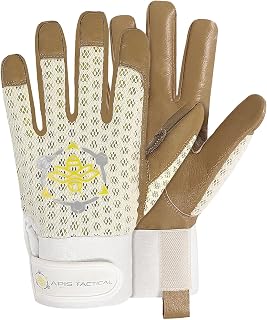
Sting resistance in leather comes down to fiber density rather than sheer bulk. Goat leather contains tightly packed collagen fibers that run parallel to the skin surface, creating a tough barrier that bee stingers struggle to pierce. Some listings cite specific dimensions, such as Apis Tactical listing 5 millimeters for its goatskin leather palm, though most manufacturers do not publish hide gauge. Sheepskin, by contrast, has a looser grain structure interspersed with natural fat deposits, leaving microscopic voids between fiber bundles. When a guard bee presses against sheepskin, the stinger finds less resistance between the relaxed fibers, making sheep hide noticeably more permeable to stings when bees are agitated.
Neither leather can stop every sting when pressed flat against skin, especially when lifting a heavy honey super that pulls the leather taut across knuckles. For dependable sting defense, pairing dense goatskin with loose sleeve gauntlets provides the safest margin for backyard apiary visits.
2. Dexterity and frame handling
Tactile sensitivity is critical during brood nest inspections, where rolling a queen or fumbling a top bar can disrupt an entire hive. Sheepskin stands out here because its relaxed fiber weave offers immediate flexibility. Fingers move freely without resistance, allowing you to manipulate hive tools, lift delicate comb, and pick up queen cages with minimal clumsiness. Beekeepers who struggle with stiff hands often prefer sheepskin for this immediate suppleness.
Goatskin offers solid dexterity as well, though it feels slightly firmer upon arrival. The listing for Foxhound Bee Company notes that goatskin molds to your grip with regular use, conforming to your hands as natural warmth and hive movements shape the leather. For specific ventilated models, Foxhound Bee Company also lists a 4 layer hand construction with a 3 layer sleeve to reinforce sting protection while preserving finger movement. Once broken in, goatskin delivers nearly the same finger sensitivity as sheepskin while maintaining far greater structural support when prying glued frames.
3. Durability and propolis resistance
Bees coat interior surfaces with sticky propolis, and hive boxes feature rough-sawn pine edges that abrade soft fabric. Goatskin handles this harsh environment with exceptional durability. The tight grain resists punctures from errant splinters, hive staples, and sharp metal edges on hive tools. Propolis tends to sit on top of goat leather rather than penetrating deep into the hide, allowing keepers to scrape off accumulated resin with a dull hive tool or cloth.
Sheepskin suffers under heavy apiary demands. Its softer, porous surface absorbs propolis and honey moisture, leading to stiff, sticky patches that attract dirt. When dragging your fingers along the underside of brood boxes or lifting splintered woodenware, sheepskin can scuff, tear, or wear thin along thumb seams. Humble Bee lists a 2 Year Manufacturer warranty for its 110 gloves, which feature a composition of 60% cotton canvas and 40% goat leather, offering formal warranty coverage for its goatskin design.
4. Break-in and suppleness
A primary reason keepers consider sheepskin is zero break-in time. You can slip on a new pair of sheepskin gloves and immediately feel complete finger articulation, which is helpful if you need gloves for an urgent inspection. Sheepskin possesses natural lanolin and an open grain that make it soft from day one, conforming readily to palms without requiring conditioning or repetitive flexing.
Goatskin requires a brief break-in period, softening across early hive visits. Natural fats and tight collagen bundles inside goat hide keep the leather pliable, but the dense outer grain requires warmth and movement to relax. Once broken in, goatskin retains its suppleness through multiple seasons, whereas sheepskin often degrades and hardens after repeated exposure to hive sweat and moisture.
5. Long-term leather care
Both leather types demand sensible maintenance to prevent premature stiffness and odor. Care instructions vary by maker: Honey Keeper specifies hand wash only with a 90 Day Limited Manufacturer Warranty, while Apis Tactical and Foxhound Bee Company list machine washing. For either leather, washing gently in cool water and avoiding high-heat machine dryers protects natural fibers from shrinking and drying brittle.
To clean leather gloves, wear them and wash your hands in cool water using mild soap, scrubbing off propolis, honey, and hive grime. Rinse thoroughly and pat dry with a towel. Allow them to air dry slowly in the shade away from heaters or direct sunlight. While drying, slip your hands into the gloves periodically to reshape the fingers and maintain palm suppleness.
Seasonal performance in the apiary
Spring buildup: Colonies expand rapidly, and temperaments can shift with changing spring weather. Goatskin offers dependable protection during cool, breezy inspections when bees are defensive, while durable canvas gauntlets guard against crawling guard bees. Summer honey flow: High heat and humidity make thick gloves sweat heavily. Ventilated goatskin options, such as the ISIVBPEP model featuring long canvas cuffs and ventilated wrist panels, keep airflow moving across wrists while maintaining palm grip through heavy supers. Autumn preparation: Nectar dries up, robbing pressure increases, and bees become naturally territorial. Dense goatskin offers higher sting resistance during defensive autumn checks when feeding or reducing entrances. Winter storage: Clean your gloves, ensure the leather is completely dry, and store them flat in a sealed container to protect the hide from mice and mold.
Glove features to check
When choosing between leathers, pay close attention to sleeve and cuff construction:
- Sleeve length and material: Long canvas sleeves that reach the elbow help keep bees from crawling up arms. ZMHBKPS lists a glove length of 19.5 inches with a 60% Cotton and 40% Goatskin construction, while Luwint lists a 17.4 inches length for youth protective gauntlets.
- Ventilation panels: Breathable mesh wrist bands improve airflow during midsummer checks, though keepers should ensure the mesh sits away from skin to minimize sting exposure.
- Elastic cuff closures: Snug elastic at the forearm helps block bees from entering the sleeve opening while you lift hive boxes.
- Reinforced stitching: Look for reinforced stitching along high-stress areas like the thumb crotch and fingertip pads.
- Fit and sizing: A snug fit provides better control than loose gloves that bunch around frame lugs, while overly tight leather stretches thin and invites stings.
What leather gloves do not protect against
Leather gloves provide physical sting resistance and grip, but they are not an impenetrable armor. When leather is pulled tight against knuckles while lifting heavy boxes, a bee stinger can still find purchase. Gloves also cannot substitute for calm, deliberate handling and proper smoker technique. Furthermore, we do not provide medical advice regarding sting reactions, nor do we provide disease diagnosis or chemical treatment recommendations. For bee health and apiary regulations, consult your state apiary inspector or local extension office.
FAQs for beekeepers
Which leather is more sting-resistant, goatskin or sheepskin?
Goatskin provides greater puncture resistance against stings due to its tighter, denser grain structure. Sheepskin is softer and more pliable, but honey bees can sting through thinner sheep leather more readily.
Do goatskin beekeeping gloves stiffen after getting wet?
Goatskin contains natural fats and tight collagen fibers that help it dry softer than cowhide, though repeated sweat and moisture will gradually firm any leather. Wiping propolis off with a damp cloth and air drying away from direct sun helps preserve suppleness.
How thick is the leather used in beekeeping gloves?
Makers rarely publish hide gauge, though Apis Tactical lists 5 millimeters for its goatskin leather model. Most standard gloves rely on supple grain leather paired with canvas gauntlets for forearm coverage.
Can you wash goatskin and sheepskin beekeeping gloves?
Washing guidelines depend on manufacturer instructions, with some makers advising hand washing while others allow machine washing. For both leathers, washing in cool water with mild soap and air drying away from heat protects the hide from shrinking.
Which leather is better for beginner beekeepers?
Beginners usually benefit most from goatskin gloves because the denser hide provides dependable confidence when lifting heavy brood boxes. Sheepskin suits keepers who prioritize delicate tactile feel over heavier sting protection.
More hive guides
See every beekeeping gloves guide and all protective gear guides.
More picks: compare leather vs nitrile gloves, explore goatskin gloves for hive inspections, read about can bees sting through nitrile gloves, or browse full beekeeping suit options. New to apiary work? Start with our beekeeping supplies for beginners checklist.