Leather vs Nitrile Beekeeping Gloves: Which One Should You Buy?
Compare leather and nitrile beekeeping gloves for hive inspections, balancing tactile frame handling and propolis management against heavy-duty sting protection.

On this page
Top picks at a glance
As an Amazon Associate I earn from qualifying purchases.
- 1
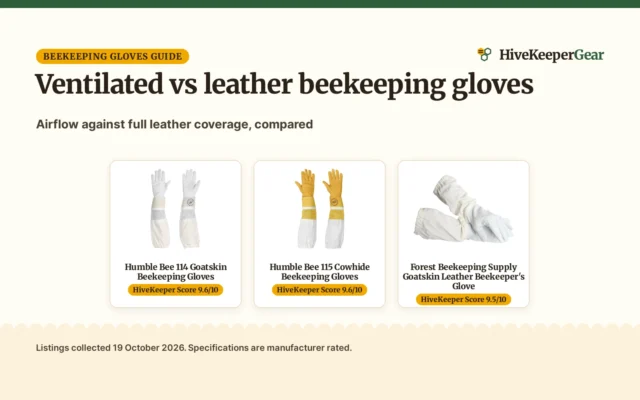
 Goatskin Leather Beekeeper's Glove with Long Canvas Sleeve &9.5/10View on Amazon
- 2
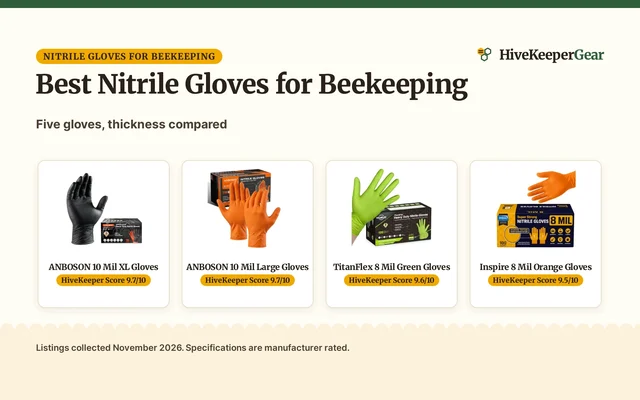
 ANBOSON 10 Mil Heavy Duty Nitrile Gloves with Diamond Grip9.8/10View on Amazon
- 3
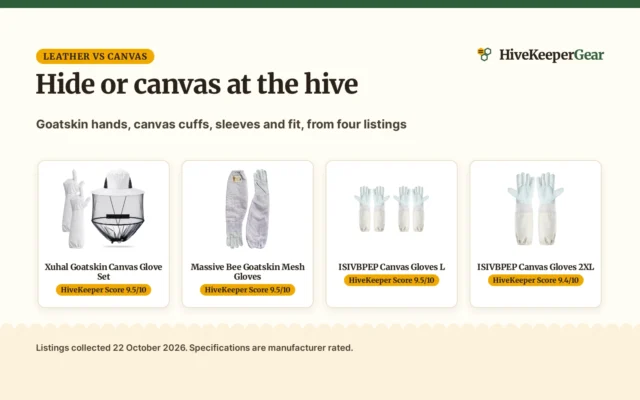
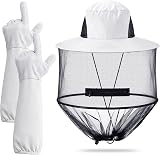 Xuhal Goatskin Leather Beekeeping Gloves with Canvas Sleeves9.5/10View on Amazon
- 4
 Professional Beekeeping GlovesView on Amazon
- 5
 Honey Keeper Beekeeping GlovesView on Amazon
- 6
 Massive Bee Cowhide Beekeeping Ventilated Cowhide LeatherView on Amazon
- 7
 Beekeeping Gloves with Goat Skin Leather Palm and 3-LayerView on Amazon
- 8
 Goatskin Leather Bee Gloves for Men & Women with Vented MeshView on Amazon
- 9
 DZXZY Professional Beekeeping Gloves Hornets Premium GoatskinView on Amazon
During spring buildup or an active honey flow, lifting heavy brood boxes and inspecting delicate comb makes hand protection an immediate decision for every beekeeper. When comparing leather vs nitrile beekeeping gloves, the right choice comes down to whether you prioritize thick physical defense against stings or fingertip dexterity for gentle frame manipulation. Leather gloves provide substantial barrier protection and forearm coverage for beginners and defensive colonies, while nitrile gloves offer tactile sensitivity and clean hive hygiene for routine inspections.
Other hives and gear to compare
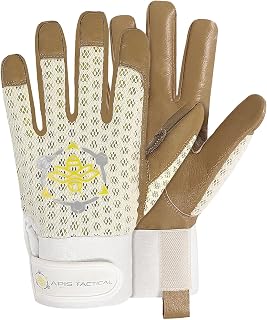 Professional Beekeeping GlovesCheck price on Amazon
 Honey Keeper Beekeeping GlovesCheck price on Amazon
 Massive Bee Cowhide Beekeeping Ventilated Cowhide LeatherCheck price on Amazon
 Beekeeping Gloves with Goat Skin Leather Palm and 3-LayerCheck price on Amazon
 Goatskin Leather Bee Gloves for Men & Women with Vented MeshCheck price on Amazon
 DZXZY Professional Beekeeping Gloves Hornets Premium GoatskinCheck price on Amazon
HiveKeeperGear earns a commission when you buy through links on this site, at no extra cost to you. As an Amazon Associate I earn from qualifying purchases. Affiliate disclosure.
Before you choose: colony temperament and apiary conditions
Every colony has its own temperament, and hive conditions shift throughout the season. During a warm nectar flow, calm bees allow smooth frame manipulation. In contrast, working during a nectar dearth or in late autumn stirs guard bees to protect stores. Beginners naturally feel secure with the barrier of leather, while experienced keepers often favor lighter gloves to avoid crushing bees between top bars. Browse our guide to the best bee suit options or see our overview of beekeeping gloves for different apiary tasks.
Leather vs nitrile beekeeping gloves: key differences compared
Choosing between leather and nitrile balances sting defense against handling dexterity. Goatskin and cowhide rely on durable hide paired with canvas gauntlets, while nitrile fits snugly against the skin to maximize fingertip feedback. The following table highlights the core differences across both styles.
| Feature | Leather beekeeping gloves | Nitrile beekeeping gloves | Our guide |
|---|---|---|---|
| Primary material | Goatskin or cowhide leather with cotton canvas gauntlet sleeves | Synthetic nitrile rubber with rolled wrist cuffs | Goatskin gloves |
| Tactile dexterity | Reduced fingertip sensitivity due to thick leather and seams | High tactile feedback for delicate comb and queen handling | Gloves for dexterity |
| Sting defense | Substantial physical barrier that prevents most sting penetration | Light barrier; bees can push stings through if material is pulled tight | Nitrile sting defense |
| Forearm coverage | Full coverage with extended canvas or ventilated mesh gauntlets | Wrist length coverage requiring snug bee jacket sleeve elastic | Wrist protection |
| Propolis cleanup | Absorbs propolis and hive odors; requires scraping and hand washing | Non-porous surface wiped with alcohol or discarded after use | Cleaning hive tools |
1. Sting protection and physical barrier strength
The primary reason beekeepers choose leather gloves is the substantial physical barrier provided by animal hide. While no glove prevents every sting, thick leather blunts most stinger thrusts. For example, Apis Tactical lists heavy-duty cowhide and goatskin gloves with a stated thickness of 5 millimeters, creating a dense shield against defensive bees. Similarly, Humble Bee lists its 111 model with a composition of 60 percent cotton canvas and 40 percent cow leather, combining cowhide hands with canvas gauntlet sleeves to shield the wrists and forearms.
Nitrile gloves operate on a different principle. Because smooth rubber offers little traction for bee claws, bees struggle to anchor. However, thin nitrile allows stinger penetration when stretched tight over knuckles or pressed against wood. Many keepers choose thicker styles, as explored in our guide to thick nitrile gloves for beekeeping, or wear an extra pair to add protection without sacrificing mobility.
2. Tactile sensitivity and delicate comb handling
While thick leather offers dependable sting defense, it reduces tactile sensation. Bulky fingertips make separating propolis-glued frames challenging, increasing the chance of bumping combs or rolling bees. For delicate tasks like handling a queen cage or inspecting queen cells, leather gloves can feel clumsy.
Nitrile gloves provide unmatched tactile feedback because flexible rubber conforms snugly to fingertips, letting you handle comb with genuine delicacy. If you prefer hide with better control, goatskin is naturally more pliable than cowhide. For instance, Foxhound Bee Company lists goatskin gloves with hand circumference sizing spanning 7 to 7.5 inches for extra small up to 9.3 to 10 inches for triple extra large, providing a tailored fit that molds to the hand over time. Learn more in our roundup of goatskin beekeeping gloves for dexterity and our review of nitrile gloves for hive inspections.
3. Forearm coverage and sleeve ventilation
Apiary protection extends to the forearms, where bees crawl when reaching between boxes. Traditional leather gloves feature extended gauntlets to seal the wrist. For adult coverage, Honey Keeper lists gloves with dimensions reaching 19.75 inches and a stated 90 Day manufacturer warranty, while youth-sized options from Luwint state a glove length of 17.4 inches, shielding open gaps at the jacket cuff.
Heavy leather gauntlets trap heat during summer inspections, though mesh panels help. Nitrile gloves end at the wrist, eliminating forearm bulk but trapping sweat against the palms. Wearing nitrile also requires securing jacket cuffs over the glove rims so bees cannot crawl inside. To compare upper body protection, see our guide to the best bee jacket styles and browse ventilated beekeeping gloves for summer.
4. Propolis cleanup and equipment hygiene
Propolis quickly coats beekeeping gloves during hive work. Leather is porous, absorbing propolis, wax, and honey. Over time, leather gloves become stiff and discolored. Furthermore, sting alarm pheromones embed in animal hide, signaling defensive behavior to bees during subsequent inspections.
Cleaning leather requires gentle scraping and careful hand washing, as hot water shrinks the hide. In contrast, nitrile offers superior hygiene. Its non-porous surface does not absorb pheromones, and propolis wipes clean with isopropyl alcohol. Discarding soiled disposable pairs also prevents transferring hive residues between boxes. For maintenance advice on other apiary equipment, see our guide on cleaning bee frames for reuse.
5. Hive temperament and seasonal conditions
Colony temperament changes with forage availability, weather, and colony strength. During a heavy nectar flow on a sunny afternoon, bees are gentle, making lightweight nitrile gloves ideal for relaxed brood nest checks. Tactile freedom lets you work smoothly without irritating the colony.
However, during an autumn dearth or when managing defensive colonies, guard bees become alert. Wearing thin nitrile can cause hesitation, which often aggravates bees further. Heavy leather gloves provide the barrier needed to work calmly. Combining your gloves with a smoker from our best bee smoker guide and a prying tool from our best hive tool review helps you maintain control in the yard.
A seasonal approach to glove selection
Early spring buildup: Installing package bees and checking light brood frames benefit from the tactile precision of nitrile gloves, preventing accidental queen injuries.
Summer nectar flow: Keepers often wear nitrile for routine box checks, switching to leather when rearranging heavy brood chambers or pulling honey.
Autumn dearth and prep: When blooms fade, guard bees defend stores against robbers. Heavy leather gloves shield hands while you reduce entrances and feed syrup.
Winter maintenance: Checking hive wraps, emergency sugar blocks, or mouse guards involves handling cold boxes. Heavy leather gloves shield against chilly winds and defensive clusters.
Helpful apiary accessories for hand protection
- A spray bottle of isopropyl alcohol to wipe sticky propolis from nitrile gloves during inspections.
- Elastic sleeve garters to keep bee jacket cuffs sealed over wrist-length nitrile gloves.
- A spare pair of goatskin gloves in your tool box for unexpectedly defensive colonies.
- A stainless steel hive tool to crack propolis seals without finger strain.
- A soft-bristle bee brush to sweep bees gently off frame top bars.
Having versatile gear options available allows you to adapt quickly to changing colony moods.
What this comparison does not cover
No beekeeping glove stops every sting. We cover equipment only and do not provide medical advice on insect sting allergies. Beekeepers with known honey bee venom allergies should consult a physician. We also do not evaluate mite treatments or veterinary hive medications; consult your local extension office for colony health guidance.
FAQs for beekeepers
Can bees sting through nitrile gloves?
Honey bees can push a stinger through nitrile if the rubber is stretched tight over skin. Many keepers choose heavy-duty nitrile or layer an extra pair to reduce sting penetration while preserving finger movement.
Why do experienced beekeepers prefer nitrile gloves for routine hive inspections?
Nitrile provides tactile sensitivity, making it easier to grasp frame lugs without crushing bees. The non-porous surface also prevents alarm pheromone from embedding in fabric.
Can honey bees sting through thick leather gloves?
Bees can occasionally penetrate leather if the hide is damp, worn thin, or pulled tight across seams. Heavy styles, such as the 5 millimeters thickness listed by Apis Tactical, provide substantial defense, though no glove stops every sting.
How do you clean propolis and honey off beekeeping gloves?
Honey rinses away with water, but propolis requires isopropyl alcohol on nitrile gloves. Disposable pairs can be discarded. Leather gloves cannot tolerate alcohol; they require gentle scraping with a hive tool and mild washing.
Which glove style is better for a beginner beekeeper?
Beginners often start with leather gloves for hand and forearm protection while learning colony behavior. As confidence and handling skills grow, many keepers switch to nitrile for routine inspections.
More hive guides
Browse every guide by category: beekeeping gloves, protective gear, hive tools, and beehives.
More glove guides: best beekeeping gloves, nitrile gloves for beekeeping, goatskin beekeeping gloves for hive inspections, and protective beekeeping gloves.