Honey Bucket vs Mason Jar: Which One Should You Buy?
A honey bucket catches the harvest, settles it and fills jars through a honey gate; mason jars are the retail-ready finish. Which container fits your harvest.

On this page
Top picks at a glance
As an Amazon Associate I earn from qualifying purchases.
- 1
 BeeCastle 2PCS Honey Gate Valve for 5 Gallon Bucket9.7/10View on Amazon
- 2
 AOZITA Wide Mouth Mason Jar Lids9.6/10View on Amazon
- 3
 Upgraded 5 Gallon Honey Warmer Bucket Heater with ThermostatView on Amazon
- 4
 Little Giant® Plastic Honey Bucket with GateView on Amazon
- 5
 Honey Gate Valve for BucketView on Amazon
- 6
 SunVara Honey BucketView on Amazon
- 7
 ZffXH 3/5/10 Pcs Beekeeping Honey Bucket ValveView on Amazon
- 8
 2Pcs Honey Gate Valve for 5 Gallon BucketView on Amazon
Honey bucket vs mason jar is really a question of where you are in the harvest. A honey bucket is the workhorse: a food-grade 5 gallon or 2 gallon pail, often with a honey gate, that catches honey from the extractor, lets it settle, and fills jars. A mason jar is the finish line: the retail-ready container for selling, gifting and serving. Most beekeepers need both, but for different jobs.
Other hives and gear to compare
 Upgraded 5 Gallon Honey Warmer Bucket Heater with ThermostatCheck price on Amazon
 Little Giant® Plastic Honey Bucket with GateCheck price on Amazon
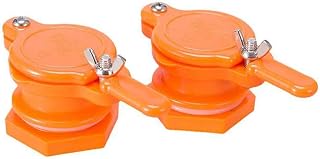 Honey Gate Valve for BucketCheck price on Amazon
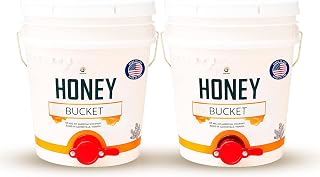 SunVara Honey BucketCheck price on Amazon
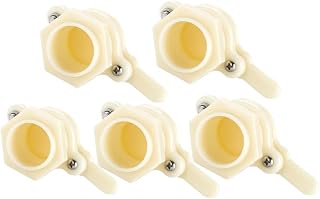 ZffXH 3/5/10 Pcs Beekeeping Honey Bucket ValveCheck price on Amazon
 2Pcs Honey Gate Valve for 5 Gallon BucketCheck price on Amazon
HiveKeeperGear earns a commission when you buy through links on this page, at no extra cost to you. As an Amazon Associate I earn from qualifying purchases. Affiliate disclosure.
Below: what each container does, the sizes the listings offer, and which one fits your harvest.
Honey bucket vs mason jar: the short answer
Buy a honey bucket for the harvest and mason jars for the sale. The bucket listings here run 5 gallon and 2 gallon, food grade and BPA-free, with options for a honey gate and an airtight screw-on lid. The bucket sits under the extractor, holds the crop while wax and bubbles rise, and the gate fills jars cleanly. Mason jars take over at bottling: they are the portion-size container customers expect, easy to label and easy to give away. If you harvest more than a few jars a year, start with the bucket; if you only need gifts for neighbors, jars alone do it.
What a honey bucket is for
The bucket is the harvest container. The Little Giant listing describes its 5 gallon BKT5 as a bucket to collect honey from your bees, placed under the extractor, with a tight-fitting lid and honey gate that both close tight. The House Naturals listings offer 5 gallon and 2 gallon food-grade buckets with a honey gate installed and a lock-on or screw-on airtight lid, made in the USA. The ePackageSupply listing offers a 5 gallon food-grade bucket in a 6 pack with an airtight gasketed lid in 90 mil HDPE plastic, BPA-free and FDA compliant. Honey gates matter: they let you draw honey from the bottom of the bucket without lifting and pouring, which keeps the settled wax and bubbles on top where they belong.
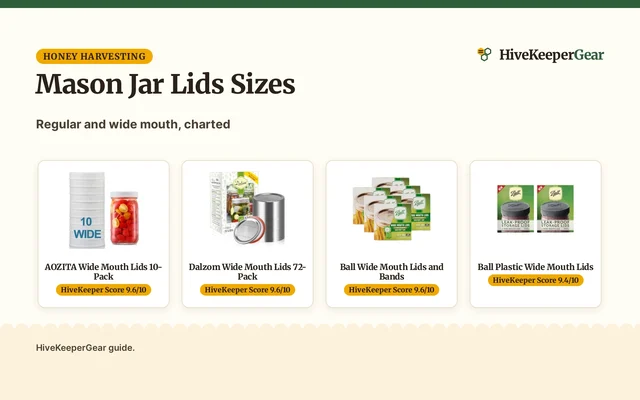
What a mason jar is for
The mason jar is the retail container. Jars are what customers buy, what gift recipients open, and what sits on the breakfast table. They seal, they label cleanly, and they portion the harvest into giftable sizes. No jar listings are in the reference set for this guide, so there are no jar figures to quote; the point is the role, not the brand. Jars are the last step, after the bucket has done the settling and straining work.
Capacity and workflow
The workflow decides the bucket size. A 5 gallon bucket is the standard harvest unit: the Little Giant 5 gallon sits under the extractor, the House Naturals 5 gallon adds the honey gate and airtight screw-on lid, and the ePackageSupply 6 pack suits a multi-hive harvest. A 2 gallon bucket, like the House Naturals 2 gallon with honey gate, suits a single hive or a small harvest where a 5 gallon pail would be mostly empty. Extract into the bucket, let it settle, then open the gate and fill jars; see our plastic vs stainless steel honey gate comparison for gate choices, and top motor vs bottom motor honey extractor for the extraction step before this one.
Which one to buy
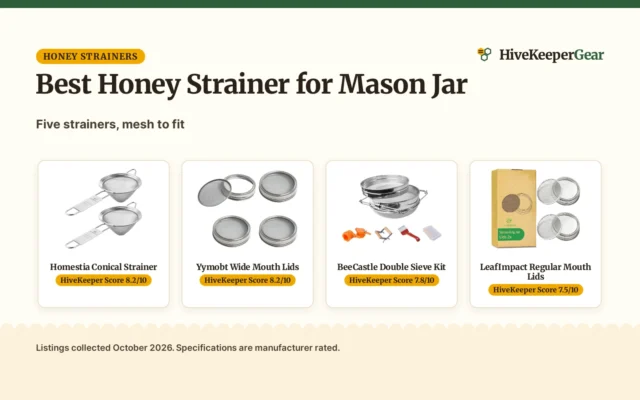
Buy the bucket first if you extract your own honey: a 5 gallon food-grade pail with a honey gate covers most hobby harvests, and the 2 gallon suits a single hive. Buy jars when you are ready to sell or gift. The two are not competitors; they are consecutive steps, and skipping the bucket means pouring from whatever you extracted into, which stirs the wax back in. For straining between the two steps, our double sieve vs single honey strainer guide covers the options.
Buying advice: bucket sizes, lids and gates
Size: 5 gallon or 2 gallon
Five gallon is the standard harvest unit: the House Naturals and Little Giant listings here are both 5 gallon pails, and the ePackageSupply listing is a 6-pack of 5 gallon buckets. That size suits multiple hives or a full extraction day. The House Naturals 2 gallon bucket suits a single hive or a small harvest, and both House Naturals sizes include a honey gate, so the choice between them is volume, not features. If you are starting out with one hive, the 2 gallon is easier to lift and pour; if you run several hives, the 5 gallon keeps you from shuffling honey between containers mid-harvest.
Lids matter as much as the pail
Every bucket here comes with a lid, and the lid is what makes a bucket a storage vessel rather than an open pail. The Little Giant listing describes a tight-fitting lid, and the ePackageSupply listing notes FDA compliance for direct food contact with BPA-free food-grade plastic. An airtight lid keeps moisture out of the honey, which is what matters for storage, and it keeps dust and insects off the surface during settling. When you compare buckets, compare the lids too: a screw-top or gasket lid like the ones described here beats a loose snap lid for anything you store more than a day.
The honey gate is the feature to prioritize
The single most useful feature on a honey bucket is the honey gate: a valve near the bottom that dispenses honey cleanly into jars. The House Naturals and Little Giant listings both describe a honey gate that closes tight so you lose no honey between dispenses. It beats lifting and pouring a full 5 gallon pail, which is heavy and stirs wax back into the honey. The Voefig listing even sells replacement gate valves, which tells you the gate is a wear item worth maintaining. When you choose a bucket, choose one with a gate; the jars come later, and the gate is what makes the bucket-to-jar step clean.
FAQs for beekeepers
Do I need a food-grade bucket?
Yes. The listings here are all food grade and BPA-free, and the ePackageSupply notes FDA compliance for direct food contact. Honey is food; the container should be.
What does a honey gate do?
It is a valve near the bottom of the bucket that dispenses honey cleanly. The House Naturals and Little Giant listings both describe a honey gate that closes tight so you lose no honey. It beats lifting and pouring a full 5 gallon pail.
Can I store honey in a bucket long term?
The listings describe the buckets for collecting, settling and shipping honey, with airtight lids that seal tight. An airtight lid keeps moisture out, which is what matters for storage; keep the bucket cool and sealed.
Should I get 5 gallon or 2 gallon?
Five gallon is the standard harvest unit and suits multiple hives; the 2 gallon suits a single hive or small harvest. Both House Naturals sizes include a honey gate, so the choice is volume, not features.
Can I skip the bucket and bottle straight into jars?
You can, but settling suffers. The bucket lets wax and air bubbles rise before bottling; bottling straight from the extractor puts that debris into the jars. The bucket is the settling step the jars cannot replace.