How to Use Hummingbird Feeder: Fill, Hang and Keep It Clean
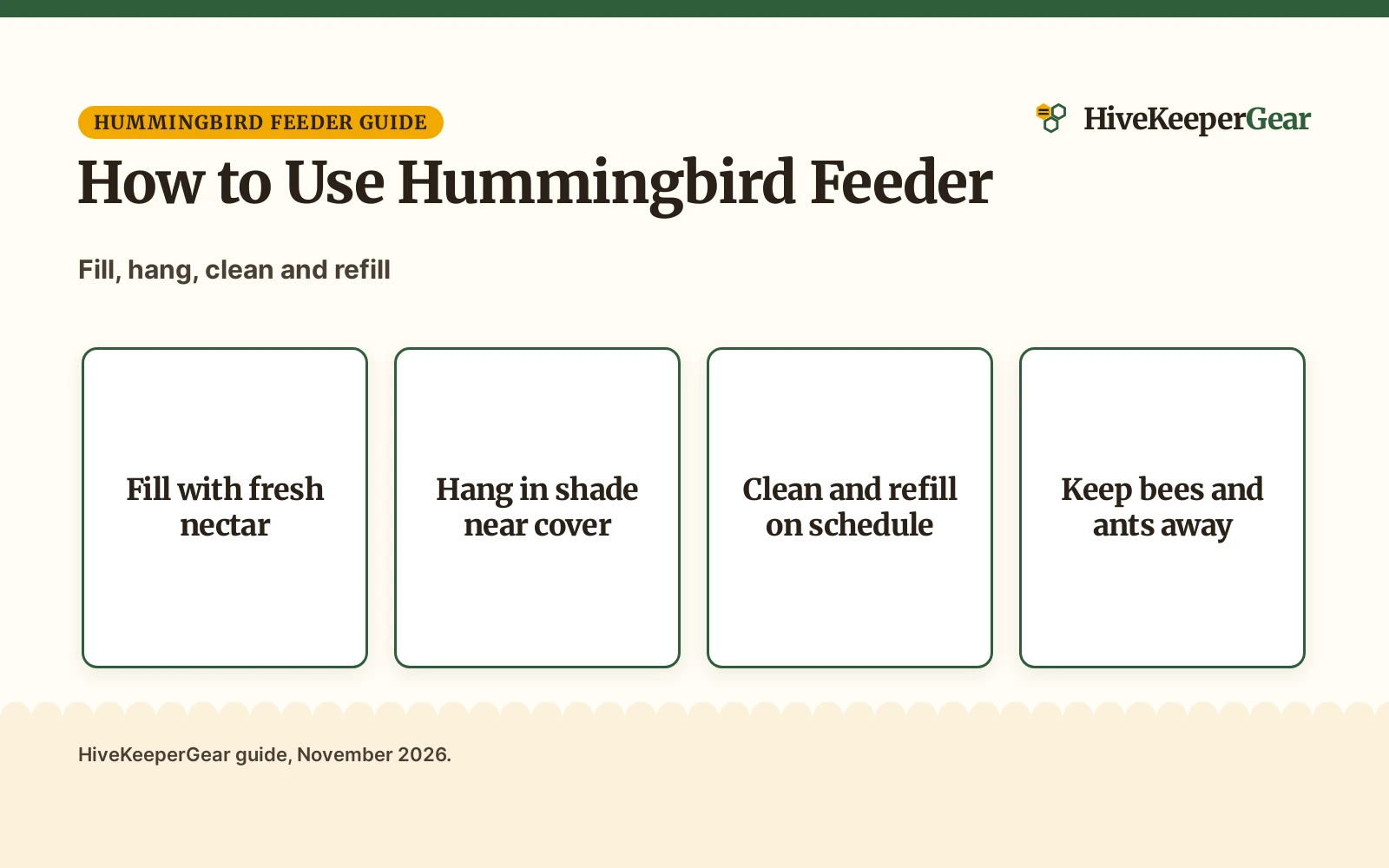
Fill a hummingbird feeder with fresh nectar, hang it in shade near cover, and clean and refill it often so hummingbirds keep coming back.

On this page
Top picks at a glance
As an Amazon Associate I earn from qualifying purchases.
- 1
 Perthlin Hummingbird Feeder Cleaning Brush9.6/10View on Amazon
- 2
 Pawfly 18 Pcs Hummingbird Feeder Cleaning Brushes9.6/10View on Amazon
- 3
 BOLITE Hummingbird Feeder for Outdoors Hanging9.5/10View on Amazon
To use a hummingbird feeder, fill it with fresh nectar, hang it where hummingbirds can find it, and keep it clean so the nectar stays fresh. That is the whole job, and this guide walks through each part of how to use hummingbird feeder, from the first fill to keeping bees and ants out of the way.
HiveKeeperGear earns a commission when you buy through links on this site, at no extra cost to you. As an Amazon Associate I earn from qualifying purchases. Affiliate disclosure.
What a hummingbird feeder needs to work
A hummingbird feeder holds nectar in a reservoir and lets birds drink through small feeding ports in the base. The base comes apart for cleaning, and the wide mouth makes the fill easy. FIRST NATURE lists a 32 oz red plastic feeder with 10 feeding ports, sold as a set of 4.
How to Use Hummingbird Feeder, Step by Step
Using a feeder takes a short routine: fill, hang, watch, clean, refill. The steps below cover each part in order.
Fill it with fresh nectar
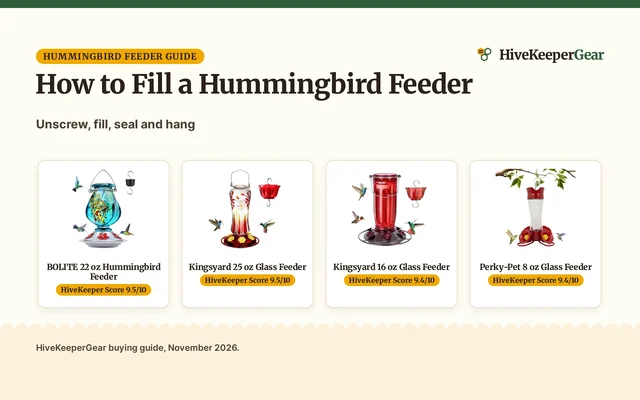
Open the feeder and pour in fresh nectar, then close the base firmly so it does not leak. A wide mouth makes the pour easy, and a base that comes apart lets you rinse it before each fill. The guide to how to fill a hummingbird feeder walks through the pour in detail, and what hummingbird nectar is explains the mix. For the mix itself, see how much sugar goes in a hummingbird feeder.
Hang it where birds can find it
Hang the feeder in shade near shrubs or flowers where hummingbirds already feed, with a clear flight path in and out. Shade keeps the nectar cooler through the day, and nearby cover gives birds a perch to rest on between visits. If birds do not visit, move the feeder to a spot that is easier to see from the air while keeping it shaded, then leave it there so birds can learn the location.
Keep it clean and refill it
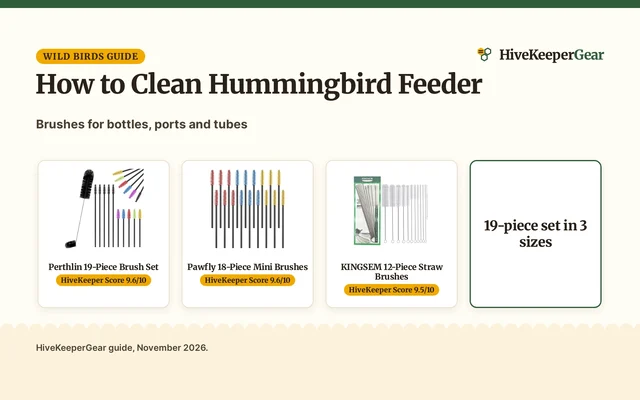
Take the feeder down, empty it, rinse the reservoir and base, and refill it with fresh nectar. Change the nectar before it turns cloudy, and clean the feeder whenever you refill it. The guide to how to clean a hummingbird feeder covers the wash in detail, and whether hummingbird nectar goes bad explains the signs that nectar needs changing. If the feeder is hard to open, see how to open a hummingbird feeder for the parts that come apart.
Where to hang a hummingbird feeder
Place the feeder where you can see it from a window, since watching the birds is much of the pleasure of keeping a feeder. Shade matters: a feeder in full sun warms fast, while a shaded feeder stays fresh longer. Keep it near flowers or shrubs that hummingbirds already visit, with open ground beneath it so cats have nowhere to hide close by. A feeder near a window can draw birds close, so leave open space around it so birds can approach and leave freely.
Keeping bees and ants away
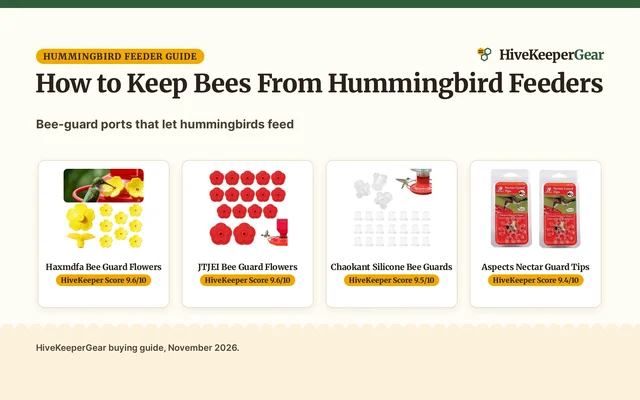
Bees and ants love the same sweet nectar, and a feeder that leaks or drips can draw them in. Keep the base closed firmly and wipe up drips when you fill it. The guide to keeping bees from hummingbird feeders covers guards and feeder styles that help, and why some keepers wrap a feeder in foil explains ant moats that help keep ants away. A feeder with a tight seal and a clean outside draws fewer unwanted visitors than a sticky feeder.
Choosing a feeder size
Size comes down to how many birds visit and how often you want to refill. FIRST NATURE lists a 32 oz feeder with 10 feeding ports, so a full feeder holds plenty of nectar for a busy spot, while a smaller fill suits a quiet yard with few visitors. A set of 4 feeders lets you hang feeders in several spots around the yard. For a fuller look at capacity, see large capacity hummingbird feeders, and for the shape question, saucer vs bottle hummingbird feeders and glass vs plastic hummingbird feeders compare the common styles.
FAQs for beekeepers
How do you fill a hummingbird feeder?
Open the base, pour in fresh nectar, and close it firmly so it does not leak. See how to fill a hummingbird feeder for the pour in detail.
How often should you change the nectar?
Change it before it turns cloudy, and clean the feeder at the same time. Hot, sunny weather turns nectar faster, so a shaded feeder stays fresh longer. See whether hummingbird nectar goes bad for the signs to watch.
Where should you hang a hummingbird feeder?
Hang it in shade near shrubs or flowers, with a clear flight path and a perch nearby. A spot you can see from a window makes the birds easy to watch.
How do you keep bees away from a hummingbird feeder?
Keep the feeder sealed and clean, wipe up drips, and choose a feeder style that guards the ports. The guide to keeping bees from hummingbird feeders covers the options.
What size hummingbird feeder do you need?
Match the feeder to the traffic: FIRST NATURE lists a 32 oz feeder with 10 feeding ports, which suits a busy spot, while a smaller fill suits a quiet yard. A set of 4 feeders covers several spots around the yard.
More hive guides
Browse related guides: best hummingbird feeder picks, how a hummingbird feeder works and feeders that keep bees away, or see all hive tools guides.