Large Bee Smoker vs Small Bee Smoker: Which One Should You Buy?
A large bee smoker holds more fuel to prevent relighting during long inspections, while a small bee smoker offers lighter handling for quick checks on a single hive.

On this page
Top picks at a glance
As an Amazon Associate I earn from qualifying purchases.
- 1
 VIVO Stainless Steel Bee Hive Smoker Heat Shield9.6/10View on Amazon
- 2
 Bee Smoker Beekeeping Domed Shaped 11 inch Heavy-Duty9.6/10View on Amazon
- 3
 Honey Keeper Bee Hive Smoker Stainless Steel with Heat ShieldView on Amazon
- 4
 Flexzion Bee Smoker for BeekeepingView on Amazon
- 5
 EAST OAK Pitmate™ Tabletop 20" Electric SmokerView on Amazon
- 6
 11-inch Stainless Steel Bee Hive Smoker with 3 Pack of SmokeView on Amazon
- 7
 SunVara Bee Smoker Stainless Steel Heat Shield High StandardView on Amazon
- 8
 DECOHS 2 Pound Burlap Bee Smoker Fuel Jute Burlap Smoker FuelView on Amazon
During a routine spring inspection when colonies expand rapidly, deciding between a large bee smoker vs small bee smoker comes down to how long you need smoke without stopping to reload fuel. For most beekeepers, a large bee smoker is the practical choice because its taller canister holds enough tinder, kindling, and fuel to stay lit through thorough colony checks across multiple hives. A small bee smoker works well for quick checks on a single hive or when keeping equipment as light as possible, but its compact chamber requires frequent refueling during extended yard work. Understanding the tradeoffs in chamber volume, burn duration, handling weight, and maintenance helps you choose the right tool for your apiary.
Other hives and gear to compare
 Honey Keeper Bee Hive Smoker Stainless Steel with Heat ShieldCheck price on Amazon
 Flexzion Bee Smoker for BeekeepingCheck price on Amazon
 EAST OAK Pitmate™ Tabletop 20" Electric SmokerCheck price on Amazon
 11-inch Stainless Steel Bee Hive Smoker with 3 Pack of SmokeCheck price on Amazon
 SunVara Bee Smoker Stainless Steel Heat Shield High StandardCheck price on Amazon
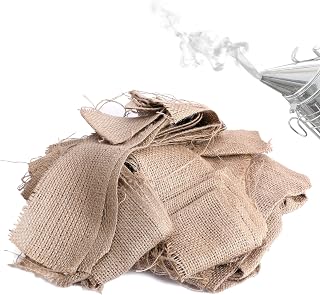 DECOHS 2 Pound Burlap Bee Smoker Fuel Jute Burlap Smoker FuelCheck price on Amazon
HiveKeeperGear earns a commission when you buy through links on this site, at no extra cost to you. As an Amazon Associate I earn from qualifying purchases. Affiliate disclosure.
Before you buy: how smoker size affects inspections
A bee smoker is an essential tool in every apiary. Puffs of cool smoke mask alarm pheromones and encourage bees to feed on honey stores, keeping the colony calm while you lift frames and inspect the brood nest. When a smoker goes out midway through an inspection, opening the canister with propolis-covered gloves to relight fuel disrupts the rhythm of your work and agitates the bees. The physical height and volume of the fuel chamber directly dictate how much fuel you can pack, how long embers stay insulated, and how long the smoker produces steady smoke without going out.
Large bee smoker vs small bee smoker: key differences
Comparing smoker sizes involves examining chamber height, fuel capacity, handling weight, and how each tool supports your inspection routine. Reference listings that publish canister width show standard 4-inch diameters, while canister heights vary from 7 inches to 12 inches.
| Feature | Small Bee Smoker | Large Bee Smoker | Inspection Impact |
|---|---|---|---|
| Canister dimensions | 4×7-inch design (Mann Lake HD555 lists 4×7-inch) | 4×11-inch to 12 inches tall (benefitbee lists 4×11-inch; Luwint lists 12 inches tall with 4-inch canister diameter) | Taller chambers provide deeper fuel beds |
| Listed item weight | 1.8 pounds (Mann Lake HD555) | 1.7 to 1.8 pounds (Honey Keeper SM75 lists 1.7 pounds; Luwint lists 1.8 pounds) | Listed empty weights remain close across sizes |
| Fuel chamber volume | Compact chamber for tinder and kindling | Deep chamber holding fuel for multiple hives (Honey Keeper SM75 lists large fuel chamber) | Larger capacity reduces mid-inspection relighting |
| Inspection application | Quick checks on a single hive | Thorough brood evaluations across multiple hives | Matching chamber size to colony count saves time |
| Refueling frequency | Requires frequent fuel top-offs during longer visits | Holds sufficient fuel to inspect multiple hives without reloading | Less downtime during multi-hive yard visits |
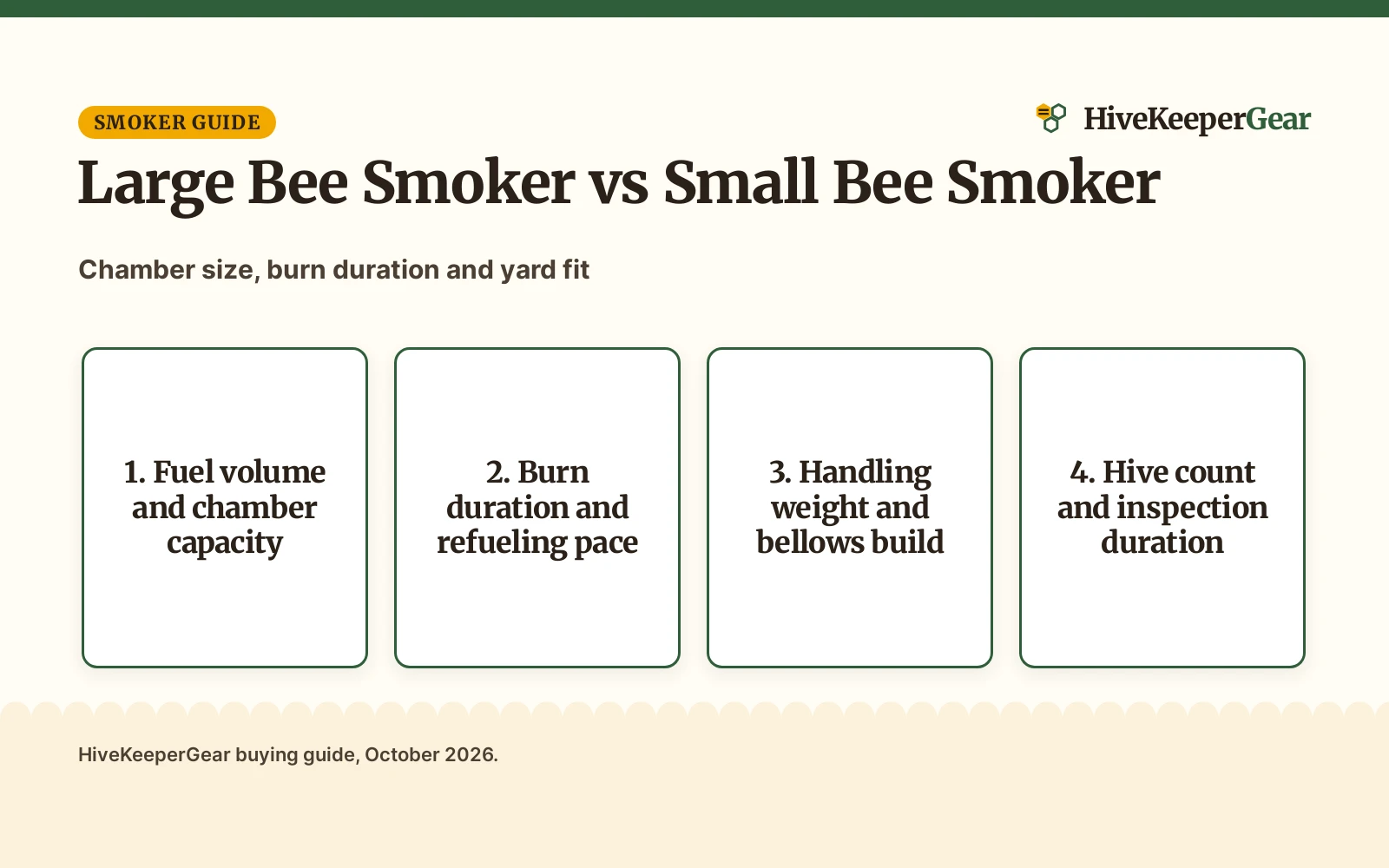
1. Chamber volume and fuel capacity
The most important mechanical distinction between smoker sizes is the volume of the combustion chamber. A bee smoker functions by maintaining a slow, smoldering burn beneath a dense layer of unburned fuel. In a small model, such as the 4×7-inch canister listed for the Mann Lake HD555, the interior space holds a modest amount of pine needles, wood shavings, or smoker pellets. This compact space exhausts its fuel faster because the smaller volume holds less total fuel above the bottom fire grate.
A large smoker provides substantial extra depth. The benefitbee listing states a 4×11-inch design, Honey Keeper SM75 lists an 11-inch height, and Luwint lists a 12 inches tall canister with a 4-inch diameter. This vertical capacity allows you to build a fire at the bottom and pack generous fuel above it. The unburned fuel acts as a natural buffer, cooling the smoke as it rises toward the directional nozzle. Choosing clean fuel from our guide to the best beekeeping smoker fuel produces cool, dense smoke that calms bees without singeing delicate wings.
2. Burn duration and refueling during inspections
Burn duration directly determines how smoothly an inspection proceeds. In the middle of examining brood frames, having your smoke source fail leaves you without smoke to redirect bees if they become agitated. A small 4×7-inch smoker often requires refueling during an extensive colony check. Opening a hot smoker canister to add kindling while wearing bulky gloves is awkward and disrupts your inspection pace.
A large smoker stays lit for extended periods because the deep fuel bed insulates glowing embers at the bottom. Reference listings for tall smokers, such as the 11-inch Honey Keeper SM75 and 12-inch Luwint, specify large fuel chambers that hold enough material to inspect multiple hives without needing to refuel. As long as you puff the bellows occasionally while moving between boxes, a large smoker maintains active coals and produces immediate smoke whenever required.
3. Handling weight and bellows control
Many beekeepers assume a large smoker will feel heavy or cumbersome in the yard, but manufacturer specifications show modest differences in listed empty weight. Mann Lake lists its compact 4×7-inch smoker at 1.8 pounds. Luwint lists its 12 inches tall smoker at 1.8 pounds, and Honey Keeper SM75 lists an 11-inch model at 1.7 pounds. Blythewood Bee Company lists a copper and stainless smoker at 2 pounds. Because thin-gauge stainless steel is lightweight, the physical height difference adds little base weight to your hand.
Fuel does add slight weight when packed completely full, but the balance of the canister remains manageable. Bellows construction plays a major role in user comfort. Listings such as Luwint (made with 201 stainless steel) and benefitbee (made with 301 stainless steel) feature upgraded leather bellows that deliver steady airflow with light pressure. Pairing your smoker with an efficient prying tool from our best hive tool guide keeps your movements deliberate and minimizes fatigue while working through hive boxes.
4. Apiary size and inspection duration
Your choice of smoker size should reflect the scale of your beekeeping operation and the duration of your typical yard visits. A beekeeper maintaining a single hive in a small suburban backyard can manage routine maintenance with a small smoker. If your visits consist of checking entrance activity, verifying feeder syrup levels, or inspecting a single brood box, a compact smoker provides plenty of smoke without burning excess fuel.
When you expand to multiple hives, a large smoker becomes essential. Inspecting several colonies requires continuous smoke for smoking hive entrances, calming bees between box removals, and driving bees down from top bars during reassembly. A large smoker allows you to finish working every colony in the yard without pausing to clear ash or restart a dead fire. Our comprehensive guide to the best bee smoker models compares top stainless options built for multiple-hive apiaries.
5. Heat shield safety and smoker storage
Both small and large smokers generate substantial heat along the combustion canister. A protective wire heat guard surrounding the chamber is an essential safety feature on any bee smoker. Quality heat shields keep hot metal away from bare hands and protective clothing. Wire mounting hooks allow you to hang the smoker from a hive box or tool stand rather than placing hot metal on dry grass.
Storage and cooling characteristics differ slightly by size. A small smoker holds less hot ash and cools down relatively quickly once the spout is blocked. A large smoker retains embers much longer due to the larger volume of insulating fuel. Always allow your smoker to cool completely, or store it in an airtight metal container, to avoid fire hazards when transporting gear. Reviewing proper handling steps in our guide on how to use a bee smoker ensures safe operation from ignition to storage.
An inspection workflow comparison
Understanding how smoker size influences your seasonal workflow helps clarify which model fits your routine:
- Spring buildup: Colonies expand and require quick checks on food stores. A small smoker lights quickly for a brief look beneath the inner cover of a single hive, while a large smoker handles full frame-by-frame colony evaluations.
- Summer honey flow: Adding honey supers and monitoring space demands sustained smoke. A large smoker smolders reliably while you lift heavy supers and clear bees from comb faces across multiple hives.
- Fall preparation: Performing winter prep, assessing honey stores, and installing entrance reducers requires steady smoke during cooler autumn weather when bees guard stores closely. A large chamber maintains heat even in brisk breezes.
- Winter storage: When inspections cease for winter, cleaning creosote from canister walls and storing your smoker in a dry shed keeps the leather bellows supple for the coming spring.
Useful smoker accessories to have
- A dedicated metal storage container or bucket to transport your smoker safely while it cools.
- A sturdy hive tool with a scraper edge to pry apart propolis and scrape hive frame rests.
- A long-reach butane lighter or torch to reach kindling at the bottom of tall canisters.
- A dry storage container for fuel pellets, pine needles, or wood shavings to keep tinder dry.
- A wooden plug or cluster of green grass to plug the nozzle and extinguish embers when inspections conclude.
What smoker size does not change
While chamber size alters fuel capacity and burn duration, it does not change fundamental beekeeping principles. Both small and large smokers must produce cool, thick white smoke rather than hot sparks or active flame. Heavy, hot smoke harms honey bees, melts beeswax comb, and agitates the colony rather than encouraging calm behavior.
A larger smoker also does not replace gentle handling techniques, calm movement, or proper protective gear. We do not give bee health or treatment advice. For colony health questions, contact your state apiary inspector or local extension office. Beekeepers interested in alternative smoker options can explore our comparison of electric bee smoker vs traditional smoker designs.
FAQs for beekeepers
What are the standard dimensions of a large bee smoker compared to a small bee smoker?
In published listings, small bee smokers commonly feature a 4×7-inch canister, such as the compact 4-inch diameter by 7-inch height listed for the Mann Lake HD555. Large bee smokers feature taller canisters, such as the 4×11-inch design listed by benefitbee or the 12 inches tall canister listed by Luwint.
Is a large bee smoker too heavy for a beginner to handle?
Several popular large stainless steel smokers weigh between 1.7 and 1.8 pounds empty, comparable to compact models on listed specifications. For example, Honey Keeper SM75 lists an 11-inch model at 1.7 pounds, while Luwint lists a 12 inches tall model at 1.8 pounds, matching the 1.8 pounds listed for the compact Mann Lake HD555. While packed fuel adds slight weight, ergonomic leather bellows keep handling comfortable.
Can I use a large bee smoker if I only have one hive?
Yes, many beekeepers choose a large smoker even for a single hive because it stays lit more reliably once ignited. Although reaching the bottom of a taller canister requires a long lighter or dropping burning tinder down, the fire smolders longer without going out, and the extra capacity accommodates future apiary expansion.
How long will a small bee smoker stay lit compared to a large one?
A small smoker burns through its kindling and fuel quickly, often requiring fresh fuel during a detailed colony inspection. A large smoker holds enough material to smolder continuously across multiple hives without going out.
Does canister metal material matter more than smoker size?
Both small and large smokers benefit from corrosion-resistant metals that withstand weather and high heat. Manufacturer listings frequently feature stainless steel, including 201 stainless steel in the Luwint smoker and 301 stainless steel in the benefitbee model. Our guide comparing a stainless steel smoker vs galvanized bee smoker details how metal choices impact durability.
More hive guides
See every bee smoker guide and all hive tool guides.
More picks: compare our top best bee smoker models, read how to use a bee smoker, or explore smoker fuel picks. New to beekeeping? Start with our beekeeping supplies for beginners checklist.