Stainless Steel Smoker vs Galvanized Bee Smoker: Which One Should You Buy?
A direct comparison of stainless steel and galvanized bee smokers covering rust resistance, heat tolerance, soot cleanup, and overall durability in the apiary.

On this page
Top picks at a glance
As an Amazon Associate I earn from qualifying purchases.
- 1
 VIVO Stainless Steel Bee Hive Smoker Heat Shield9.6/10View on Amazon
- 2
 VEVOR Charcoal Offset SmokerView on Amazon
- 3
 SmokinTex 'The OG' Electric SmokerView on Amazon
- 4
 SmokinTex Lil' Tex Electric SmokerView on Amazon
- 5
 Honey Keeper Bee Hive Smoker Stainless Steel with Heat ShieldView on Amazon
- 6
 11-inch Stainless Steel Bee Hive Smoker with 3 Pack of SmokeView on Amazon
- 7
 SunVara Bee Smoker Stainless Steel Heat Shield High StandardView on Amazon
Lighting a smoker on a cool spring morning as the colony stirs is a quiet ritual that grounds every apiary visit. When choosing your primary inspection tool, comparing a stainless steel smoker vs galvanized bee smoker comes down to how each metal handles moisture, firebox heat, and routine hive management over time. The direct answer is that stainless steel is the superior choice for routine beekeeping because it resists rust throughout the metal and withstands aggressive scraping, while a galvanized smoker relies on a thin zinc coating that eventually burns away or oxidizes, making it better suited as an occasional spare. Understanding how each metal performs under real hive conditions will help you select gear that keeps your bees calm without failing mid season.
Other hives and gear to compare
 VEVOR Charcoal Offset SmokerCheck price on Amazon
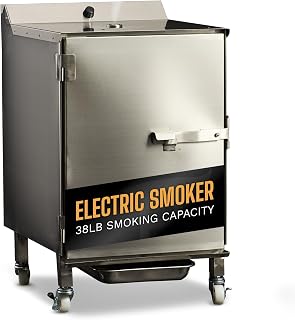 SmokinTex 'The OG' Electric SmokerCheck price on Amazon
 SmokinTex Lil' Tex Electric SmokerCheck price on Amazon
 Honey Keeper Bee Hive Smoker Stainless Steel with Heat ShieldCheck price on Amazon
 11-inch Stainless Steel Bee Hive Smoker with 3 Pack of SmokeCheck price on Amazon
 SunVara Bee Smoker Stainless Steel Heat Shield High StandardCheck price on Amazon
HiveKeeperGear earns a commission when you buy through links on this site, at no extra cost to you. As an Amazon Associate I earn from qualifying purchases. Affiliate disclosure.
Before you buy: understanding smoker materials
A bee smoker is an essential piece of apiary equipment, used at almost every inspection to mask alarm pheromones and disrupt defensive communication among guard bees. Because the tool houses burning fuel, pumps air through smoldering embers, and sits outdoors in all kinds of weather, the metal casing faces harsh conditions. Heat, moisture from combustion, organic tar from fuels, and atmospheric humidity constantly attack the smoker body.
Beekeeping smokers are almost universally constructed from either stainless steel or galvanized sheet steel. While these designs share similar silhouettes, bellows mechanisms, and wire protective guards, the metallurgical differences between them dictate how they age, how easy they are to clean, and how many seasons of service they provide in the bee yard.
Stainless steel smoker vs galvanized bee smoker
To understand how a stainless steel smoker vs galvanized bee smoker will perform in your apiary, it helps to examine what each material actually is. Stainless steel is an iron alloy melted with chromium. When exposed to oxygen, the chromium forms an invisible, self-healing oxide film on the surface that blocks rust from penetrating the core metal. Even if the smoker barrel gets scratched by a sharp hive tool or dented during transport, the exposed surface immediately oxidizes into a new protective barrier.
Galvanized steel, by contrast, is standard mild carbon steel that has been dipped into molten zinc or electroplated with a thin zinc layer. The zinc acts as a sacrificial barrier, oxidizing before the underlying steel can rust. However, this protective layer is only skin deep. When exposed to intense fire, acidic creosote, or mechanical abrasion, that zinc barrier gradually degrades, leaving raw iron susceptible to rust and deterioration.
| Feature | Stainless Steel Smoker | Galvanized Bee Smoker |
|---|---|---|
| Corrosion resistance | High; chromium alloy resists rust throughout the entire metal | Moderate; relies on surface zinc that degrades over time |
| Heat tolerance | Excellent; handles combustion heat without coating breakdown | Fair; firebox heat degrades and oxidizes the zinc layer |
| Creosote scraping | Safe to scrape clean with a hive tool without damage | Scraping scratches off the zinc coating and exposes raw steel |
| Weather tolerance | Resists outdoor humidity, morning dew, and damp fuel | Prone to surface oxidation and red rust in damp apiary air |
| Apiary lifespan | Built for many seasons of routine hive inspections | Best suited for short term use or as a backup smoker |
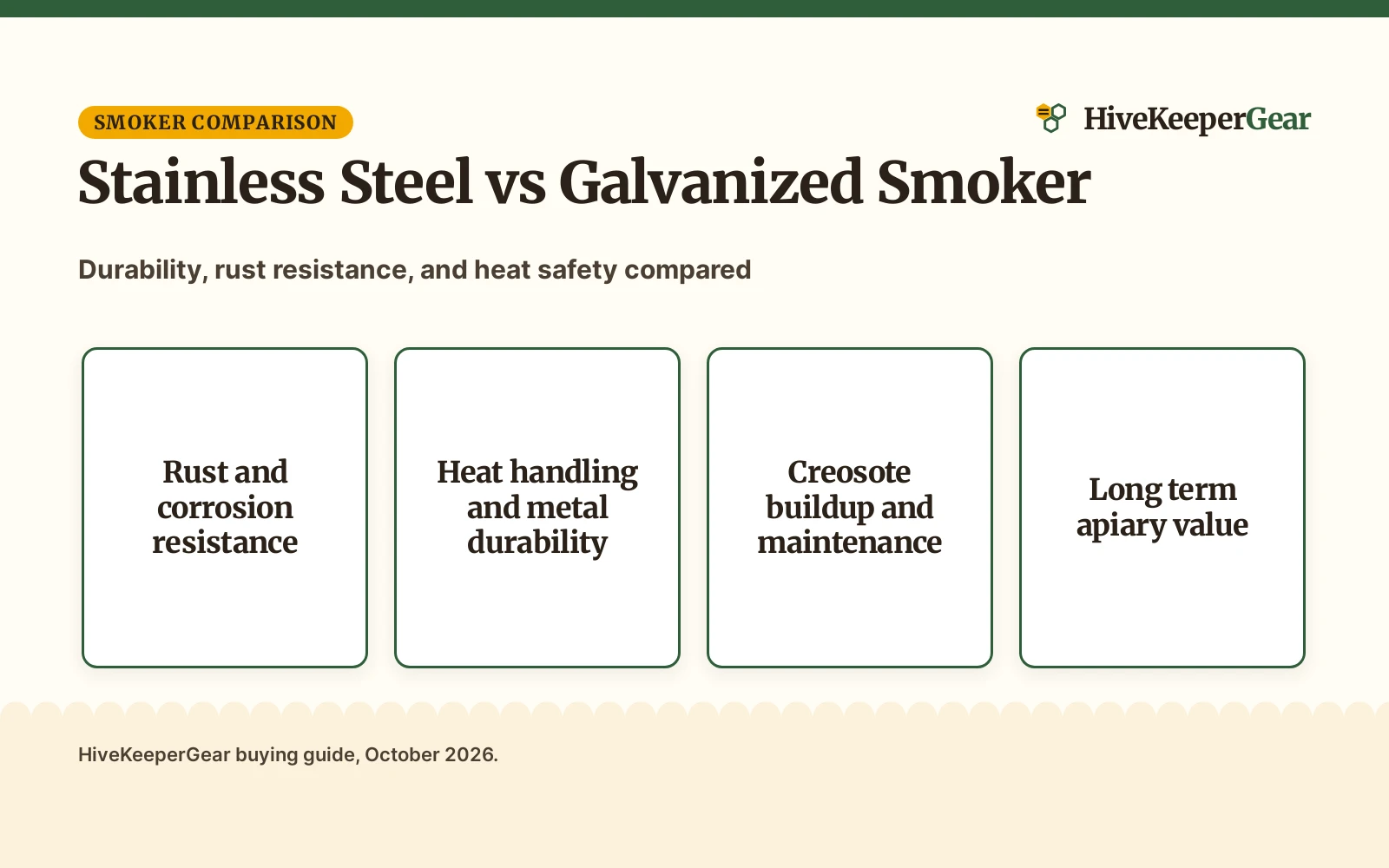
Rust and corrosion resistance in the bee yard
Apiaries are naturally humid, outdoor environments. Morning grass is heavy with dew, sudden afternoon rainstorms roll through during spring buildup, and damp ground releases moisture beneath hive stands. Furthermore, smoker fuel itself, whether pine needles, wood shavings, or compressed cotton pellets, releases moisture and mild organic acids as it smolders. This damp, acidic vapor condenses on the cooler interior walls of the smoker chamber and lid.
Under these conditions, a galvanized smoker begins to show wear relatively early. The zinc coating initially develops a dull, chalky white film known as white rust. As humidity and combustion acids continue to wear down the zinc, patches of red rust appear around the bottom seam, the hinge rivets, and the nozzle crease. When red rust takes hold, the sheet metal thins, and pinholes can eventually develop near the base where ash and embers accumulate.
A stainless steel smoker provides far higher resistance to this cycle. Because the alloy does not rely on a surface coating, it handles damp apiary conditions significantly better than galvanized steel. Even when stored in an apiary shed or honey house between seasonal inspections, stainless steel resists deep structural corrosion. The metal may discolor from heat, turning shades of bronze, gold, or blue near the firebox, but the underlying metal remains sound.
Heat tolerance and fire chamber wear
The interior of a bee smoker reaches significant combustion heat, especially when the bellows are pumped rapidly to revive a slow smudge during a lengthy brood inspection. The metal immediately surrounding the combustion grate experiences intense thermal expansion and contraction with each lighting and cooling cycle.
Galvanized steel suffers when subjected to concentrated, repeated heat. High thermal stress causes the surface zinc coating to oxidize rapidly and flake away from the sheet steel. Near the bottom air intake and lower grate, where embers glow hottest, the protective zinc coating degrades rapidly under intense heat. As that sacrificial layer breaks down, the hot carbon steel underneath reacts directly with oxygen and moisture from smoldering fuel, leading to accelerated oxidation, metal flaking, and weakened seam welds.
Stainless steel handles high heat without structural breakdown. The material retains its mechanical strength at elevated temperatures, preventing the fire chamber floor from burning out or warping out of round. For beekeepers who want reliable gear across multiple apiaries, consulting our guide to the best bee smoker models highlights well-built stainless options equipped with internal grates that protect the barrel floor.
Creosote accumulation and cleaning methods
Every beekeeper quickly discovers that burning natural fuel creates heavy soot, tar, and sticky creosote. Selecting proper smoker fuel helps create cool, white smoke, but creosote buildup inside the nozzle and around the lid rim is unavoidable over a full season of hive checks. Eventually, sticky deposits prevent the hinged lid from seating tightly, allowing smoke to leak around the rim rather than directing it through the snout.
Restoring a gummed-up smoker requires mechanical scraping, heat softening, or chemical cleaning. Learning how to clean beekeeping tools properly is essential for smooth apiary operations. On a stainless steel smoker, you can firmly scrape the chamber walls, lid rim, and nozzle using a stainless hive tool without hesitation. Even aggressive wire brushing will not compromise the metal, as the alloy retains corrosion resistance throughout its entire thickness.
Cleaning a galvanized bee smoker requires far more caution. Scraping hard deposits with a steel hive tool inevitably gouges the soft zinc plating, peeling it away in strips alongside the tar. When those gouges expose the bare carbon steel, moisture trapped beneath residual soot accelerates rust inside the scrape lines. Over time, the lid rim can corrode unevenly, creating permanent smoke leaks that irritate the beekeeper during delicate hive handling.
Bellows construction and heat shield safety
While the metal barrel is the heart of a smoker, the surrounding safety features and airflow mechanics determine how comfortable and safe the tool is to use. Smokers of either material are typically fitted with an external wire cage heat shield. This wire barrier prevents direct contact between your protective gloves or suit fabric and the hot metal canister, reducing the risk of accidental burns or melted gear during an inspection.
Heat shields on stainless smokers typically use stainless wire, which helps protect mounting points and brackets from rusting together into a seized mass. On lower-grade galvanized smokers, mounting brackets and spot welds are more frequent failure points where corrosion can weaken the connection between the heat shield and the main cylinder.
The bellows mechanism also deserves close inspection. A durable bellows features flexible leather or heavy synthetic material, sturdy wooden or composite panels, and an internal spring that provides smooth, consistent airflow. Learning how to use a bee smoker with steady, gentle squeezes ensures a cool volume of smoke that calms guard bees without throwing sparks into the hive.
Long term durability and value
When outfitting an apiary, beekeepers often weigh upfront equipment costs against long-term service life. A galvanized bee smoker may carry a slightly lower initial price tag, making it an appealing option for someone assembling starter equipment on a tight budget. However, because galvanized steel begins corroding once heat and scraping remove the zinc coating, these units often require replacement after several seasons of regular hive inspections.
A quality stainless steel smoker represents far greater value over the course of your beekeeping journey. Because the metal resists weather, soot, and repeated cleanings, a stainless smoker can remain in active service for many years with only occasional bellows maintenance. Replacing a corroded galvanized smoker every few seasons quickly eclipses the modest initial savings of buying galvanized in the beginning.
Which smoker should you choose?
Choosing between these materials depends on how you manage your bees, how frequently you open hives, and where you store your beekeeping gear between visits.
Choose a stainless steel smoker if:
- You inspect your hives regularly throughout spring, summer, and fall.
- You live in an area with high seasonal humidity, frequent rainfall, or heavy morning dew.
- You want a tool that can be scraped clean of creosote without worrying about rust.
- You prefer buying durable apiary gear that lasts for years without replacement.
Choose a galvanized bee smoker if:
- You need an inexpensive spare smoker to keep in your truck for emergency swarm collections.
- You maintain a small backyard colony in an arid climate and store all your gear indoors.
- You need temporary equipment while setting up your apiary on a strict starter budget.
For beekeepers interested in modern alternatives, comparing an electric bee smoker vs traditional smoker can also provide helpful context on push-button airflow systems versus manual bellows.
FAQs for beekeepers
Will a galvanized bee smoker rust over time?
Yes. Galvanized steel relies on an outer zinc coating that degrades from high firebox heat, weather exposure, and scraping with hive tools. When that layer wears away, the exposed steel underneath rusts quickly.
Can heat damage the zinc coating on a galvanized smoker?
Yes. The heat generated inside an active smoker fire chamber burns off the surface zinc coating around the base and lower grate. This leaves bare carbon steel exposed to moisture and combustion acids.
Why do most beekeepers choose a stainless steel smoker?
Stainless steel resists corrosion throughout the metal rather than relying on a surface wash. It withstands intense heat, outdoor moisture, and repeated creosote scraping without rusting through.
How do you clean creosote out of a bee smoker?
Scrape heavy tar deposits from the chamber and lid rim using a standard hive tool. Stainless steel handles firm scraping without losing corrosion resistance, whereas scraping galvanized metal can strip its protective zinc.
Is a galvanized bee smoker suitable as a backup tool?
A galvanized smoker works well as an inexpensive spare kept dry in a truck or shed for emergency swarm calls. For regular hive inspections throughout the active season, a stainless steel model offers far better durability.
More hive guides
See every bee smoker guide and all beekeeping tools guides. You can also explore our equipment guides for beehives, protective gear, and honey harvesting.
More guides: select natural fuel with our guide to smoker fuel, explore assembled bundles in beekeeping tool sets, review essential starter equipment in the beginner checklist, or compare pry bars in J hook vs standard hive tool.