Observation Hive vs Langstroth Hive: Which One Should You Buy?
Decide between an observation hive for indoor education and a Langstroth hive for honey yield, colony expansion, and practical backyard beekeeping.

On this page
Top picks at a glance
As an Amazon Associate I earn from qualifying purchases.
- 1
 BeeCastle 10 Frame Langstroth Bee Hive Coated with Beeswax9.7/10View on Amazon
- 2
 BeeCastle 8 Frame Langstroth Bee Hive Coated with Beeswax9.6/10View on Amazon
- 3
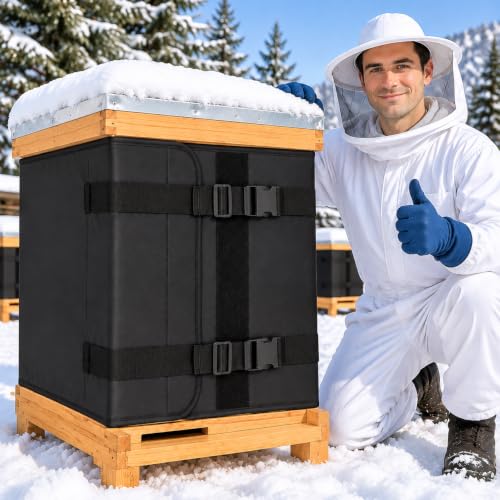 BobbleT Winter Bee Hive Insulation Wrap9.6/10View on Amazon
- 4
 10-Frame Langstroth Medium Super Bee Hive Box with FramesView on Amazon
- 5
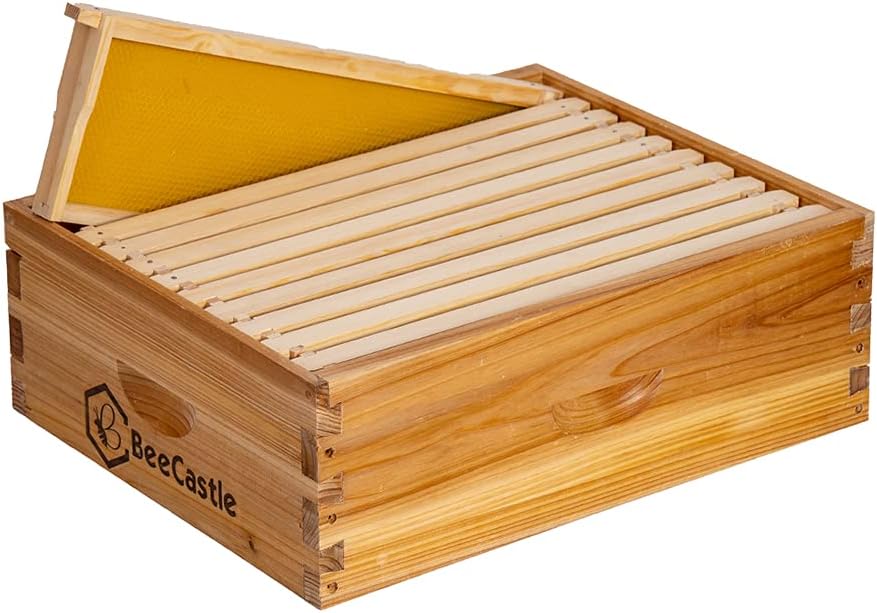 BeeCastle 10 Frame Medium Super Bee Hive BoxView on Amazon
- 6
 BeeCastle 8 Frame Medium Super Bee Hive BoxView on Amazon
- 7
 BeeCastle 10 Frame Langstroth Bee Hive Coated with 100%View on Amazon
During spring buildup when colonies expand rapidly, choosing between an observation hive vs langstroth hive comes down to your primary goal: buy a Langstroth hive if you want honey production, colony growth, and standard modular management in the bee yard, or buy an observation hive if you want an educational display to watch live bee activity indoors through glass. A Langstroth hive provides expandable wooden boxes for a productive backyard colony, whereas an observation hive encloses comb between transparent panes for public viewing and teaching.
Other hives and gear to compare
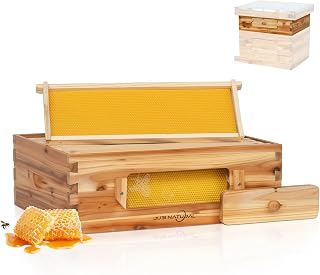 10-Frame Langstroth Medium Super Bee Hive Box with FramesCheck price on Amazon
 BeeCastle 10 Frame Langstroth Bee Hive Coated with BeeswaxCheck price on Amazon
 BeeCastle 8 Frame Langstroth Bee Hive Coated with BeeswaxCheck price on Amazon
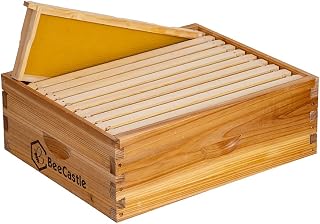 BeeCastle 10 Frame Medium Super Bee Hive BoxCheck price on Amazon
 BeeCastle 8 Frame Medium Super Bee Hive BoxCheck price on Amazon
 BeeCastle 10 Frame Langstroth Bee Hive Coated with 100%Check price on Amazon
HiveKeeperGear earns a commission when you buy through links on this site, at no extra cost to you. As an Amazon Associate I earn from qualifying purchases. Affiliate disclosure.
Before you buy: compare your primary beekeeping goals
Before purchasing equipment, determine where the hive will sit and what you hope to learn from your bees. A Langstroth hive is an outdoor apiary system designed for colony health, nectar storage, and seasonal honey harvesting. It uses stacked boxes that expand as the queen lays eggs and workers bring in nectar. In contrast, an observation hive is primarily an educational installation kept indoors inside a home, classroom, or nature center. It connects to the outdoors through an exit tube, allowing observers to study comb construction, queen egg laying, and worker communication without opening the hive or wearing protective clothing.
Observation hive vs langstroth hive: detailed comparison
| Feature | Observation Hive | Langstroth Hive | Related Guide |
|---|---|---|---|
| Primary purpose | Educational viewing and observation | Honey production and colony growth | Langstroth hives |
| Installation location | Indoors with exit tube to outdoors | Outdoors in apiary or bee yard | Beehives |
| Colony expansion | Fixed space within glass panels | Stackable deep and medium boxes | 10-frame kits |
| Honey harvest | Minimal surplus for extraction | Multiple supers for honey harvest | Honey extractors |
| Equipment sizing | Enclosed observation casing | Standard 8-frame or 10-frame boxes | 8-frame hives |
| Frame compatibility | Uses standard movable frames | Removable frames with foundation | Hive frames |
| Feeding method | Regular indoor feeder access | Frame, top, or entrance feeders | Bee feeders |
1. Purpose and colony visibility
The primary advantage of an observation hive is direct visibility. Because the comb is positioned behind panes of glass or transparent panels, you can observe colony dynamics without opening the hive. When viewing covers are removed, observers can watch nurse bees tending brood, foragers performing waggle dances to communicate floral sources, and the queen moving across cells. This makes observation hives valuable teaching centers for schools and nature centers. However, this visibility comes at the expense of colony size and honey storage.
A Langstroth hive houses bees inside solid wooden boxes made of cedar or pine. The colony remains in darkness, which mimics the natural hollow tree cavity bees prefer. While you cannot view daily comb activities from the outside, the dark interior promotes natural comb construction, brood rearing, and honey ripening. Checking colony progress requires opening the hive during an inspection.
2. Honey production and supers
If your goal is harvesting surplus honey, a Langstroth hive is the proper choice. Langstroth hives use modular, interchangeable boxes that can be stacked vertically as the nectar flow surges. Beekeepers place medium or shallow honey supers above the brood chambers, often separated by a queen excluder to keep the queen from laying eggs in honey frames. For example, TRINFREE lists a 4 layer 10-frame Langstroth hive that includes 2 deep boxes, 2 medium boxes, and 40 frames, weighing 68 pounds with dimensions of 19.88 by 16.26 by 36.42 inches. Similarly, Hiveaura lists a 10-frame cedar kit with 2 deep boxes, 1 medium box, and 30 frames, weighing 59 pounds. These stacked configurations give colonies the volume needed to store large quantities of honey that can be uncapped with uncapping tools and extracted using honey extractors.
An observation hive offers very little room for honey storage. Because the internal volume is limited to protect visibility, bees quickly fill available cells with brood, pollen, and immediate food stores. Surplus honey is rarely produced, and attempting to harvest from an observation hive disrupts the display. Anyone prioritizing jars of honey should invest in a standard outdoor hive.
3. Colony inspections and handling
Managing an outdoor Langstroth hive requires standard beekeeping tools and protective gear. When inspecting boxes, beekeepers use bee smokers to calm the colony and hive tools to separate frames glued together by propolis. Inspections involve lifting heavy boxes, removing individual frames to assess queen laying patterns, and rearranging components as needed.
Observation hives do not require smoker fuel or protective veils for routine viewing, as bees remain sealed behind glass. However, physical maintenance presents unique handling challenges. Cleaning propolis from the glass or replacing old comb requires opening the casing indoors or carrying the observation unit outdoors. If opened indoors, stray bees can escape into the room. For this reason, observation hive maintenance requires steady hands, calm planning, and careful timing.
4. Feeding and winter survival
Colony nutrition and winter cluster management differ substantially between these two hive styles. An observation hive contains a small population of bees with limited storage capacity. Because they cannot store ample honey reserves, observation colonies often depend on supplemental sugar syrup delivered through dedicated beehive feeders. The heated indoor room protects the colony from freezing winter temperatures, but the bees remain active through the winter months and continue consuming syrup stores.
Outdoor Langstroth colonies follow natural seasonal cycles. In late summer and fall, worker bees fill upper boxes with honey to sustain the winter cluster. Standard hives can be equipped with screened bottom boards or insulated outer covers to endure freezing weather. The colony forms a tight cluster to generate heat, remaining inside until warm weather returns in spring.
5. Equipment standard and modular parts
Langstroth hives represent the dimensional standard of modern North American beekeeping. Components are widely available and interchangeable across brands. Beekeepers can select standard 10-frame kits or narrower 8-frame boxes depending on lifting preference. For example, MayBee lists an 8-frame Langstroth kit weighing 49 pounds, featuring deep boxes measuring 14 by 19-7/8 by 9-5/8 inches and medium boxes measuring 14 by 19-7/8 by 6-5/8 inches, with 16 frames per box pair. For standard 10-frame equipment, Hiveaura lists a cedar kit with 2 deep boxes, 1 medium box, and 30 frames, weighing 59 pounds. Standard frames and replacement parts can be sourced easily through guides to standard 10-frame kits, 8-frame kits, and beehive frames.
Observation hives, by contrast, often feature proprietary designs and custom glass mountings. While many observation units accept standard deep or medium Langstroth frames for easy colony transfers, the outer casing, mounting hardware, and exit tube connectors are unique to each manufacturer. Replacement parts cannot simply be purchased off the shelf at a local farm store.
A seasonal management timeline
Early spring: colonies begin seasonal buildup. In an outdoor Langstroth hive, inspect brood chambers on warm days, clean bottom boards, and provide sugar syrup if winter stores are low. For an observation hive, establish the colony by transferring frames of brood, bees, and food from an outdoor hive, then verify that the outdoor exit tube is clear.
Late spring and summer: active nectar flow and brood expansion. Langstroth hives require adding honey supers as lower boxes fill with comb. In an observation hive, watch for signs of congestion or queen cell development, as the confined volume can prompt swarming if not managed.
Fall: winter preparation. Langstroth beekeepers remove surplus honey supers, assess cluster weight, and install entrance reducers to deter mice. Observation hive keepers verify that indoor feeder jars remain filled with syrup to support colony nutrition.
Winter: cold-weather management. Outdoor Langstroth hives remain closed on cold days while bees cluster for warmth. Indoor observation colonies remain confined inside, kept warm by the indoor room while requiring continued monitoring and supplemental syrup feeding.
Additional gear to consider
- A protective veil, jacket, or suit from our protective gear guide for inspections and frame transfers.
- A stainless steel bee smoker and sturdy hive tool for opening outdoor boxes and loosening propolis.
- A feeder, such as an entrance or frame feeder for a Langstroth hive or a jar feeder for an observation hive, to supply syrup during nectar dearths.
- A sturdy hive stand to lift outdoor wooden boxes off damp soil and deter ground pests.
- Secure mounting brackets and sealed PVC exit tubing to safely route observation hive bees through an exterior wall.
What is not covered in this guide
Live honey bees, whether purchased as packages, nucleus colonies, or caught swarms, are sourced separately through local apiaries and bee suppliers. This guide covers woodenware and observation hardware. In keeping with site rules, we do not provide veterinary diagnoses, chemical treatment schedules, or disease management advice. For apiary health regulations, consult your local agricultural extension service or state apiary inspector.
FAQs for beekeepers
Can you harvest honey from an observation hive?
Observation hives prioritize colony viewing over honey production, yielding little to no harvestable surplus. Beekeepers seeking harvestable honey use Langstroth hives with stackable honey supers.
Can bees live permanently in an observation hive?
A colony can live in an observation hive if provided with continuous care, regular feeding, and swarm management. Because space inside the glass casing is confined, colonies require closer monitoring than bees in outdoor Langstroth boxes.
How do bees exit an indoor observation hive?
Indoor observation hives connect to the outdoors through an exit tube sealed to an exterior wall or window port. This allows foragers to forage outdoors while keeping bees safely sealed inside the indoor display.
What size Langstroth hive should a beginner choose?
Many beekeepers choose between standard 8-frame and 10-frame equipment. For example, MayBee lists an 8-frame kit with deep boxes measuring 14 by 19-7/8 by 9-5/8 inches, which are narrower and lighter to lift than wider 10-frame boxes.
Can you transfer frames from a Langstroth hive to an observation hive?
Many observation hives are designed to hold standard Langstroth frames. This allows beekeepers to move a frame of brood, bees, and food directly from an outdoor Langstroth hive into the observation unit.
More hive guides
Browse every guide by category: beehives, Langstroth hives, hive tools and honey harvesting.
More picks: explore our guides to the best Langstroth hive, best 8 frame beehive, best beehive frames, and best beehive feeder.