Observation Hive vs Top Bar Hive: Which One Should You Buy?
Compare observation hives and top bar hives for colony visibility, brood inspection, comb management, and honey yield to choose the best design for your backyard apiary.

On this page
Top picks at a glance
As an Amazon Associate I earn from qualifying purchases.
- 1
 BeeCastle 10 Frame Langstroth Bee Hive Coated with Beeswax9.7/10View on Amazon
- 2
 BeeCastle 8 Frame Langstroth Bee Hive Boxes Coated with9.7/10View on Amazon
- 3
 Beehive 8 Frame Bee Hives and Supplies Starter Kit9.4/10View on Amazon
- 4
 Balanced Beekeeping II: Managing the Top Bar Hive by PhilipView on Amazon
- 5
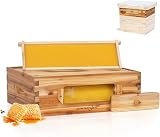 10-Frame Langstroth Medium Super Bee Hive Box with FramesView on Amazon
During spring buildup when colonies expand rapidly, choosing how you observe and manage your bees shapes your entire apiary routine: in an observation hive vs top bar hive comparison, you should buy an observation hive if your goal is educational demonstration and watching colony behavior without opening a hive, while you should choose a top bar hive if you want a manageable backyard hive for honey production and natural comb without lifting heavy boxes. We compared colony visibility, frame handling, inspection routines, and comb management to help you choose the right hive for your yard.
Other hives and gear to compare
 Balanced Beekeeping II: Managing the Top Bar Hive by PhilipCheck price on Amazon
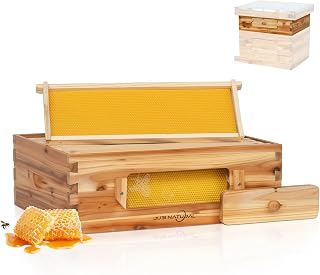 10-Frame Langstroth Medium Super Bee Hive Box with FramesCheck price on Amazon
HiveKeeperGear earns a commission when you buy through links on this site, at no extra cost to you. As an Amazon Associate I earn from qualifying purchases. Affiliate disclosure.
Before you choose: understand your beekeeping goals
Every hive design serves a distinct beekeeping purpose. An observation hive is built primarily for visibility, allowing beekeepers, students, and visitors to watch comb building, queen movement, brood development, and pollen storage through transparent walls. A top bar hive is designed for horizontal outdoor colony management, prioritizing bee comfort, natural comb geometry, and ergonomic handling without lifting heavy supers. Before deciding between them, consider whether your main objective is colony observation and educational outreach, or managing a full outdoor colony for wax and honey production.
Observation hive vs top bar hive: side-by-side comparison
This side-by-side comparison highlights the key differences between observation hives and top bar hives across visibility, colony handling, comb foundation, honey harvesting, and physical demands.
| Evaluation Feature | Observation Hive | Top Bar Hive | Related Guide |
|---|---|---|---|
| Colony visibility | Continuous full-comb observation through transparent glass or acrylic panels without opening the hive | Requires removing bars to inspect interior combs, with optional side observation windows for exterior comb viewing | Observation vs Langstroth |
| Colony management | Vertical display panels or multi-box hives with viewing windows | Horizontal cavity managed along a single level using movable divider boards | Top bar vs horizontal |
| Comb structure | Standard Langstroth frames with wax or plastic foundation | Frameless wooden top bars where bees draw natural comb downward | Beehive frames |
| Honey harvesting | Minimal harvest in small display units; standard super harvest in windowed hives | Comb honey harvested by cutting comb from bars or crush-and-strain processing | Top bar hives |
| Lifting requirements | Lightweight single-frame transport or standard vertical box lifting | Zero heavy box lifting; each bar is handled individually at waist height | Horizontal vs vertical hives |
| Outdoor wintering | Compact display units require indoor placement or donor colony return; windowed hives winter outdoors | Full outdoor colony wintered in place with reduced entrance and divider boards | Langstroth hives |
1. Colony visibility: watching bees without disturbance
The defining strength of an observation hive is direct visual access. Tough timbers lists a medium observation hive holding 1 medium Langstroth 19 inch frame and a deep model holding 1 deep Langstroth 19 inch frame, each measuring 4 by 24 by 18 inches and weighing 25 pounds with pine wood construction and Plexiglass viewing panels. For outdoor colonies, Honey Lake lists an 8 frame hive with acrylic windows, deep brood box measuring 19.88 by 14 by 9.56 inches, medium super measuring 19.88 by 14 by 6.6 inches, and 16 wood frames with 16 beeswax-coated plastic foundation sheets. VEVOR offers a 10 frame kit with transparent acrylic windows in 0.74 inch thick fir wood weighing 42.1 pounds with 20 frames across 1 deep box and 1 medium box, while Walsport lists a 10 frame cedar hive with an observation window, deep box measuring 19-7/8 by 16 by 9-5/8 inches, medium super measuring 19-7/8 by 16 by 6-5/8 inches, and a weight of 42.5 pounds.
Top bar hives enclose bees within a wooden trough. Many designs include a side observation window behind a wooden door, but viewing interior combs requires removing the roof and lifting individual bars. Because top bars rest flush together, lifting one bar leaves the rest of the cavity dark and undisturbed.
2. Colony management: horizontal trough versus observation hives
Top bar hives manage colony expansion horizontally at waist height. As colonies expand during nectar flows, beekeepers slide a wooden follower board and insert empty top bars next to the brood nest, avoiding the heavy box lifting required by vertical hives. Observation hives require different handling: portable units like the Tough timbers models holding 1 deep or 1 medium frame need regular frame rotation from an outdoor donor colony using a hive tool, while multi-box hives like VEVOR 10 frame and Honey Lake 8 frame kits manage vertically with interchangeable frames.
3. Comb structure and equipment compatibility
Observation hives use standard Langstroth frames, such as 19 inch frames in Tough timbers units or wood frames with foundation in VEVOR and Honey Lake kits, integrating directly with standard apiary equipment. Top bar hives use frameless wooden bars where bees build natural comb downward without foundation. Because top bar comb lacks reinforcing wooden borders, it must be handled vertically to prevent fresh wax from sagging on warm days, and bars do not fit standard Langstroth boxes.
4. Honey harvesting and comb processing
Single-frame observation hives prioritize demonstration over honey production, while windowed outdoor hives produce standard super crops extracted with a honey extractor. Top bar hives yield comb honey without an extractor: beekeepers slice natural comb into squares or crush comb in a bucket and filter honey through a mesh honey strainer, leaving bees to draw fresh wax on returned bars.
5. Overwintering and colony survival
Compact observation hives like the 4 by 24 by 18 inch Tough timbers units holding 1 frame cannot overwinter outdoors in freezing weather because bees cannot form a cluster to retain warmth; they must be kept indoors with an exit tube or returned to a donor hive before winter. Full-sized windowed hives winter outdoors normally. Top bar hives winter outdoors in temperate regions when colonies are consolidated with a follower board and protected by entrance reducers and top insulation.
Seasonal management differences
Spring: Expand top bar space by moving follower boards and adding bars; stock observation hives with a frame of brood and nurse bees. Summer: Harvest capped comb from top bar hives; ensure observation hive vents remain clear to prevent overheating. Fall: Consolidate top bar colonies near winter stores; return seasonal observation frames to donor colonies or prepare indoor flight tubes. Winter: Shelter top bar hives with reduced entrances; monitor indoor observation hive feeding.
Nice to have later
- A hive tool with a J-hook for separating propolis-bound bars and lifting frames (hive tools).
- A protective suit or jacket and gloves for top bar inspections (beekeeping suits and beekeeping gloves).
- A smoker with a heat shield for working open bars (bee smokers).
- A double-sieve strainer and bucket for filtering crushed top bar comb (honey strainers).
- A feeder for syrup during early comb drawing (beehive feeders).
What neither hive will do for you
Neither hive design runs on autopilot. Top bar hives require monitoring to prevent cross-comb, and observation hives require donor colonies or indoor climate management. Consistent apiary success always depends on understanding bee biology, seasonal floral flows, and regular hive maintenance.
FAQs for beekeepers
Can bees live permanently in an observation hive?
In a compact 1 frame observation hive, bees cannot live indefinitely without regular donor frame rotation. Larger indoor multi-frame units with flight tubes and windowed outdoor hives sustain permanent colonies year-round.
Is a top bar hive easier for beginners than an observation hive?
For an outdoor honey-producing hive, a top bar hive is much easier to manage because it avoids heavy box lifting, while single-frame observation hives require ongoing frame swaps with a donor colony.
How do you harvest honey from a top bar hive?
Top bar honey is harvested by cutting comb from the bar and crushing it through a mesh strainer, or by slicing comb honey squares.
Do top bar hives require foundation?
No, bees build natural comb downward from wooden bars without plastic or wax foundation sheets.
Can an observation hive be kept indoors?
Yes, indoor observation hives use a sealed exit tube through an exterior wall or window so foragers can fly outside.
More hive guides
Browse every guide by category: beehives, protective gear, hive tools and honey harvesting.
More picks: explore our guide to top bar bee hives, compare observation hives vs Langstroth hives, or read our breakdown of horizontal vs vertical bee hives. New to beekeeping? Start with our beekeeping supplies for beginners checklist.