Layens Hive vs Top Bar Hive: Which One Should You Buy?
Compare Layens and top bar horizontal hives by frame style, comb handling, winter insulation, and harvest work to decide which setup fits your apiary.

On this page
Top picks at a glance
As an Amazon Associate I earn from qualifying purchases.
- 1
 BeeCastle 10 Frame Langstroth Bee Hive Coated with Beeswax9.7/10View on Amazon
- 2
 BeeCastle 8 Frame Langstroth Bee Hive Boxes Coated with9.7/10View on Amazon
- 3
 Beehive 8 Frame Bee Hives and Supplies Starter Kit9.4/10View on Amazon
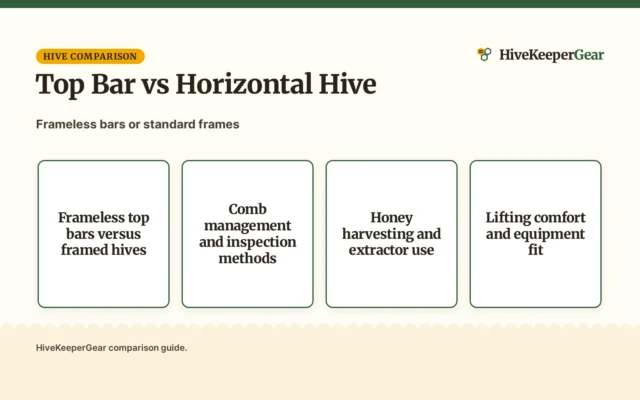
During late winter apiary planning, beekeepers often look to horizontal hives to avoid lifting heavy stacked boxes. When deciding between a layens hive vs top bar hive, the right choice depends on your local climate and how you prefer to handle comb: choose a Layens hive if you manage bees in cold winter climates and want deep enclosed frames that keep winter clusters warm and hold comb safely, or choose a top bar hive if you keep bees in mild or warm regions, want simple frameless equipment, and prefer harvesting honeycomb by crushing and straining.
HiveKeeperGear earns a commission when you buy through links on this site, at no extra cost to you. As an Amazon Associate I earn from qualifying purchases. Affiliate disclosure.
Before you buy: understanding horizontal hives
Horizontal hives manage colonies horizontally rather than stacking boxes vertically, removing heavy lifting entirely. All brood rearing, food storage, and surplus honey remain inside an undivided long chest or trough. Inspections occur by opening a hinged lid and moving across the colony frame by frame or bar by bar.
Both styles share this layout, but they handle comb support and winter thermal dynamics differently. Comparing horizontal vs vertical bee hives helps clarify whether a long chest fits your apiary layout and physical lifting preferences.
Layens hive vs top bar hive: quick comparison
| Feature | Layens Hive | Top Bar Hive |
|---|---|---|
| Hive structure | Horizontal chest holding deep frames | Horizontal trough holding top bars |
| Comb support | Fully enclosed wooden perimeter frames | Frameless wooden bars with hanging natural comb |
| Winter insulation | Thick wooden walls and deep vertical cluster space | Sloped wooden walls requiring sideways cluster movement |
| Comb handling | Rigid frames handle easily in any orientation | Fragile comb requires careful vertical handling |
| Honey extraction | Centrifugal extractor or crush and strain | Crush and strain or honey press |
| Colony expansion | Movable divider board with added frames | Movable follower board with added bars |
1. Frame design and comb support
The primary difference between these hive designs is how bees build and support comb. A Layens hive uses fully enclosed wooden frames with top bars, bottom bars, and side bars. Because wax comb is anchored on all wooden edges, beekeepers can lift, rotate, and transport frames without comb collapsing.
A top bar hive uses frameless wooden bars resting across the trough rim. Bees draw natural comb downward from a starter strip along the bar center without side or bottom wood support. In warm weather, fresh wax comb full of honey is fragile. Keepers working top bar hives keep comb oriented vertically during inspections to protect the natural structure. Exploring different types of bee hive frames shows how perimeter wood supports delicate comb across multiple seasons.
2. Insulation and winter cluster warmth
Winter survival is where the Layens design excels. Georges de Layens developed this hive specifically to help colonies endure harsh winter temperatures. Layens frames are exceptionally deep, creating a tall vertical comb space inside the horizontal chest. When cold weather arrives, the winter cluster forms at the bottom of the deep frames and moves upward through continuous honey stores, staying warm directly beneath rising cluster heat.
Layens hives feature thick wooden walls, insulated lids, and snug divider boards that retain colony warmth. In contrast, top bar hives are commonly built with thinner boards and sloping sides. Because top bar combs are relatively shallow, a wintering colony must move sideways along the trough to reach remaining stores, which increases winter starvation risks in freezing northern climates. Reviewing insulated beehive vs wooden beehive options provides further context on thermal performance across varying regions.
3. Hive inspections and comb handling
Inspecting a horizontal hive requires a different rhythm than working stacked boxes. In a Layens hive, the wide top bars sit flush against each other, creating an enclosed ceiling over the brood chamber. Sliding the divider board back creates working space at the end of the frame row, allowing you to lift individual frames while the rest of the colony remains covered, dark, and calm.
Top bar hives also feature bars that touch to form a continuous ceiling. The sloped walls of a Kenyan top bar hive follow the catenary curve of hanging comb, discouraging bees from attaching comb to the sides. Even so, keepers gently check along trough sides with a hive tool to free any bridge comb before lifting a bar. Using a gentle stream of smoke from a reliable bee smoker helps keep bees calm while handling bars.
Managing colony expansion follows a similar method in both designs. The beekeeper uses movable follower boards or divider boards to adjust the internal volume of the hive. In early spring, the board confines the colony to a snug space near the entrance. As the queen expands her brood nest and forage increases, the board is moved back, and empty frames or bars are added to provide room for incoming nectar.
4. Honey harvesting methods
In a Layens hive, deep frames can be uncapped and placed directly into specialized centrifugal extractors. Spinning frames extracts liquid honey while leaving drawn comb intact to return to the colony, saving bees the nectar required to secrete fresh wax. Layens comb can also be harvested by crushing and straining if an extractor is unavailable.
Top bar comb lacks perimeter wood, so standard centrifugal extractors risk shattering the fragile wax unless specialized comb baskets are used. Consequently, top bar honey is most commonly harvested by crushing and straining through a mesh honey strainer, or pressed in a dedicated unit. Comparing a honey press vs honey extractor reveals the trade-offs between preserving comb and harvesting pure beeswax.
While crushing comb destroys the wax structure, it yields pristine, clean beeswax and eliminates the need to purchase or store costly mechanical extraction equipment. For small-scale backyard apiaries wanting simple processing, crush and strain requires very little initial investment.
5. Equipment sourcing and construction
Top bar hives enjoy widespread popularity across North America. Complete wooden kits and pre-cut bars are readily available from commercial suppliers, and hobbyists with basic woodworking tools can build a trough hive from dimensional lumber.
Layens hives have fewer commercial kit options. Keepers often purchase from specialized horizontal hive builders or construct their own boxes using published design plans. Deep Layens frames also have non-standard dimensions rarely stocked locally, requiring keepers to source them from specialized builders or build them from lumber. Learn more in our top bar bee hive guide or compare options in our long Langstroth hive vs top bar article.
A seasonal management comparison
Spring buildup: Both hives require early inspection to check food stores. In a Layens hive, slide the divider board to confirm brood expansion. In a top bar hive, check that comb hangs straight along bars and correct any cross-comb before nectar flow begins.
Summer flow: Add empty bars or frames toward the rear of the hive to capture surplus nectar. Keep top bar combs shaded during extreme heat to prevent wax sagging. Layens frames remain structurally sound during hot inspections.
Fall and winter: Harvest surplus combs from behind the brood area, leaving sufficient honey stores for wintering. In Layens hives, reduce cavity volume with insulated divider boards. In top bar hives, consolidate combs near the entrance, insert follower boards, and position windbreaks for winter protection.
Helpful gear for horizontal hives
- A sturdy hive tool with a thin scraper edge for separating comb attachments along trough walls.
- A smoker with a wire heat shield to direct gentle smoke across open bar seams.
- A soft bee brush for sweeping bees gently off delicate natural comb.
- A food-grade bucket and mesh sieve for straining honey harvested by crush and strain.
- A stable hive stand that elevates the trough to comfortable working height.
Beginners can review our recommended beekeeping supplies for beginners to ensure essential apiary gear is ready before bees arrive.
What to consider before choosing
Choosing between Layens and top bar horizontal hives comes down to local climate and handling preferences. Choose a Layens hive if you manage bees in regions with cold winters, prefer the structural security of enclosed frames, and wish to extract honey while preserving drawn wax comb.
Choose a top bar hive if you live in a moderate or warm climate, prefer simple frameless equipment, and want to harvest pure comb honey without investing in mechanical extractors.
We focus strictly on physical hive equipment and colony mechanics; we do not provide bee health or veterinary advice. Consult your local beekeeping association or state apiary inspector for disease management guidance.
FAQs for beekeepers
Can you use Langstroth frames in a Layens hive or top bar hive?
Standard Langstroth frames do not fit Layens hives or top bar troughs without custom adapter bars or hive modifications.
Do top bar hives or Layens hives produce more honey?
Layens hives generally yield higher extractable honey surpluses because drawn comb can be extracted and returned to the bees intact.
Which horizontal hive is easier to inspect without breaking comb?
Layens hives are significantly easier to inspect without comb damage because perimeter wooden frames protect comb edges.
How do Layens hives survive cold winters compared to top bar hives?
Layens hives offer superior winter survival in freezing regions because deep frames allow winter clusters to move vertically through warm honey stores.
Can you extract honey from a top bar hive with a centrifuge extractor?
Standard extractors are built for rigid frames and can tear unsupported comb, so top bar beekeepers typically harvest honey using crush and strain or a honey press.
More hive guides
Browse every guide by category: beehives, protective gear, hive tools and honey harvesting.
More guides: top bar bee hive, horizontal vs vertical bee hives, long langstroth hive vs top bar, and langstroth hive alternative.