Top Bar Hive vs Horizontal Hive: Which One Should You Buy?
Decide between a top bar hive and a framed horizontal hive by comparing comb handling, honey harvesting methods, lifting demands, and equipment compatibility.

On this page
Top picks at a glance
As an Amazon Associate I earn from qualifying purchases.
- 1
 BeeCastle 8 Frame Langstroth Bee Hive Boxes Coated with9.7/10View on Amazon
- 2
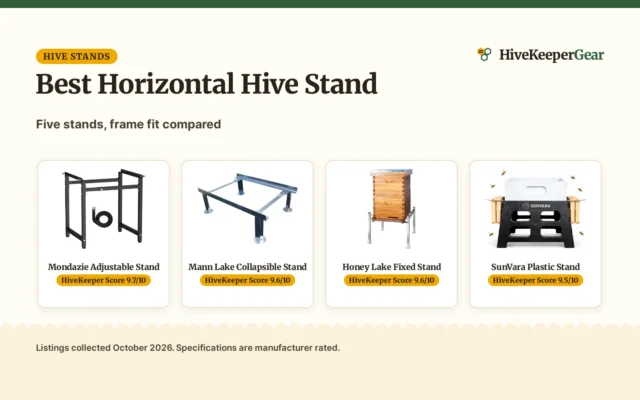
 Mondazie Adjustable Metal Bee Hive Stand9.7/10View on Amazon
A midsummer hive inspection often reminds a beekeeper how heavy standard stacked boxes become when nectar flows fill every comb with honey. Comparing a top bar hive vs horizontal hive reveals distinct approaches to horizontal beekeeping that eliminate the strain of lifting stacked boxes. If your priority is foundationless comb, lower equipment costs, and simple cut-comb or crushed-honey harvesting, choose a top bar hive. If you want sturdy wooden frames that support comb during inspections, fit standard centrifugal extractors, and accept familiar foundation, choose a framed horizontal hive.
HiveKeeperGear earns a commission when you buy through links on this site, at no extra cost to you. As an Amazon Associate I earn from qualifying purchases. Affiliate disclosure.
Planning your apiary: horizontal hive ergonomics
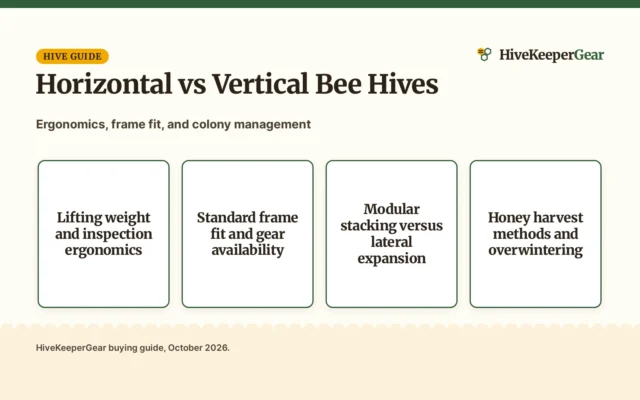
Traditional vertical hives require stacking honey supers above brood boxes, creating tall towers that demand heavy lifting during routine inspections and seasonal harvests. A full honey super can strain your back, especially when you must lift multiple boxes off the brood chamber to check queen laying patterns. Both top bar hives and framed horizontal hives solve this challenge by expanding horizontally along a long trough or box resting securely on sturdy legs or a waist-high stand.
Working at waist height transforms hive inspections into a calm, methodical routine. You open the roof and inspect the colony by sliding bars or lifting frames individually, leaving the remaining colony undisturbed beneath adjacent bars or cloth covers. Because you never lift heavy boxes, horizontal hives remain popular among beekeepers seeking a gentler physical routine, urban apiarists working in compact yards, and keepers managing colonies without extra lifting assistance. While both systems share this horizontal layout, the internal hardware creates distinct beekeeping experiences.
Top bar hive vs horizontal hive: key differences
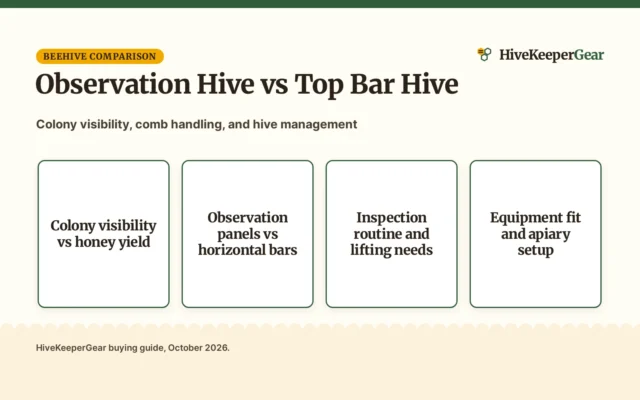
Choosing between these horizontal designs comes down to how comb is built, supported, and harvested. A top bar hive uses simple wooden slats across the top of a trough, allowing bees to sculpt natural, unsupported wax comb. A framed horizontal hive uses full wooden frames that encase the comb on all sides, often matching standard Langstroth dimensions.
| Feature | Top Bar Hive | Horizontal Hive | Relevant Guide |
|---|---|---|---|
| Comb structure | Unsupported comb hanging from wooden bars | Enclosed comb supported by wooden frames | Beehive frames |
| Foundation support | Natural foundationless comb built by bees | Compatible with wax or plastic foundation | Foundation guide |
| Honey harvesting | Crush-and-strain or cut-comb harvesting | Centrifugal honey extractor or crush | Honey extractors |
| Comb handling | Must remain vertical to prevent comb breakage | Rigid frames allow rotation and inspection | Hive tools |
| Equipment standard | Custom bar lengths and angled troughs | Standard Langstroth frame dimensions | Long Langstroth comparison |
| Colony exposure | Minimal exposure as adjacent bars stay in place | Cover cloths keep uninspected frames dark | Horizontal vs vertical hives |
Comb design and foundation support
The defining difference between these hive styles lies in how the bees construct their comb. In a top bar hive, the beekeeper provides only a wooden bar with a narrow starter guide or a line of beeswax along the center. The bees anchor the comb to the underside of the bar and draw it downward into the sloped cavity. Because there are no side bars or bottom bars, the wax comb hangs free. The bees control cell size entirely, drawing worker brood cells, drone comb, and honey storage cells according to colony needs. While this approach creates beautiful, natural wax comb, fresh comb is soft and vulnerable to breakage. A beekeeper must handle every top bar with care, keeping the comb in a vertical plane so gravity does not snap the wax off the wooden bar.
In contrast, a framed horizontal hive uses rectangular wooden frames that surround the comb on all edges. Beekeepers can insert sheets of wax or plastic foundation, or let the bees draw foundationless comb within the safety of the wooden frame. The frame provides structural rigidity. You can rotate a framed comb, tilt it to catch sunlight while looking for eggs, and transport it without fear of structural failure. For beekeepers who want to inspect colonies quickly or move combs between hives, the structural support of a wooden frame provides valuable peace of mind.
Hive inspections and colony disruption
Colony temperament during an inspection often reflects how much of the hive interior is exposed to outside light and cool drafts. In a standard vertical hive, removing the inner cover exposes the entire top of the box, releasing heat and exciting the bees. Horizontal hives handle inspections much more gently, but they do so through different mechanisms.
In a top bar hive, the wooden bars fit tightly together along the rim of the trough, forming their own continuous ceiling under the roof. When you begin an inspection, you use your hive tool to break propolis seals and lift a bar. The rest of the colony remains in darkness beneath the remaining bars. By shifting bars along the cavity, you inspect the brood nest while exposing only a narrow gap to the open air. This keeps brood warm and maintains a quiet, calm colony temperament throughout the inspection.
A framed horizontal hive typically uses open spaces between frame top bars, similar to a standard Langstroth box. To maintain heat and keep bees calm during an inspection, horizontal beekeepers lay canvas cloths or lightweight wooden follower boards over the frames. As you slide the cloth back to reveal an individual frame, the rest of the cavity remains dark and covered. Puffing cool smoke from a stainless steel bee smoker across the top bars directs the bees downward, allowing you to lift each frame smoothly. Both styles excel at minimizing colony stress compared to vertical setups, though the integrated ceiling of a top bar hive requires fewer separate canvas covers.
Honey harvesting and wax handling
Your choice between these hives directly shapes your honey harvest routine and the equipment you will need in your honey house. Because top bar combs lack surrounding frames and wire reinforcement, they cannot withstand the centrifugal force of a spinning honey extractor. Instead, harvesting from a top bar hive involves slicing the comb away from the wooden bar with a clean knife. Beekeepers can cut the comb into neat squares for fresh comb honey or crush the comb inside a food-grade bucket and pour it through stainless steel honey strainers. This crush-and-strain method yields raw honey and substantial amounts of pure beeswax, requiring very little equipment. However, because the bees must draw new comb from scratch each season, a portion of their nectar intake goes into producing wax rather than surplus honey.
A framed horizontal hive provides greater harvesting flexibility. Because the comb is supported by a sturdy wooden frame, you can uncap the wax cappings using specialized uncapping tools and place the frames directly into a standard centrifugal extractor. The extractor spins the liquid honey out against the drum walls while leaving the drawn wax comb intact. You can then return the empty drawn comb to the hive, where worker bees immediately clean and refill it during an active nectar flow. Reusing drawn comb allows the colony to store honey more rapidly, resulting in larger seasonal yields. If you prefer crush-and-strain or cut comb, you can still harvest framed comb that way, but having the option to extract and preserve drawn comb is a major benefit of framed horizontal hives.
Equipment availability and expansion
Beekeeping equipment compatibility becomes an important consideration as your apiary grows. Most commercial beekeeping gear in North America is built around standard Langstroth frame dimensions. If you choose a framed horizontal hive built for standard deep frames, you can purchase pre-assembled frames, wax-coated foundation, frame feeders, and replacement parts from virtually any supply catalog. Furthermore, you can readily buy nucleus colonies from local beekeepers, because the standard nuc frames slide straight into your horizontal hive cavity.
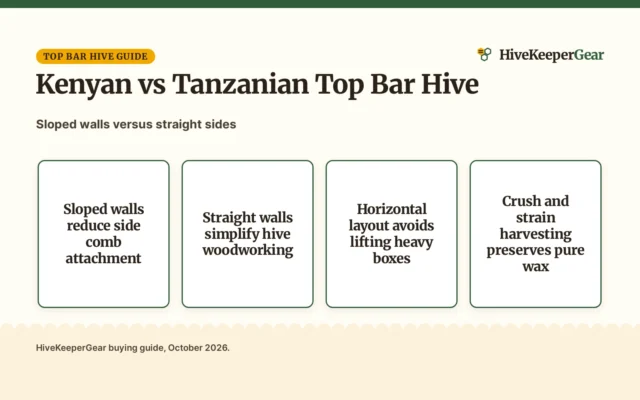
Top bar hives operate on non-standardized dimensions. Kenyan top bar hives feature sloping sides that encourage bees to build comb without attaching it to the hive walls, while Tanzanian models have straight sides. Top bar widths, lengths, and trough depths vary widely between different manufacturers and home-built plans. You cannot buy standard nucleus colonies to install into a top bar hive; instead, you must install a packaged bee cluster or shake a captured swarm into the trough. You must also craft or source matching bars whenever you expand. For beekeepers who enjoy woodworking, building a top bar hive from scratch offers great satisfaction at modest expense. For keepers who prefer off-the-shelf equipment and easy frame swaps with neighboring beekeepers, framed horizontal hives offer superior compatibility.
How to choose between top bar and horizontal hives
Deciding between a top bar hive and a framed horizontal hive ultimately depends on your physical goals, budget, and beekeeping philosophy. Both styles successfully protect your back by eliminating heavy lifting, allowing you to manage productive colonies at comfortable waist height.
Select a top bar hive if:
- You prefer natural beekeeping principles that let bees draw foundationless comb according to their own biological rhythm.
- You want a simple hive design that can be built at home using basic lumber or purchased as a minimalist kit.
- You plan to harvest honey through crush-and-strain or cut-comb methods without investing in bulky centrifugal extractors.
- You appreciate quiet, gentle inspections where the hive roof opens bar by bar with minimal disturbance to the brood nest.
Select a framed horizontal hive if:
- You want the convenience of using standard frames and foundation available from mainstream bee supply vendors.
- You want the ability to install standard nucleus colonies purchased from local beekeepers in early spring.
- You plan to use a centrifugal extractor to harvest honey while preserving valuable drawn comb for rapid refilling.
- You want sturdy, rotatable frames that simplify inspections and reduce the risk of accidental comb collapse during warm weather.
FAQs for beekeepers
Can you extract honey from a top bar hive with an extractor?
Standard centrifugal extractors require supported wooden frames and cannot spin delicate, frameless top bar combs without tearing the wax. Top bar beekeepers harvest honey by cutting comb off the bar for cut-comb honey or by crushing and straining the wax through mesh filters.
Are horizontal hives warmer in winter than vertical hives?
Horizontal hives offer excellent thermal efficiency because beekeepers can insert insulated follower boards to shrink the internal cavity around the winter cluster. Because there are no stacked box seams where cold drafts can enter, the colony conserves warmth effectively during cold months.
Can you install a nucleus colony into a top bar hive?
Standard nucleus colonies come on rectangular wooden frames that do not fit into the angled cavity of a top bar hive. Beekeepers starting a top bar hive typically install packaged bees, catch a swarm, or carefully transfer comb using rubber bands attached to top bars.
Do bees build cross comb more often in top bar hives?
Bees are more prone to building cross comb across top bars if the hive is unlevel or if starter strips are misaligned. Framed horizontal hives guide comb construction more reliably, especially when fitted with embossed wax or plastic foundation sheets.
Which hive style requires less physical lifting?
Both hive styles eliminate the heavy lifting of stacked honey supers by keeping all brood and honey combs inside a waist-high box. In both designs, you only lift an individual wooden bar or frame at a time during routine apiary inspections.
More hive guides
Browse every guide by category: beehives, protective gear, hive tools and honey harvesting.
Related comparisons: explore our detailed guides comparing Long Langstroth hives to top bar hives, horizontal versus vertical hives, and top bar hive options. Starting fresh with apiary equipment? Review our comprehensive guide to beekeeping supplies for beginners.