Kenyan vs Tanzanian Top Bar Hive: Which One Should You Buy?
A side-by-side guide to Kenyan and Tanzanian top bar hives, comparing sloped versus straight walls, comb building, comb stability, and yard management.

On this page
Top picks at a glance
As an Amazon Associate I earn from qualifying purchases.
- 1
 BeeCastle 8 Frame Langstroth Bee Hive Boxes Coated with9.7/10View on Amazon
- 2
 Beehive 8 Frame Bee Hives and Supplies Starter Kit9.4/10View on Amazon
- 3
 Colingmill 2 Pcs 8 Frame Bee Hive Telescoping Top Cover Metal9.4/10View on Amazon
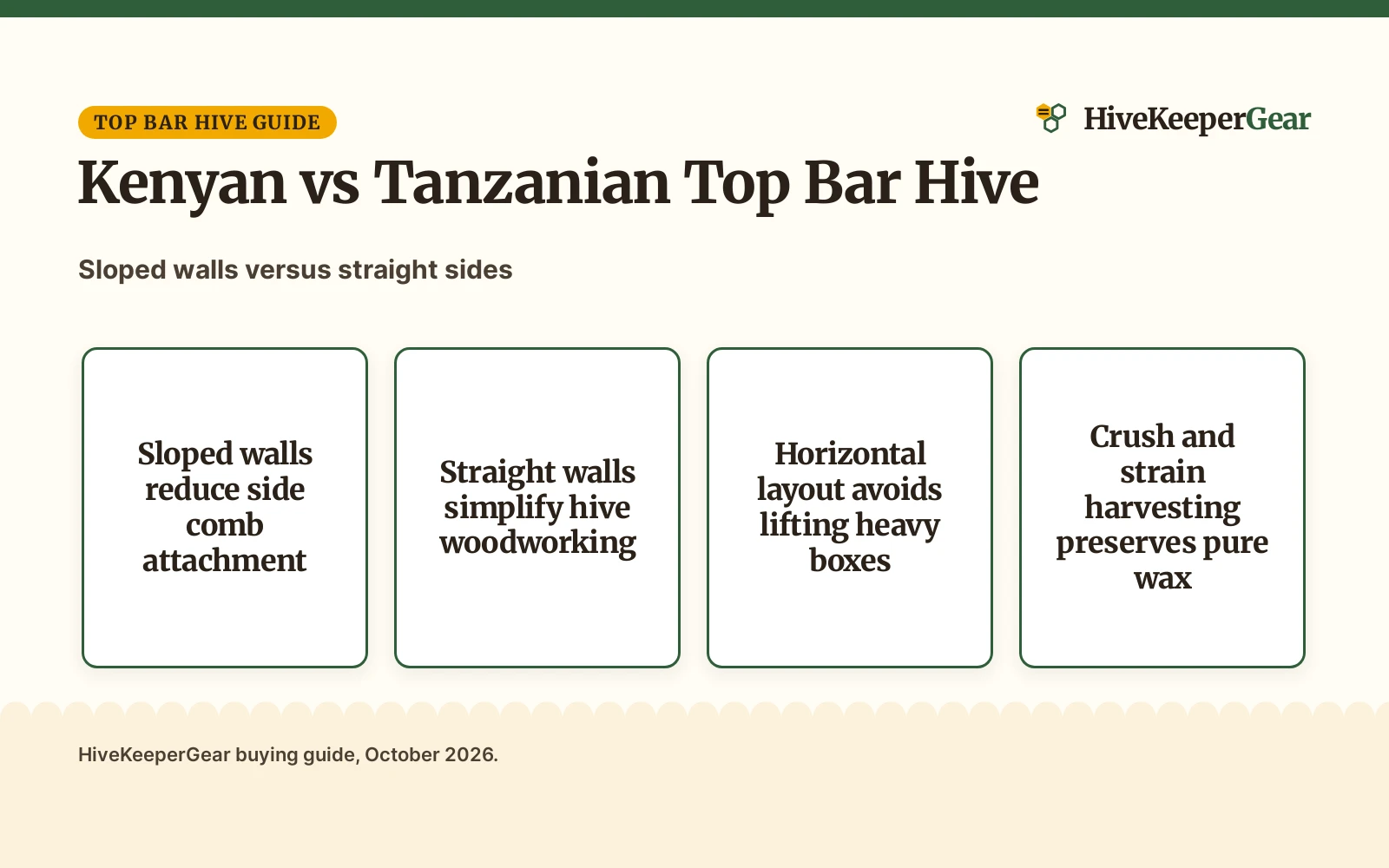
During a midsummer hive inspection when comb is heavy with brood and honey, choosing between a kenyan vs tanzanian top bar hive comes down to whether you prefer cleaner comb inspections or simpler box construction. For most backyard beekeepers, the Kenyan top bar hive is the practical choice because its sloped walls discourage bees from attaching comb to the sides, resulting in smoother bar removals with far less comb breakage. The Tanzanian top bar hive features straight vertical walls that are easier to build with basic carpentry tools, but bees routinely attach comb along the vertical sides, requiring careful slicing with a hive tool during every inspection. We compared wall slope, comb attachment tendencies, comb stability, woodworking complexity, and routine yard handling to help you choose the right horizontal hive style.
HiveKeeperGear earns a commission when you buy through links on this site, at no extra cost to you. As an Amazon Associate I earn from qualifying purchases. Affiliate disclosure.
Before you choose: horizontal hive basics
Both the Kenyan and Tanzanian designs belong to the horizontal hive family, which means colonies expand sideways across a single long trough rather than upward through stacked boxes. Because you inspect individual bars rather than tiered boxes, there are no heavy honey supers to lift during routine colony checks. Before selecting a design, consider your yard space, your comfort with comb handling, your woodworking experience, and how much time you want to spend detaching comb during inspections.
Horizontal beekeeping requires a calm, deliberate inspection technique. Instead of prying apart stacked boxes glued with propolis, you lift individual wooden bars while keeping the rest of the cavity covered with a canvas cloth. Choosing the right wall profile determines how smoothly those inspections go throughout the spring buildup and summer nectar flow.
The kenyan vs tanzanian top bar hive comparison
| Comparison Factor | Kenyan Top Bar Hive | Tanzanian Top Bar Hive | Related Guide |
|---|---|---|---|
| Side wall profile | Sloped inward along both sides | Straight vertical side walls | Top bar hive gear |
| Comb attachment | Minimal side attachment by bees | Extensive comb attachment to walls | Hive tools |
| Comb shape | Trapezoidal comb profile | Rectangular comb profile | Horizontal hive design |
| Box construction | Requires angled bevel cuts | Simple square ninety-degree joints | Beekeeping supplies |
| Honey harvest method | Crush and strain or honey press | Crush and strain or honey press | Harvesting methods |
1. Wall angle and comb attachment
The defining structural difference between these horizontal hive styles is wall angle. The Kenyan top bar hive features sloped side walls that taper inward toward a narrower floor. Honey bees naturally build comb in a catenary curve, similar to a hanging chain suspended from upper anchor points. Because the sloped walls closely follow this natural curve, bees rarely attach comb edges to the wooden sides. As a result, you can lift top bars out of the hive with minimal risk of tearing delicate wax or rolling worker bees.
In contrast, the Tanzanian top bar hive has straight vertical side walls. While bees build downward from the top bars, they treat vertical wooden surfaces as permanent structural supports, anchoring comb directly to the hive walls with wax and propolis. Before lifting a bar from a Tanzanian hive, you must reach down with a hive tool to slice the comb away from both side walls. If you lift without cutting, the comb can shear off the bar and fall into the hive cavity.
2. Comb shape and structural stability
Wall angle directly determines the shape and structural stability of the comb. Because a Kenyan hive tapers inward, the comb drawn by the bees takes on a distinct trapezoidal shape that is wider across the top bar and narrower along the bottom. This tapered profile makes the comb naturally self-supporting, keeping the center of gravity close to the top bar and reducing the risk of comb collapse when bars are rotated during inspections.
The straight walls of a Tanzanian top bar hive produce broad rectangular combs. While a rectangular comb provides more surface area for brood and honey storage, it also carries substantial weight at the lower corners. Because top bar hives do not use wire reinforcement or foundation sheets, heavy rectangular combs are more vulnerable to sagging or tearing, especially once the side attachments that previously supported them against the vertical walls have been sliced free.
3. Protective gear and inspection mechanics
Top bar hive inspections differ fundamentally from vertical box inspections. In standard stacked hives, removing the outer and inner covers exposes the entire colony to open daylight. In both Kenyan and Tanzanian top bar hives, top bars sit flush against one another, forming an unbroken wooden ceiling over the colony. Removing a bar exposes only a narrow opening while the rest of the brood nest remains dark and protected.
This enclosed layout keeps colonies calm, but protective gear remains essential. Smoke from a bee smoker masks alarm pheromones, while a bee suit or jacket with a veil protects against stings. Because natural comb in top bar hives lacks plastic foundation, you must keep bars vertical during inspections, as unsupported comb can collapse if held flat.
4. Feeder styles and internal feeding
Feeding a horizontal top bar hive requires equipment designed for internal placement. Conventional hive-top feeders built for stacked boxes do not fit directly on top bars because there is no open hole in a flat top bar ceiling. Beekeepers commonly use internal division board feeders, inverted jar feeders placed on the bottom board behind a follower board, or shallow pans filled with syrup and floating rafts to prevent drowning.
Because bees in top bar hives draw every comb from scratch without foundation, supplemental syrup feeding is vital when establishing new colonies in spring. Feeding fuels wax production and accelerates comb building until local nectar flows begin.
5. Honey harvesting and wax production
Harvesting honey from horizontal hives requires minimal specialized equipment. In both Kenyan and Tanzanian top bar hives, honey comb is harvested by selecting fully capped bars, cutting the comb away from the wooden bar, and placing it into clean buckets. The comb is crushed and poured through a fine mesh honey strainer, or pressed using a manual honey press. This crush-and-strain method yields raw honey alongside clean beeswax free from commercial foundation residues.
Because top bar combs are built naturally without foundation sheets or wire reinforcement, they cannot be spun in a centrifugal honey extractor. The centrifugal force would tear the unsupported wax apart. Returning empty drawn comb is standard practice with framed Langstroth hives, but top bar beekeeping embraces regular comb renewal, providing fresh wax each season and reducing old comb buildup in the apiary.
A seasonal management timeline
Spring: install a package or caught swarm onto bars with starter wax guides. Feed sugar syrup continuously behind a follower board until the colony draws out comb. Inspect weekly to verify the queen is laying and ensure bees draw straight comb along each bar.
Summer: expand the brood nest by gradually sliding the follower board outward as the colony grows. In Tanzanian hives, check side walls during each visit and slice away burr comb before it hardens. In Kenyan hives, confirm comb hangs freely without bridging adjacent bars. Harvest capped honey bars from the rear of the hive during the main nectar flow.
Fall: check honey reserves and consolidate the colony for winter. Slide follower boards inward to reduce empty space and fit an entrance reducer to deter mice. Ensure the cluster has sufficient stores for cold weather.
Winter: leave the hive undisturbed during cold months. Check that the roof remains secure against wind and rain, clear snow from the entrance, and prepare clean bars for next spring.
Helpful accessories for top bar beekeeping
A few specialized accessories make horizontal hive management simpler and cleaner:
- A long hive tool or comb knife to slice burr comb along hive walls during inspections.
- A follower board to adjust cavity size as the colony expands or contracts through the season.
- A spare top bar comb stand to rest bars upright while inspecting brood comb.
- A bee brush for gently sweeping bees off honey comb prior to harvesting.
- A settling bucket with a honey gate and dual sieve strainer for clean bottling.
A dedicated comb knife or long hive tool is particularly helpful when managing straight-walled Tanzanian hives, freeing comb cleanly without tearing delicate wax.
What neither hive design will change
Choosing between sloped and straight walls does not alter basic honey bee biology or apiary regulations. Both hive types require diligent swarm management, regular monitoring, and proper ventilation. We cover equipment specifications only and do not provide veterinary or colony treatment advice. For local regulations and colony health questions, consult your state apiary inspector or local extension office.
FAQs for beekeepers
Which top bar hive is easier for beginners to inspect?
The Kenyan top bar hive is generally easier for beginners because its sloped walls discourage bees from attaching comb to the sides. With fewer comb attachments to slice through, beekeepers experience far fewer broken or torn combs during routine hive inspections.
Why is the Kenyan top bar hive more popular than the Tanzanian design?
The Kenyan top bar hive is far more common in backyard apiaries because its sloped walls minimize side comb attachment. In a Tanzanian hive, bees anchor comb securely to the straight vertical walls, making inspections slower and increasing the likelihood of broken comb.
Can you extract honey from a top bar hive with a centrifugal extractor?
Because top bar combs are built naturally without foundation or supporting frame wires, they cannot withstand the centrifugal force of a standard honey extractor. Beekeepers harvest honey from both Kenyan and Tanzanian hives by crushing capped comb and straining it through a fine mesh honey strainer.
Do top bar hives require heavy lifting during inspections?
No, a major benefit of horizontal hives is that you only lift an individual top bar at a time. Unlike vertical hives where entire honey supers must be lifted, horizontal management keeps all work at a comfortable standing height.
Why do bees attach comb to straight hive walls?
Honey bees naturally build comb downward in catenary curves and seek to anchor wide, vertical comb structures to straight surfaces for stability. In straight-walled Tanzanian hives, bees treat vertical walls as natural structural supports, securing comb edges to the wood with wax and propolis.
More hive guides
Browse every guide by category: beehives, protective gear, hive tools and honey harvesting.
More picks: explore our guide to top bar bee hive equipment, compare Layens hive vs top bar hive designs, evaluate horizontal vs vertical bee hives, or read our overview of beekeeping supplies for beginners.