Poplar vs Cedar Beehive: Which One Should You Buy?
Cedar resists rot for years with little care; poplar costs less but needs paint. How the hive woods compare and which suits your apiary.

On this page
Top picks at a glance
As an Amazon Associate I earn from qualifying purchases.
- 1
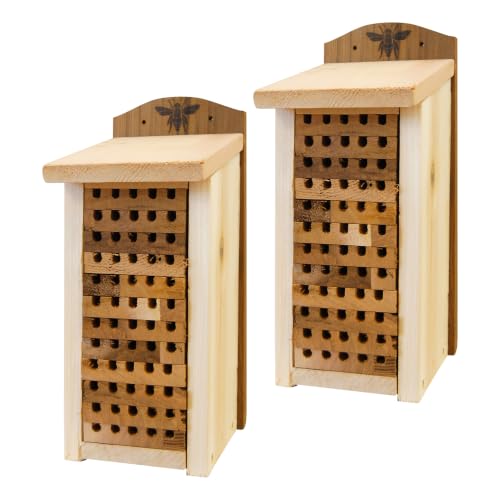 Woodlink Heavy Duty Cedar Mason Bee House9.5/10View on Amazon
- 2
 Wooden Insect Hotel9.4/10View on Amazon
- 3
 MayBee 8-Frame Beehive Quilt BoxView on Amazon
- 4
 3 Pcs Beehive Candy Board for Langstroth 10 Frame Bee HivesView on Amazon
The wood the hive is built from decides how many seasons it stands in the weather. That is the poplar vs cedar beehive question: cedar resists rot and insects naturally and weathers for years with little care, while poplar costs less up front but needs paint and maintenance to survive outdoors. 1 honest note up front: no poplar hives appear in the reference listings for this guide, so the wood comparison draws on the materials themselves and the cedar figures come from the QHZHANG Nordic cedar listing.
Other hives and gear to compare
 MayBee 8-Frame Beehive Quilt BoxCheck price on Amazon
 3 Pcs Beehive Candy Board for Langstroth 10 Frame Bee HivesCheck price on Amazon
HiveKeeperGear earns a commission when you buy through links on this site, at no extra cost to you.
Poplar vs cedar beehive: the short answer
| Poplar | Cedar | |
|---|---|---|
| Up-front cost | Lower; the budget hive wood | Higher; the premium hive wood |
| Rot resistance | Low; needs paint to survive outdoors | High; natural oils resist rot and insects |
| Maintenance | Repaint every few seasons | Little; weathers to gray gracefully |
| Weight | Heavier than cedar | Light for its strength |
| Listed example | No poplar hives in the listings here | QHZHANG 10-frame Nordic cedar, wax-dipped, up to 15 years stated |
| Best moment | Many hives on a budget, painted well | Buy once, keep for years |
What poplar gives you
Poplar is the economical hive wood: widely available, easy to mill and paint, and kind to the budget when you are building out an apiary of many hives. The catch is durability. Poplar has little natural resistance to rot or insects, so an unpainted poplar box will not last outdoors; painted and maintained, it serves fine, but the paint job is part of the cost. No poplar hives appear in the listings here, so there are no stated dimensions to quote for poplar; the VEVOR fir listing at 0.74 in thick and the Honey Lake cedar deep box at 19.88 by 16.25 by 9.56 inches show the standard 10-frame Langstroth sizes any poplar box would follow.
What cedar gives you
Cedar is the wood that asks the least of the keeper. Its natural oils resist rot and insects, it is light for its strength, and it weathers to an attractive gray without paint. The QHZHANG listing puts numbers on it: cold-climate Nordic cedar, 30-minute wax dipping for waterproofing, and a stated service life of up to 15 years. That 10-frame kit includes 1 deep brood box and 10 beeswax foundation sheets. Cedar costs more than poplar or fir, but the premium buys years of not repainting. For a keeper with a few hives who would rather tend bees than boxes, cedar is the easy answer. Our Langstroth hives guide covers the box styles both woods come in.
Which wood fits your apiary
Match the wood to how many hives you run and how you feel about a paintbrush. Running 1 to 4 hives and wanting them to last with minimal care: cedar, and the QHZHANG’s 15-year stated life shows why. Building out 10-plus hives on a budget: poplar or fir, painted well from day 1, keeps the per-hive cost down; the VEVOR’s 0.74-inch fir boxes and dovetail joinery show what a solid budget box looks like. Either wood, keep the boxes off damp ground, repaint poplar before the paint fails rather than after, and expect cedar to gray. See our beehive starter kit guide for what goes inside the boxes.
Cedar boxes in the listings
Three cedar kits appear in the reference listings, and they show what the premium wood buys. The QHZHANG kit is cold-climate Nordic cedar with a 30-minute wax dip the listing says makes the box waterproof and preservative, with a stated service life of up to 15 years. Its deep box measures 19-7/8 by 16-3/8 by 9-7/8 inches, the 10-frame Langstroth standard, with dovetail joints and connectors the listing says keep the hive from blowing over in strong winds. The Honey Lake kit is also beeswax-coated cedar: 2 deep brood boxes and 1 medium super, 30 wood frames with 30 waxed plastic foundations, the deep box 19.88 by 16.25 by 9.56 inches and the medium 19.88 by 16.25 by 6.6 inches, dovetail joints with pre-drilled holes. The JubiNatural kit is a smaller beeswax-coated cedar set, 1 deep plus 1 medium, with a transparent observation window and a queen excluder in the box. The pattern across all three: cedar plus a wax or beeswax coating, standard dimensions, dovetail joinery.
What the budget boxes look like
The fir listings show the class poplar would compete in. The VEVOR kit is beeswax-coated fir, 0.74 inches thick, with dovetail joinery, acrylic observation windows and ventilation ports: 1 deep plus 1 medium box with 20 frames, 42.1 pounds for the kit. The Golden Palace kit is also fir, built around 7 auto-flow frames for tapping honey straight into the jar. Both are honest working boxes: solid joinery, coated against the weather, aimed at keepers building out an apiary. A poplar box would live in this same class, with one extra demand: fir gets a beeswax coat in these listings, while poplar needs real paint, applied before the first season and renewed before it fails.
Coatings compared: paint, beeswax, wax dipping
This is where the wood choice bites. Poplar has no coating option in the listings because there are no poplar hives here, and that is the point: poplar’s protection is paint, chosen and applied by you. The fir and cedar listings show the factory alternatives. VEVOR coats its fir in beeswax; Honey Lake and JubiNatural do the same for cedar; QHZHANG goes further with a 30-minute wax dip it says waterproofs the box for up to 15 years. Beeswax coating is a surface treatment, paint is a film: paint hides the grain and needs recoating, wax soaks in and weathers. For poplar, there is no soaking option that replaces paint; for cedar, many keepers skip coating entirely and let it gray.
FAQs for beekeepers
Is cedar better than poplar for beehives?
For durability, yes: cedar resists rot and insects naturally while poplar needs paint. For budget, poplar wins. The choice is maintenance against money.
How long does a cedar beehive last?
The QHZHANG listing states up to 15 years for its wax-dipped Nordic cedar boxes. Real life depends on climate and care.
Do poplar beehives need to be painted?
Yes. Poplar has little natural rot resistance, so paint is what stands between the box and the weather. Cedar can go unpainted.
Are the boxes the same size in either wood?
Yes. Both follow standard Langstroth dimensions; the Honey Lake deep box at 19.88 by 16.25 by 9.56 inches is the 10-frame standard either wood would match.
What is wax dipping?
The QHZHANG listing describes 30-minute wax dipping that makes the cedar waterproof and preservative. It is a factory treatment, not something to do at home.
What wood are the frames?
The listings name pine frames in the QHZHANG and Honey Lake kits, and food-grade plastic flow frames in the Golden Palace kit. Frames are replaceable wear parts; the box wood is the long-term decision.
More hive guides
Related: our Langstroth hives guide, beehive starter kit picks and best 8-frame beehive picks.