Squeeze Bottle vs Glass Honey Jar: Which One Should You Buy?
A practical comparison of squeeze bottles and glass honey jars for beekeepers, covering dispensing convenience, clarity, shelf life, and warming crystallized honey.

On this page
Top picks at a glance
As an Amazon Associate I earn from qualifying purchases.
- 1
 LepoHome 50-Pack 6 Inch Wooden Honey Dipper Sticks9.6/10View on Amazon
- 2
 24 Pack Honey BottleView on Amazon
- 3
 2 Pcs Honey Bear Bottle Plastic Honey Squeeze BottleView on Amazon
- 4
 Honey Bear Bottle Plastic Honey Squeeze Bottle TransparentView on Amazon
- 5
 8 Pack 5oz Honey Squeeze BottleView on Amazon
- 6
 Sliner 36 Set Clear Honey Squeeze BottleView on Amazon
- 7
 VEVOR Pneumatic Paste Liquid Filling MachineView on Amazon
Choosing between a squeeze bottle vs glass honey jar comes down to how you plan to use and store your harvest: squeeze bottles provide unmatched everyday convenience for the kitchen table, while glass honey jars offer superior long-term preservation, clearer display, and simpler warming when honey crystallizes. For beekeepers packaging honey to share, sell, or keep in the pantry, comparing both options reveals distinct trade-offs in dispensing, sealing, weight, and customer preference. This guide walks through each factor step by step so you can select the right container for your honey harvest.
Other hives and gear to compare
 24 Pack Honey BottleCheck price on Amazon
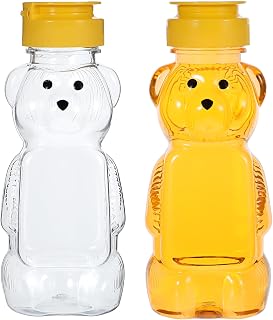 2 Pcs Honey Bear Bottle Plastic Honey Squeeze BottleCheck price on Amazon
 Honey Bear Bottle Plastic Honey Squeeze Bottle TransparentCheck price on Amazon
 8 Pack 5oz Honey Squeeze BottleCheck price on Amazon
 Sliner 36 Set Clear Honey Squeeze BottleCheck price on Amazon
 VEVOR Pneumatic Paste Liquid Filling MachineCheck price on Amazon
HiveKeeperGear earns a commission when you buy through links on this site, at no extra cost to you. As an Amazon Associate I earn from qualifying purchases. Affiliate disclosure.
Before you bottle: understanding honey density and volume
Before choosing containers, beekeepers must understand how honey density affects capacity. Honey is substantially denser than water, meaning container capacities stated in liquid volume do not match net weight. When shopping for containers, check whether a stated specification refers to fluid volume or honey weight. For example, Skywin lists a bottle holding 16 ounces of honey by weight while holding 12 fluid ounces of liquid volume. Similarly, Bekith specifies an 8 fluid ounce container that holds 12 ounces of honey. In smaller sizes, Eccliy lists a container holding 8.8 ounces (250 grams) of honey while holding 6.1 ounces of water or 180 milliliters. Always verify container labels before filling, and consult our guide to honey jar sizes for standard bottling weights.
Squeeze bottle vs glass honey jar: comparison at a glance
Both containers serve distinct roles in the honey house. Squeeze bottles emphasize convenience, leak-resistant dispensing, and shatterproof handling, whereas glass jars excel in airtight preservation, retail display, and heat tolerance. The table below compares the essential characteristics of each option.
| Feature | Squeeze Bottle | Glass Honey Jar | Practical Verdict |
|---|---|---|---|
| Primary material | Food-grade plastic | Clear glass | Glass offers clarity; plastic resists breakage |
| Dispensing method | Flip-top spout or no-drip silicone valve | Spoon, dipper, or wide-mouth pour | Squeeze bottles prevent sticky counter drips |
| Warming tolerance | Varies by plastic (SkyJourney and PPXHFV rate their bottles to 122 degrees Fahrenheit) | Tolerates warm water baths without warping | Glass reliquefies crystallized honey safely in warm water |
| Airtight seal | Flip cap with inner seal or gasket | Lined metal lid or continuous thread cap | Glass provides superior long-term moisture barrier |
| Weight and shipping | Lightweight and shatterproof | Heavy and breakable | Plastic saves freight costs and prevents transit breaks |
| Visual clarity | Clear plastic, may scuff over time | Clear glass with high optical clarity | Glass showcases honey color for retail sales |
| Related guide | Honey jar dispenser | Glass honey jars | Glass vs plastic honey jars |
Dispensing convenience and everyday table use
The standout advantage of a squeeze bottle is mess-free dispensing. Honey is viscous and sticky, making traditional jar dispensing prone to drips down the sides, sticky rims, and messy countertops. Most honey squeeze bottles feature flip-top caps, and select models include internal silicone valves. When you squeeze the bottle, honey dispenses smoothly; on valve-equipped bottles, releasing pressure snaps the opening shut to cut off the stream cleanly. This makes squeeze bottles a practical choice for morning tea, toast, and quick kitchen drizzling.
Standard wide-mouth glass jars typically require a utensil for dispensing. Serving honey from an open jar involves a spoon or wooden dipper, which readily drips unless handled with care. Dipping utensils into an open jar can also introduce moisture or food crumbs into raw honey. For beekeepers who prefer the look of glass but want clean dispensing, a dedicated honey jar dispenser offers a bottom-release valve that eliminates dripping.
Clarity, presentation, and retail display
When it comes to visual presentation, glass honey jars remain the standard. Raw honey ranges from water-white clover to rich amber and dark buckwheat. Clear glass possesses optical clarity that lets natural light illuminate the honey, showcasing its purity. For beekeepers selling at farmers markets or farm stands, honey packed in classic glass jars conveys artisanal value that appeals to premium buyers.
Plastic squeeze bottles provide clear visibility when fresh, but flexible plastic lacks the gloss and heft of glass. Plastic surfaces can also scuff during handling and transport. However, certain squeeze bottles, such as those from Skywin, feature dual flat panels specifically designed for labeling, providing smooth surfaces for apiary branding and nutritional details. For gifts and retail sales, glass wins on visual charm, while squeeze bottles excel for utilitarian daily use.
Crystallization and warming temperature limits
Most raw honey eventually crystallizes as glucose separates from solution. When honey solidifies inside a container, how easily you can reliquefy it becomes a major consideration. This is where glass honey jars hold a significant advantage over plastic squeeze bottles.
Glass withstands gentle warming in a warm water bath without risk of softening or warping. To reliquefy crystallized honey in glass, you loosen the lid and place the jar in a bath of warm water until the crystals dissolve. Plastic containers require far more caution with heat. For example, maker listings for PPXHFV and SkyJourney specify a maximum temperature resistance of 122 degrees Fahrenheit for their bottles. Exposing bottles with this rating to hotter water can warp the plastic walls and compromise the cap seal. In addition, wide-mouth glass jars allow you to spoon out crystallized honey directly as a spread, which is difficult through a narrow squeeze spout.
Airtight sealing and moisture protection
Honey is naturally hygroscopic, meaning it absorbs moisture from ambient air. If raw honey absorbs excessive moisture, naturally occurring wild yeasts can trigger fermentation. A tight, reliable seal is essential for preserving your harvest over multiple seasons.
Glass jars paired with plastisol-lined metal lids provide a hermetic moisture barrier. Glass is non-porous and will not transmit atmospheric moisture over extended storage. Squeeze bottles rely on flip-top caps with foam liners, foil gaskets, or snap lids. While these closures provide good leak resistance for table use and transport, plastic walls have slight permeability over long durations. For honey intended for long-term pantry storage, glass jars offer superior shelf stability.
Weight, durability, and transport
Weight and fragility are the main drawbacks of glass jars. Glass is heavy and brittle. Transporting glass jars to markets requires padded dividers, and an accidental drop on concrete breaks the jar and ruins the honey. Shipping glass jars also adds postage expense due to tare weight and carries the risk of parcel breakage.
Plastic squeeze bottles offer clear logistical advantages. Food-grade plastic bottles are shatterproof, surviving drops and rough handling during market transport or postal transit. Squeeze bottles are also lightweight, reducing parcel postage when mailing honey to customers. For outdoor markets, gifts sent through the mail, and busy kitchens, squeeze bottles eliminate broken glass hazards.
A step-by-step bottling workflow
Regardless of which container you choose, an orderly bottling routine ensures clean containers and minimal waste:
- Strain after extraction: Pass extracted honey through a fine double-mesh honey strainer into a settling tank to remove comb wax and debris. See our guide on why filter honey for straining methods.
- Let honey settle: Allow honey to rest in a covered tank for several days so air bubbles and wax froth rise to the top surface.
- Dispense with a honey gate: Use a drip-free valve on your bucket, such as a honey bucket with gate, to fill containers cleanly without splattering.
- Wipe container rims: Clean stray honey from threads with a damp cloth before capping to ensure an airtight seal.
- Affix clear labels: Apply labels showing your apiary name, floral source, and net weight in compliance with local food regulations.
Helpful bottling accessories
A few dedicated accessories make bottling day run smoothly:
- A dedicated bottling pail with a gate valve for controlled filling.
- A rimmed stainless tray placed beneath the gate to catch stray drips.
- A calibrated refractometer to verify safe moisture levels before sealing.
- A digital kitchen scale to check that filled containers meet their stated net weight.
- Spare flip-top caps and lined metal lids to replace faulty closures.
What is not covered in this guide
This guide covers retail and household honey containers. It does not address bulk storage pails or commercial automated packaging systems. We also do not provide medical advice or health benefit claims. For commercial food licensing and labeling laws, contact your state department of agriculture or cooperative extension office.
FAQs for beekeepers
Which container is better for honey: squeeze bottle or glass jar?
Neither container is universally better; they serve different purposes. Squeeze bottles are superior for everyday table use, mess-free dispensing, and portable handling. Glass jars are superior for long-term storage, retail presentation, and reliquefying crystallized honey.
Can you warm a plastic honey squeeze bottle to reliquefy honey?
Only in gentle warm water, not hot water. Certain plastic bottles, such as those from PPXHFV and SkyJourney, specify a maximum temperature limit of 122 degrees Fahrenheit. Water hotter than a bottle’s rated limit can deform plastic walls and ruin the seal. For simple reliquefying in a warm water bath, glass jars are much more forgiving.
Why does honey bottle capacity differ between fluid ounces and weight?
Honey is denser than water. Listings from Skywin show that a bottle holding 12 fluid ounces of liquid volume holds 16 ounces of honey by weight. Always check whether a listing states liquid volume or net honey weight before ordering.
Do squeeze bottles keep honey fresh as long as glass jars?
Glass jars provide a tighter long-term moisture barrier because glass is non-porous and pairs with lined metal lids. Squeeze bottles protect freshness during daily use, but plastic walls have slight permeability over multiple years of storage.
Can you spoon crystallized honey out of a squeeze bottle?
Narrow squeeze spouts make scooping crystallized honey nearly impossible once it hardens. Wide-mouth glass jars allow easy spoon access, letting you use crystallized honey as a spread.
More hive guides
Browse every guide in honey harvesting, or explore our guides on beekeeping tools, beehives, and protective gear.
More guides: compare glass vs plastic honey jars, see our guide to standard honey jar sizes, browse top-rated glass honey jars, or check our beekeeping supplies for beginners checklist.