Stainless Steel vs Plastic Honey Extractor: Which One Should You Buy?
Stainless steel lasts for decades and cleans easily; plastic costs less and weighs less. How each holds up at harvest and which fits your apiary.

On this page
Top picks at a glance
As an Amazon Associate I earn from qualifying purchases.
- 1
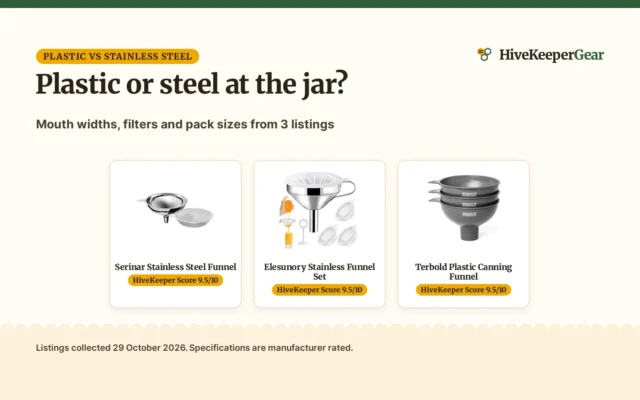
 Serinar Stainless Steel Funnel9.6/10View on Amazon
- 2
 Honey Keeper Bee Hive Smoker Stainless Steel with Heat ShieldView on Amazon
- 3
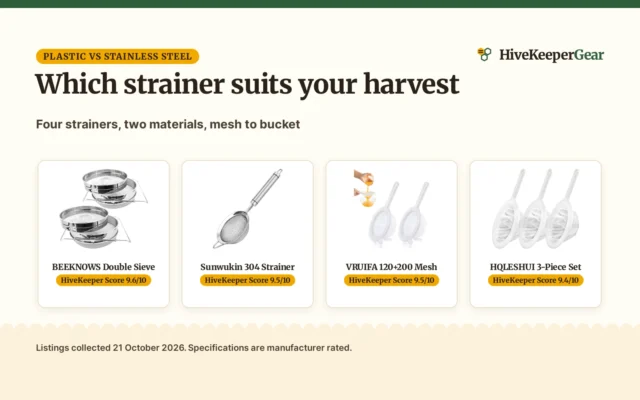
 Flexzion 304 Stainless Steel Honey StrainerView on Amazon
- 4
 Honey StrainerView on Amazon
- 5
 11-inch Stainless Steel Bee Hive Smoker with 3 Pack of SmokeView on Amazon
- 6
 Foxhound Bee Co Stainless Steel 12.5-inch Pro Bee Hive SmokerView on Amazon
- 7
 WMKGG 304 Stainless Steel FunnelView on Amazon
The first real harvest is when the extractor question stops being theoretical. That is the stainless steel vs plastic honey extractor decision: stainless steel costs more up front and lasts for decades of harvests, while plastic costs less, weighs less and suits a keeper who extracts a few supers a year. Both spin honey out of the comb without destroying it; the material decides how the drum ages, how it cleans and how many seasons it serves.
Other hives and gear to compare
 Honey Keeper Bee Hive Smoker Stainless Steel with Heat ShieldCheck price on Amazon
 Flexzion 304 Stainless Steel Honey StrainerCheck price on Amazon
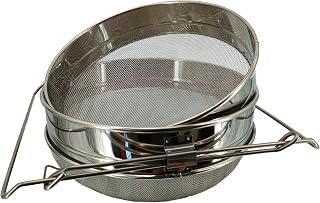 Honey StrainerCheck price on Amazon
 11-inch Stainless Steel Bee Hive Smoker with 3 Pack of SmokeCheck price on Amazon
 Foxhound Bee Co Stainless Steel 12.5-inch Pro Bee Hive SmokerCheck price on Amazon
 WMKGG 304 Stainless Steel FunnelCheck price on Amazon
HiveKeeperGear earns a commission when you buy through links on this site, at no extra cost to you.
Stainless steel vs plastic honey extractor: the short answer
| Stainless steel | Plastic | |
|---|---|---|
| Up-front cost | Higher; a buy-it-once purchase | Lower; the entry-level pick |
| Lifespan | Decades; rust-resistant and rigid | Years; can crack or warp with age |
| Cleaning | Washes out fast; food-grade grades stated | Washes out fine; scratches hold residue |
| Weight | Heavier to move and store | Lighter; easier to carry to the honey house |
| Listed examples | Little Giant 2-frame hand-crank in 18/10; HCTOOL 304 press with 2.8mm wall; FWTRMRC 3.5-gallon press | No plastic extractors in the listings here |
| Best moment | Many hives, many harvests | A few supers a year |
What stainless steel gives you
Stainless steel is the material every listing here is built from, and the grades tell the story: the Little Giant 2-frame hand-crank extractor uses 18/10 stainless, the BEEKNOWS strainer and 1 HCTOOL press use 304, and another HCTOOL press uses 201. Food-grade stainless resists rust, takes hot wash water without warping and does not hold odors from harvest to harvest. The wall figures show the build: the HCTOOL 304 press states a 2.8mm wall with a bottom twice as thick, and the FWTRMRC press holds 3.5 gallons in a barrel 24cm across and 27cm tall, taking 8 to 10 small frames. Steel drums also hold their shape under a spinning load, so the basket stays balanced. The tradeoff is weight and price: a steel extractor is the thing you buy once and hand down.
What plastic gives you
Plastic extractors trade longevity for price and weight. A plastic drum costs a fraction of a steel drum, weighs far less to carry to the honey house and washes out easily when new. The weaknesses show with time: plastic scratches, and scratches hold honey residue and wax that make cleaning harder; thin drums can flex under a spinning load; and long sun exposure makes plastic brittle. No plastic extractors appear in the listings here, so there are no stated capacities to quote. For a keeper with 1 or 2 hives extracting a few supers a year, plastic is a reasonable first extractor; for anyone planning to grow the apiary, it is a stepping stone. Our best honey extractor picks cover both materials.
Which drum fits your harvest
Match the drum to the apiary you will have in 5 years, not the yard you run today. Running 1 or 2 hives and extracting a weekend a year: plastic gets you harvesting now for less money. Running 5-plus hives, extracting for neighbors or planning to expand: stainless steel pays for itself in seasons of service, and the food-grade grades in the listings (18/10, 304) are the ones to look for. Either way, rinse the drum the same day you extract; dried honey is the enemy of both materials. See how to use a honey extractor for the extraction itself and hand crank vs electric for the drive choice.
Sizing the drum to your harvest
Buy the drum for the harvest you actually run. The listings span 2.6, 3.17, 3.5 and 4.2 gallons on the press-style units, with the FWTRMRC listing built around a 3.5-gallon stainless body, while the Little Giant listing is a 2-frame hand-crank extractor. A 2-frame extractor suits a keeper with a few hives who extracts a super at a time; a larger drum suits bigger harvests with fewer batches. Press-style units, which most of these listings are, work differently: they squeeze honey from the comb rather than spinning it out, so the comb is not preserved. If you run crush-and-strain or process cappings wax, a press is the tool; if you want drawn comb back for the bees to refill, you want a true extractor. Either way, match the drum to your frame size: the Little Giant listing notes compatibility with deep frames, and a drum that cannot take your frames is the wrong drum whatever it is made of.
Reading the steel grade before you buy
Not all stainless is equal, and the listings name three grades. 304 stainless appears across the listings as food-grade, corrosion-resistant steel; 201 stainless is a lower-nickel grade that costs less with less corrosion resistance; and 18/10 appears in one listing as the premium food-grade material. Honey is mildly acidic and sits in the drum during extraction, so corrosion resistance is not cosmetic: it is what keeps the drum food-safe season after season. For a drum that meets honey, 304 or 18/10 is the safer pick, and it is worth checking the listing actually names the grade rather than saying stainless and stopping there. On the plastic side, the case is honest: a plastic drum costs less and suits a keeper with a couple of hives who extracts once or twice a year. Watch for flex under a full load and keep wash water warm rather than hot, since plastic warps where steel does not. Whichever drum you choose, rinse it the same day before honey dries, dry it fully before storage, and the drum will outlast the decision.
FAQs for beekeepers
Does stainless steel affect honey flavor?
Food-grade stainless (18/10 and 304 in the listings) is non-reactive, so it does not add flavor to honey. That is why commercial extractors are steel.
Can a plastic extractor handle full supers?
Yes when new, but watch for flex: a heavy load in a thin plastic drum can wobble. Stainless drums hold their shape under the same load.
What is the difference between 304 and 201 stainless?
Both appear in the listings. 304 is the food-grade standard with better corrosion resistance; 201 is a lower-nickel grade that costs less. For a drum that meets honey, 304 or 18/10 is the safer pick.
Is a honey press the same as an extractor?
No. Most listings here are presses, which squeeze honey from comb, while an extractor spins it out and leaves the comb intact. See our honey press vs honey extractor comparison.
How do I clean an extractor?
Rinse with warm water the same day, before honey dries. Stainless takes hotter water; plastic should stay below warping heat. Dry fully before storage.
More hive guides
Related: our best honey extractor picks, hand crank vs electric and honey press vs honey extractor.