How to Use a Honey Extractor: Step-by-Step Guide
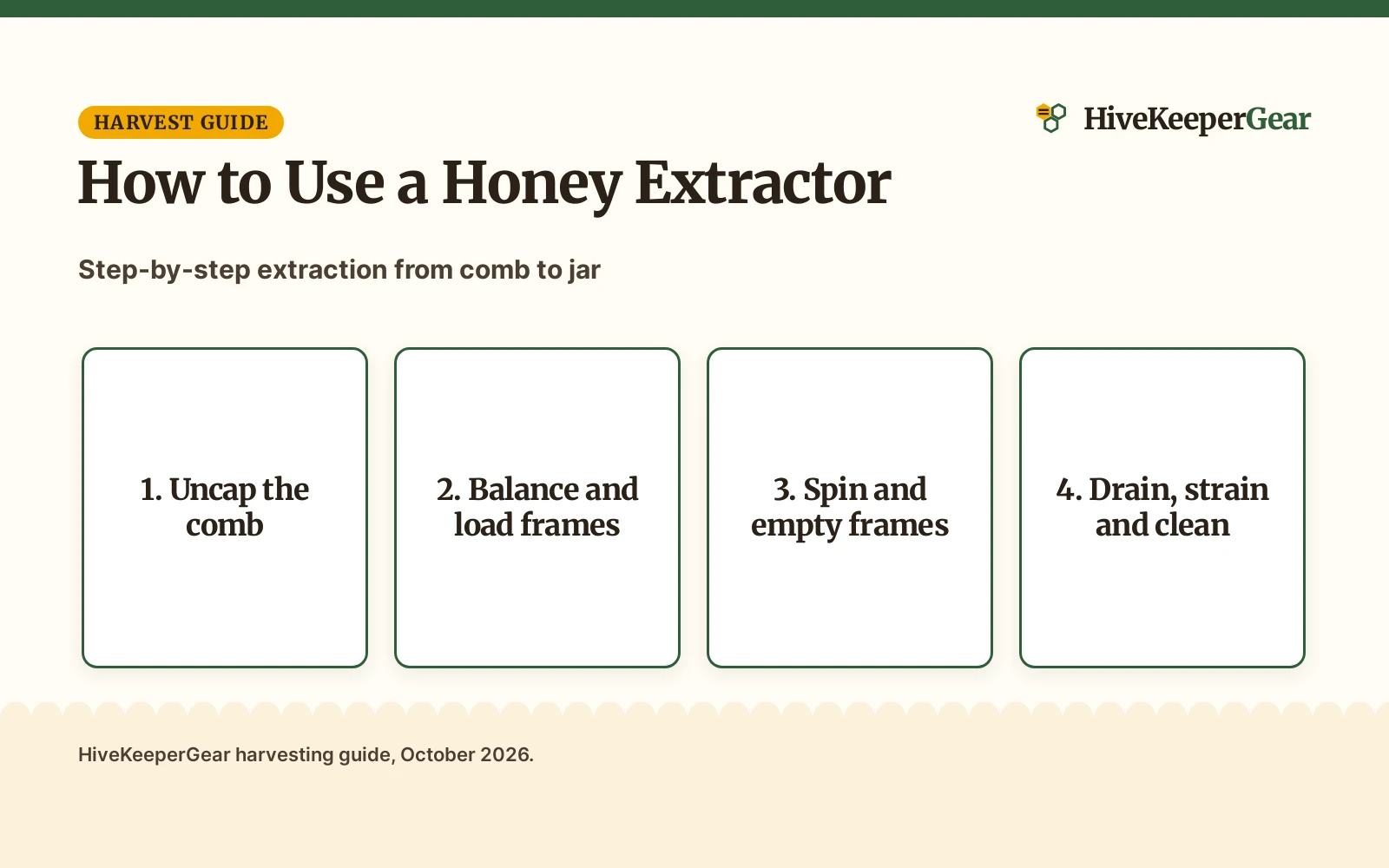
Learn how to use a honey extractor step by step, from uncapping wax comb and loading balanced frames to spinning, filtering raw honey, and cleaning your gear.

On this page
Top picks at a glance
As an Amazon Associate I earn from qualifying purchases.
- 1
 VIVO Electric Honey Extractor for 4 or 8 Frame Rack Food9.7/10View on Amazon
- 2
 VIVO Honey Extractor 8 Frame Rack9.6/10View on Amazon
- 3
 Goplus 3 Frame Honey Extractor9.6/10View on Amazon
- 4
 Little Giant® Plastic Honey Bucket with GateView on Amazon
- 5
 BeeCastle 2PCS Honey Gate Valve for 5 Gallon BucketView on Amazon
- 6
 3/5/10 pcs Honey gate Valve for 5 Gallon Bucket bee hive gateView on Amazon
- 7
 Honey Gate Valve for BucketView on Amazon
- 8
 MayBee 2 Pack Honey Gate Valve for ExtractorView on Amazon
- 9
 Honey Lake 2 Pack Honey Gate Valve for Extractor DurableView on Amazon
Learning how to use a honey extractor begins with uncapping sealed honeycomb frames, loading them symmetrically into the basket to keep the drum balanced, and spinning the reel so centrifugal force throws liquid honey against the stainless steel wall. The honey runs down the drum walls to drain through a honey gate into a bucket through a strainer before bottling. Operating the machine smoothly preserves comb foundation so bees can refill it next season. This guide explains each phase of the extraction process, from workspace preparation to final cleanup.
Other hives and gear to compare
 Little Giant® Plastic Honey Bucket with GateCheck price on Amazon
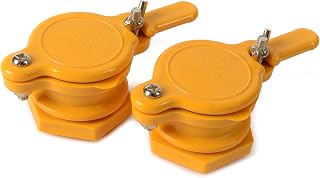 BeeCastle 2PCS Honey Gate Valve for 5 Gallon BucketCheck price on Amazon
 3/5/10 pcs Honey gate Valve for 5 Gallon Bucket bee hive gateCheck price on Amazon
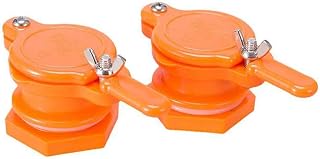 Honey Gate Valve for BucketCheck price on Amazon
 MayBee 2 Pack Honey Gate Valve for ExtractorCheck price on Amazon
 Honey Lake 2 Pack Honey Gate Valve for Extractor DurableCheck price on Amazon
HiveKeeperGear earns a commission when you buy through links on this site, at no extra cost to you. As an Amazon Associate I earn from qualifying purchases. Affiliate disclosure.
Before you spin: workspace setup and frame readiness
Extracting honey requires a clean, enclosed workspace. Foraging bees quickly detect exposed honey, so never run an extractor outdoors. Choose an indoor room such as a kitchen or basement with secure window screens to exclude robber bees. Spread clean tarps across the floor to catch drips and make cleanup easier.
Before uncapping, confirm that honey is ripe. Bees fan excess moisture from nectar and cap cells with wax once moisture drops to safe storage levels. Frames should be fully capped or mostly capped before spinning to prevent fermentation. Stability is also essential. VEVOR lists adjustable stand legs ranging from 39.3 inches (100 cm) to 42.5 inches (108 cm) in height. Bolting the feet to a plywood sheet stabilizes the machine and elevates the drum above standard buckets.
How to use a honey extractor, step by step
| Step | Harvest phase | Key action | Our guide |
|---|---|---|---|
| 1 | Uncapping | Slice wax cappings off comb faces | Uncapping tools |
| 2 | Loading | Balance frames symmetrically across the basket | Honey extractors |
| 3 | Spinning | Spin at low speed, flip or ramp speed, then finish | Centrifugal drum |
| 4 | Filtering | Drain through double sieves into a bucket | Honey strainers |
| 5 | Cleanup | Rinse drum and basket with cool water | Honey harvesting |
1. Uncapping the honeycomb frames
Before honey can exit the comb, wax cappings sealing each cell must be removed. Place an uncapping tank or food-grade tub on a sturdy table. Zonon lists a double-layer plastic uncapping station measuring 23.62 by 15.75 by 7.87 inches (60 by 40 by 20 cm) with a wooden crossbar and stainless steel fixing pin to hold frames steady while cappings collect on an upper screen.
Rest the bottom bar of a frame on the support pin, tilt the top bar slightly, and slice through the cappings with a smooth, steady stroke so wax drops away into the tub. Heated electric knives make rapid work of this step. For instance, Yencoly lists an electric uncapping knife rated for 140 to 160 degrees Celsius that melts wax seals cleanly. For low comb depressions, use an uncapping fork to scratch open remaining cells. Heated blades and cold knives both slice cleanly across straight combs, while an uncapping fork clears remaining sunken cells.
2. Loading and balancing the extractor drum
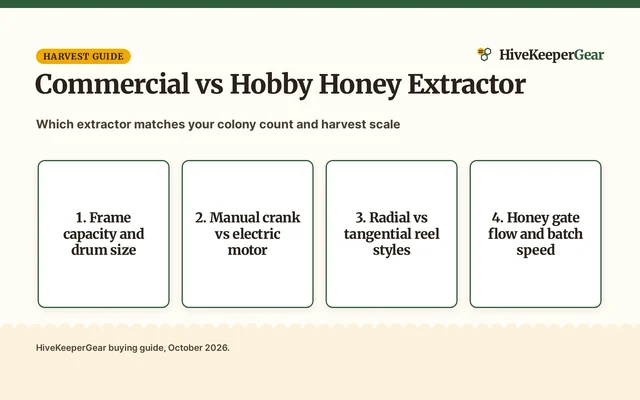
Load uncapped frames into the internal basket. Radial baskets hold frames like wheel spokes with top bars facing out, while tangential baskets hold frames flat against the drum wall. Match frame sizes to basket capacity. VEVOR lists a 3-frame manual extractor built for 18.9 by 9-inch deep frames (48 by 23 cm) or 18.9 by 6.3-inch medium frames (48 by 16 cm). VEVOR also lists an electric 4/8-frame model holding up to 4 deep frames and 4 medium or shallow frames.
Balancing the basket is critical. Heavy honey combs spinning unevenly cause severe drum wobble and gear strain. On extractors with opposing frame holders, always pair frames of similar weight directly opposite each other across the central shaft. On three-frame extractors, ensure all three frames share comparable weight to maintain rotational balance.
3. Spinning the frames
Centrifugal force extracts honey without damaging comb structure. In a tangential extractor, begin spinning at low speed to clear initial weight from the outer face without breaking brittle comb. Stop the rotor, flip each frame so the opposite face points toward the drum wall, and spin to empty that side. Finally, flip the frames back to finish extracting the first face at moderate speed. In a radial extractor, both faces extract simultaneously, so you start slowly and gradually increase rotation as honey empties.
Electric models simplify speed control. VEVOR and YSMN both list 140W electric extractors with speed dials reaching up to 1300 rpm and clear lids for visual monitoring. VEVOR includes a safety switch that stops the motor if the lid opens during spinning.
4. Draining and straining raw honey
As honey spins out against the drum wall, it flows down to the bottom reservoir. Never allow liquid honey to rise high enough to submerge the spinning basket, which creates heavy drag. Operators can leave the honey gate open to drain continuously into a bucket, or keep it closed temporarily to collect a batch in the bottom reservoir, provided the level stays below the rotating basket.
Raw honey contains wax fragments that require straining. Mount a double-mesh stainless steel sieve over your bucket. NUOMIC lists a double sieve strainer combining 1875-micron coarse mesh and 650-micron fine mesh to filter honey across 5-gallon to 10-gallon buckets. MayBee lists a double sieve measuring 9 inches in diameter and 4 inches high with extendable arms reaching 15.5 inches. Let strained honey settle so fine air bubbles rise before filling jars from our best honey jars guide.
5. Cleaning and storing the extractor
Clean the extractor immediately after harvesting. Always use cool water rather than hot water. Hot water melts beeswax onto the stainless steel drum and drain valve, creating a sticky coating that clogs pipes. Cool water quickly dissolves honey while keeping wax residue firm and easy to wipe away with a sponge.
Rinse the drum, basket, and honey gate until clean. Dry all stainless steel surfaces thoroughly with clean towels to prevent spotting. Store the unit in a clean, dry room with the honey gate open to promote air circulation.
A typical extraction day workflow
Organizing your extraction day keeps work manageable. In the morning, clear bees from honey supers using a soft brush and move boxes into your indoor workspace. At midday, assemble the uncapping station, anchor your extractor, place the strainer bucket, and extract frames in balanced batches. In late afternoon, finish spinning, leave filled buckets to settle, and wash down all stainless steel tools with cool water before evening.
Helpful extraction accessories to add later
- A frame grip to pull sticky frames from supers without damaging comb edges.
- An electric uncapping knife to slice through wax cappings quickly.
- A double sieve strainer to filter wax fragments before bottling.
- A soft bee brush to clear worker bees from honey frames before bringing supers indoors.
- A food-grade settling bucket with a honey gate for smooth jar filling.
Investing in reliable accessory tools makes harvest sessions faster, reduces physical strain during extraction, and protects comb foundation for future seasons.
What this guide does not cover
This guide covers centrifugal extraction from removable frames. We do not cover alternative harvest methods such as crush and strain, which destroy drawn comb. We also do not provide colony health, disease, or treatment advice. For hive management questions, contact your state apiary inspector or local beekeeping club.
FAQs for beekeepers
How fast should you spin a honey extractor?
Start at low rotational speed to remove initial weight without breaking comb foundation. Once combs are partially empty, gradually increase speed to finish extraction. While VEVOR and YSMN rate electric motors up to 1300 rpm, operators should run at moderate speeds to protect comb foundation.
Can you extract deep and medium frames together?
Yes, in extractors with four or more frame positions, provided opposing frames share equal depth and weight. VEVOR lists extractors accepting 18.9 by 9-inch deep frames and 18.9 by 6.3-inch medium frames. On three-frame extractors, all three frames should match in size and weight to preserve balance.
Should honey frames be spun warm or cold?
Warm honey extracts much faster and more completely than cold honey. Extracting supers shortly after removal from the hive on a warm summer day lowers viscosity and ensures clean evacuation from cells.
Why should you wash an extractor with cool water instead of hot water?
Cool water dissolves honey cleanly while leaving beeswax solid and easy to wipe out. Hot water melts wax into a liquid film that coats stainless steel surfaces and clogs drains.
Do you need to uncap both sides of a frame before spinning?
Yes. Both sides of every frame must be uncapped before loading. If one side remains sealed under wax, honey cannot escape, creating severe weight imbalance during rotation.
More hive guides
See every honey extractors guide and all honey harvesting guides. Also see our manual honey extractor. Also see our manual vs electric honey extractor. Also see our hand crank vs electric honey extractor. Also see our radial vs tangential honey extractor. Also see our vevor honey extractor vs vivo bee-v003d.
More related guides (11)
- reversible vs radial honey extractor
- variable speed vs single speed honey extractor
- top drive vs side drive honey extractor
- direct drive vs belt drive honey extractor
- motorized vs hand crank honey extractor
- conical bottom vs flat bottom honey extractor
- seamless vs welded honey extractor
- commercial vs hobby honey extractor
- top motor vs bottom motor honey extractor
- best honey jars for farmers markets
- 2 frame manual honey extractor
More picks: See our reviews of the best honey extractor models, the best uncapping knife, and the best honey strainer. New to beekeeping? Start with our beekeeping equipment list for beginners.