Manual Honey Extractor: How to Choose and Use Hand-Crank Models
A manual honey extractor uses a hand crank and centrifugal force to spin honey from comb without motor power, preserving wax frames for future apiary seasons.

On this page
Top picks at a glance
As an Amazon Associate I earn from qualifying purchases.
- 1
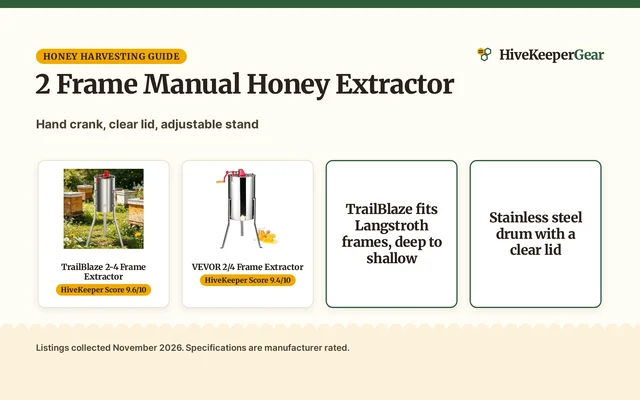
 VEVOR 2/4 Frame Manual Honey Extractor9.4/10View on Amazon
- 2
 TrailBlaze Stainless Steel Honey Extractor9.6/10View on Amazon
- 3
 Little Giant® 2-Frame Honey Extractor for BeekeepingView on Amazon
- 4
 MayBee 2 Pack Honey Gate Valve for ExtractorView on Amazon
- 5
 3 Pcs Uncapping Needle Roller Honey Extractor Cleaning BeeView on Amazon
- 6
 2Pcs Honey Gate Valve for ExtractorView on Amazon
- 7
 Stainless Steel Honey Extractor Spinner CentrifugeView on Amazon
- 8
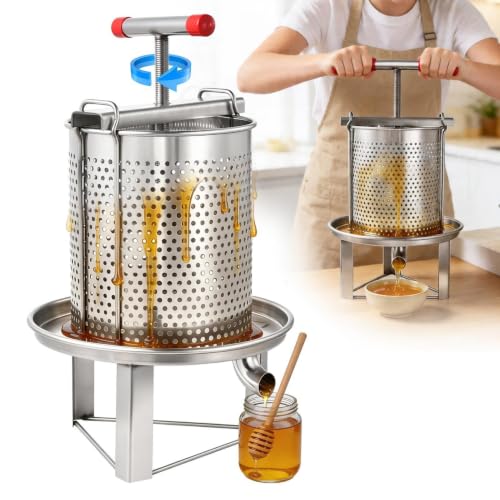 Honey Presser Beeswax Extractor Beekeeping Machine StainlessView on Amazon
A manual honey extractor is a hand-cranked harvesting machine that separates liquid honey from wax comb using centrifugal force without requiring electrical power. Turning an external hand crank rotates an internal wire basket holding uncapped frames, flinging honey droplets outward against the drum walls where gravity pulls the liquid downward toward a bottom honey gate. This extraction method preserves delicate comb structures intact so honeybees can quickly refill the drawn wax cells during future nectar flows rather than spending valuable energy rebuilding foundation. For backyard beekeepers managing a modest apiary, hand-cranked models offer an accessible, quiet, and durable harvesting solution.
Other hives and gear to compare
 Little Giant® 2-Frame Honey Extractor for BeekeepingCheck price on Amazon
 MayBee 2 Pack Honey Gate Valve for ExtractorCheck price on Amazon
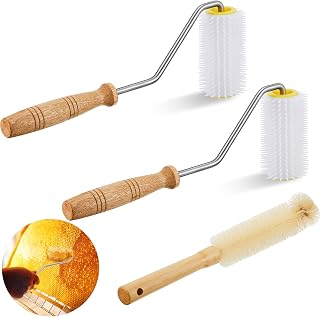 3 Pcs Uncapping Needle Roller Honey Extractor Cleaning BeeCheck price on Amazon
 2Pcs Honey Gate Valve for ExtractorCheck price on Amazon
 Stainless Steel Honey Extractor Spinner CentrifugeCheck price on Amazon
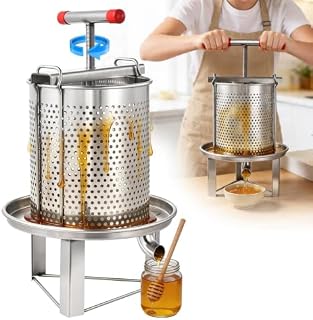 Honey Presser Beeswax Extractor Beekeeping Machine StainlessCheck price on Amazon
HiveKeeperGear earns a commission when you buy through links on this site, at no extra cost to you. As an Amazon Associate I earn from qualifying purchases. Affiliate disclosure.
How a manual honey extractor works
Centrifugal extraction relies on mechanical rotational motion to draw honey from comb cells. When bees store surplus nectar, they seal each hexagonal cell with an airtight wax cappings layer. After a beekeeper slices away these cappings using uncapping tools, liquid honey remains seated inside the open cells. Placing these uncapped frames inside the extractor basket and rotating the central axle causes the frames to spin along a circular path. Centrifugal force pushes the dense liquid outward, expelling honey from the comb onto the inner drum surface. From there, honey flows down the smooth cylinder walls toward the sloped bottom base, where it can drain through an adjustable valve into a collection container.
Hand-crank extractors achieve this rotation through an overhead gear assembly. A side or top mounted crank handle connects to drive gears that turn the central spindle. Because the gearing steps up rotational velocity, turning the crank allows the operator to control basket speed precisely, starting gently to avoid comb damage before accelerating to clear remaining honey. Unlike motorized systems, manual units provide immediate physical feedback through the handle, allowing real-time adjustments for comb fragility and honey viscosity.
Manual honey extractor components and features
| Component | Material | Purpose | Related guide |
|---|---|---|---|
| Drum barrel | Food grade stainless steel | Collects honey droplets flung from spinning comb | Honey extractors |
| Internal basket | Stainless steel wire cage | Secures frames in radial or tangential orientation | Included with drum |
| Crank gearbox | Enclosed metal gears with handle | Translates manual rotation into high-speed basket spin | How to use an extractor |
| Honey gate | Food grade plastic or cast stainless | Regulates drainage into settling pails | Honey strainers |
| Uncapping gear | Serrated stainless blade or scratcher | Removes wax cappings before loading frames | Uncapping tools |
| Clear covers | Transparent acrylic panels | Enables visual monitoring while containing splatters | Included with drum |
Each component plays a critical functional role during harvest day. High-grade stainless steel barrels prevent honey contamination and resist organic acids naturally present in raw honey. Transparent top covers protect honey from airborne debris while allowing the beekeeper to watch extraction progress without stopping the spin. An integrated honey gate valve at the bottom of the drum controls drainage directly into collection pails equipped with fine mesh filters.
Tangential versus radial manual extractors
Manual extractors generally feature either tangential or radial basket layouts, and understanding the mechanical distinction helps determine which style suits your apiary frames.
In a tangential basket arrangement, each comb frame sits flat against the outer perimeter of the spinning cage, facing the drum wall directly. When the basket rotates, centrifugal force acts directly on the outer comb face, pulling honey straight out of the exposed cells. Because honey only leaves the side facing outward, the operator must stop the basket, manually flip each frame around, and spin the opposite face to empty the comb completely. Tangential extraction provides solid backing against the wire basket mesh, making this design practical for deep frames that hold substantial honey weight.
In a radial basket arrangement, frames stand upright with top bars facing outward toward the drum wall and bottom bars pointing inward toward the center spindle, arranged like spokes on a wagon wheel. As the basket spins, centrifugal force pulls honey outward along the natural upward slant of comb cells on each side simultaneously. This design extracts comb faces during a spinning run, eliminating the need to reverse frames mid-cycle. Radial baskets handle shallow and medium frames efficiently, though deep frames require larger drum diameters to achieve equivalent extraction velocity near the inner bottom bar.
Step-by-step extraction procedure
Operating a hand-crank extractor requires methodical technique to harvest honey efficiently while preserving valuable comb.
Uncapping the frames: Begin by removing wax cappings from fully cured honey frames over an uncapping tank or food-grade tray. Use an uncapping knife to shear off capping sheets flush with the wooden frame bars, and use an uncapping scratcher fork to unseal low spots or uneven corners. Clear cappings thoroughly from each comb face before loading.
Balancing opposing frames: Always extract frames in evenly matched sets so that weight distributes uniformly across opposing basket positions. Place frames of comparable weight directly across from each other around the central spindle. An unbalanced basket causes excessive vibration, wobbling, and strain on drum bearings during rotation.
Initial low speed spinning: Begin turning the hand crank smoothly at a slow pace. Starting with low rotational speed removes the bulk of heavy honey without crushing the delicate comb against basket wires. Heavy honey combs can collapse under sudden high speed acceleration, especially in warm harvesting weather when wax comb softens.
Reversing and clearing comb: For tangential baskets, spin the starting side until partially emptied, flip each frame to expose the reverse face, and spin that opposite side at full speed until dry. Then reverse the frames back to complete extraction on the initial face. For radial baskets, gradually increase cranking speed toward the end of the run until each comb face spins clean.
Draining through the gate: Position a collection bucket beneath the honey gate valve. The gate may be left open during spinning so honey drains directly into a bucket, or kept closed to allow honey to gather in the base before draining. If keeping the gate closed, monitor the liquid level so accumulated honey remains below the spinning basket, as submerged basket wires create fluid drag that makes hand cranking sluggish and difficult.
How to choose a manual honey extractor
Selecting a reliable manual extractor involves evaluating key construction details that affect durability, ease of operation, and honey hygiene.
Drum barrel construction: Look for food grade stainless steel with seamless or smooth rolled welds. Smooth interior seams prevent raw honey and wax residues from trapping in crevices, facilitating sanitary cleaning. Avoid galvanized metals or thin sheet materials prone to denting or corrosion from acidic honey.
Gearbox quality and handle design: The drive mechanism endures substantial torque during harvest sessions. Enclosed metal gearboxes protect internal gear teeth from grit and honey splashes while preventing user finger pinch points. Look for crank mechanisms featuring a freewheel clutch or disengaging handle that stops spinning when the operator releases the grip, allowing the basket to coast safely without an active rotating handle.
Stand stability and leg height: Hand cranking naturally imparts lateral sway to the drum. Sturdy tubular steel legs with wide stance feet and predrilled bolt holes allow securing the unit to a sturdy wooden base or plywood sheet. Adequate leg clearance should leave ample vertical space beneath the honey gate to slide a standard harvest bucket and filter screen into place without awkward balancing.
Basket capacity and versatility: Consider the frame dimensions commonly used in your hive boxes. A versatile basket accommodating deep, medium, and shallow Langstroth frames provides flexibility as apiary management expands. Tangential baskets excel when extracting mixed frame sizes, whereas dedicated radial baskets speed up harvests for beekeepers utilizing uniform medium honey supers.
Cleaning, maintenance, and storage
Proper post-harvest cleanup preserves extractor components and ensures food grade sanitation for upcoming harvest seasons.
Immediately following extraction, tilt the drum forward to allow remaining liquid honey to drain completely through the open gate valve. Rinse the drum and basket thoroughly using cold or lukewarm water. Avoid using boiling water, which melts residual beeswax into the stainless steel pores and mesh crevices, creating a sticky coating that becomes stubborn to scrub away. A soft sponge and mild unscented dish soap remove sticky films without scratching smooth polished metal surfaces.
Protect upper gear assemblies and bottom spindle bearings from direct water spray during washing. Moisture inside enclosed gear housings can degrade lubricants and promote corrosion over winter dormancy. Pay particular attention to drying the bottom spindle bearing cup, where trapped moisture can cause corrosion. After washing, dry the stainless drum thoroughly with clean cotton towels or leave the unit open in warm sunshine to eliminate all residual moisture. Apply a drop of food-safe mineral oil to external pivot points before storing the extractor in a clean, dry, rodent-safe storage space until next season.
FAQs for beekeepers
Can a manual honey extractor handle different frame sizes?
Most manual extractors accept deep, medium, and shallow Langstroth frames in tangential baskets. Radial manual extractors handle medium and shallow frames efficiently, but deep frames typically require tangential placement or larger drum diameters.
Why does a manual honey extractor wobble while spinning?
Wobbling occurs when frames loaded across the central spindle have unequal honey weights. Placing frames of similar weight directly opposite each other balances rotational inertia and smooths hand cranking.
How does manual extraction protect drawn comb?
Centrifugal force pulls honey out of uncapped cells while leaving the beeswax comb foundation fully intact. Returning intact drawn comb to the hive allows bees to resume honey storage without spending time building new comb.
Is a manual honey extractor difficult to turn by hand?
Properly geared manual extractors turn smoothly with modest effort. Draining honey regularly and keeping the liquid level below the spinning basket prevents rotational fluid drag on the crank handle.
How should a manual honey extractor be cleaned after harvest?
Wash the stainless drum and basket with lukewarm water and a soft sponge. Never use boiling water, which melts wax onto metal surfaces, and avoid spraying water into enclosed gear bearings.
More hive guides
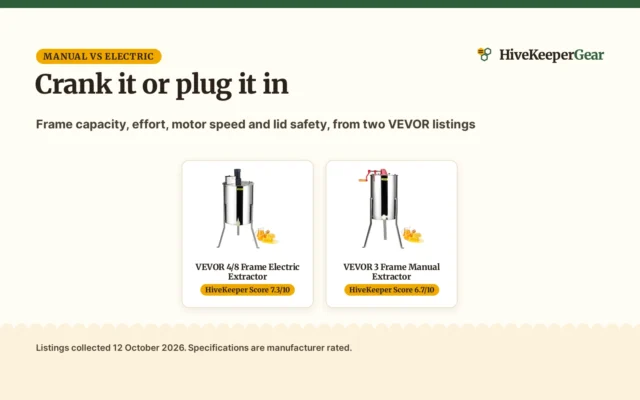
See every honey extractor guide and all honey harvesting guides. Also see our manual vs electric honey extractor.
More picks: Explore our guides for honey extractors, how to use a honey extractor, uncapping tools, and honey strainers. New to beekeeping? Start with our beekeeping equipment list for beginners.