Wood Chips vs Pine Needles Bee Smoker: Which Fuel to Use?
Wood chips vs pine needles bee smoker fuel: chips burn long and steady, needles light fast and smoke cool. How to choose and use each.

On this page
Top picks at a glance
As an Amazon Associate I earn from qualifying purchases.
- 1
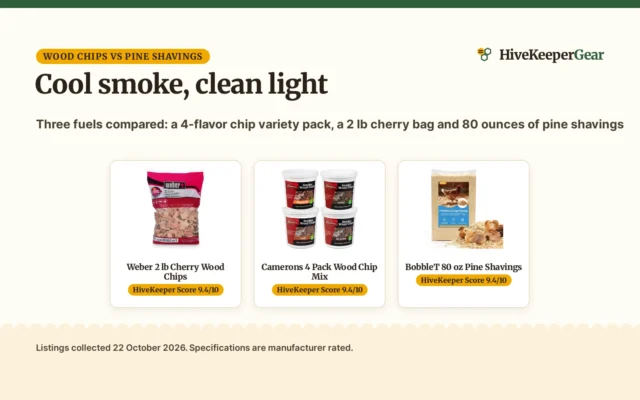
 Weber Cherry Wood Chips9.4/10View on Amazon
- 2
 BobbleT 100% Natural Radiata Pine Shavings9.4/10View on Amazon
- 3
 Camerons 4 Pack Variety Wood Chips9.4/10View on Amazon
- 4
 Camp Chef Premium Hardwood ChipsView on Amazon
- 5
 Smoking Wood Chips Variety PackView on Amazon
- 6
 Weber® Apple Wood ChipsView on Amazon
- 7
 Weber® Pecan Wood Smoking ChipsView on Amazon
- 8
 Weber Smoked Wood ChipsView on Amazon
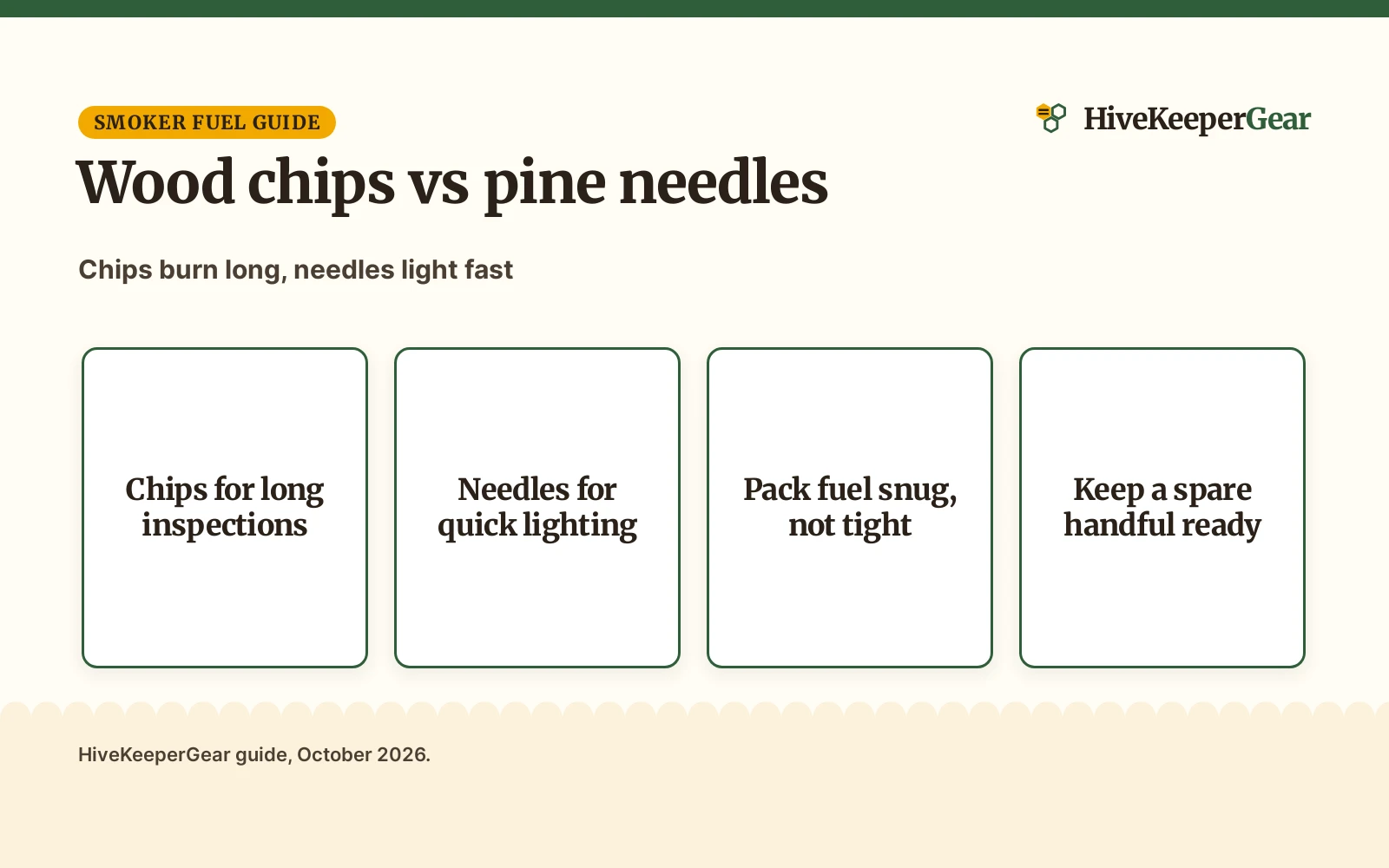
The smoker is lit and the hive is waiting, and the wood chips vs pine needles bee smoker question is really about how long your inspection runs: wood chips burn long and steady for unhurried work through many frames, while pine needles catch fast and give cool, gentle smoke for quick checks. Either calms the bees when the smoke is cool and white; the choice is about your rhythm in the bee yard.
Other hives and gear to compare
 Camp Chef Premium Hardwood ChipsCheck price on Amazon
 Smoking Wood Chips Variety PackCheck price on Amazon
 Weber® Apple Wood ChipsCheck price on Amazon
 Weber® Pecan Wood Smoking ChipsCheck price on Amazon
 Weber® Cherry Wood ChipsCheck price on Amazon
 Weber Smoked Wood ChipsCheck price on Amazon
HiveKeeperGear earns a commission when you buy through links on this site, at no extra cost to you. As an Amazon Associate I earn from qualifying purchases. Affiliate disclosure.
The quick answer
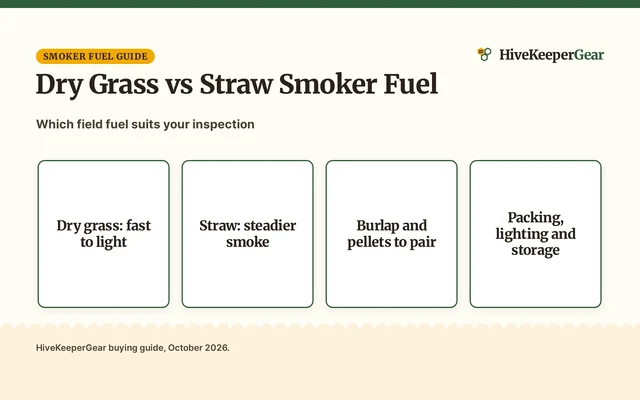
Choose wood chips when the inspection is long: a full hive check, honey harvest, or working several hives in a row. The dense chips smolder slowly and hold their heat, so the smoker stays lit between hives. Choose pine needles when the visit is short: a quick peek under the cover, a feeder refill, a glance at the entrance. Needles catch from a match in moments and give cool smoke right away, but they burn through faster and need topping up. Many keepers carry both and let the day decide.
Wood chips in the smoker
Wood chips are the slow fuel. Hardwood chips pack into the smoker chamber and smolder rather than flame, giving a steady stream of cool white smoke over a long inspection. They suit the keeper who works methodically, frame by frame, because the smoker is still going when the last frame goes back. Chips also relight well: a smoker that has gone out on chips usually catches again from the ember bed with a few puffs of the bellows.
The tradeoff is the start. Chips need a proper lighting: a ball of newspaper or a handful of dry kindling underneath, lit well before the chips go on, and patient bellows work until the ember bed is established. Rushing the light gives a smoker that dies at the first hive. Pack the chips snug but not tight; a packed-tight chamber starves the embers of air.
Pine needles in the smoker
Pine needles are the fast fuel. A handful of dry needles catches from a single match and gives cool, fragrant smoke within moments, which makes them the favorite for quick inspections and for keepers who dislike fussing with the smoker. The smoke is gentle, and the needles are free for the gathering wherever pines grow.
The tradeoff is duration. Needles burn through quickly, so a long inspection means opening the smoker and topping up the fuel mid-visit. They also need to be dry: damp needles sulk and give thin, hot smoke. Gather them dry, store them dry, and keep a spare handful in the bee bucket for the top-up.
Wood chips vs pine needles bee smoker: the real difference
The real difference is burn time against lighting ease. Wood chips ask for patience at the start and repay it with a smoker that lasts the whole yard visit. Pine needles ask for nothing at the start and repay it with a smoker that needs feeding along the way. Smoke quality from either is cool and white when the fuel is dry and the bellows work is gentle; hot, thin smoke means the fuel is damp or the chamber is packed too tight, whichever fuel you chose. For a beginner, needles forgive poor lighting technique; for a long harvest day, chips forgive a long inspection.
Lighting and keeping it lit
Light the smoker before you open the first hive, not after. Start with dry tinder at the bottom, add the main fuel once the tinder is going well, and work the bellows until the smoke runs cool and white. Puff a little smoke at the entrance and wait a breath before lifting the cover; the bees settle when the smoke drifts rather than blasts. During the inspection, a puff or two across the top bars keeps things calm; between hives, plug the spout with a tuft of grass to bank the embers. See how to use a bee smoker for the full routine.
What the listings offer
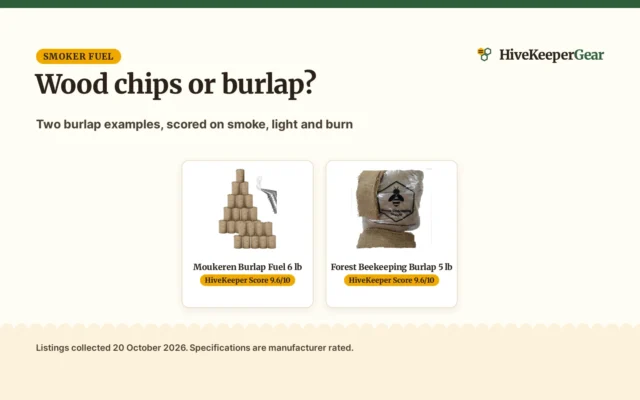
Prepared fuels exist for keepers who prefer not to gather. The Moukeren listing is a 6.06-pound package of jute burlap smoker fuel rolls, designed to produce clean and cool smoke, easy to light and long burning, torn into strips and lit with a match. The package measures 17.09 by 12.68 by 4.8 inches at 6.06 pounds. It is a third option beyond chips and needles: consistent, ready to use, and enough for many inspections. No warranty term is stated.
A ready-made fuel from the listings
If you would rather not forage your own fuel, the one listing we reviewed offers a ready-made answer: Moukeren jute burlap smoker fuel rolls, sold as a 6-pound package (the spec table lists 6.06 lb; we trust the title). The fuel is natural jute, torn into small strips and added to the smoker, then lit with a match. The listing promises easy lighting, a long continuous burn and clean, cool smoke that relaxes bees, which is exactly the combination this guide asks of any fuel: cool smoke, steady output and no harshness. Six pounds is enough for daily use across many inspections, and the listing even suggests sharing with other beekeepers. Jute sits between the two fuels above: it catches more readily than packed wood chips, closer to pine needles, while the dense rolls smolder longer than loose needles once going. Whatever fuel you choose, the listing’s own advice holds: cool, clean smoke calms the bees, and hot or harsh smoke does the opposite.
FAQs for beekeepers
Which smoker fuel lasts longest?
Wood chips, by their density: they smolder slowly and hold the ember bed through long inspections. Pine needles burn faster and need topping up.
Can I mix wood chips and pine needles?
Yes, and many keepers do: needles on top for the fast light, chips below for the long burn. Light the needles first and let the chips catch from them.
Why did my smoker go out?
Usually damp fuel, a chamber packed too tight, or lighting rushed before the ember bed was established. Dry fuel, a snug pack, and patient bellows work fix most of it.
Is pine needle smoke safe for bees?
Pine needles are a traditional smoker fuel and give cool, gentle smoke when dry. Keep the smoke cool and use it sparingly; the goal is calm bees, not a smoky hive.
What size smoker do I need?
Size the smoker to the inspection: a larger chamber holds more fuel for long days. See large vs small bee smoker for the comparison.
More hive guides
Also see best bee smoker and electric vs traditional smoker.