Entrance Feeder vs Frame Feeder: Which One Should You Buy?
Compare entrance feeders and frame feeders to choose the right setup for feeding sugar syrup, preventing robbing, and managing hive inspections.

On this page
Top picks at a glance
As an Amazon Associate I earn from qualifying purchases.
- 1
 Front Entrance Honey Bee Feeder & Lid9.6/10View on Amazon
- 2
 MayBee 6.5L Bee Pro Feeder9.7/10View on Amazon
- 3
 Bee Hive Entrance FeederView on Amazon
- 4
 Bee FeederView on Amazon
- 5
 Toddmomy 8pcs Metal Bee Feeders Entrance Beehive LidView on Amazon
- 6
 Rtteri 2 Pcs Bee Feeders for Hives with 1 LidsView on Amazon
- 7
 Minelife 4 Pack Entrance Feeder with LidsView on Amazon
- 8
 Bee Hive Feeder -8 Pack Green Entrance Feeders for Bee HivesView on Amazon
During early spring buildup or an autumn nectar dearth, choosing between an entrance feeder vs frame feeder determines how safely your colony takes supplemental sugar syrup. A frame feeder is the better choice for most backyard beekeepers because it hangs inside the hive body, shields syrup from robbing bees, and keeps feed warm near the brood cluster. An entrance feeder offers rapid syrup checks from outside the hive without opening boxes, but its front position increases robbing risks and chills quickly on cold nights. We compared both styles across placement, accessibility, robbing defense, and daily yard management.
Other hives and gear to compare
 Bee Hive Entrance FeederCheck price on Amazon
 Bee FeederCheck price on Amazon
 Toddmomy 8pcs Metal Bee Feeders Entrance Beehive LidCheck price on Amazon
 Rtteri 2 Pcs Bee Feeders for Hives with 1 LidsCheck price on Amazon
 Minelife 4 Pack Entrance Feeder with LidsCheck price on Amazon
 Bee Hive Feeder -8 Pack Green Entrance Feeders for Bee HivesCheck price on Amazon
HiveKeeperGear earns a commission when you buy through links on this site, at no extra cost to you. As an Amazon Associate I earn from qualifying purchases. Affiliate disclosure.
Before you choose: colony strength and feeding goals
Before choosing a feeder, assess colony strength and seasonal forage. New package colonies have limited guard bees to patrol the entrance, whereas established colonies defend their bottom boards effectively. Supplemental syrup encourages bees to draw wax foundation and store feed when natural blooms are scarce. Never feed syrup while honey supers are in place. Reviewing different bee feeder types helps you match equipment to your yard, and using entrance reducers helps protect vulnerable colonies when syrup is present.
Entrance feeder vs frame feeder: comparison breakdown
The primary contrast centers on whether syrup is placed inside hive warmth or at the exterior entrance. The table below outlines how both designs compare across core apiary tasks.
| Comparison Factor | Entrance Feeder | Frame Feeder | Practical Result |
|---|---|---|---|
| Hive Placement | Bottom board entrance, outside hive | Inside brood chamber, replacing frames | Frame feeders stay warmer and concealed |
| Robbing Vulnerability | Elevated, especially during dearth | Minimal, syrup is deep inside colony | Frame feeders protect vulnerable hives |
| Weather Performance | Syrup chills quickly in cool weather | Cluster warmth keeps syrup fluid | Frame feeders allow earlier spring feeding |
| Inspection Routine | Refill and monitor without opening hive | Requires removing outer and inner cover | Entrance feeders save inspection time |
| Bee Safety | Bees feed through small lid holes | Requires textured walls, ladders, or floats | Internal floats prevent bees from drowning |
| Hive Compatibility | Fits bottom entrance of wooden hives | Hangs on frame rests in standard boxes | Both fit standard Langstroth equipment |
1. Hive placement and hardware setup
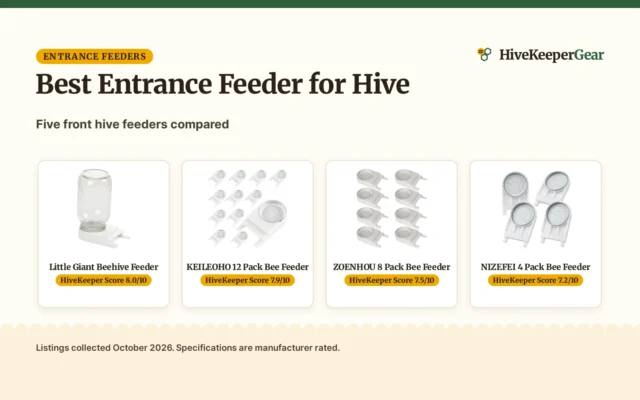
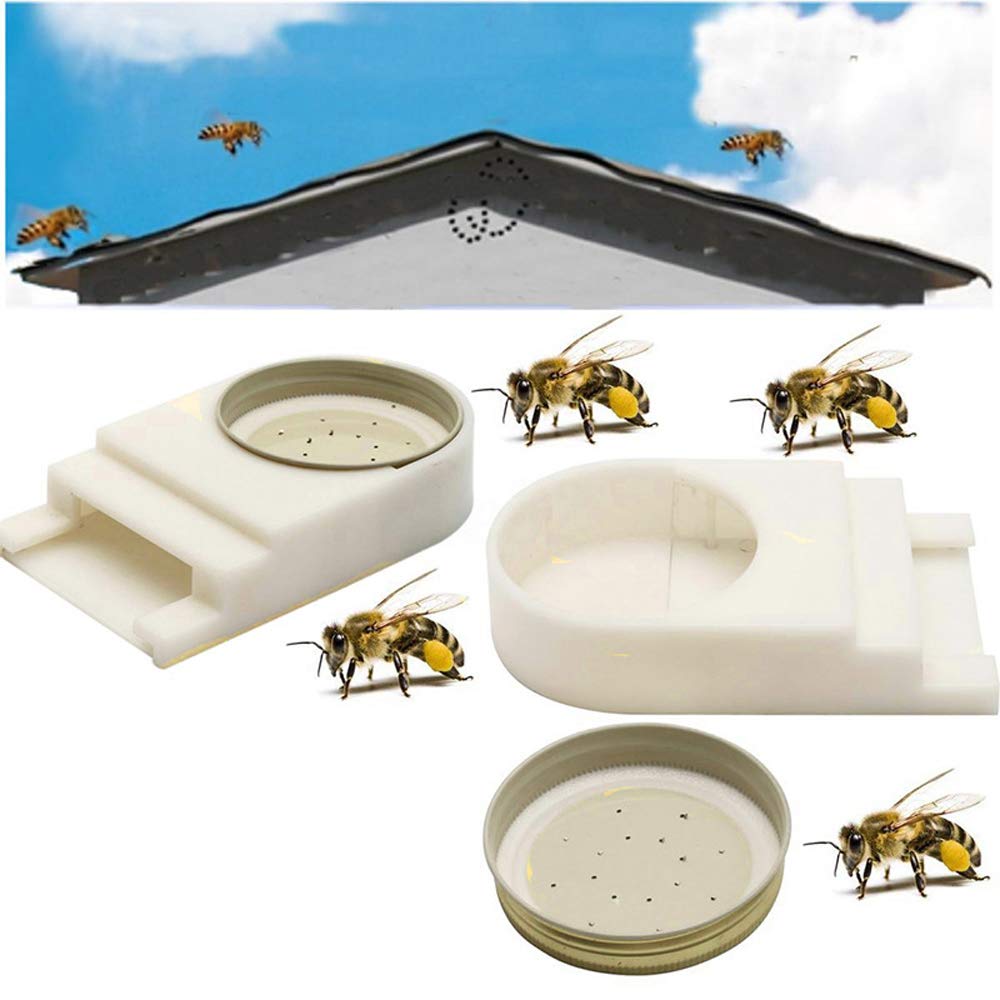
An entrance feeder slides its base tongue directly into the bottom entrance of a Langstroth hive, leaving an inverted jar outside the front wall. For example, Lohas Select lists base dimensions of 5.1 inch long, 3.15 inch wide, and 1.18 inch tall. Minelife lists base dimensions of 5.5 by 3.15 by 1.18 inches with a weight of 4.16 ounces, and NIZEFEI publishes dimensions of 3.15 by 5.5 by 1.1 inches with an item weight of 12 ounces. Maker XILEWHZF notes that its entrance feeder equipment works across 5 – frame, 8 – frame, and 10 – frame Langstroth hives, showing how front units fit standard entrance widths regardless of box size.
A frame feeder hangs directly inside the hive body on standard frame rests, replacing comb frames beneath the inner cover. Because it matches box dimensions, a frame feeder works in standard 8-frame beehives or 10-frame Langstroth hives. Beekeepers place the frame feeder inside the brood chamber next to the cluster so bees access syrup without leaving box warmth.
2. Robbing risks and apiary defense
Robbing is a major hazard during summer and autumn nectar dearths. An entrance feeder places sweet syrup at the front threshold where odors drift into the apiary. Scout bees, wasps, and yellowjackets detect the aroma quickly. If the colony is small, robbers can overwhelm entrance guards and pillage stored honey.
Frame feeders minimize robbing by enclosing syrup deep inside the brood chamber where foreign bees cannot access it without passing the guard line. Because the feeder is completely internal, beekeepers can install entrance reducers on the bottom board to narrow the opening to a small notch, helping guards defend the colony.
3. Weather, hive temperature, and cluster access
Honey bees cluster tightly around the brood nest to conserve heat during cold weather. In cool spring or autumn conditions, bees will not break cluster to walk across cold bottom boards toward an exterior entrance feeder.
Because an entrance feeder sits outside the hive wall, syrup chills rapidly in cold air and wind, which can immobilize bees attempting to feed. In contrast, a frame feeder sits inside the brood chamber adjacent to the cluster. Heat generated by clustered bees keeps nearby syrup fluid and accessible during cool spring weather when bees cannot forage outdoors.
4. Syrup capacity and refilling frequency
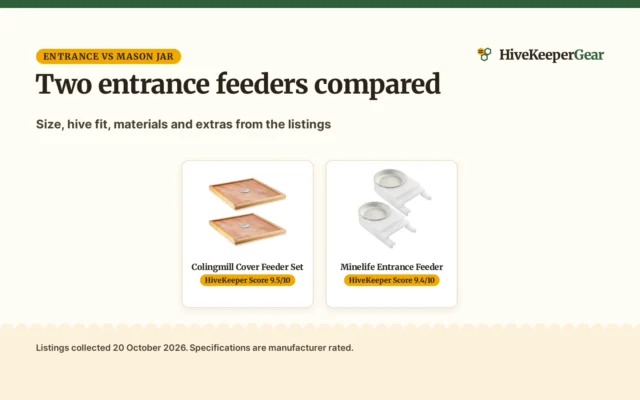
Refilling frequency depends on reservoir capacity. Entrance feeders use inverted jars with perforated lids. PUERDEAN specifies an aluminum cap fitting 2.75-inch jars, XILEWHZF lists lids for jars measuring 2 ¾ inches, and NIZEFEI notes compatibility with 2-3/4 in regular-mouth jars. For replacement lids, Toddmomy supplies perforated metal caps measuring 2.87 by 2.87 by 0.59 inches (also listed as 7.30 by 7.30 by 1.50 cm) in an 8 piece set, and Colingmill lists aluminum feeder caps sized at 2.87 by 0.59 inches for 10 frame hive setups with inner covers measuring 19.88 by 16.34 by 0.98 inches. These standard jars hold modest volumes, requiring frequent refilling when bees draw comb.
Frame feeders provide much larger capacity. Occupying a deep frame slot, the internal trough holds generous volume, reducing apiary visits during rainy periods. Our guide to Mason jar bee feeders reviews jar fittings, while our roundup of beehive feeders compares larger dispensers.
5. Colony disturbance and inspection routine
Fast maintenance is the key benefit of an entrance feeder. Because the jar is external, you can check syrup levels from a distance without wearing a veil or smoking bees. Refilling takes moments without opening the hive.
Servicing a frame feeder requires removing the outer lid and inner cover to pour syrup into the trough. This causes brief colony disruption and releases warmth. Quality frame feeders include internal ladders or floats so bees drink safely without drowning. When inspecting, handle adjacent beehive frames carefully to protect the queen.
A seasonal syrup feeding timeline
Matching your feeder to the season protects colonies and prevents yard issues:
Early spring: Packages and small colonies need syrup to draw wax. Frame feeders keep syrup warm near the cluster during chilly weather.
Late spring nectar flow: Remove all syrup feeders once natural nectar flows begin, keeping sugar syrup out of honey supers.
Midsummer dearth: When nectar pauses and robbing surges, use internal frame feeders with reduced entrances; avoid entrance feeders.
Autumn winter prep: Fill brood boxes with dense syrup quickly using frame feeders before temperatures drop.
Winter dormancy: Remove liquid feeders before freezing weather arrives. Excess syrup moisture chills winter clusters; rely on capped honey or dry sugar.
Best practices for syrup feeding
Follow these yard practices for clean, safe feeding:
- Confirm frame feeders have floating rafts or textured ladders to give bees footing while drinking.
- Dissolve white cane sugar fully in clean water before pouring syrup into feeders.
- Reduce hive entrances when feeding internal syrup, or seal gaps around entrance feeder bases.
- Refill syrup late in the day so bees clean up drips overnight before morning flight.
- Rinse bases and jars between feedings to avoid mold and fermentation.
What is not in this guide
This guide compares entrance and frame feeders for liquid sugar syrup. We do not cover winter candy boards or dry sugar methods. We also do not provide colony health diagnoses or chemical treatment advice. Consult your local beekeeping club or state apiary specialist for health and floral dearth guidance.
FAQs for beekeepers
Which feeder is better for a new package of bees?
A frame feeder is better for a new package because it keeps syrup warm near the cluster and allows installing an entrance reducer. Entrance feeders leave syrup vulnerable to robbing at the front entrance.
Can an entrance feeder cause robbing?
Yes, entrance feeders frequently trigger robbing during dearth periods because syrup odors escape at the entrance where foraging bees and wasps congregate.
What size jar fits an entrance feeder base?
Many entrance feeders fit regular-mouth canning jars. For example, PUERDEAN and XILEWHZF specify caps for 2.75-inch (or 2 ¾ inch) openings, and NIZEFEI lists compatibility with 2-3/4 in regular-mouth jars, while other models fit wide-mouth jars.
How do you prevent bees from drowning in a frame feeder?
Use frame feeders equipped with corner ladders, wooden floats, or textured inner walls that give bees traction while feeding.
Can I use an entrance feeder to provide water during hot summer months?
Yes, entrance feeders work well for summer water provision because bees forage for water without inducing robbing frenzies. Refilling jars with clean water hydrates colonies without opening boxes.
More hive guides
See every bee feeder guide and all hive tool guides.
More guides: compare beehive feeders, review entrance feeders, inspect bucket feeders, or explore bee feeder types. New to beekeeping? Review our checklist for beekeeping supplies for beginners.