Entrance Feeder vs Top Feeder: Which One Should You Buy?
Compare entrance feeders and top feeders by syrup capacity, hive defense, robbing risks, and ease of inspection across the beekeeping season.

On this page
Top picks at a glance
As an Amazon Associate I earn from qualifying purchases.
- 1
 Front Entrance Honey Bee Feeder & Lid9.6/10View on Amazon
- 2
 AOIT Rapid Round Hive Top Feeder for 8 or 10 Frame Beehives9.7/10View on Amazon
- 3
 AukBeeFun Bee Feeders for Hives9.6/10View on Amazon
- 4
 Bee Hive Entrance FeederView on Amazon
- 5
 Bee FeederView on Amazon
- 6
 Toddmomy 8pcs Metal Bee Feeders Entrance Beehive LidView on Amazon
- 7
 Rtteri 2 Pcs Bee Feeders for Hives with 1 LidsView on Amazon
- 8
 Minelife 4 Pack Entrance Feeder with LidsView on Amazon
- 9
 Bee Hive Feeder -8 Pack Green Entrance Feeders for Bee HivesView on Amazon
During spring buildup or fall preparation when colonies need supplemental syrup, choosing between an entrance feeder vs top feeder comes down to colony defense and syrup volume. For most beekeepers, a top feeder is the better choice because it holds syrup securely inside the hive above the cluster, keeping feed warm and preventing robbing bees from attacking the front entrance. An entrance feeder offers the convenience of quick monitoring from outside the hive without lifting the outer cover, but its exposed position invites robbing and cools down quickly in brisk weather. In this guide, we compare placement, syrup capacity, robbing hazards, and seasonal performance to help you select the right feeder style for your apiary.
Other hives and gear to compare
 Bee Hive Entrance FeederCheck price on Amazon
 Bee FeederCheck price on Amazon
 Toddmomy 8pcs Metal Bee Feeders Entrance Beehive LidCheck price on Amazon
 Rtteri 2 Pcs Bee Feeders for Hives with 1 LidsCheck price on Amazon
 Minelife 4 Pack Entrance Feeder with LidsCheck price on Amazon
 Bee Hive Feeder -8 Pack Green Entrance Feeders for Bee HivesCheck price on Amazon
HiveKeeperGear earns a commission when you buy through links on this site, at no extra cost to you. As an Amazon Associate I earn from qualifying purchases. Affiliate disclosure.
Entrance feeder vs top feeder: key differences at a glance
Both feeder designs deliver sugar syrup to sustain colonies during nectar dearths, comb building, or winter preparation, but their locations on the hive create very different conditions for the bees. The comparison table below outlines how these two styles differ across essential operational criteria.
| Criterion | Entrance Feeder | Top Feeder | Practical Takeaway |
|---|---|---|---|
| Placement | Bottom board hive entrance | Directly above top hive body | Top feeders stay protected inside the hive stack |
| Syrup capacity | Modest jar volume | Bulk reservoir volume | Top feeders require fewer refill trips to the yard |
| Hive disturbance | None; refilled from outside | Requires removing outer cover | Entrance feeders allow quick external monitoring |
| Robbing risk | High; entrance scent attracts robbers | Minimal; syrup sealed inside hive | Top feeders protect vulnerable colonies from attacks |
| Cool weather feeding | Poor; syrup chills at entrance | Strong; cluster warmth rises to feeder | Top feeders allow feeding during chilly spring snaps |
How entrance feeders work
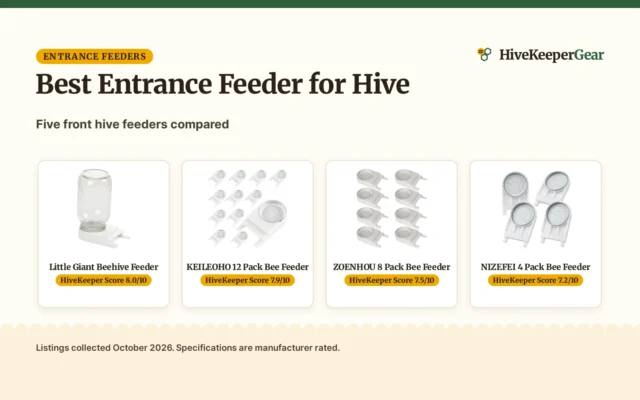
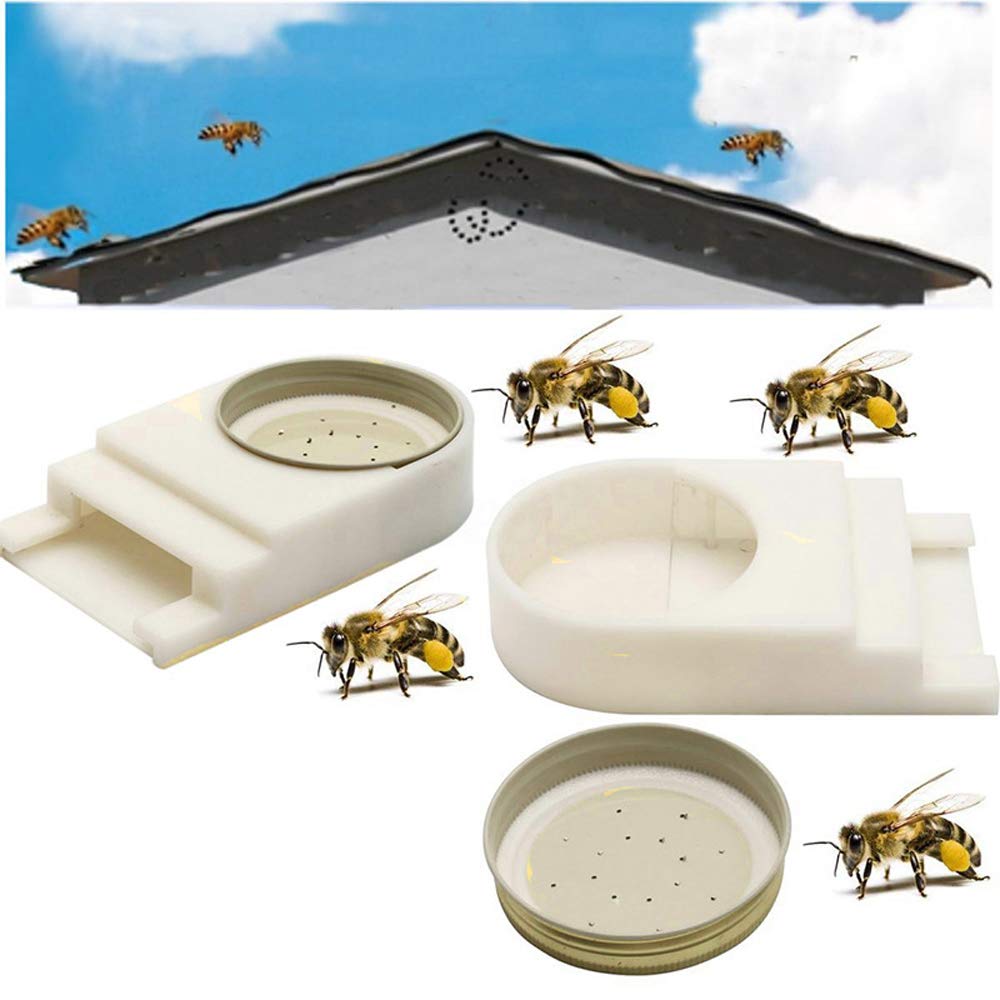
An entrance feeder, often called a Boardman feeder, consists of an inverted jar set into a specialized tray. The extended tongue of the tray slides directly through the bottom entrance of the hive, resting on the bottom board so that bees access the perforated lid from inside while the inverted jar remains outside. For example, the Lohas Select entrance feeder uses a tray measuring 5.1 inch long, 3.15 inch wide and 1.18 inch tall, while the Minelife feeder tray measures 5.5 x 3.15 x 1.18 inches with a weight of 4.16 ounces. These bases accept standard canning jars: the XILEWHZF feeder lid fits jars measuring 2 ¾ inches across 5 – frame, 8 – frame, and 10 – frame Langstroth equipment, matching the 2.75-inch cap specification from PUERDEAN and the 2-3/4 in regular-mouth opening listed by NIZEFEI, whose base measures 3.15 x 5.5 x 1.1 inches. Replacement perforated caps, such as the Toddmomy metal lids, measure 2.87 x 2.87 x 0.59 inches with an item weight of 3.52 ounces. For lightweight water delivery, units like the BENBO dispenser weigh 4.8 ounces and slide into place to provide hydration at the entrance.
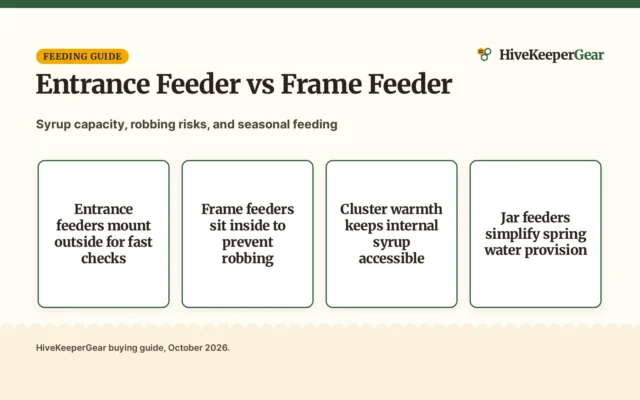
The chief benefit of this design is effortless monitoring without colony disruption. A beekeeper can check syrup levels at a glance from across the yard without smoking the hive or cracking propolis seals. Refilling requires simply unscrewing the jar outdoors and replacing it. However, because the jar sits exposed to outside air, syrup cools down quickly on chilly days. Furthermore, temperature swings or slight air leaks can break the jar vacuum, dripping syrup onto the bottom board and creating an immediate scent trail for pests.
How top feeders work
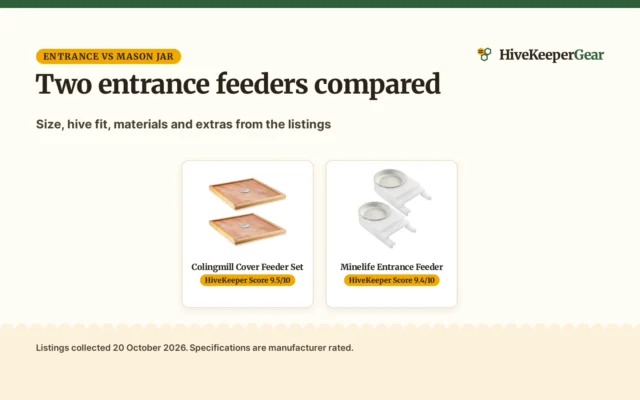
A top feeder sits at the very top of the hive stack, positioned directly over the uppermost brood box and beneath the outer telescoping roof. Top feeding systems include full-coverage wooden or plastic basin feeders, inverted bucket feeders placed over an inner cover hole, and specialized feeding boards. For instance, the Colingmill wooden inner cover for 10 Frame hives measures 19.88 x 16.34 x 0.98 inches with a weight of 3.35 pounds, featuring access points that accommodate feeder inserts measuring 2.87 x 0.59 inches to deliver feed directly through the ceiling of the brood chamber.
Top feeders protect the feeding process by enclosing syrup entirely within the hive envelope. Bees climb up through an internal access chimney or screened partition to reach the syrup without leaving hive warmth. Floats, wooden ladders, or wire mesh screens provide footing so bees drink freely without drowning. Heat rising from the brood nest warms the reservoir directly above them, keeping syrup accessible during cold nights. Refilling requires removing the outer lid, but screened baffles keep bees separated from the syrup reservoir so the beekeeper can pour fresh feed without bees flying out.
Capacity and apiary management
Capacity is a decisive factor for beekeepers who manage outyards or cannot inspect hives daily. Entrance feeders rely on standard canning jars, which hold modest quantities of liquid. During active comb building or package installation, a hungry colony can drain an entrance jar very quickly, demanding frequent apiary visits to prevent comb building from stalling.
Top feeders provide vastly superior liquid capacity. A top feeder basin holds enough bulk syrup to sustain a colony for extended intervals without intervention. This large reservoir allows beekeepers to feed colonies rapidly during autumn preparation, enabling bees to store and cap sufficient honey stores before winter sets in while minimizing trip frequency.
Robbing risks and hive defense
The most significant operational hazard associated with entrance feeding is robbing. An entrance feeder places sweet sugar syrup right at the front doorstep of the hive, where odors drift freely into the apiary. During late summer and autumn nectar dearths, foraging scout bees from nearby colonies, along with yellowjackets and wasps, actively hunt for vulnerable food sources. The scent of syrup concentrated at the bottom entrance quickly draws robbers directly to the front opening.
For a small colony, a package install, or a nucleus hive, defending a wide entrance against aggressive robber bees can prove impossible. Using a wooden entrance reducer helps diminish the opening, but having syrup located at the threshold remains an inherent hazard. Top feeders eliminate this vulnerability by isolating syrup deep inside the hive stack. Scent remains sealed beneath the outer cover, far from the entrance where outside foragers cruise.
Weather performance and seasonal timing
In cool spring weather or brisk autumn days, worker bees contract into a tight winter cluster around the brood nest to conserve heat. Bees will not break this protective cluster to venture into cold areas of the hive where they risk chilling and death.
Because an entrance feeder sits at the drafty bottom opening on the floor of the hive, the syrup chills down to ambient outside temperatures. When temperatures drop, bees refuse to travel down to the bottom board to consume cold syrup. In contrast, heat generated by the brood cluster rises upward through the frames, warming a top feeder directly above them. This thermal advantage makes top feeders the superior tool for early spring feeding and rapid late-season provisioning. You can compare different styles across our comprehensive guide to beehive feeders.
Which feeder should you buy?
Deciding between an entrance feeder and a top feeder depends on your seasonal management goals, apiary location, and colony strength:
- Choose a top feeder when establishing new colonies from packages or nucleus hives, feeding during chilly early spring or late fall prep, managing outyards with infrequent visits, or protecting vulnerable hives from robbing pressure.
- Choose an entrance feeder when providing clean water during warm summer months, offering light syrup stimulation to a strong colony in warm weather, or managing an observation hive where external viewing is desired.
For general backyard beekeeping, a top feeder remains the safer, more versatile primary investment. To explore how other styles compare, see our comparisons of the entrance feeder vs frame feeder and the Boardman feeder vs top feeder, or check our guide to bee feeders for beginners.
FAQs for beekeepers
Does an entrance feeder cause robbing?
Yes, entrance feeders are widely recognized for increasing robbing risks because they place sweet syrup at the front entrance where odors escape into the apiary. Foraging bees and wasps from outside colonies follow the scent, which can overwhelm smaller or newly established colonies.
Can I use an entrance feeder in cold weather?
Entrance feeders perform poorly in cold weather because bees cluster together over the brood nest to conserve heat and will not break cluster to venture down to a cold bottom board. In contrast, heat rising from the cluster warms a top feeder, allowing bees to access syrup during cooler weather.
What jar size fits a standard beehive entrance feeder?
Most entrance feeders accept standard regular-mouth canning jars. For instance, the XILEWHZF and NIZEFEI entrance feeders specify lids designed for 2 ¾ inches (or 2-3/4 in) jar openings, matching the 2.75-inch cap dimensions from PUERDEAN.
Can an entrance feeder be used inside the hive?
Yes, some entrance feeders can be placed inside an empty hive box above the inner cover. Colingmill provides a dedicated 10 Frame wooden inner cover measuring 19.88 x 16.34 x 0.98 inches with feeder access holes measuring 2.87 x 0.59 inches, allowing beekeepers to feed from above while keeping syrup secure inside the hive envelope.
Why is a top feeder preferred for establishing new bee colonies?
A newly installed package or nucleus colony needs abundant syrup to draw out new comb, but lacks a large guard force to defend the entrance. A top feeder provides a large reservoir inside the hive where bees feed in warmth and safety without exposing the colony to robbing attacks.
More hive guides
See every bee feeders guide and all hive tools guides, or explore our guides on beehives, protective gear, and honey harvesting.
More guides: learn about overall bee feeder types, compare bucket feeders for bees, or browse our list of the best beehive feeders.