Mason Bee Size and the Right Nesting Tube Diameter
Mason bee size is about nesting tube diameter, not house height, and the houses listed offer tubes in a range of diameters for different solitary bees.

On this page
Top picks at a glance
As an Amazon Associate I earn from qualifying purchases.
- 1
 Rivajam 150 Mason Bee Tubes with 75 Cardboard Tubes and 759.6/10View on Amazon
- 2
 Rivajam 125 Mason Bee Cardboard Nest Tubes Refill Pack9.6/10View on Amazon
- 3
 Veezy Natural Reed Mason Bee Tubes with Clay Sealer9.6/10View on Amazon
Mason bee size is about the nesting tube a mason bee can enter, not the height of the house it hangs in. In spring, mason bees look for a dry hole in wood or a hollow tube, and a house that offers tubes in a range of diameters gives different solitary bees a place to nest. The right size is the tube that fits the bee, with room to lay eggs in a line and seal the entrance with mud.
HiveKeeperGear earns a commission when you buy through links on this site, at no extra cost to you. As an Amazon Associate I earn from qualifying purchases. Affiliate disclosure.
Mason Bee Size: Tube Diameter Comes First
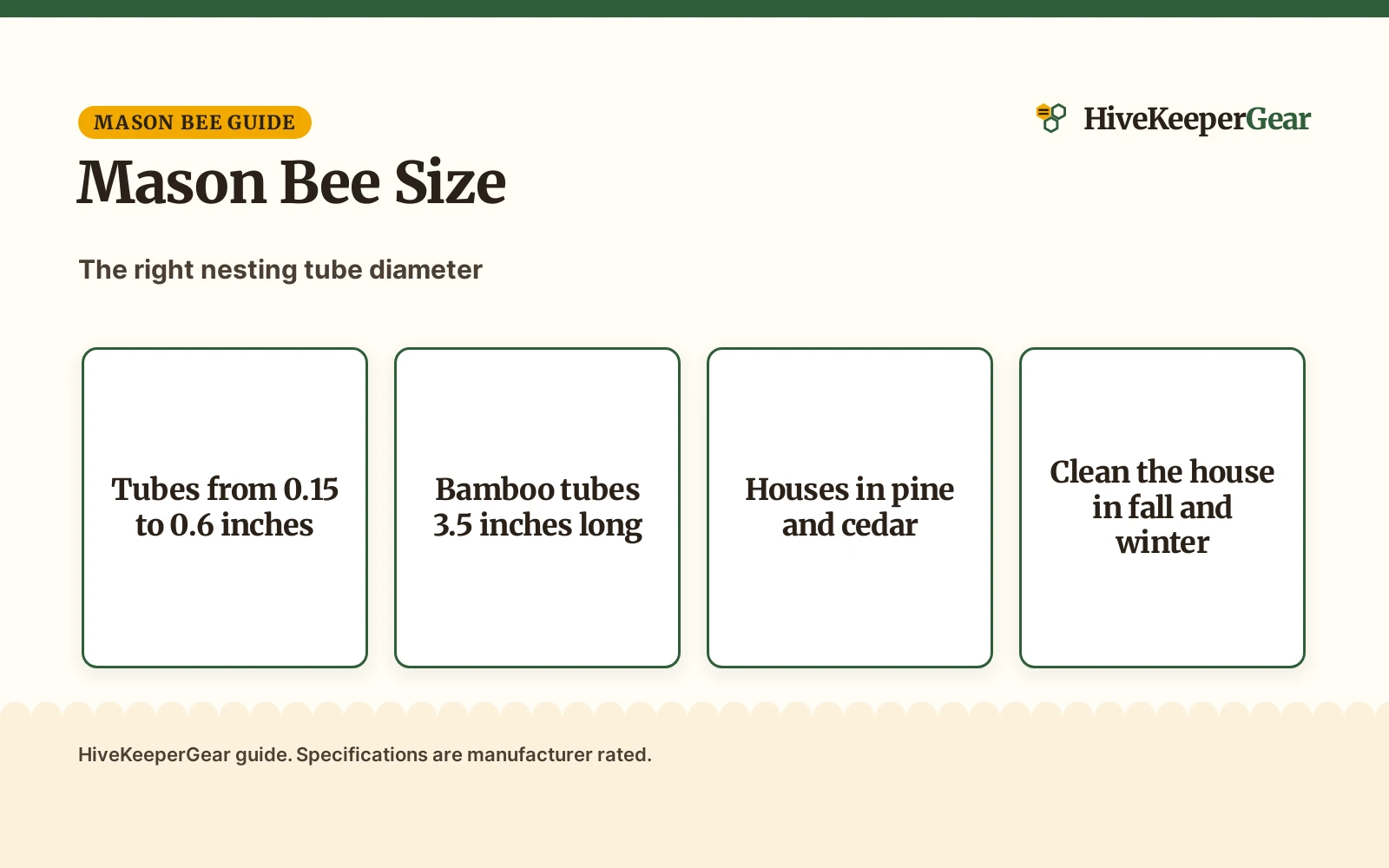
Tube diameter is the size that matters for mason bees. A tube that is too wide gives the bee more space than it needs, while a tube that is too narrow keeps the bee out. Houses that list tubes in varied diameters let different solitary bees choose a tube that fits, and the Dmnnlp house (on Amazon) lists tubes with varied diameters from 0.15 to 0.6 inches. The JZDF house (on Amazon) also lists different sized holes to support mason bees, leafcutter bees and other solitary bees. For more on hole diameter, see mason bee hole size.
Tube length matters too, and the NASIDE house (on Amazon) lists bamboo tubes measuring 3.5 inches in length. A tube that is long enough gives the bee room for a line of cells, while a tube that is too short leaves little room for eggs. When a house lists tube length, compare it with the tube diameter, and look for tubes that stay dry under a roof or overhang.
What the Houses List
| House | Size | Tubes | Material |
|---|---|---|---|
| Dmnnlp hexagon house | 10.24 x 5.71 x 3.15 in | 0.15 to 0.6 in diameters | Pine wood |
| NASIDE wooden bee hotel | 6.3 x 6.38 x 6.5 in | Bamboo tubes 3.5 in long | Natural wood |
| JZDF bug hotel | 3.5 x 7.1 x 11.4 in | Different sized holes | Pine wood |
| GUBEARE pine house | 8.4 x 8.26 x 4.56 in | Bamboo tubes of different diameters | Pine wood |
| Panacea cedar houses, pack of 3 | 7.75 x 6 x 9.5 in | Six removable trays with deep grooves | Cedar |
The table shows how much house sizes vary, while tube size stays the point to check. A house measuring 10.24 x 5.71 x 3.15 inches can hold tubes of many diameters, and a house measuring 6.3 x 6.38 x 6.5 inches can hold tubes that are 3.5 inches long. The Panacea houses (on Amazon) are sold as a pack of 3, with six removable trays in each house, so trays can be taken out for cleaning at the end of the season.
Tube Length and House Size
House size alone does not tell a reader whether mason bees will use a house. The antiai house (on Amazon) measures 5.35 x 7.28 x 28.58 inches, with bamboo tubes inside and a stake for the ground, while the GUBEARE house measures 8.4 x 8.26 x 4.56 inches, with a feeding tray included. A compact house can still hold tubes that are long enough for a line of cells. Check the tube diameter and the tube length in the listing, not just the outside size.
Weight and material also shape where a house can hang. The JZDF house weighs 1.9 pounds, and the GUBEARE house weighs 2.2 pounds. The GUBEARE house lists screws provided for hanging on a tree or a wall, while the JZDF house is listed as simple to hang and install. Pine wood is the material listed for the Dmnnlp, JZDF and GUBEARE houses, while the Panacea houses are listed as cedar. Cedar is listed as resisting rot, so the choice is about where the house will sit and how much rain it will see.
Where to Put a Bee House
A bee house needs sun, shelter and flowers nearby. The Dmnnlp house comes with a metal ground stake that is 32 inches tall, and 3 cleaning brushes, so it can stand among flowers, sit on a flat surface, or hang from a tree or wall with the top hook. The NASIDE house comes with a metal wall buckle and a rope for tree hanging, so it can go on a wall or hang from a branch. For placement, see where to put a bee house and how to attract mason bees.
Cleaning and Reuse
Cleaning keeps a bee house usable from season to season. The JZDF house is listed as reusable, with a note to clean the hive in the fall and winter, remove dead or diseased eggs, and reuse it again next year. The Panacea houses have six removable trays with deep grooves, so trays can be taken out and cleaned at the end of the season. The Dmnnlp house includes 3 cleaning brushes.
Waterproofing also matters for dry tubes. The antiai house has a waterproof roof, and the NASIDE house is coated with beeswax for water resistance.
What Mason Bee Size Does Not Mean
Mason bee size does not mean the size of the house, the size of the pack, or the size of the stake. A pack of 3 houses is a count of houses, not a tube size, and the Panacea houses list trays, not tube diameters. A stake that is 32 inches tall does not change the tube a bee can enter. The JZDF house carries a 2 year manufacturer warranty, which is about the house, not about the bees that use it.
It also does not mean that every hole in a house is for mason bees. The antiai house is listed for mason bees, ladybugs, lacewings and butterflies, and the GUBEARE house is listed for bees, butterflies, ladybugs and other pollinators. Different spaces suit different insects, so a house with varied diameters can serve mason bees and other solitary bees at the same time. See solitary bee house vs mason bee house for the difference.
FAQs for beekeepers
How wide should a mason bee tube be?
Use tubes in varied diameters, so different solitary bees can choose a tube that fits. The Dmnnlp house lists tubes from 0.15 to 0.6 inches, and the JZDF house lists different sized holes for mason bees, leafcutter bees and other solitary bees.
How long should a mason bee tube be?
Look for the tube length the maker lists. The NASIDE house lists bamboo tubes measuring 3.5 inches in length, which gives room for a line of cells inside the tube.
Do mason bees need a large house?
No, house size alone does not decide use. The NASIDE house measures 6.3 x 6.38 x 6.5 inches, while the Dmnnlp house measures 10.24 x 5.71 x 3.15 inches, and both list tubes for solitary bees. Check tube diameter and tube length, not just outside size.
Can mason bees sting?
Mason bees are described in the houses listed as peaceful pollinators, which means they are not aggressive, not that they never sting. For more on mason bees and stings, see can mason bees sting.
What is the difference between a mason bee house and a bee hotel?
A mason bee house is a bee hotel made for mason bees, with tubes sized for solitary bees. A bee hotel can also hold space for other insects, such as ladybugs and butterflies, as the antiai house lists. See mason bee house vs bee hotel.
More hive guides
Browse every guide by category: beehives, mason bee hole size, what is a mason bee and where to put a bee house, or see the safety disclaimer.