Synthetic Bee Suit vs Cotton Bee Suit: Which One Should You Buy?
Compare synthetic and cotton bee suits across sting protection, fabric breathability, drying speed, weight, and long-term durability in the apiary.

On this page
Top picks at a glance
As an Amazon Associate I earn from qualifying purchases.
- 1
 3-Layer Ultra Ventilated Sting Proof Bee Suit for Men & Women9.7/10View on Amazon
- 2
 LONGADS Bee Suit for Men9.6/10View on Amazon
- 3
 Forest Beekeeping 100% Cotton Bee Suit with Round Veil9.6/10View on Amazon
- 4
 Humble Bee 430 Ventilated Beekeeping Suit with Round VeilView on Amazon
- 5
 Brutul Bee 3 Layer Beekeeping Ultralight Ventilated Suit withView on Amazon
- 6
 Humble Bee 421 Ultravent Beekeeping Suit with Fencing VeilView on Amazon
- 7
 Flexzion Bee SuitView on Amazon
- 8
 TOPINCN Professional Child Beekeeping Yellow Cotton Suit BeeView on Amazon
- 9
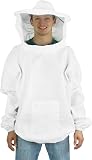 VIVO Professional L Beekeeping Suit WhiteView on Amazon
When opening a hive during a humid summer nectar flow, deciding between a synthetic bee suit vs cotton bee suit comes down to airflow, drying speed, and how each fabric handles stinger contact. A synthetic suit, particularly a ventilated multi-layer mesh, provides cooling airflow, keeps stingers away from skin, and dries rapidly after washing. A pure cotton suit provides a dense woven barrier that resists abrasions from rough hive boxes and thorns, but it absorbs sweat and takes longer to dry on the line. Synthetic suits offer superior heat relief during summer inspections, while heavy cotton remains a dependable choice in cooler weather or overgrown yards.
Other hives and gear to compare
 Humble Bee 430 Ventilated Beekeeping Suit with Round VeilCheck price on Amazon
 Brutul Bee 3 Layer Beekeeping Ultralight Ventilated Suit withCheck price on Amazon
 Humble Bee 421 Ultravent Beekeeping Suit with Fencing VeilCheck price on Amazon
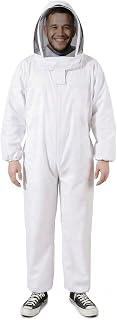 Flexzion Bee SuitCheck price on Amazon
 TOPINCN Professional Child Beekeeping Yellow Cotton Suit BeeCheck price on Amazon
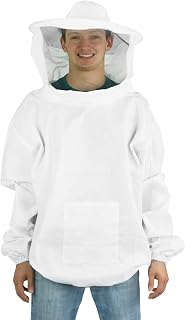 VIVO Professional L Beekeeping Suit WhiteCheck price on Amazon
HiveKeeperGear earns a commission when you buy through links on this site, at no extra cost to you. As an Amazon Associate I earn from qualifying purchases. Affiliate disclosure.
Before you buy: apiary climate and yard conditions
Before selecting a fabric, consider your local climate and apiary layout. Beekeepers inspecting colonies under open summer sunshine face significant heat fatigue, where breathable gear helps maintain calm, deliberate movements. In contrast, yards bordered by dense brambles or wire fences demand snag-resistant woven textiles that shed thorny contact without tearing outer netting.
Synthetic bee suit vs cotton bee suit: comparison overview
Traditional cotton suits rely on tight yarn weave to stop stinger penetration, while multi-layer synthetic suits use raised mesh to keep bees beyond stinger reach while letting breezes circulate.
| Feature | Synthetic suit | Cotton suit | Practical difference in the yard |
|---|---|---|---|
| Fabric construction | Polyester mesh, single or multi-layer | Woven cotton twill or canvas | Synthetic uses open mesh; cotton uses dense yarn |
| Airflow | Open mesh allows breezes through | Breathable weave with less direct airflow | Ventilated synthetic stays cooler in summer |
| Drying speed | Hydrophobic fibers dry rapidly | Hydrophilic cotton absorbs sweat and dries slowly | Synthetic dries quickly on the line between visits |
| Snag resistance | Outer mesh can catch on brambles | Dense smooth weave resists thorns and splinters | Cotton handles rough brush with fewer pulls |
| Sting defense | Depth barrier in layered mesh | Dense barrier stopping direct fabric entry | Layered mesh holds stinger tips away from skin |
| Care | Check label; gentle cold wash or hand wash | Check label; typically machine wash cold, hang dry | Remove veils before washing to protect mesh |
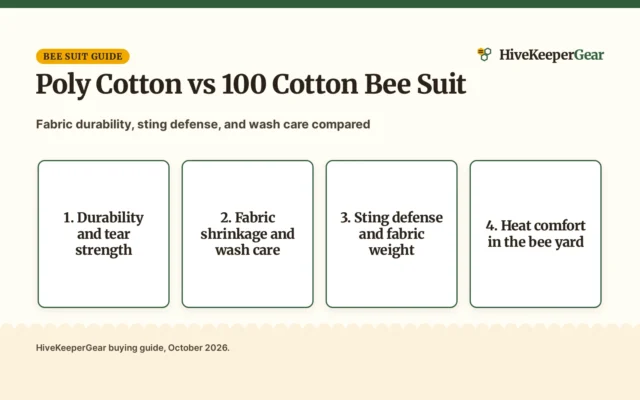
1. Fabric construction and materials
Modern synthetic suits often use composite netting. USKeepers lists a 3-layer suit built with 100% polyester mesh, latex foam mesh, and polycotton fabric. Other designs prioritize minimum weight; Mann Lake lists its ProVent suit with 100% polyester mesh for high-heat breathability. These synthetic polymers resist rot and mildew in damp storage.
Cotton suits feature natural woven fibers. Forest Beekeeping Supply lists a 100% cotton suit made from pre-shrunk, sanforized, and mercerized cotton for a smooth, tough surface. Hybrid designs blend materials; Andes lists a suit with 90% cotton tight weave at 0.52 mm thickness (280 gsm), claiming it is thicker than standard 0.40 mm cloth, with chest, back, and arm ventilation panels. Humble Bee lists a 50% cotton and 50% synthetic blend at 280 gsm cloth paired with 100% synthetic 220 gsm ventilation panels.
2. Ventilation and airflow
Airflow is the main benefit of synthetic mesh. USKeepers lists three layers of mesh fabric that allow breezes in and sweat to evaporate out, circulating air as you work. Solid cotton breathes through thread gaps during mild weather, but once damp with sweat, it holds heat against the skin. For hot climates, our cotton vs ventilated bee suit guide and best ventilated bee suit reviews detail how mesh panels preserve stamina.
3. Sting protection and layer depth
Multi-layer synthetic suits defend through thickness rather than fabric density. USKeepers states its three layers of raised fabric sit high to keep bees away from skin, creating space greater than a worker stinger reach. Single-layer cotton stops stings across loose areas, but when stretched taut over knees or shoulders, stingers can penetrate the weave. To protect vulnerable spots, Mann Lake lists reinforced knees, and USKeepers incorporates cushioned knee pads.
4. Fabric durability and snag resistance
Woven cotton excels around rough equipment and thorny brush. Scraping propolis or carrying rough Langstroth boxes rarely harms dense canvas. Synthetic mesh requires more caution around briars and sharp wire, where outer netting can snag and pull runs. Forest Beekeeping Supply highlights reinforced seams and brass hardware to resist wear at stress points.
5. Moisture absorption and drying speed
Cotton is hydrophilic, soaking up sweat and rain until it feels heavy and takes hours to dry. Synthetic polyester fibers absorb virtually no water, allowing sweat to pass through and washing cycles to dry rapidly on a line in the breeze.
Suit weight, zippers, and apiary hardware
Suit weight varies by design: Forest Beekeeping Supply lists a 100% cotton suit at 16 ounces, Humble Bee lists its polycotton blend suit at 14.4 ounces, Mann Lake lists its synthetic suit at 2.8 pounds, Andes lists its suit at 3.36 pounds, and Lovjoyse lists a ventilated suit at 1.65 pounds. While multi-layer mesh carries slightly more dry weight, cotton gains significant weight as it absorbs sweat.
Hardware ensures dependable protection. Forest Beekeeping Supply lists YKK brass zippers with 12-inch leg openings, and Andes features self-locking metal zippers. For gear storage, Forest Beekeeping Supply lists 3 tool pockets, and USKeepers features front pockets with hook-and-loop closures. Elastic cuffs, thumb loops, and ankle stirrups seal openings. Use our bee suit size chart to pick a loose fit.
Veil styles and visibility
Detachable fencing and round veils suit different preferences. USKeepers includes 2 veils, offering a fencing veil and a 360-degree round veil. Andes likewise includes 2 veils with a 270-degree fencing view and a 360-degree round view. See our fencing veil vs round veil comparison for vision and storage tradeoffs.
Suit care and washing recommendations
Always detach veils to hand wash separately, protecting delicate face mesh. For suit bodies, follow stated care: Forest Beekeeping Supply specifies machine-wash cold and hang dry, USKeepers specifies machine wash cold on gentle for the body and hand wash for the veil, and Humble Bee lists hand wash only. Hang suits to dry rather than using machine heat.
What to avoid when selecting a suit
Never choose a tight fit; loose fabric creates an air buffer that prevents stingers from reaching skin. Avoid flimsy plastic zippers lacking protective collar flaps. For shorter yard tasks, check our best beekeeping jacket review, or explore full coveralls in our best beekeeping suit guide.
FAQs for beekeepers
Which suit material is cooler in summer?
Ventilated synthetic suits are cooler because multi-layer mesh lets breezes pass through, speeding sweat evaporation. Cotton breathes but traps heat once soaked with perspiration.
Can bees sting through cotton suits?
Yes, if the fabric pulls tight over shoulders or knees. Loose-fitting cotton and spacer-mesh synthetic suits prevent stingers from reaching skin.
How do drying speeds compare?
Polyester mesh sheds water and line-dries rapidly, while cotton fibers absorb moisture and require hours to dry.
Can bee suits be machine washed?
Some makers allow machine-washing the body on gentle cold cycles, while others specify hand wash only. Veils must always be hand washed.
Which fabric resists brambles better?
Dense cotton canvas slides past thorns and wood splinters with minimal snagging, whereas open mesh netting can hook on briars.
More hive guides
See every bee suits guide and all protective gear guides.
More picks: best beekeeping suit, best ventilated bee suit, best beekeeping jacket, and best beekeeping gloves. New to beekeeping? Start with our beekeeping supplies for beginners checklist.