Poly Cotton vs 100 Cotton Bee Suit: Which One Should You Buy?
Compare poly cotton and 100 cotton bee suits to understand differences in fabric durability, sting resistance, wash shrinkage, and daily apiary comfort.

On this page
Top picks at a glance
As an Amazon Associate I earn from qualifying purchases.
- 1
 LONGADS Bee Suit for Men9.6/10View on Amazon
- 2
 BEEKINGDOM Full Body Bee Suit with Detachable Veil9.5/10View on Amazon
- 3
 Bee Proof Ventilated 3 Layer Bee Suit9.5/10View on Amazon
- 4
 TOPINCN Professional Child Beekeeping Yellow Cotton Suit BeeView on Amazon
- 5
 Bee Smoker Fuel 100% Cotton Knitted Smoking Cut-OffsView on Amazon
Pulling on protective gear on a warm afternoon during the main honey flow brings the question of poly cotton vs 100 cotton bee suit into sharp focus. If you want a suit that resists tearing on hive corners, holds its shape without shrinking, and lasts through seasons of yard work, choose a poly cotton bee suit. If you prefer pure natural fiber breathability and soft drape, choose a 100 cotton bee suit. For most backyard beekeepers, poly cotton provides the superior balance of snag resistance, dimensional stability, and dependable sting defense.
Other hives and gear to compare
 TOPINCN Professional Child Beekeeping Yellow Cotton Suit BeeCheck price on Amazon
 Bee Smoker Fuel 100% Cotton Knitted Smoking Cut-OffsCheck price on Amazon
HiveKeeperGear earns a commission when you buy through links on this site, at no extra cost to you. As an Amazon Associate I earn from qualifying purchases. Affiliate disclosure.
Before you choose: fabric basics
Choosing between poly cotton and pure cotton comes down to how natural and synthetic fibers perform in the apiary. Cotton is a traditional fiber valued for softness and airflow, but it absorbs sweat readily and contracts when heated. Polyester is a synthetic fiber built for tensile strength and abrasion resistance. Blending the two pairs cotton comfort with synthetic durability.
In published listings, blends vary across ratios. The Humble Bee 410 lists a 50% cotton and 50% synthetic blend at 280 gsm weighing 3.9 pounds, while the GAIACOLMEIA suit lists a 70% cotton and 30% polyester fabric weighing 2.02 pounds. Cotton-rich weaves also appear, such as the ANDES suit specifying a 90% cotton weave at 280GSM with a 0.52mm thickness compared to standard 0.40mm cloth, weighing 3.36 pounds. Pure cotton suits like witbee weigh 3.25 pounds, noted for up to 100 colonies, while lightweight suits like LOVJOYSE weigh around 1.65 pounds. These specs help you choose between full bee suits and ventilated bee jackets.
Poly cotton vs 100 cotton bee suit: key comparison
Comparing fabric characteristics clarifies why blend ratios matter during regular hive inspections and weekly yard chores.
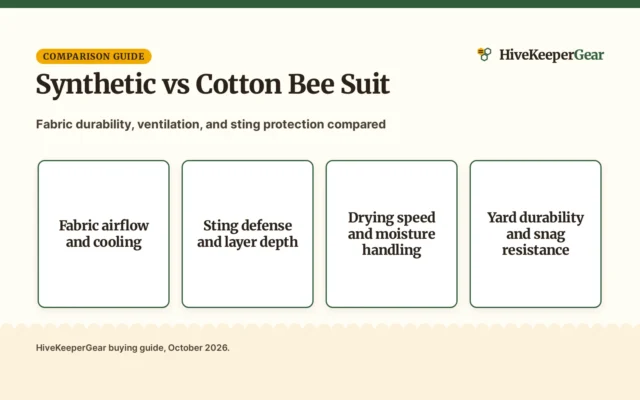
| Comparison Factor | Poly Cotton Bee Suit | 100% Cotton Bee Suit | Yard Reality |
|---|---|---|---|
| Fabric Composition | Cotton blended with polyester (such as 50% cotton and 50% synthetic, or 70% cotton and 30% polyester) | 100% pure cotton weave | Blends use synthetic fibers to reinforce natural cotton yarns. |
| Wash Shrinkage | Reduced shrinkage; synthetic fibers help stabilize the weave during laundering | Noticeable shrinkage when washed or dried with heat; benefits from cold washing and line drying | Cotton suits lose torso length and sleeve reach if exposed to heat. |
| Tear and Abrasion Resistance | High tensile strength; polyester fibers resist snags from hive boxes and vegetation | Moderate strength; natural cotton fibers wear down faster at friction points | Poly cotton suits withstand dragging against rough woodenware and hive stands. |
| Sting Defense | Blended weave adds structural stiffness that helps keep fabric suspended away from skin | Soft natural drape; requires generous sizing to keep fabric from pulling flush against skin | Both fabrics stop stings when sized loose; tight spots allow stingers through. |
| Heat and Moisture Comfort | Moderate air permeability; synthetic fibers dry quickly and shed moisture in breezes | High natural breathability; absorbs sweat well but remains damp longer when saturated | Cotton feels cooler in dry heat; poly cotton dries faster during humid work. |
| Garment Weight and Feel | Available in varied weights (from 2.02 pounds up to 3.9 pounds in reference listings); crisp feel | Available in varied weights (such as 3.25 pounds or 3.36 pounds in published listings); soft drape | Poly cotton feels crisper; pure cotton drapes softer against everyday clothing. |
1. Fabric durability and tear resistance
Apiary chores put mechanical strain on protective clothing. Beekeepers lift heavy wooden hive bodies, pry propolis-glued boxes apart with hive tools, and brush past sharp hive stands. Pure cotton has moderate tensile strength; its natural fibers weaken over time from friction and sun exposure, leading to thinning at knees and elbows.
Poly cotton blends solve this because polyester fibers add high tensile strength and snag resistance. Synthetic filaments lock cotton yarns together, preventing splinters from tearing the cloth. Humble Bee reinforces its 50% cotton and 50% synthetic suit with double-stitched pockets and brass zippers to handle yard strain. For keepers moving supers over rough ground, poly cotton provides dependable tear resistance. For weight differences, see our comparison of heavy duty vs lightweight bee suits.
2. Shrinkage and laundering
Fabric shrinkage is a critical distinction between poly cotton and cotton bee suits. Inspections soil suits with honey, propolis, and hive dust. Laundering keeps gear clean and washes away alarm pheromones that provoke guard bees.
Pure cotton fibers contract when exposed to heated water or dryer air. When a cotton suit shrinks, the torso shortens and cuffs pull away from wrists and ankles, creating tight spots where stingers penetrate easily. Keepers using cotton benefit from cold washing and line drying. Poly cotton suits resist shrinkage far better because polyester fibers stabilize the weave. Following care instructions and avoiding high dryer heat preserves fit and protects zipper tracks across seasons.
3. Sting protection and fabric weight
Honey bees use stingers that penetrate thin fabric resting flush against skin. Protective clothing relies on fabric thickness and a loose fit that holds cloth away from the body. If fabric pulls taut across your shoulders while lifting boxes, stingers can penetrate single-layer cloth regardless of weave. A loose fit is the main defense against stings in any single-layer suit.
Fabric weight reflects density, measured in grams per square meter (gsm). The 280 gsm fabric specified by Humble Bee for its poly cotton suit and ANDES for its 90% cotton suit creates a sturdy barrier. ANDES notes its 0.52mm fabric thickness exceeds standard 0.40mm cloth. GAIACOLMEIA incorporates a 70% cotton and 30% polyester weave designed for a 4.5mm safety gap. Blends also offer an advantage because synthetic fibers provide a crisp drape that resists clinging when wet with sweat. Check our bee suit size chart to ensure a loose fit.
4. Breathability and heat comfort
Colony inspections occur during warm weather when bees forage. Working in sunlight builds body heat, making ventilation essential. Pure 100% cotton excels in natural breathability; its cellulose structure permits airflow and absorbs sweat readily, keeping you comfortable during short inspections in dry heat.
In humid conditions or extended yard sessions, cotton saturates with sweat, dries slowly, and clings. Poly cotton blends manage moisture differently: because polyester absorbs minimal water, sweat evaporates faster in apiary breezes. The suit stays lighter and sheds dampness quickly. While poly cotton can feel slightly warmer in still air than dry cotton, its fast drying makes it dependable across summer. For maximum airflow, explore our guide to cotton vs ventilated bee suits.
5. Long-term value and maintenance
Protective gear should provide reliable service across seasons as your apiary expands. Poly cotton suits offer solid value for hobbyists because synthetic fibers resist seam fraying, zipper track tears, and wash thinning. Humble Bee backs its poly cotton suit with a 2 Year manufacturer warranty, reflecting confidence in blended fabric durability.
Cotton suits can also last, though keepers often choose cold washing and line drying to avoid shrinkage, even on models listed as machine washable. For beginners, poly cotton provides a durable, forgiving option that minimizes fabric contraction. To select your first suit, explore our guide to the best bee suits for beginners.
Seasonal yard care and suit storage
Caring for your bee suit preserves protective qualities and extends hardware life:
Spring buildup: Inspect zippers, seams, and veil mesh before opening hives. Check elastic tension at wrists and ankles, and wash out stale odors using cold water and mild detergent.
Summer flow: After hot inspections, hang your suit in a shaded breezeway to dry. Never leave damp gear crumpled in closed bins where mildew degrades cotton fibers.
Fall harvest and feeding: Carrying honey supers and syrup feeders strains seams. Rinse sticky syrup with cold water to keep fabric pliable, and check that ankle cuffs seal over boots.
Winter storage: Detach veils for hand washing. Clean the suit body following maker instructions, using cold water and line drying. Store clean, dry suits in a sealed tote away from mice.
Practical suit features to look for
Specific construction details impact yard safety and comfort:
- Sturdy metal or resin zippers with large pulls that slide easily while wearing gloves.
- Thumb loops and foot stirrups that keep sleeves and pant legs in place while bending.
- Roomy pockets, like the 8 pockets on OZ ARMOUR or Ten pockets on Humble Bee, to hold hive tools.
- Detachable veils that unzip for washing, comparing styles in our fencing veil vs round veil guide.
- Elastic waistbands that gather excess cloth to prevent snagging on hive corners.
What fabric will not fix
Fabric choice cannot replace calm hive handling. Bees react to sharp vibrations, dropped frames, and alarm pheromones. Deliberate movements and proper smoker use prevent defensive reactions far more reliably than fabric alone.
Ensure closures seal completely: neck zippers must overlap, flap covers must close, and cuffs must tuck into beekeeping gloves and over boots. HiveKeeperGear evaluates equipment only; for colony health and management, consult your local extension office.
FAQs for beekeepers
Does a 100 cotton bee suit shrink more than a poly cotton suit?
Yes. Pure cotton fibers contract when exposed to heated water or dryer air, shortening sleeves and torso length. Poly cotton blends resist wash shrinkage because synthetic polyester fibers hold their dimensions across laundering.
Which fabric offers better tear resistance around the apiary?
Poly cotton provides higher tear resistance because polyester filaments add tensile strength to the weave. This helps prevent snags from hive tool edges, rough boxes, and brambles from tearing open into large holes.
Can bees sting through poly cotton or pure cotton suits?
Bees can sting through either material if fabric pulls tightly against skin. Both fabrics stop stings when sized loose, though heavier weaves like 280 gsm and stiffer blended textiles help keep cloth suspended away from the body.
Is a 100 cotton bee suit cooler in hot weather than poly cotton?
Cotton offers greater air permeability and absorbs sweat readily, feeling cooler during brief inspections in dry heat. However, poly cotton dries faster when damp and clings less during long yard sessions.
How should I wash and care for my bee suit?
Detach the veil for gentle hand washing. Launder the suit body in cold water with mild detergent, and hang it on a line to dry to prevent heat shrinkage and hardware damage.
More hive guides
See every bee suit guide and all protective gear guides.
More comparison guides: explore our breakdown of cotton vs ventilated bee suits, compare synthetic vs cotton suits, check the bee suit size chart, or compare bee suits vs bee jackets.