Uncapping Knife vs Uncapping Fork: Which One Should You Buy?
Uncapping knife vs uncapping fork: the knife clears flat cappings fast, the fork works corners and low spots, and the listings show when each earns its keep.

On this page
Top picks at a glance
As an Amazon Associate I earn from qualifying purchases.
- 1
 Electric Honey Uncapping Knife Digital Display Uncapping KnifeView on Amazon
- 2
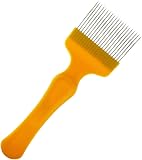 3 Pack Steel Beekeeping Uncapping Fork with 21 Tines Brand:View on Amazon
- 3
 Stainless Steel Uncapping KnifeView on Amazon
- 4
 ROTORS Electric Honey Uncapping KnifeView on Amazon
Late summer brings the heavy frames: supers full of capped honey, ready for harvest. That is when the uncapping knife vs uncapping fork question lands on the workbench. The short answer: the knife does the broad work across flat cappings, the fork handles the low spots and corners the knife misses, and many keepers end up owning both.
Other hives and gear to compare
 Electric Honey Uncapping Knife Digital Display Uncapping KnifeCheck price on Amazon
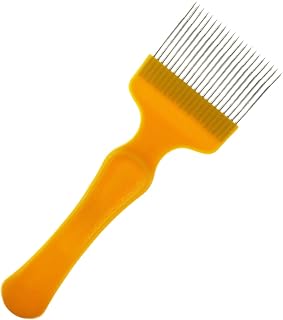 3 Pack Steel Beekeeping Uncapping Fork with 21 Tines Brand:Check price on Amazon
 Stainless Steel Uncapping KnifeCheck price on Amazon
 ROTORS Electric Honey Uncapping KnifeCheck price on Amazon
HiveKeeperGear earns a commission when you buy through links on this site, at no extra cost to you. As an Amazon Associate I earn from qualifying purchases. Affiliate disclosure.
uncapping knife vs uncapping fork: the short answer
Choose the knife for speed across evenly capped frames and the fork for detail work. A serrated cold knife like the GOODLAND, with an 11 inch by 1-3/8 inch blade on a 16 inch overall length, slices flat cappings with no power cord. A heated knife like the Pierce Speed King, with a 10 inch by 2 inch blade that heats in 30 seconds on an 8-foot cord, glides through wax with less pressure. The fork, such as the 210mm E-outstanding, works the embedded areas and frame corners the listing says a cutter cannot reach. If you are setting up a first harvest, the Generic 5-piece kit bundles an uncapping knife and an uncapping fork with a strainer, frame holder and honey gate.
What an uncapping knife does best
Cold serrated knives are the simple option. The GOODLAND GLUK-SER lists a serrated stainless blade 11 inches by 1-3/8 inches, sized for deep or medium frames, on a 16 inch overall length with an oak wood handle. Toresano also lists an 11 inch blade and 16 inch overall length in high-carbon stainless with a wood handle. No outlet, no warm-up, and the GOODLAND listing says hand wash only.
Heated knives trade simplicity for ease. The Pierce Speed King listing claims a food-grade 304 stainless blade, 10 inches long and 2 inches wide, with a preset thermostat, heat in 30 seconds, a cool-touch turned wood handle and an 8-foot grounded cord, plus a 2-year warranty. The Speed King with controller stand is listed at 120 volts and adds temperature adjustment through its control box. Heat means a power cord near the work table, so plan the setup before the first frame.
What an uncapping fork does best
The fork is the detail tool, and it is a cold tool. The E-outstanding fork is 210mm, about 8.27 inches, in stainless steel with a plastic handle, and the listing positions it for embedded areas with open honeycomb covers and frame corners the cutter cannot reach. Yenghome’s adjustable fork uses 304 stainless with a wooden handle. Where a knife skims the surface, the fork lifts cappings out of dips and edges without tearing deep into the comb.
Knife or fork: how to decide
Match the tool to the cappings. Even, well-filled frames go quickest under a knife; the GOODLAND’s 11 inch blade covers a deep frame face in steady passes. Uneven or partially capped frames leave low spots where a knife bridges over the wax, and that is the fork’s work.
Who should buy which
- Small harvest, no outlet nearby: a cold serrated knife such as the GOODLAND (11 inch blade, hand wash only) or the Toresano (11 inch blade, 16 inch overall).
- Longer harvest days: a heated knife such as the Pierce Speed King, with its 30-second heat-up, 8-foot cord and 2-year warranty. It is the only listing here with a stated warranty term.
- Uneven or partly capped frames: add a fork. The E-outstanding is 210mm and built for corners and embedded areas; the Yenghome is the wooden-handled alternative.
- Setting up from scratch: the Generic 5-piece kit puts a knife and a fork in one box with a double sieve strainer, frame holder and honey gate.
Our pair recommendation: one knife plus one fork. Pair a knife for the flat faces, either the cold GOODLAND or the heated Pierce Speed King, with the E-outstanding fork for corners and low spots. The knife does the bulk of every frame and the fork finishes what it leaves behind. See our uncapping knife picks, the honey extractor guide and the honey strainer guide for the rest of the line.
Keeping the tools in service
Stainless steel dominates these listings, from the GOODLAND’s corrosion-resistant blade to the 304 stainless on the Pierce and Yenghome, which keeps cleanup simple. The GOODLAND listing says hand wash only. The E-outstanding fork hangs for storage, and the Yenghome fork’s wooden handle wants the same dry storage as any hive tool.
FAQs for beekeepers
Do I need both a knife and a fork?
Not strictly, but they do different jobs. The knife clears broad, flat cappings; the fork, per the E-outstanding listing, works embedded areas and corners a cutter cannot reach. The Generic 5-piece set includes both for keepers who want the full kit.
What is the difference between a heated knife and a cold one?
Heat. The Pierce Speed King listing claims heat in 30 seconds with a preset thermostat and an 8-foot cord. Cold serrated knives like the GOODLAND and Toresano need no power at all.
What size knife fits my frames?
The GOODLAND’s 11 inch by 1-3/8 inch blade is listed for deep or medium frames; the Pierce blade is 10 inches long and 2 inches wide. Match the blade to your frame depth.
Which uncapping tools list a warranty?
Among the tools compared here, only the Pierce Speed King lists a warranty term: 2 years.
Can the fork replace the knife?
For small harvests some keepers manage, but the listings position the fork as the complement: it handles the spots the knife misses, not the whole frame.
More hive guides
Browse every guide by category: honey harvesting and uncapping tools.