Uncapping Fork vs Uncapping Roller: Which One Should You Buy?
Compare uncapping forks and uncapping rollers to decide which manual honey harvesting tool fits your apiary frames, wax management, and extraction setup.

On this page
Top picks at a glance
As an Amazon Associate I earn from qualifying purchases.
- 1
 Pierce Beekeeping Uncapping Tub Kit with Cover9.7/10View on Amazon
- 2
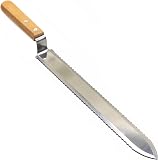 WEICHUAN Stainless Steel Serrated Uncapping Knife Beekeeping9.6/10View on Amazon
- 3
 Honbay Bee Keeping Uncapping Fork with 18 Tines Stainless9.6/10View on Amazon
- 4
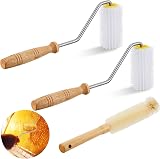 3 Pcs Uncapping Needle Roller Honey Extractor Cleaning BeeView on Amazon
- 5
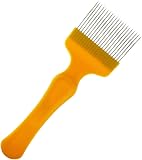 3 Pack Steel Beekeeping Uncapping Fork with 21 Tines Brand:View on Amazon
When the late summer nectar flow ends and honey supers come off the hives, deciding between an uncapping fork vs uncapping roller comes down to whether your frames have uneven comb faces or flat, uniform wax cappings. For most backyard beekeepers, an uncapping fork is the more versatile tool to buy first because its sharp metal tines reach into low spots, frame corners, and uneven hollows that a roller skips, while cleanly lifting wax cappings without mashing comb. An uncapping roller rolls over flat frames quickly, puncturing wax cappings with minimal wax debris, but it cannot reach sunken comb pockets and requires flat comb to work effectively.
Other hives and gear to compare
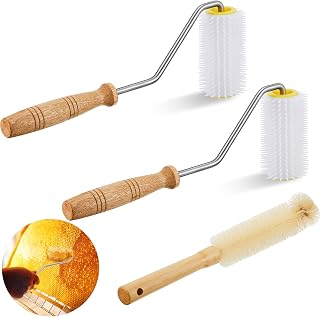 3 Pcs Uncapping Needle Roller Honey Extractor Cleaning BeeCheck price on Amazon
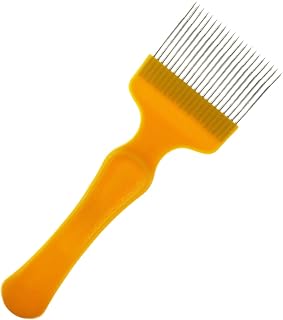 3 Pack Steel Beekeeping Uncapping Fork with 21 Tines Brand:Check price on Amazon
HiveKeeperGear earns a commission when you buy through links on this site, at no extra cost to you. As an Amazon Associate I earn from qualifying purchases. Affiliate disclosure.
Uncapping fork vs uncapping roller: key differences
Uncapping is the essential preparatory step before spinning honey frames in an extractor. Honey bees cap ripe honey cells with a protective layer of beeswax. Before centrifugal force can pull liquid honey out of the comb, those wax seals must be opened. Beekeepers use either cutting tools, scratching tools, or puncturing tools to accomplish this.
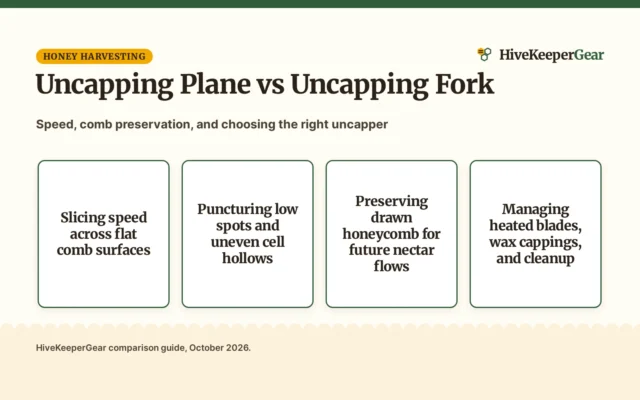
The uncapping fork and the uncapping roller represent distinct mechanical approaches to manual uncapping. A fork lifts or breaks cappings away from the comb face using rigid tines. A roller presses multiple sharp pins through the cappings as it glides over the frame, perforating the wax caps without slicing them away. Understanding how these actions interact with wax comb, honey clarity, and harvest pace helps determine which tool fits your apiary workflow.
| Feature | Uncapping Fork | Uncapping Roller |
|---|---|---|
| Primary action | Lifts and scratches wax cappings open | Punctures cappings with sharp needles |
| Comb compatibility | Handles uneven comb, low pockets, and frame edges | Requires flat, straight comb faces |
| Wax debris level | Produces wax cappings and flakes for collection | Minimizes loose wax debris in honey |
| Comb preservation | Lifts wax caps, leaving cell walls intact when angled properly | Leaves entire capping structure attached to comb |
| Cleaning method | Clean with hot water, soap, and a brush | Soak or rinse in warm water |
| Harvest role | Essential primary tool or secondary cleanup tool | Specialized fast opener for flat frames |
1. How an uncapping fork works
An uncapping fork consists of a row of stiff, sharp metal tines mounted to an ergonomic handle. To use a fork, the beekeeper slides the tines just beneath the wax cappings, parallel to the frame surface. With a gentle upward flicking motion, the tines pry the wax cappings upward, exposing the honey cells beneath. The fork can also be drawn lightly across uneven pockets like a comb scratcher, scratching or raking open cappings in depressions where an uncapping knife cannot reach.
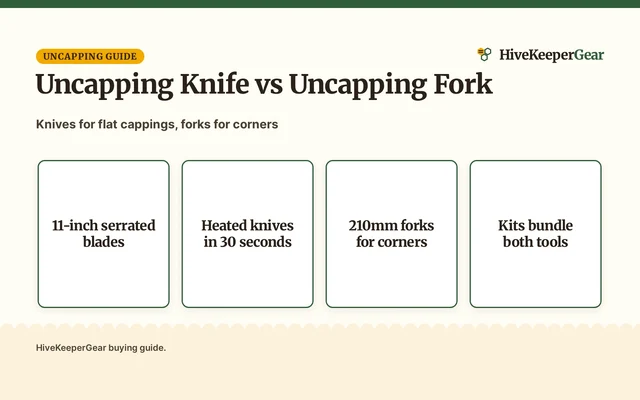
Manufacturers provide uncapping forks across various weights and tine setups. The Aliotech uncapping fork listing specifies 21 stainless steel tines with a tine length of 39 mm, a tine pitch of 1.4 mm, a plastic handle length of 160 mm, a width of 70 mm, and an item weight of 8 ounces. The QWORK listing specifies 21 tines in a 3 pack with plastic handles. The Longdex listing records an overall length of approximately 21 cm (8.27 inches) with an item weight of 2.39 ounces in a 1 count package. The E-outstanding listing states a length of 210 mm (21 cm or 8.27 inches) in a 1 count package. The GOTOTOP listing reports dimensions of 22 x 7 cm (8.66 x 2.76 inches) and an item weight of 4.6 ounces. The Yenghome listing specifies 304 stainless steel with a wood handle and an item weight of 1.6 ounces. The Primeonly27 listing states a rubber handle and stainless steel construction with package dimensions of 8.3 x 2.5 x 0.7 inches and 3.21 ounces in a 1 count package. The Fdit listing records an item weight of 1.41 ounces with stainless steel tines.
Because the tines are narrow and rigid, an uncapping fork offers precise control. When bees build comb with low dips, sunken centers, or bulges along the wooden bottom bar, the fork follows the contours of the comb. It opens every capped cell without shearing away large sections of comb or damaging foundation.
2. How an uncapping roller works
An uncapping roller features a rotating cylinder studded with rows of sharp plastic or metal needles. As the beekeeper rolls the tool firmly down the face of a capped honey frame, the needles pierce through the wax cappings into the honey cells. This mechanical action pops open the sealed wax lids rather than slicing them off.
The Duseu uncapping needle roller listing describes this tool as utilizing sharp plastic prongs and steel welding with an ergonomic handle. The listing notes that the gentle uncapping method does not cause excessive damage to the comb because it pops open closed honey cells so honey can spin out in an extractor. The maker also highlights that the roller minimizes wax debris entering the honey compared to an uncapping knife, leading to less waste and simpler filtering post-processing. Unlike the uncapping fork listings, the Duseu listing states no tine count, needle length, or package dimensions.
The primary advantage of the uncapping roller is speed across flat surfaces. A beekeeper can pass the roller over a frame in seconds. However, because the roller cylinder is rigid and flat, it only contacts raised or level comb. Any sunken cell area, concave depression, or corner near the wooden side bars remains untouched by the needles.
3. Wax management and comb preservation
Managing beeswax is a central part of the honey harvest. The choice between an uncapping fork and an uncapping roller directly influences how much wax you harvest and how much comb your bees must rebuild next season.
When using an uncapping fork to pry up cappings, the tines lift wax cappings off the cells, allowing them to drop into an uncapping container. Cappings wax is prized in the bee yard because it is clean wax produced during the nectar flow, which beekeepers collect for rendering. When raking or scratching low pockets, some wax flakes loosen and remain on the comb. In contrast, an uncapping roller leaves cappings attached to the comb face by popping open cells with sharp prongs. This allows bees to repair the comb quickly after extraction with minimal wax rebuilding.
Rebuilding wax requires significant honey consumption by worker bees. By preserving the existing comb structure, the uncapping roller conserves colony energy and resources for future brood rearing or honey storage.
4. Harvest workflow and extractor efficiency
The uncapping tool you select dictates your workflow at the uncapping station and throughout the extraction process. An efficient harvest balances uncapping speed against honey filtering requirements.
When using an uncapping fork, honey spins freely out of fully opened cells in your honey extractor. Because cell tops are lifted away, centrifugal force empties each frame thoroughly. When loose wax flakes break free during scratching, they enter the honey stream and pass through a double sieve or mesh strainer, such as those covered in our honey strainers guide, to remove floating wax particles before bottling.
With an uncapping roller, honey spins out through the punctures made by the needles. Because cappings are popped open rather than sliced away, honey releases under centrifugal force while the wax capping remains anchored to the comb. Because fewer wax flakes break loose, honey coming out of the extractor contains less wax debris, reducing strainer clogging during bottling.
Many beekeepers combine manual tools with cutting equipment. If you use a knife, detailed in our guide on what is an uncapping knife or our roundup of uncapping knives and tools, an uncapping fork serves as the ideal companion tool. A knife planes off high, even comb, while the fork quickly cleans up the low spots the blade missed. An uncapping roller cannot fill this complementary role effectively because it cannot penetrate low pockets.
5. Cleaning and equipment maintenance
Harvest equipment must be thoroughly cleaned before winter storage to prevent mold, pest attraction, and equipment degradation. Sticky honey and propolis adhere quickly to uncapping tools.
An uncapping fork is simple to clean. The smooth metal tines and open spacing allow hot water to rinse away honey, wax bits, and propolis in seconds. Both the Aliotech and QWORK listings specifically recommend cleaning the fork with hot water, soap, and a brush after use. Because there are no moving parts or tight crevices, drying and storing an uncapping fork is straightforward.
For an uncapping roller, the Duseu listing recommends cleaning by keeping the roller in warm water for hassle-free maintenance. Submerging the tool in warm water dissolves sticky honey and softens wax around the needles. The listing also notes that loose nuts can be tightened by hand, and nuts may be loosened manually for cleaning needs when maintenance is required.
Which tool should you buy?
For the majority of hobbyist beekeepers managing a small apiary, the uncapping fork is the superior first purchase. It is dependable, simple to clean, and capable of uncapping any frame regardless of comb irregularities. Even if you later invest in an uncapping knife or an uncapping roller, your uncapping fork will remain in service every harvest season to finish recessed comb areas and frame borders.
The uncapping roller is suited for beekeepers whose honey supers have flat, uniformly drawn comb. If your supers yield uniform, level comb faces and your goal is rapid uncapping with minimal wax straining, the roller provides a convenient workflow. However, because it cannot handle uneven comb, an uncapping roller should not be your only manual uncapping tool.
FAQs for beekeepers
Can an uncapping roller replace an uncapping fork completely?
An uncapping roller cannot replace an uncapping fork because the roller cannot reach into sunken comb pockets or frame corners. Beekeepers with rollers still need a fork to open low spots that the roller skips.
Does an uncapping roller damage wax comb?
An uncapping roller does not slice away comb; instead, it punctures the wax cappings with sharp plastic prongs so honey can spin out in an extractor. The Duseu listing notes that this gentle method minimizes wax debris while opening closed honey cells.
What tine counts and dimensions do uncapping fork listings show?
Listings vary by maker. Aliotech and QWORK specify 21 stainless steel tines, with Aliotech listing a tine length of 39 mm, a pitch of 1.4 mm, and a width of 70 mm, while other listings omit tine counts.
How do you clean an uncapping roller after extracting honey?
Clean the roller by soaking or rinsing it in warm water to dissolve honey and loosen wax residue. The Duseu listing recommends keeping the roller in warm water for maintenance.
Which uncapping tool produces less wax debris in the honey strainer?
An uncapping roller produces less wax debris because it perforates cappings rather than peeling or raking off large amounts of wax. An uncapping fork produces loose wax cappings that require straining from the honey.
More hive guides
See every uncapping tools guide and all honey harvesting guides.
More harvest guides: compare uncapping knives and tools, read our guide on what is an uncapping knife, choose between an uncapping tank vs uncapping tub, or learn how to use a honey extractor. New to beekeeping? Start with our beekeeping supplies for beginners checklist.