What Is Uncapping Knife: How It Works and How to Use It
An uncapping knife removes wax seals from honeycomb frames before honey extraction, available in heated electric models and plain serrated blades.

On this page
Top picks at a glance
As an Amazon Associate I earn from qualifying purchases.
- 1
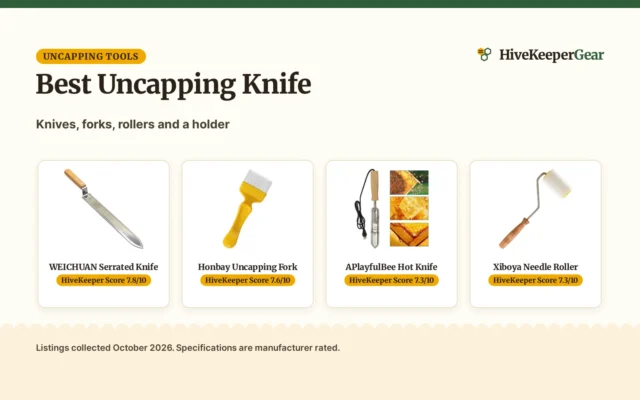
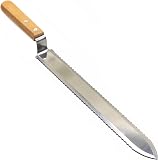 WEICHUAN Stainless Steel Serrated Uncapping Knife Beekeeping9.6/10View on Amazon
- 2
 Electric Bee Honey Uncapping Knife Stainless-Steel Constant9.5/10View on Amazon
- 3
 Honbay Bee Keeping Uncapping Fork with 18 Tines Stainless9.6/10View on Amazon
- 4
 Electric Honey Uncapping Knife Digital Display Uncapping KnifeView on Amazon
- 5
 Stainless Steel Uncapping KnifeView on Amazon
- 6
 ROTORS Electric Honey Uncapping KnifeView on Amazon
If you are asking what is uncapping knife equipment and how it fits into honey harvesting, it is a specialized beekeeping blade designed to slice away the protective wax cappings that honeybees build over ripe honeycomb cells. Removing this wax layer exposes the liquid honey so frames can spin freely inside an extractor without damaging the comb foundation. In this guide, we explain how uncapping knives operate, compare heated electric models with traditional cold serrated blades, and explain frame preparation step by step.
Other hives and gear to compare
 Electric Honey Uncapping Knife Digital Display Uncapping KnifeCheck price on Amazon
 Stainless Steel Uncapping KnifeCheck price on Amazon
 ROTORS Electric Honey Uncapping KnifeCheck price on Amazon
HiveKeeperGear earns a commission when you buy through links on this site, at no extra cost to you. As an Amazon Associate I earn from qualifying purchases. Affiliate disclosure.
Before you uncap: preparation and honey ripeness
Before using an uncapping knife, beekeepers must verify that honey is ripe. Honeybees cap cells with beeswax once moisture drops sufficiently to prevent fermentation. Beekeepers generally look for frames where bees have capped the vast majority of the comb surface, as uncapped nectar can carry excess moisture that risks spoilage.
Set up in a clean, bee-tight indoor space. Working in a warm room softens beeswax cappings, reducing drag on the blade and producing cleaner cuts. Warm temperatures also help honey drain smoothly once cells are exposed.
What is uncapping knife equipment: tools and methods compared
An uncapping knife is the main tool used to open capped comb. Beekeepers choose between distinct blade styles and heating options depending on apiary size.
| Tool | Heat Source | Blade Type | Harvest Role |
|---|---|---|---|
| Uncapping knife | Cold or heated element | Straight or serrated stainless steel | Slicing wax cappings from comb |
| Uncapping fork | None (manual) | Pointed tines | Lifting wax from sunken cells |
| Needle roller | None (manual) | Rotating needle cylinder | Perforating wax without cutting |
| Uncapping tank | None (manual) | Screened collection tub | Holding frames and catching cappings |
| Honey extractor | Manual crank or motor | Centrifugal spinning reel | Extracting honey from open cells |
| Double sieve strainer | None (gravity) | Mesh filter screens | Removing wax debris before bottling |
1. Inspecting frames and preparing the harvest area
The harvest begins by inspecting honey frames individually. Remove frames from supers, brushing away bees with a soft bee brush. When bees draw comb out proud of the wooden frame bars, beekeepers can use the wooden edges as a guide to slice away the raised wax cappings. Comb that remains flush with or recessed below the frame bars cannot be fully cleared with a knife alone and requires secondary uncapping tools.
Place an uncapping tank or tub beneath your work area. A crossbar frame rest stabilizes the frame above the tank, letting severed wax cappings fall directly into a collection screen while keeping hands clear of the blade.
2. Selecting a cold or heated uncapping knife
Choosing between cold and heated blades is the primary equipment decision. Many cold uncapping knives feature serrated edges. Listings for serrated stainless steel knives commonly state an 11-inch blade with a 16-inch overall length and a wooden handle. These manual knives rely on gentle sawing motions, require no electrical outlets, and suit smaller apiaries.
For larger harvests, electric uncapping knives incorporate internal heating elements to slice through beeswax with minimal resistance. Listings for corded heated knives commonly state a 10-inch stainless steel blade and a wooden or insulated handle. One maker lists heating in 30 seconds and a 120 volt, 100 watt model with a control box and stand. Temperature adjustment is available on several models: one listing states an adjustable range of 50 to 180 degrees Celsius (122 to 356 degrees Fahrenheit), another states 140 to 160 degrees Celsius (284 to 320 degrees Fahrenheit), and a digital model states 130 to 180 degrees Celsius with a 10-second preheating time. Always check the power source and cord length before you buy.
3. Slicing wax cappings cleanly from the comb
To uncap, support the frame securely on the crossbar above your uncapping tank and tilt the top slightly forward so severed wax cappings fall clear of the comb face. Rest the blade against the wooden frame edges to guide cutting depth, then slice upward from the bottom to the top of the frame.
Guide the knife along the comb. With a cold knife, use a gentle back-and-forth sawing motion to slice through the wax without crushing cell walls. With a heated knife, the warm blade melts a thin path through the wax, allowing the cappings to peel away in a continuous sheet with minimal downward pressure. Avoid cutting deeply into the frame: remove only the outer cappings to preserve the reusable comb foundation.
4. Clearing uneven cells with uncapping forks
Comb surfaces are rarely uniform. Worker bees often draw comb with dips, sunken sections, or low corners where cappings sit below the wooden bars. A straight knife blade glides over these hollows without opening the cells.
An uncapping fork is a useful accessory for these uneven areas. One listing describes a stainless steel uncapping fork with 18 tines sold alongside a needle roller. The tines slide beneath recessed wax seals, lifting them open without gouging the comb foundation. A fork complements a knife rather than replacing it.
5. Loading uncapped frames into the extractor
Once both sides are uncapped, load frames directly into the honey extractor. Balance the reel by positioning frames of similar weight opposite each other to prevent excessive vibration during rotation.
Centrifugal spinning forces honey out of the open cells against the extractor drum walls, where it drains downward toward the honey gate. Learn more about operating procedures in our guide on how to use a honey extractor.
An uncapping day workflow
An organized harvest station keeps uncapping efficient. Arrange full supers on a staging area to the left of the uncapping tank, with the extractor positioned on the opposite side. This linear setup keeps honey drips contained.
Work through supers super by super. Let wax cappings drain over the tank screen to recover liquid honey. After spinning frames, run honey through a double sieve strainer into food-grade buckets for settling.
Helpful accessories for uncapping
- An uncapping tank or tub with a stainless steel screen to separate wax cappings from draining honey.
- A sturdy frame rest or crossbar to support frames securely above the tank during cutting.
- An uncapping fork with steel tines to reach low or sunken cells that knife blades pass over.
- A heat-resistant stand to support a heated electric knife safely between frame passes.
- A food-grade collection bucket equipped with a gate valve for bottling honey cleanly.
Having these supporting accessories arranged within arm reach keeps your uncapping station orderly and minimizes sticky spills.
What uncapping knives do not do
Uncapping knives only remove surface wax seals; they do not extract honey from inside cells, which requires a honey extractor. They also do not filter wax particles from extracted honey, which requires a double sieve honey strainer. We cover equipment only and do not provide hive treatment advice.
FAQs for beekeepers
What is uncapping knife equipment used for in beekeeping?
An uncapping knife slices away the beeswax cappings that honeybees build over ripe honeycomb cells. Removing this wax layer exposes the honey so it can spin out freely inside a centrifugal extractor without destroying the comb foundation.
What is the difference between a cold knife and an electric uncapping knife?
A cold uncapping knife relies on manual sawing action with a serrated stainless steel blade. An electric uncapping knife features an internal heating element that warms the blade to slice through beeswax with less physical effort.
How fast does a heated uncapping knife reach working temperature?
Heat-up times vary by model and heating element. One maker lists an uncapping knife that heats in 30 seconds, while a digital model lists reaching operating temperature in 10 seconds.
What blade length is typical for an uncapping knife?
Listings commonly state 10-inch blades for heated knives and 11-inch blades for serrated cold knives, sized to span standard frames.
Can you reuse honeycomb after uncapping with a knife?
Yes. When used with care, an uncapping knife removes only the thin outer wax capping while leaving the underlying cell walls and foundation intact. Returning intact drawn comb to the hive saves bees valuable nectar and energy during subsequent honey flows.
More hive guides
Browse every guide by category: honey harvesting and uncapping tools.
More picks: Explore our reviews of the best uncapping knife and best honey extractor.