What Do You Feed Bees? Feeding Options and Feeders
Sugar syrup for energy, pollen feed for protein, and the feeders that carry them: a calm guide to what bees eat and what beekeepers feed them.

On this page
Top picks at a glance
As an Amazon Associate I earn from qualifying purchases.
- 1
 SuperFuel Probiotic Fondant Patties for Honey BeesView on Amazon
- 2
 Mann Lake Pro-Winter Feed for BeesView on Amazon
- 3
 Bee FeederView on Amazon
- 4
 SuperNectar Probiotic Bee Feed Supplement for Honey BeesView on Amazon
On a warm afternoon at the hive, with bees moving in and out of the entrance and stores visibly low on the frames, the question comes up fast: what do you feed bees when the colony needs help? The short answer is sugar syrup for energy and pollen feed for protein, given through a feeder that fits the hive. This guide explains each feed, the feeder styles that carry it, and when to feed and when to leave the colony alone.
Other hives and gear to compare
 SuperFuel Probiotic Fondant Patties for Honey BeesCheck price on Amazon
 Mann Lake Pro-Winter Feed for BeesCheck price on Amazon
 Bee FeederCheck price on Amazon
 SuperNectar Probiotic Bee Feed Supplement for Honey BeesCheck price on Amazon
HiveKeeperGear earns a commission when you buy through links on this site, at no extra cost to you. As an Amazon Associate I earn from qualifying purchases. Affiliate disclosure.
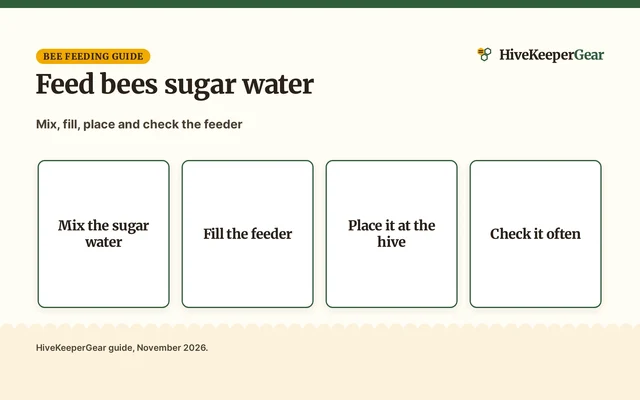
What do you feed bees in a hive?
Bees feed on nectar and pollen gathered from flowers. Nectar gives energy, pollen gives protein, and water keeps the colony going through dry spells. When forage runs short, beekeepers step in with sugar syrup in place of nectar and pollen feed in place of pollen. Fondant, a solid sugar feed, suits cold months when liquid syrup stays untouched. Plain water near the hive also helps, since bees need water to thin stored honey and cool the hive in hot weather.
Sugar syrup: the feed for energy
Sugar syrup is the feed most beekeepers reach for when a colony needs energy. White sugar mixed with water gives bees the carbohydrate they burn through daily work, comb building and keeping the brood warm. Syrup goes into the hive through a feeder, so the colony can take it down at its own pace, and a feeder inside the hive keeps the feed away from robber bees.
Feeder size decides how often the syrup needs topping up. A Hktuoji frame feeder (on Amazon) holds 3.5 litres of syrup or water and replaces 1-2 standard frames in a deep box, so it sits inside the hive where bees reach it without leaving the nest. A Hansen Honey Farm in-hive feeder holds 1 gallon and sits at the inner cover hole, where the listing says bees feed in warmth regardless of the temperature outside. For a closer look at feeder styles, see the bee feeder types guide and the best bee feeder roundup.
Pollen feed and protein
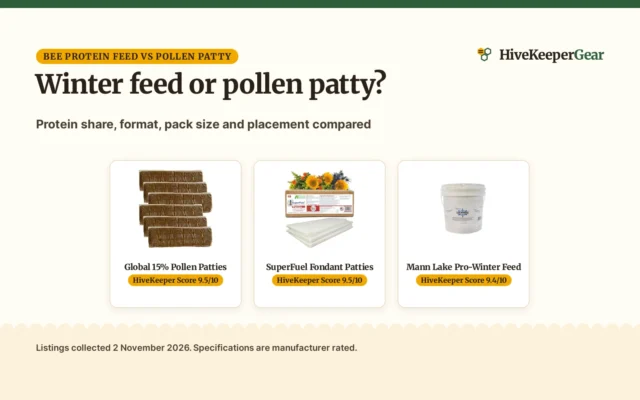
Pollen feed covers the protein side of the diet. Pollen substitute and pollen patties give the colony the building blocks for brood rearing when natural pollen runs short in late summer or early spring. A benefitbee hive top feeder (on Amazon) handles dry and wet feed at the same time, with separate compartments for dry bee food such as pollen substitute or patties and liquid such as water or syrup, so energy and protein can be offered together. See bee protein feed vs pollen patty for how the dry options compare.
Feeder types compared
Feeder styles differ in where they sit and how much they hold. The table below sets out the sizes stated in the listings.
| Feeder | Size stated in the listing | Where it sits |
|---|---|---|
| Frame feeder, Hktuoji 2-pack | 3.5 litres per feeder | Inside the hive, in place of 1-2 deep frames |
| Entrance feeder, Rtteri wooden base | 11 inches long, takes jars with 70mm lid rings | At the hive entrance |
| In-hive feeder, Hansen Honey Farm | 1 gallon | At the inner cover hole |
| Hive top feeder, benefitbee | 19.7 x 16.1 inches, 3.3 pounds, fits 10-frame hives | On the super box |
Each style suits a different moment. Frame feeders and hive top feeders keep syrup inside the hive, which cuts robbing. An entrance feeder sits at the hive entrance instead, so the feed is within reach of robber bees; the Rtteri listing says its design lets bees reach food without leaving the hive, which it presents as useful in cold or rainy weather. The benefitbee top feeder adds a clear lid, which the listing says lets feeding be checked at a glance without opening the hive. For entrance styles, see entrance feeder for bees; for a side-by-side look at feeding inside versus outside, see open feeding vs in hive feeding.
When to feed and when to stop
New colonies need feeding most. Packages and swarms build comb from nothing, and syrup gives them the energy to draw comb while pollen feed supports brood rearing. Nucs and splits arrive with comb already drawn, so feeding supports their build-up rather than comb from scratch. The Hansen feeder listing calls out early season build up, fall feeding and emergency winter feeding as the moments its feeder serves, and the Rtteri listing points to spring growth, building winter stores in autumn, and nectar dearth as the times an entrance feeder earns its place.
Feeding stops when the flow starts. While nectar flows freely, bees gather what they need and stored syrup can end up in honey supers, which no keeper wants. Feed in the evening where robbing is a risk, and stop when the colony holds ample stores for the season ahead. A local club or extension office can advise when feeding makes sense in the area, since forage and weather differ by region.
What not to feed bees
Not every sweet thing suits bees. Honey from another hive stays out of the feeder, and brown sugar and molasses stay out too, since neither suits the colony the way plain white sugar syrup does. Open bowls of syrup invite robbing and drowning, so syrup goes in a feeder. Feeders with ladders or footholds, like the grooved ladders in the Hktuoji frame feeder, let bees drink without slipping in. Plain water belongs near the hive as well, in a shallow dish with landing spots, so foraging bees have somewhere to land while they drink.
FAQs for beekeepers
What do you feed bees in winter?
Fondant in cold months, since bees leave liquid syrup untouched once it turns cold. The Hansen feeder listing calls out emergency winter feeding as a moment its in-hive feeder serves. Bees also need stored honey to get through winter, so autumn feeding builds the stores they draw on.
What can I feed a bumble bee?
A tired bumble bee takes sugar water from a spoon or a soaked cotton pad, then flies off when it recovers. Bumble bees live in small colonies and forage on flowers, so garden planting matters more for them than hive feeding. Never bring a bumble bee indoors or keep it in a jar.
Can bees live on sugar syrup alone?
No. Syrup gives energy, while pollen gives the protein brood rearing needs. A colony fed syrup without pollen feed raises less brood, so pollen substitute or patties belong in the feeding plan whenever natural pollen runs short.
Do bees need feeding during a nectar flow?
During a strong nectar flow, bees gather plenty and need no feeding. Feeding matters when forage runs short, after a move, or while a new colony builds comb. Watch the stores on inspection and feed when frames look light.
What size feeder fits a new hive?
A frame feeder that replaces 1-2 deep frames suits a new colony, since it sits inside the hive and holds 3.5 litres per feeder in the Hktuoji listing. A 1 gallon in-hive feeder suits a colony fed at the inner cover hole. Match the feeder to the hive width, since the benefitbee top feeder fits 10-frame hives.
More hive guides
Browse every guide by category: bee feeders, hive tools and bee smokers, or see all beekeeping tools guides.