Open Feeding vs in Hive Feeding: Which One Should You Buy?
Open feeding puts syrup out for every bee in range; in-hive feeding keeps it inside the colony, and the listings show top, frame, entrance and candy-board options.

On this page
Top picks at a glance
As an Amazon Associate I earn from qualifying purchases.
- 1
 Foxhound Bee Company Beetle Traps for Beekeeping9.6/10View on Amazon
- 2
 HunterBee Hive Beetle Traps9.5/10View on Amazon
- 3
 Small Hive Beetle Traps9.5/10View on Amazon
- 4
 Mann Lake Pro Health Bee Feeding SupplementView on Amazon
- 5
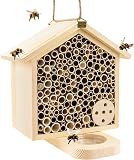 Mason Bee House with Feeding TraysView on Amazon
In late summer, when the nectar flow fades and the hives feel light, feeding decisions start. Open feeding vs in hive feeding is really a question of where the feed sits: open feeding puts syrup out in the open for every bee in range, while in-hive feeding keeps it inside the colony that needs it. The second method is the safer default for most backyard keepers, because open feed invites robbing. The listings below show the in-hive side in detail: top feeders, frame feeders, entrance feeders and candy boards.
Other hives and gear to compare
 Mann Lake Pro Health Bee Feeding SupplementCheck price on Amazon
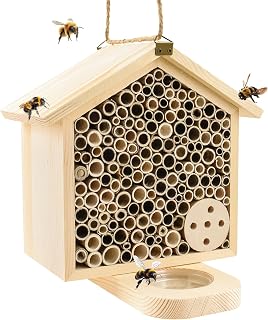 Mason Bee House with Feeding TraysCheck price on Amazon
HiveKeeperGear earns a commission when you buy through links on this site, at no extra cost to you. As an Amazon Associate I earn from qualifying purchases. Affiliate disclosure.
Open feeding vs in hive feeding at a glance
| Aspect | Open feeding | In-hive feeding |
|---|---|---|
| Where the feed sits | Out in the open, away from the hives | Inside the hive: top, frame, entrance or candy board |
| Who can reach it | Any bee in range, including other colonies | Mostly the colony in that hive |
| Robbing risk | High; strong colonies can follow the scent home | Low; feed stays behind the entrance |
| Refill effort | One station serves many hives | Each hive refilled separately |
| What the listings show | No open-feeding equipment listed | Top, frame, entrance feeders and candy boards |
The table sums up the trade: open feeding is convenient and risky, in-hive feeding is more work and far more controlled. Everything below follows from that difference.
What open feeding means
Open feeding means setting out syrup in the open, somewhere away from the hives, and letting the bees find it. One station can serve a whole apiary at once, which is why some keepers like it during a dearth. The trouble is that you cannot choose which bees come: foragers from every colony in range, including strong colonies that are not yours, will work the feed. Bees that find easy feed start looking for more of it, and that attention can turn toward weaker hives. There is no open-feeding equipment in the listings, so treat this section as background, not a shopping list.
What in-hive feeding means
In-hive feeding puts the feed inside the hive, where mostly that colony can reach it. The listings show four styles. Top feeders sit above the top box: the Little Larue top feeder is a 10-frame pine feeder with 2 floats and wax-sealed insides, and the Lehman’s top feeder holds two reservoirs with wooden floats at 7.3 pounds. Frame feeders hang inside the box in place of frames: the HiveSweet frame feeder holds 6.5 liters and occupies about 2 frames, the vensovo holds 6 liters at 19 x 3 x 9 inches, and the Aetwhy holds 3.5 liters. Entrance feeders work from the front of the hive: the Minelife entrance feeder comes as a 2-pack, and the PUERDEAN entry feeder takes 2.75-inch bottles with a vacuum seal that lets you watch the syrup level from outside. Candy boards feed dry sugar from above for winter: the BeeCastle candy board fits 10-frame hives at 19.84 x 16.14 x 2.2 inches.
Robbing: the real difference
Robbing is what separates the two methods. Open feed teaches bees in the area that free syrup exists, and strong colonies may then probe the entrances of weaker ones. In-hive feeding avoids advertising: the BeeQuestify listing puts it plainly, saying that feeding the bees inside the hive helps to prevent robbing, thereby avoiding the attraction of other colonies that might prey on weaker ones. If you have ever watched a hive get robbed, you feed inside the hive from then on. New keepers with one or two hives have the most to lose from robbing and the least to gain from the convenience of open feeding.
Choosing for your apiary
Choose in-hive feeding as the default. Pick the feeder style by season and job: frame or top feeders for building up colonies on syrup, entrance feeders when you want to refill without opening the hive, and a candy board for winter stores. The benefitbee top feeder even separates dry and wet feed in one unit for beekeepers who feed both. Open feeding has its place for experienced keepers with many hives who accept the robbing risk and manage it, but it is not where a beginner should start. For a walkthrough of the styles, see our bee feeder types guide, and for first picks see best bee feeder for beginners.
FAQs for beekeepers
Can I feed all my hives from one open feeder?
You can, and that is the appeal: one station, no hive to open. The cost is control. You cannot direct the feed to the colony that needs it, and the scent draws foragers from every hive in range, which raises the robbing risk for weaker colonies.
Which in-hive feeder holds the most?
The Lehman’s top feeder lists 1248.75 cubic inches across its two reservoirs, the largest stated capacity. Among frame feeders, the HiveSweet holds 6.5 liters and the vensovo holds 6 liters. Both come in multi-packs, so you can run one per hive or keep a spare.
Do I have to open the hive to refill?
Not always. Top feeders sit under the outer cover, so you lift the cover but not the boxes; the Lehman’s feeder is designed to sit in place of the inner cover. Entrance feeders like the PUERDEAN refill from outside entirely, with a vacuum seal that shows the syrup level without opening anything.
What do I feed in winter?
Dry feed from above. The BeeCastle candy board is made for winter: it fits 10-frame hives and holds sugar over the cluster so you rarely need to open the hive in the cold. See best bee fondant for winter for cold-weather feed options.
Will in-hive feeding stop robbing?
It removes the main trigger. Feeding inside the hive keeps the scent and the syrup behind the entrance, which is why the BeeQuestify listing credits in-hive feeding with helping prevent robbing. It does not make a hive immune, but it stops you from inviting trouble.
More hive guides
Compare feeder styles head to head: frame feeder vs top feeder, entrance feeder vs top feeder and bucket feeder vs top feeder. For feed choices, read sugar syrup vs fondant bee feeder.