Sugar Syrup vs Fondant Bee Feeder: Which One Should You Buy?
Choose between sugar syrup and fondant bee feeders based on the season, cluster temperature, moisture control, and whether your colony needs comb or emergency food.

On this page
Top picks at a glance
As an Amazon Associate I earn from qualifying purchases.
- 1
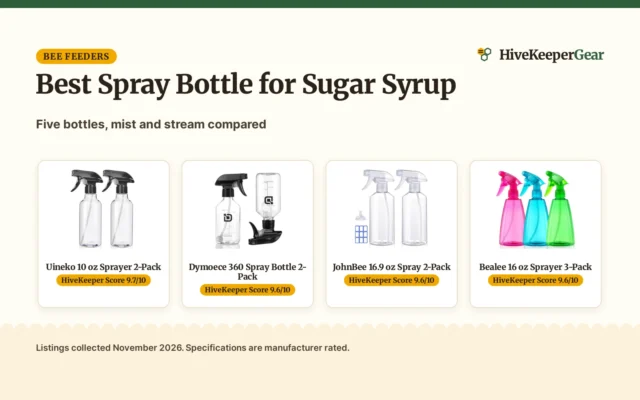
 Uineko Empty Spray Bottles9.7/10View on Amazon
- 2
 Hive Alive Bee Food Fondant with Vitamins and Amino Acids9.7/10View on Amazon
- 3
 0-90% Brix Refractometer for HoneyView on Amazon
- 4
 Zopeal Set of 12 Honey Maple Syrup Dispenser 12 oz GlassView on Amazon
When deciding between a sugar syrup vs fondant bee feeder, use a sugar syrup feeder during warm weather when bees need liquid nourishment to stimulate brood rearing and draw fresh comb, and switch to a fondant feeder during cold winter weather when freezing temperatures prevent bees from processing liquid feed without chilling the hive. Liquid feed supplies immediate hydration and energy during spring buildup and autumn stores replenishment, but requires warm cluster conditions. Solid fondant provides emergency carbohydrates directly above the winter cluster without releasing damp moisture into the hive. Selecting the right feeder style protects your colony from seasonal starvation while keeping the hive dry and calm.
Other hives and gear to compare
 0-90% Brix Refractometer for HoneyCheck price on Amazon
 Zopeal Set of 12 Honey Maple Syrup Dispenser 12 oz GlassCheck price on Amazon
HiveKeeperGear earns a commission when you buy through links on this site, at no extra cost to you. As an Amazon Associate I earn from qualifying purchases. Affiliate disclosure.
Before you feed: seasonal timing and cluster behavior
Honeybees adjust their behavior as seasonal temperatures shift. During warm spring and summer weather, workers actively break cluster, produce beeswax, and raise brood. Liquid syrup supports these activities because foraging bees easily ingest, pass, and store liquid sugars in open comb cells. In cold weather, bees form a tight winter cluster around the queen to maintain warmth. Once ambient temperatures fall, bees cannot break cluster to travel down to cold liquid pools, and cold syrup chills their bodies. Solid fondant placed flat on top frames directly above the cluster allows bees to feed by scraping sugar without breaking cluster.
The sugar syrup vs fondant bee feeder comparison
Both feeding methods provide essential carbohydrates, but each serves distinct seasonal periods and colony needs. Comparing liquid syrup feeders and solid fondant systems side by side clarifies when each tool belongs in the apiary.
| Feature | Sugar Syrup Feeder | Fondant Feeder | Our guide |
|---|---|---|---|
| Primary Season | Warm spring buildup and early autumn storage | Freezing winter months and cold early spring | Bee feeder types |
| Colony Objective | Stimulating brood rearing and drawing wax comb | Emergency cluster survival and starvation prevention | Winter bee fondant |
| Cluster Accessibility | Requires warm weather for bees to travel | Accessible directly above winter cluster frames | Beehive feeders |
| Hive Moisture Impact | Adds liquid volume that bees must ventilate | Absorbs ambient humidity without condensing | Inner covers |
| Feeder Hardware | Internal frame feeders, top pails, and jar bases | Shallow rim spacers, candy boards, and shims | Frame feeders |
| Robbing Risk | Moderate to high during summer nectar dearths | Minimal because solid sugar lacks airborne odor | Robber screens |
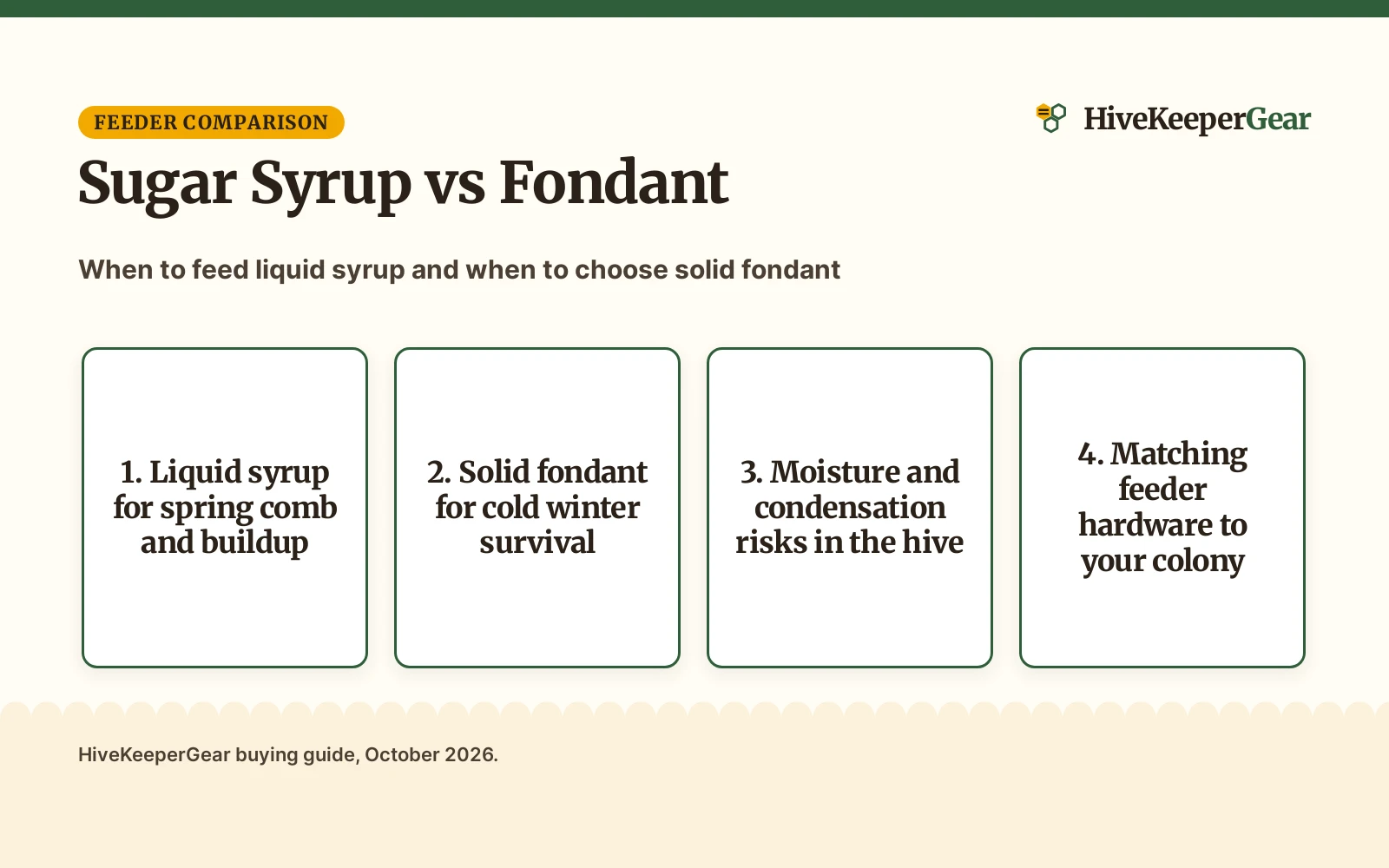
1. Sugar syrup for comb building and brood expansion
Liquid sugar syrup functions as an artificial nectar flow. In early spring once weather warms and bees begin flying, colonies need caloric intake to raise brood before natural flowers bloom. Feeding thin syrup mimics a natural flow, encouraging the queen to lay eggs and activating worker wax glands to draw straight comb across new foundation sheets. Liquid syrup is also vital when installing packaged bees into hives without drawn comb reserves.
In late summer and early autumn, beekeepers provide dense sugar syrup to help colonies pack brood boxes with winter reserves. A colony entering winter requires substantial capped stores positioned around the brood nest. Dense autumn syrup contains less water than spring mixtures, allowing bees to process and cap cells before cold weather halts comb activity.
2. Solid fondant for winter cluster survival and emergency feeding
Solid fondant consists of finely crystallized sucrose paste that holds its form at room temperature. Unlike liquid syrup, fondant will not freeze into solid ice during deep winter cold, remaining accessible to the cluster. When colonies exhaust their honey stores during extended freezing weather, clustering bees move upward toward the hive top. If capped honey frames sit out of reach on cold outer walls, clustering bees can starve even when food remains inside the box. Solid fondant placed flat on top bars directly over the cluster provides immediate life-saving calories.
Fondant serves strictly as an emergency reserve rather than a tool for comb construction. Bees scrape sugar crystals from the block using their mouthparts, ingesting food gradually without exciting the hive into premature brood rearing or flight activity. When checking winter stores, beekeepers can quickly lift the outer cover to add fondant with minimal disruption to the cluster below.
3. Hive moisture dynamics and winter condensation
Moisture management is critical to winter colony survival. Bees produce water vapor through normal respiration as they consume carbohydrates to generate warmth. During warm months, colonies fan their wings to ventilate humid air out through hive openings. In cold weather, bees cannot ventilate actively, causing warm, humid air to rise to the cold inner cover, condense into liquid drops, and rain down onto the winter cluster. Damp bees quickly chill and perish.
Liquid syrup feeders should never remain on hives during freezing weather because unconsumed syrup adds evaporative moisture. In contrast, solid fondant is hygroscopic, meaning it naturally absorbs moisture from the rising warm air generated by the cluster. As the fondant absorbs this condensation, the surface softens, making it easier for bees to scrape without introducing excess dampness into the hive interior. Using an insulated cover alongside a winter candy board provides extra protection against chilling condensation.
4. Feeder hardware styles and feeder placement
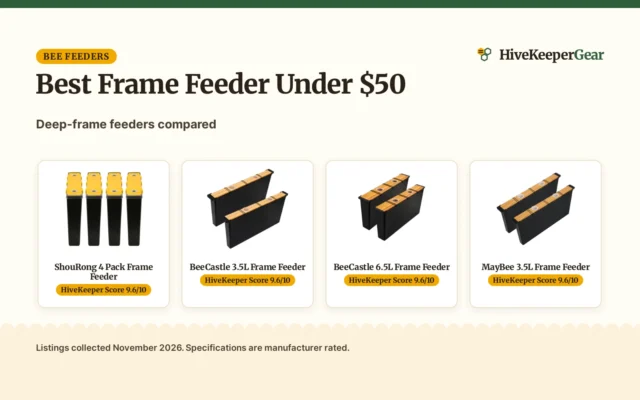
Choosing between liquid syrup and solid fondant determines the feeder hardware needed in the apiary. For liquid syrup, internal frame feeders replace standard hive frames inside the brood box. For example, BeeQuestify lists deep frame feeders with a stated capacity of 3.5L and dimensions of 19 x 2 x 9 inches, incorporating internal climbing ladders so bees drink without falling into the liquid. Frame feeders keep syrup near brood warmth inside the hive, which helps reduce robbing compared to external models.
External entrance and jar dispensers offer convenience when beekeepers want to monitor feed levels without opening hive boxes. Listings from NIZEFEI specify a 4 pack of entrance feeders measuring 3.15 x 5.5 x 1.1 inches designed to fit 2-3/4 in regular mouth canning jars. Similarly, XILEWHZF publishes a 4 pack of entrance dispensers compatible with 8-frame and 10-frame Langstroth hives, featuring metal lids that fit jars measuring 2 ¾ inches with base dimensions of 5.5 by 3.14 by 1.18 inches. For open feeding stations or watering trays, ZAVHOZ lists an inner platform diameter of 8.5 cm (3.3 in), an outer diameter of 13 cm (5.51 in), and a weight of 82 grams. In contrast, fondant requires simple hardware: beekeepers place patties directly on top of the brood frames beneath a shallow wooden spacer rim or inverted inner cover to provide physical clearance beneath the outer roof.
5. Apiary robbing risks and colony defense
Feeding liquid sugar syrup carries a distinct risk of robbing from neighboring honeybee colonies and wasps. The sweet aroma of liquid syrup, particularly when dispensed through entrance jars or leaky feeder seams, attracts scout bees during nectar dearths. Once robbing starts, intruder bees can overwhelm a colony and strip its stores in hours. Beekeepers feeding during warm months can reduce entrance openings or switch to internal frame feeders protected by hardware from our robber screen vs entrance reducer guide to defend the hive.
Solid fondant significantly reduces robbing risks compared to liquid syrup. Because solid sucrose paste sits inside the hive above the cluster and produces far less airborne odor than open liquid feed, outside foragers are much less likely to detect it. Additionally, cold winter temperatures naturally suppress outside foraging flights, allowing colonies to feed without defensive battles at the hive threshold.
A seasonal feeding timeline
A successful feeding strategy aligns feeder hardware and feed consistency with the seasonal cycle of the colony:
- Early Spring: When temperatures warm and bees begin daily flights, install internal liquid feeders with thin sugar syrup. This jump-starts brood rearing and helps workers draw comb on foundation before major floral blooms arrive.
- Late Spring and Summer: Remove artificial feeders once natural nectar flows begin. If mid-summer drought halts nectar production, monitor colony stores and reintroduce top or frame feeders to prevent brood starvation.
- Autumn: Following the honey harvest, supply heavy, concentrated sugar syrup to help colonies pack their brood boxes with dense winter stores. Ensure all liquid feeding finishes while temperatures remain mild enough for bees to process and cap the syrup.
- Winter: Once freezing weather arrives and bees form their winter cluster, remove all liquid feeders. Lay solid fondant blocks directly across top frames over the cluster, providing accessible emergency calories without generating damp hive moisture.
Equipment and accessories to consider
Supporting both feeding methods requires a few simple apiary accessories:
- Feeder Rims and Shims: A shallow wooden rim provides necessary headspace between top bars and the inner cover to accommodate thick blocks of solid fondant without crushing bees.
- Robber Screens: Mesh screens protect hive entrances during liquid syrup feeding by disorienting outside robbers while allowing resident bees to navigate safely.
- Hive Scales: Periodically lifting the back edge of a hive or using a scale allows beekeepers to track colony weight changes and determine when fondant reserves are needed without opening the hive in cold weather.
- Entrance Reducers: Wooden reducers, like those in our best hive entrance reducer for winter comparison, restrict the flight entrance to retain warmth and limit drafts during late-season feeding.
What not to feed your bees
When preparing artificial feed, purity matters. Always use pure white granulated cane or beet sucrose. Never feed brown sugar, molasses, raw unrefined sugar, or maple syrup, as these unrefined sweeteners contain indigestible solids and ash that cause fatal bee dysentery during winter confinement. Avoid feeding commercial honey purchased from grocery stores, which can carry dormant spore pathogens harmless to humans but destructive to bee colonies. Most importantly, avoid placing liquid syrup on hives when freezing temperatures arrive, as chilled liquid and condensation jeopardize winter colony survival.
FAQs for beekeepers
Can I feed sugar syrup to bees in winter?
Liquid sugar syrup should not be fed during freezing winter weather because cold bees cannot break cluster to consume liquid feed. Unconsumed syrup also chills the colony and releases excess water vapor that condenses on cold hive surfaces, leading to freezing moisture drops on the winter cluster.
When should I switch from sugar syrup to fondant?
Beekeepers switch from sugar syrup to solid fondant when autumn temperatures cool and bees begin forming their tight winter cluster. Fondant is placed directly over the cluster frames to provide accessible emergency carbohydrates without forcing bees to process liquid water in the cold.
Will feeding sugar syrup cause robbing in the apiary?
Liquid sugar syrup has a sweet airborne scent that can attract robber bees and wasps, especially during summer and autumn nectar dearths. Using internal frame feeders rather than entrance dispensers, or installing robber screens over hive entrances while feeding internally, helps prevent stronger neighboring colonies from attacking weaker hives.
What feeder hardware works with canning jars?
Jar dispensers and entrance feeders vary by opening size, with some designs accommodating wide mouth jars while others, including listings from NIZEFEI and XILEWHZF, specify bases for regular mouth canning jars measuring 2 ¾ inches. Inverted jar feeding stations allow beekeepers to monitor feed volume without opening the brood nest.
Do bees consume fondant during spring buildup?
Bees will consume leftover fondant during chilly early spring days when natural nectar is unavailable, but colonies prefer warm liquid sugar syrup once active brood rearing begins. Liquid feed encourages comb building and stimulates the queen to lay eggs much faster than solid sugar candy.
More hive guides
See every bee feeders guide and all hive tools guides.
More picks: compare styles in our best beehive feeder review, read our breakdown of bee feeder types, explore cold-weather options in our best bee fondant for winter guide, or see the beekeeping supplies for beginners checklist.