Chinese Grafting Tool vs Stainless Grafting Tool: Which One Should You Buy?
A comparison of flexible horn Chinese grafting tools and rigid stainless steel grafting tools for queen rearing, larva handling, and hive maintenance.

On this page
Top picks at a glance
As an Amazon Associate I earn from qualifying purchases.
- 1
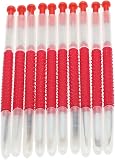 dophee 10-Piece Detachable Queen Larva Transplanting Grafting9.5/10View on Amazon
- 2
 V-Cut Top Grafting ToolView on Amazon
- 3
 Beekeeping Shift pin Worm Moving Grafting Tools 2pcsView on Amazon
- 4
 Beekeeping ToolsView on Amazon
- 5
 KINGLAKE Beekeepers Polished Stainless Steel Hive ScraperView on Amazon
- 6
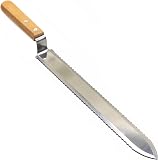 WEICHUAN Stainless Steel Serrated Uncapping Knife BeekeepingView on Amazon
- 7
 WEICHUAN 2PCS Stainless Steel Hive Scraper Tools Bee HiveView on Amazon
During spring buildup when colonies expand and strong hives prepare to swarm, queen rearing becomes a rewarding apiary project. When deciding between a chinese grafting tool vs stainless grafting tool, choose the Chinese grafting tool if you want a flexible horn tongue that slips easily beneath delicate larvae and uses a push button to slide them into cell cups with royal jelly, or select the stainless grafting tool if you prefer a rigid, durable instrument that can be sterilized with heat and lasts across countless seasons. Each tool serves queen breeders well, but their handling characteristics, tip flexibility, and maintenance routines suit different beekeeper habits. Linking your technique to the right queen grafting tool ensures smooth cell transfer and healthy queen production.
Other hives and gear to compare
 V-Cut Top Grafting ToolCheck price on Amazon
 Beekeeping Shift pin Worm Moving Grafting Tools 2pcsCheck price on Amazon
 Beekeeping ToolsCheck price on Amazon
 KINGLAKE Beekeepers Polished Stainless Steel Hive ScraperCheck price on Amazon
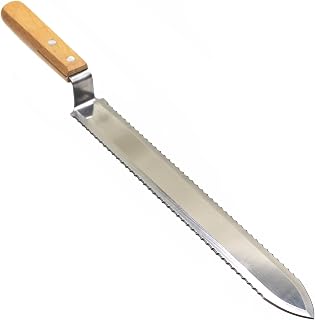 WEICHUAN Stainless Steel Serrated Uncapping Knife BeekeepingCheck price on Amazon
 WEICHUAN 2PCS Stainless Steel Hive Scraper Tools Bee HiveCheck price on Amazon
HiveKeeperGear earns a commission when you buy through links on this site, at no extra cost to you. As an Amazon Associate I earn from qualifying purchases. Affiliate disclosure.
Before you buy: understanding queen grafting
Queen grafting is the delicate art of moving a very young worker larva from brood comb into an artificial queen cell cup. Worker bees then feed this chosen larva an abundant diet of royal jelly, drawing out a peanut-shaped queen cell from which a virgin queen emerges. The process requires steady grip, good lighting, and an instrument that lifts the fragile larva without crushing its cuticle or drying its breathing pores.
Before selecting a tool, consider the cell cups you plan to fill. Beekeepers often choose between plastic vs wax queen cell cups, and the cup material can affect how your tool tip releases the larva. Both tool styles work effectively with plastic and natural beeswax cell cups, though a flexible tongue conforms easily to molded cup contours, while a rigid spatula gives direct tactile feedback against firm cell bases.
Chinese grafting tool vs stainless grafting tool: key differences
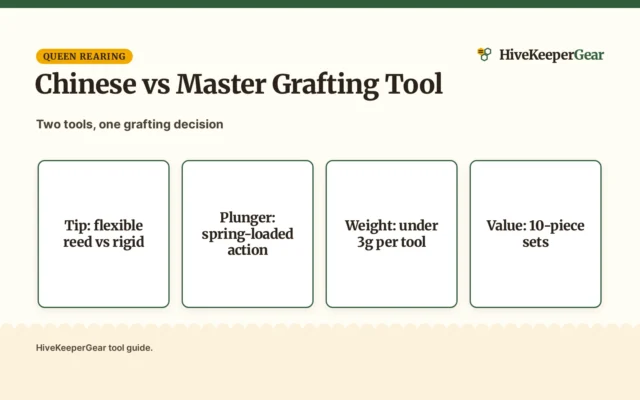
The choice between these grafting instruments represents distinct philosophies in queen rearing equipment: flexible compliance versus rigid permanence. The Chinese grafting tool relies on a bendable natural horn feather and an internal push plunger, while the stainless grafting tool uses a solid surgical-grade metal spatula shaped to lift larvae manually.
| Comparison Factor | Chinese Grafting Tool | Stainless Steel Grafting Tool |
|---|---|---|
| Tongue and Tip Material | Flexible horn or plastic tongue | Rigid surgical stainless steel |
| Larva Release Method | Spring-loaded push plunger | Manual slide or royal jelly surface tension |
| Royal Jelly Pickup | Scoops natural bed of jelly under larva | Lifts larva with minimal royal jelly |
| Cell Base Adaptability | Bends along the cell bottom contour | Maintains fixed curve requiring exact angle |
| Sterilization Method | Warm water and alcohol wipe | Flame, boiling water, or autoclave |
| Durability and Lifespan | Replaceable tips with seasonal body wear | Solid metal with multi-season lifespan |
| Beekeeper Preference | Beekeepers prioritizing flexible automated release | Beekeepers prioritizing rigid control and heat sterilization |
Tip design and tongue flexibility
The defining feature of the Chinese grafting tool is its flexible horn tongue. When you slide the tongue down the wall of a brood comb cell, the horn feather bends as it reaches the base, flattening horizontally beneath the larva. This flex allows the tool to scoop beneath the larva without puncturing the delicate wax bottom of the cell. For beginners, this flexibility provides a forgiving cushion that prevents accidentally spearing the larva.
In contrast, a stainless steel grafting tool has a rigid, solid metal tip that does not bend. The beekeeper must position the blade at a precise angle to scoop beneath the larva without jabbing the wax cell bottom. While this demands greater hand stability and visual focus, the rigid steel gives direct tactile feedback, allowing experienced operators to feel the cell base and separate larvae cleanly from older, toughened brood comb.
Larva pickup and royal jelly transfer
A successful graft depends heavily on transferring the larva in a healthy droplet of royal jelly. The flexible tongue of the Chinese tool naturally scoops up a generous pool of royal jelly as it glides across the bottom of the brood cell. When deposited into the receiving cup, this jelly cushions the larva, keeps it from drying out, and encourages nurse bees to accept the cell immediately.
Because the rigid blade of a stainless steel tool lifts less jelly, many beekeepers use a technique called wet grafting. This involves priming each cell cup with a drop of fresh royal jelly, or royal jelly thinned with warm distilled water, before placing the larva. The liquid base helps the larva float off the steel tip cleanly. While this extra step takes patience, it gives the beekeeper complete control over the consistency and freshness of the priming medium.
Sterilization and durability
Sanitation is essential when moving between frames and colonies. Stainless steel grafting tools excel in hygiene because they can be flamed with an alcohol lamp, dipped in boiling water, or sanitized in an autoclave between grafting sessions. Solid steel resists rust, never softens, and handles rigorous cleaning protocols without degrading.
Chinese grafting tools require gentler cleaning methods. The plastic barrel and natural horn feather will melt, warp, or scorch under high heat or open flames. Beekeepers clean them using warm water and mild alcohol wipes. Learning how to clean beekeeping tools properly protects the delicate horn feather from drying out, becoming brittle, or splitting across seasons.
Working speed and apiary rhythm
Speed matters in queen rearing because young larvae deteriorate quickly when exposed to dry outside air and fluctuating temperatures. The Chinese tool features a spring-loaded push plunger running down the barrel. With a light tap of your index finger, the plunger slides down the horn tongue, gently pushing the larva and royal jelly into the cup without rolling or damaging the delicate brood. This mechanism creates a rapid, fluid rhythm ideal for grafting numerous cups in a working session.
Releasing a larva from a stainless steel spatula requires a subtle tilting and wiping motion against the cup wall, or touching the larva to a droplet of royal jelly so surface tension pulls it free. While slightly slower than a push plunger, this manual transfer gives the operator complete visual confirmation of the larva placement and orientation in the cup.
Tool lifespan and replacement parts
Chinese grafting tools are affordable, lightweight instruments often bought in multipacks. The horn tongues eventually wear down, fray, or break after extensive use. Many models come with spare replacement tongues that slide into the plastic housing, but beekeepers treat the tools as consumable equipment, replacing them periodically as springs weaken or barrels loosen.
A stainless steel grafting tool is a permanent addition to your apiary gear, built to last alongside your primary hive tool. The solid metal will not warp, snap, or degrade from exposure to sunlight, honey, or sanitizing agents. For beekeepers who dislike disposable plastic tools and value dependable permanence, stainless steel is a satisfying investment.
A grafting session timeline
A smooth grafting session follows an organized sequence from comb selection to cell builder placement. Begin by preparing your workspace in a warm, humid location sheltered from direct wind and bright sunlight. Gather your cell bars, moist paper towels, and an artificial queen rearing kit to hold your cups.
Next, pull a frame containing the youngest, smallest C-shaped larvae from your chosen breeder hive, brushing adult bees away gently. Keep the frame covered with a warm, damp cloth while you work. Graft larvae steadily into your cell cups, keeping each batch covered as you fill the bars. As soon as a bar is complete, transfer the grafted frame directly into a strong cell starter or cell builder colony packed with young nurse bees.
Later in the development cycle, once the queen cells are capped and ripened, beekeepers prepare to protect each cell before emergence. You can move the ripe cells into individual mating nuclei or place them into a queen rearing incubator or nursery hive to monitor emergence under steady warmth.
Nice to have in your grafting kit
- A focused headlamp or magnifying reading glasses to illuminate the bottoms of deep brood cells clearly.
- Clean, damp cloth towels to wrap around brood frames and prevent delicate larvae from chilling or drying out.
- A stable queen marking cage or gentle queen catcher ready for when virgin queens emerge and need handling.
- A small vial of fresh royal jelly, or royal jelly thinned with warm distilled water, for priming cell cups before grafting.
- A dedicated apiary notebook or record sheet to track grafting dates, breeder colony identities, and cell acceptance results.
Keeping a clean, organized grafting kit helps maintain steady focus during critical transfer steps, reducing stress on both the beekeeper and the young brood.
What grafting tools cannot replace
While a quality grafting tool makes lifting and releasing larvae significantly easier, equipment alone does not produce exceptional queens. Queen rearing success depends fundamentally on colony nutrition, abundant nurse bees, pollen availability, and gentle handling. A well-stocked cell starter colony with heavy honey and pollen stores will rear robust queens regardless of which tool placed the larvae.
Remember that equipment reviews cover tools and physical gear; we do not offer veterinary advice, bee disease diagnosis, or chemical treatment recommendations. For colony health questions or disease management, always consult your local agricultural extension service or state apiary inspector.
FAQs for beekeepers
Which grafting tool is easier for a beginner to learn with?
The Chinese grafting tool is widely favored by beginners because its flexible tongue slides along the bottom of the comb cell and scoops up the larva along with a cushion of royal jelly. The spring-loaded plunger makes releasing the larva into a queen cell cup smooth and consistent.
Can you sterilize a Chinese grafting tool with heat?
No, the Chinese grafting tool contains plastic components and a natural horn tongue that will melt or warp under excessive heat. Clean it gently using warm water or an alcohol wipe rather than boiling water or an open flame.
Why do some beekeepers prefer a stainless steel grafting tool?
Stainless steel grafting tools offer superior rigidity and longevity, allowing beekeepers to autoclave, boil, or flame the metal tip between apiary sessions. They do not bend unexpectedly against tough old brood comb and will never wear out or require replacement tongues.
Do you need royal jelly when grafting with a stainless tool?
Priming cell cups with a tiny drop of fresh royal jelly, or royal jelly thinned with warm distilled water, is often helpful when using a stainless tool, as the rigid spatula lifts less jelly from the comb than a flexible horn tongue. This lubrication helps the larva slide off the steel tip cleanly without rolling or injury.
How often should you replace the tongue on a Chinese grafting tool?
Inspect the flexible horn tongue before each grafting session and replace it whenever the tip frays, splits, or loses its springiness. Spare replacement tongues and springs are readily available and simple to swap into the plastic barrel.
More hive guides
Browse every guide by category: hive tools, beekeeping tools, beehives, and protective gear.
More guides: Explore our queen grafting tool picks, read our guide on how to use a queen rearing kit, or compare plastic vs wax queen cell cups. Stocking your apiary? Check our beekeeping supplies for beginners checklist.