Full Body Bee Suit vs Two Piece Suit: Which One Should You Buy?
A comparison of full body bee suits and two-piece jacket and pants setups, covering sting coverage, waist gaps, ventilation, and convenience for apiary inspections.

On this page
Top picks at a glance
As an Amazon Associate I earn from qualifying purchases.
- 1
 3 Layer Ventilated Bee Suit for Men & WomenView on Amazon
- 2
 Brutul Bee 3 Layer Beekeeping Ultralight Ventilated Suit withView on Amazon
- 3
 Flexzion Bee SuitView on Amazon
- 4
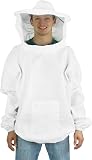 VIVO Professional L Beekeeping Suit WhiteView on Amazon
- 5VIVO Professional XL Beekeeping Suit JacketView on Amazon
- 6
 VIVO Professional White XXL Beekeeping SuitView on Amazon
Opening a crowded hive during the height of the summer nectar flow requires calm movements and reliable protective gear. When choosing your apiary attire, deciding between a full body bee suit vs two piece suit comes down to a balance between unbroken coverage and modular convenience. A full body bee suit is generally favored for comprehensive brood inspections and defensive colonies because its continuous coverall design eliminates waistline gaps where bees can enter while bending over hive boxes. A two-piece suit, combining a standalone bee jacket with separate protective pants, appeals to beekeepers who prioritize modular flexibility, allowing you to don only a jacket for quick hive checks or adjust layers between apiary visits.
Other hives and gear to compare
 3 Layer Ventilated Bee Suit for Men & WomenCheck price on Amazon
 Brutul Bee 3 Layer Beekeeping Ultralight Ventilated Suit withCheck price on Amazon
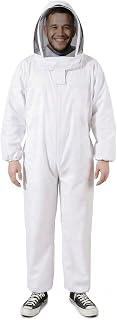 Flexzion Bee SuitCheck price on Amazon
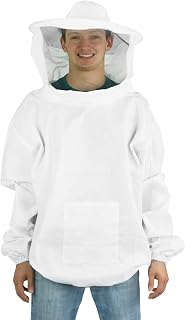 VIVO Professional L Beekeeping Suit WhiteCheck price on Amazon
- VIVO Professional XL Beekeeping Suit JacketCheck price on Amazon
 VIVO Professional White XXL Beekeeping SuitCheck price on Amazon
HiveKeeperGear earns a commission when you buy through links on this site, at no extra cost to you. As an Amazon Associate I earn from qualifying purchases. Affiliate disclosure.
Full body bee suit vs two piece suit: comparison overview
Beekeepers spend substantial time leaning over open colonies, prying apart propolis-sealed frames, and lifting heavy honey supers. The mechanical difference between a full coverall and a two-piece set directly influences how you move in the bee yard, how well your skin stays shielded, and how comfortable you remain in changing weather conditions.
| Feature | Full Body Bee Suit | Two Piece Suit |
|---|---|---|
| Waistline Security | Continuous fabric barrier without waistline entry gaps | Separate jacket and pants overlapping at elastic waistband |
| Inspection Flexibility | Full garment required even for brief hive visits | Jacket can be worn independently for quick entrance checks |
| Dressing and Undressing | Single long vertical zipper; leg cuffs fit over footwear | Two separate garments that put on and take off independently |
| Heat Management | Continuous coverage; ventilated fabrics allow full airflow | Overlapping waistline fabric retains midsection warmth; jacket can be removed on breaks |
| Fit Customization | Torso length and inseam must match a single overall size | Jacket and pants can be selected in differing sizes when bought separately |
| Best Suited For | Deep brood inspections, defensive colonies, and gap-free coverage | Routine maintenance, quick checks, and modular yard tasks |
Full body bee suit vs two piece suit: coverage and waistline security
The primary advantage of choosing a full coverall over separate garments is eliminating the gap between jacket hem and trouser waistband. Honey bees naturally climb upward when disturbed on a comb or dislodged onto the ground. When working over an open brood box, a beekeeper frequently bends at the hips, crouches beside the bottom board, and reaches across hive bodies. In a two-piece arrangement, these motions can cause the bottom elastic of the jacket to ride upward, while the waistband of the pants pulls downward.
Even when a jacket features a wide elastic band or drawstrings, bending creates tension across the lower back. If the fabric pulls away from the trousers, crawling bees can find their way under the hem. Once inside the jacket, bees continue moving upward toward the neck and veil area. A full body garment connects the collar, torso, and legs into a continuous protective shell, completely removing this vulnerability. For new beekeepers learning to manage hive tools and frames without worrying about shifting clothes, exploring dedicated bee suits provides reliable peace of mind. Those weighing whether to skip protective pants entirely can review our analysis of a bee suit vs bee jacket to understand the protection trade-offs.
Modularity and convenience: when a two-piece suit excels
While full coverage provides absolute security, a two-piece suit offers superior flexibility for daily management tasks. Apiary chores do not always demand a thorough teardown of the brood nest. Checking an entrance feeder, replacing a pollen patty, lighting a smoker, or inspecting the hive entrance takes only moments. Stepping into a full suit, pulling arms through sleeves, and zipping leg cuffs can feel cumbersome for a brief chore. With a modular setup, beekeepers can pull on a standalone jacket over sturdy jeans in seconds.
Working across multiple apiary locations highlights another practical advantage of modular gear. Driving between outyards in a full coverall can be warm and restrictive behind the steering wheel. With two separate pieces, you can easily remove the jacket, store it in your vehicle, and cool down between stops while keeping your protective trousers in place. Selecting a quality jacket from our roundup of bee jackets pairs effectively with separate protective pants, while our guide on a ventilated bee jacket vs full bee suit details how top-only coverage performs during routine colony checks.
Fabric construction, weight, and summer heat management
Protective clothing must balance sting resistance with breathability, especially during midsummer when colonies are populous and temperatures rise. Manufacturers construct both full body suits and two-piece suits from traditional cotton canvas, polycotton blends, or multi-layer ventilated mesh. The choice of fabric dramatically influences the overall weight of the garment and how much air reaches your skin.
Makers use different approaches to fabric weight and heat management. Some rely on woven polycotton blends, while others utilize multi-layer mesh. For example, ZMHBKPS lists a full body suit constructed from a 65% Cotton, 35% Polyester blend that registers an item weight of 2.8 pounds, featuring a shoulder to bottom hem length of 63.8 inches. Similarly, QHZHANG offers a polycotton blend suit made of a 65% cotton 35% polyester fabric designed for apiary maintenance. These woven fabrics provide dependable durability against rough wooden hive boxes and thorny brush, but they can hold body heat during extended yard sessions.
To improve airflow, manufacturers produce ventilated suits that use porous mesh layers to maintain distance between the bee and your skin. For example, OZ ARMOUR titles its suit as a 3 layer ventilated suit with air mesh fabric designed for air circulation, and Brutul Fight lists a 3 layer ventilated suit with mesh fabric. Mount Helicon titles its offering as a 3-layer suit while listing polycotton material. For lightweight options, LOVJOYSE lists a suit weighing around 1.65 lbs for size XL, while its size L listing notes a weight around 1.6 lbs in the bullet and 1.74 pounds in the specification table. Beekeepers evaluating material options can consult our breakdown of a cotton vs ventilated bee suit, as well as our comparison of a 3 layer bee suit vs cotton suit for detailed fabric insights.
Veil styles, accessories, and sizing considerations
Beyond the torso and legs, veil design and sizing geometry play decisive roles in how comfortably your suit performs. Veils generally come in two styles: rounded veils that offer panoramic visibility and hold mesh away from the ears, and fencing veils that fold flat for compact storage. Several makers offer multiple veils; for instance, OZ ARMOUR includes two detachable veils, providing both a fencing veil and a round veil, while Mount Helicon lists 2 detachable veils with its suit package. Reviewing our comparison on a fencing veil vs round veil or our overview of detachable veil options helps clarify veil selection.
Sizing is where the distinction between full body and two-piece gear becomes critical. A full body suit must accommodate both your torso height and your leg inseam simultaneously. If the torso is too short, bending over a hive causes the fabric to pull taut across the shoulders and crotch, restricting movement and pressing the cloth directly against the skin. Manufacturers publish specific height guidelines to assist buyers; for example, LOVJOYSE lists size L fitting 5’4”-5’9” and size XL fitting 5’9”-6’1”, while ZMHBKPS lists size XL fitting 5’7″-5’11” and size XXL fitting 5’11”-6’2″. Consulting our bee suit size chart provides additional sizing tips. In contrast, separate jacket and trouser combinations allow selecting differing sizes for upper and lower body when bought individually, making it easier for beekeepers with non-standard body proportions to achieve a loose, comfortable fit.
Accessories also complete the protective envelope. Packages from makers like QHZHANG and LOVJOYSE include goatskin gloves to shield the hands, while OZ ARMOUR equips its suit with 8 pockets for carrying hive tools and marking pens. Selecting proper beekeeping gloves ensures your hands remain protected while retaining the dexterity needed to handle delicate comb.
FAQs for beekeepers
Is a full body bee suit safer than a two piece suit?
A full body suit eliminates the waistline seam where jacket hems can ride up during bending. A two-piece suit protects well when the jacket overlaps the waistband securely, but loose hems can create gaps if elastic weakens.
Can I wear just the jacket from a two piece suit?
Yes, many beekeepers put on only the jacket with thick denim pants for quick entrance checks or smoker lighting. For full colony inspections that involve lifting brood boxes, wearing both pieces or a full suit provides more reliable coverage.
Which suit style is cooler in hot summer weather?
Fabric construction influences cooling more than garment style, as ventilated 3 layer mesh provides airflow across the body whereas dense cotton traps heat. During active hive inspections, a two-piece suit has overlapping fabric layers at the waistband that retain warmth around the midsection, though it offers the convenience of unzipping or removing the jacket during breaks between yards.
How do I choose the right size for a full body bee suit?
Full suits require matching both torso length and inseam to avoid pulling at the crotch when bending over hives. Makers list specific height brackets, such as ZMHBKPS listing XL for 5’7″-5’11” and XXL for 5’11”-6’2″, and LOVJOYSE listing L for 5’4”-5’9”.
Do bee suits prevent all stings?
No protective garment stops every sting. Fabric thickness, loose fitting cuts, and secure elastic at wrists and ankles keep bees off the skin, but calm hive handling and proper smoker use remain essential.
More hive guides
Browse every protective gear guide in our protective gear section, explore bee suits, or review our bee jackets.
More comparisons: our guide on ventilated bee jacket vs full bee suit, the bee suit vs bee jacket breakdown, and our cotton vs ventilated bee suit analysis.