Steam vs Solar Wax Extractor: Which One Should You Buy?
Compare steam and solar wax extractors to choose the right melting method for rendering clean cappings, old brood frames, and hive wax efficiently.

On this page
As the main summer honey flow winds down and honey supers come off the hives, every apiary accumulates piles of fragrant wax cappings alongside dark cull frames that need melting, making the choice between a steam vs solar wax extractor an important decision for the harvest season. A solar wax extractor is the better choice for hobby beekeepers who want a passive, sun-powered method to melt clean cappings without electricity, while a steam wax extractor is the superior option for beekeepers who need to melt dark brood comb, clean wooden frames quickly, or process wax regardless of cloud cover. Understanding how each melter handles heat, separates slumgum, and fits your yard workflow ensures you recover clean, golden beeswax without damaging valuable equipment.
HiveKeeperGear earns a commission when you buy through links on this site, at no extra cost to you. As an Amazon Associate I earn from qualifying purchases. Affiliate disclosure.
Understanding beeswax rendering in the apiary
Beeswax is a valuable harvest byproduct that honey bees produce by consuming nectar and secreting thin wax scales from abdominal glands. During honey extraction, beekeepers slice wax cappings from sealed honeycomb cells with an uncapping knife before spinning frames in a honey extractor. Over several seasons, brood comb also darkens as bees raise successive generations, leaving behind silk cocoons, propolis, and cast skins that thicken the comb. Rendering separates pure, usable beeswax from these accumulated residues, which beekeepers call slumgum.
Because raw comb melts into a sticky liquid mixed with debris and residual honey, applying uncontrolled heat risks scorching the wax or creating a severe fire hazard. Both steam and solar extractors provide controlled thermal energy that liquefies beeswax safely above its natural melting point while catching impurities in internal screens. Selecting the right appliance depends on whether you primarily render fresh, light cappings from honey harvesting or tough, dark brood combs salvaged from colony inspections.
Steam vs solar wax extractor: core differences
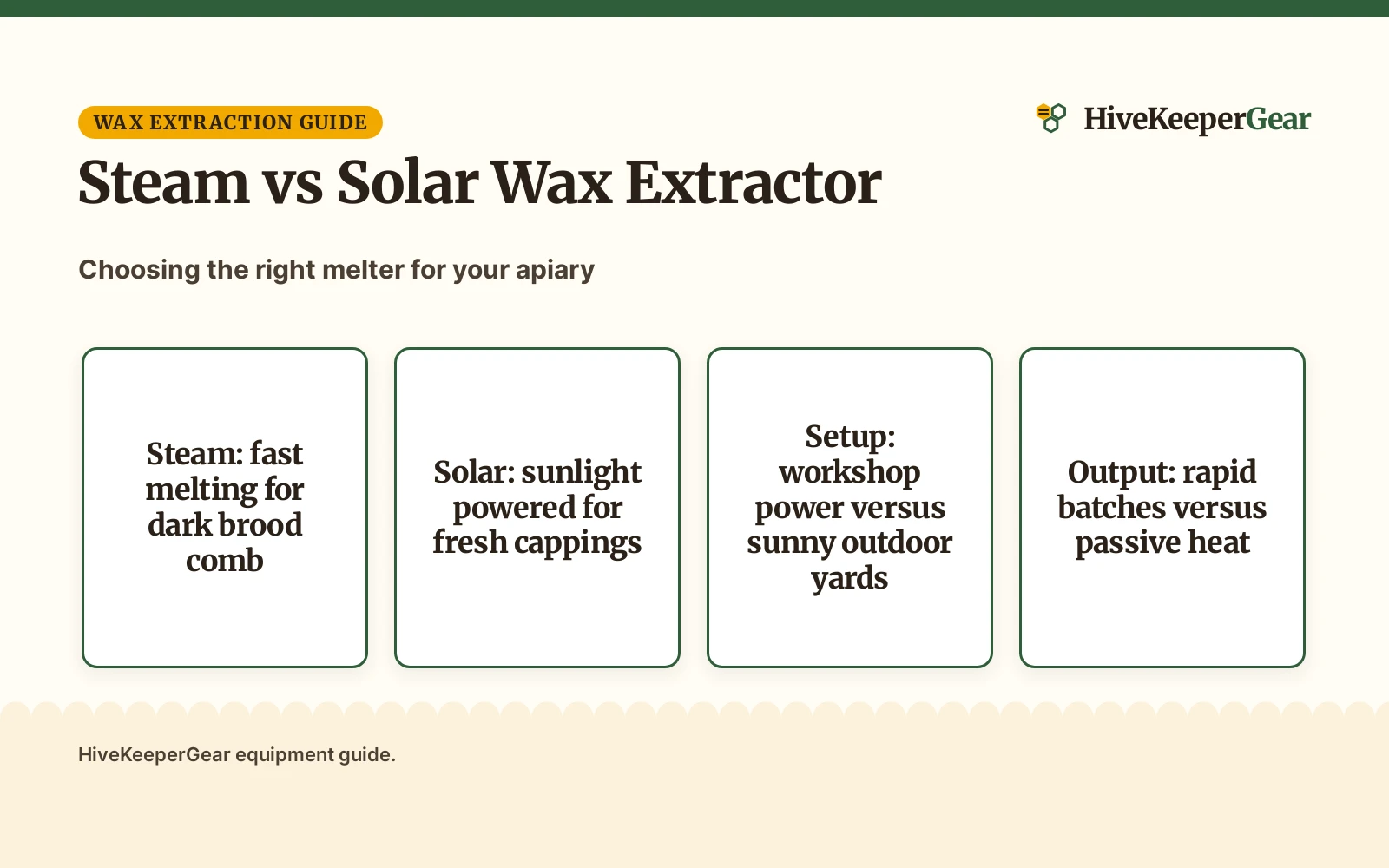
Comparing a steam vs solar wax extractor highlights distinct differences in heat generation, operating pace, energy requirements, and comb handling. Steam melters use boiling water vapor to transfer intense thermal energy rapidly across enclosed metal chambers, whereas solar extractors rely entirely on trapped solar radiation beneath glazed glass or clear lids to melt wax slowly and passively throughout sunny afternoons.
| Feature | Steam Wax Extractor | Solar Wax Extractor |
|---|---|---|
| Heat Source | Boiling water steam vapor | Direct sunlight through glazed cover |
| Melting Pace | Fast processing cycles | Slow passive heating over sunny hours |
| Comb Types | Dark brood comb and light cappings | Clean cappings and light comb |
| Frame Handling | Can melt wax directly off suspended frames | Best suited for cut comb and loose cappings |
| Weather Dependency | Operates during rain, clouds, or sunshine | Requires clear, unbroken sunshine |
| Power Needs | Requires electrical outlet or burner | No electrical power, runs entirely on sunlight |
| Slumgum Handling | Penetrates dense cocoons to extract wax | Cocoons absorb and trap molten wax |
| Wax Color Outcome | Yields darker tones when melting old brood comb | Sunlight bleaches cappings into light yellow wax |
How steam wax extractors operate
A steam wax extractor consists of a sturdy tank or enclosed melting chamber, an internal perforated basket or rack to hold comb, a water boiler or external steam generator, and a bottom drain for molten wax. Water heated in the base chamber or an external generator boils, filling the enclosed chamber with dense steam. As steam circulates around the comb, it rapidly transfers latent heat to the wax, melting it away from foundation wires and wooden frame bars.
The liquefied beeswax flows downward through a fine stainless mesh screen that strains out larger slumgum fragments, bee parts, and residual cocoons. Below the drain spout, the molten wax drips into a collection bucket containing warm water. Because beeswax is less dense than water, it floats to the surface while water-soluble honey residues dissolve into the water layer below. As the wax cools slowly on top of the liquid, it solidifies into a clean wax cake, leaving particulate dirt settled along the bottom edge where you can scrape it clean with a hive tool.
How solar wax extractors operate
A solar wax extractor operates like a specialized miniature greenhouse. It features an insulated wooden or sheet metal box, an angled metal melting pan painted black to absorb solar radiation, a wire filter screen across the lower lip of the pan, and a tightly sealed glass or acrylic cover. Beekeepers angle the box toward the sun during midday when solar intensity reaches its peak.
Sunlight passes through the transparent cover and strikes the dark metal tray, converting radiant light energy into trapped thermal heat. As internal temperatures rise well above the melting threshold of beeswax, comb resting on the tray softens and liquefies. The molten wax trickles down the inclined pan, passes through the filter mesh, and collects in an underlying pan. Because solar extractors generate gentle, steady warmth without boiling turbulence, the wax clarifies smoothly, and sunlight acts as a natural bleaching agent that yields bright, pale yellow wax cakes.
Processing dark brood comb versus fresh cappings
The composition of your hive wax should strongly influence your extractor choice. Honey cappings harvested with an uncapping knife consist of almost pure beeswax with virtually no pupal cocoons or propolis. Cappings melt quickly and cleanly, making them perfectly suited for solar extractors where the vast majority of wax drains freely into the collection tray without getting trapped.
Dark brood comb presents a much tougher challenge. After bees rear multiple brood cycles in a frame, each cell becomes lined with tough silk cocoons spun by developing larvae. When heated in a solar melter, these absorbent cocoons act like tiny sponges, soaking up melted wax and holding it on the tray rather than releasing it into the pan. Steam extractors overcome this problem through sustained thermal vapor and moisture that penetrate compacted cocoons, washing trapped wax loose so it drains efficiently into the collection bucket. For beekeepers engaged in cleaning bee frames for reuse after culling old brood comb, steam extraction provides far greater wax yields.
Apiary setup, power availability, and weather dependence
Your physical apiary arrangement and local seasonal climate play major roles in choosing between steam and solar wax processing. Solar wax extractors require no power cords, gas burners, or plumbing connections. However, solar extractors must be placed in a sunny location well away from your hives to avoid attracting foraging bees or triggering robbing behavior in the yard. Solar extractors also depend entirely on clear, sunny weather. Prolonged rainy spells, morning fog, or overcast autumn days slow solar melting, requiring beekeepers to wait for clear skies before completing batches.
Steam wax extractors require an energy source to boil water. Electric steam generators require an electrical outlet in a garage, honey house, or workshop, while gas-fired boiler units operate outdoors in sheltered areas with adequate ventilation. In return for power reliance, steam units grant complete weather independence. You can render comb during cold autumn afternoons, rainy days, or evening hours after outdoor apiary work finishes. Steam melters also process batches far faster than solar units, allowing you to melt multiple batches of frames during an afternoon rather than waiting for extended sunshine.
Choosing the right melter for your hive management
When deciding which system suits your apiary, evaluate your colony count, comb culling schedule, and available budget. If you manage a small backyard apiary with a few colonies, your wax harvest will mainly consist of clean cappings accumulated during summer honey extraction. A solar wax extractor handles this volume with ease, incurs no ongoing utility costs, and operates silently without requiring electrical cords or utility connections. Beekeepers considering solar designs can also read our solar vs electric wax melter guide to evaluate heated pan alternatives.
If your apiary is growing, or if you practice aggressive comb rotation to maintain clean brood nests, a steam wax extractor becomes the more practical investment. Steam units melt accumulated cull frames rapidly, clean wooden frame bars of comb and propolis, and recover wax that would otherwise remain trapped in cocoon layers. While steam equipment requires closer attention to water levels and steam hoses, the rapid batch turnaround saves hours of labor during post-harvest cleanup.
Essential equipment for honey and wax harvesting
Wax rendering is closely tied to your broader honey harvesting setup. Before melting comb, beekeepers uncap honey frames and extract liquid honey using a manual or motorized honey extractor. The drained cappings and scrapings then pass through a honey strainer to collect residual honey before the wax goes into the melter. Understanding filtering wax and honey properly prevents honey waste while keeping your rendering pans free of caramelized honey residues.
Beyond the extractor itself, keep dedicated silicone molds or bread pans handy for cooling molten wax into uniform blocks. A sturdy hive tool is essential for scraping slumgum from melting screens while the metal remains warm. Always allow wax cakes to cool slowly at room temperature to avoid deep surface cracking.
FAQs for beekeepers
Can a solar wax extractor melt dark brood comb?
Solar extractors struggle with dark brood comb because dense cocoons absorb the molten wax before it drains into the collection pan. Steam extractors handle old brood frames much better because continuous steam vapor penetrates deep layers of cocoons to release trapped wax.
Does steam extraction damage wooden hive frames?
Steam softens propolis and melts wax without scorching wood, leaving frames free of comb and ready for new foundation. Frames dry quickly after removal, though plastic foundation can warp if exposed to excessive steam heat.
Will solar wax extraction bleach beeswax?
Sunlight naturally lightens beeswax while it rests inside the glazed chamber. This gentle heating process clarifies cappings wax into bright, pale yellow blocks, yielding clean, light wax with minimal discoloration.
Can you run a steam wax extractor indoors?
Electric steam wax melters produce moisture, steam vapor, and warm honey aromas that can attract foraging bees outdoors or raise humidity indoors. Operating an electric unit in a garage, honey house, or well-ventilated workshop provides a protected workspace while keeping bees away from the warm wax.
Which wax extractor suits beginner beekeepers?
A solar wax extractor suits beginner beekeepers who manage a few backyard colonies and primarily harvest clean wax cappings during honey extraction. Solar units require no electricity, operate quietly in the sun, and produce clean wax blocks with minimal monitoring.
More hive guides
Browse every guide by category: honey harvesting, hive tools, beehives, and protective gear.
More harvest and apiary guides: explore our solar vs electric wax melter comparison, practical steps for cleaning bee frames for reuse, and our starter checklist of beekeeping supplies for beginners.