Flow Hive vs Warre Hive: Which One Should You Buy?
A direct comparison of Flow hives and Warre hives, contrasting key-operated honey harvesting with natural comb management for backyard beekeepers.

On this page
Top picks at a glance
As an Amazon Associate I earn from qualifying purchases.
- 1
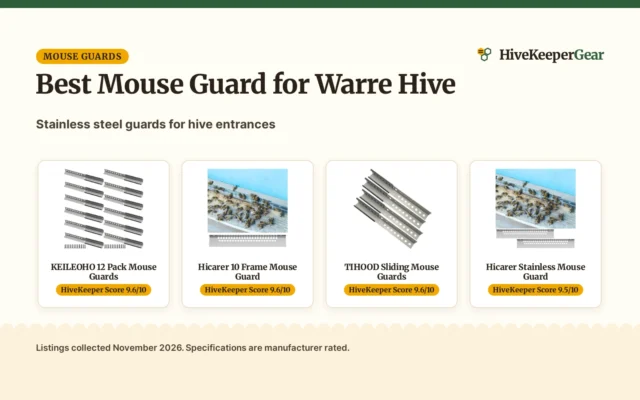
 Hicarer Stainless Steel Bee Hive Mouse Guard and Entrance9.5/10View on Amazon
- 2
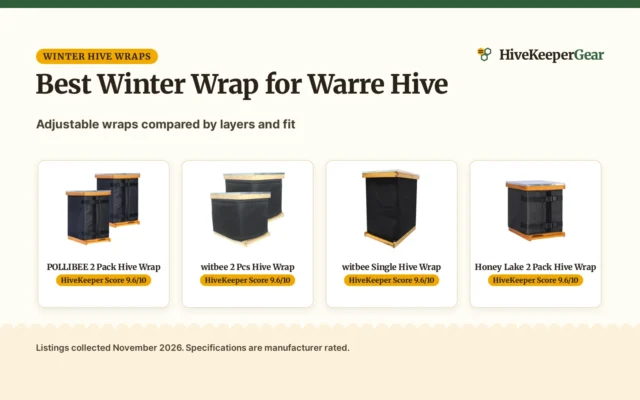
 witbee Winter Bee Hive Wrap for 8 and 10 Frame Beehives9.6/10View on Amazon
- 3
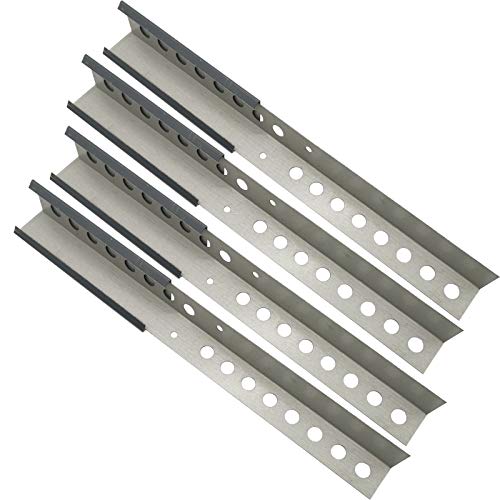 TIHOOD Sliding Beehive Mouse Guards9.6/10View on Amazon
When deciding between a flow hive vs warre hive, your choice comes down to whether you prioritize effortless honey extraction on tap or natural, foundationless comb management with minimal colony intervention. A Flow hive pairs standard Langstroth dimensions with split-cell plastic frames to drain honey directly into jars using a key, without opening the super or buying an extractor. A Warre hive uses compact vertical wooden boxes with top bars where bees build comb downward, insulated by an upper quilt box and harvested by crushing comb. Choose Flow for convenient harvesting, or Warre for natural comb stewardship.
HiveKeeperGear earns a commission when you buy through links on this site, at no extra cost to you. As an Amazon Associate I earn from qualifying purchases. Affiliate disclosure.
Before you choose: consider your management goals
Every beehive design shapes your routine in the bee yard. Before purchasing woodenware, consider your inspection frequency, comb philosophy, and harvest methods. A Flow super mounts directly onto a standard Langstroth brood box, eliminating honey spinning machinery while retaining movable frames. A Warre hive replicates natural tree-hollow conditions through compact, box-centered management. Check local apiary regulations and consult area beekeeping mentors to confirm which setup best suits your local climate.
Flow hive vs warre hive: key differences at a glance
| Feature | Flow Hive | Warre Hive | Related Guide |
|---|---|---|---|
| Harvest method | Key-operated split-cell frames drain honey directly into jars | Crush-and-strain or comb pressing of whole top-bar combs | Honey press vs extractor |
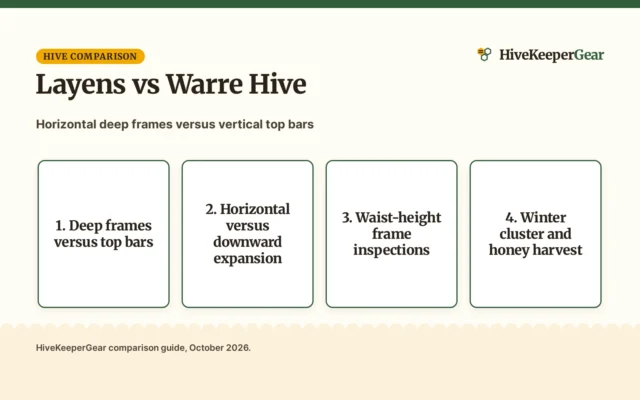
| Comb foundation | Plastic auto flow frames in super; brood frames use foundation or natural comb | Foundationless natural comb built from wooden top bars | Langstroth vs Warre hive |
| Hive expansion | Supering: new honey boxes added to the top of the stack | Nadiring: new empty boxes added beneath the brood nest | Top bar vs Warre hive |
| Hive ventilation | Inner cover with telescoping lid; screened bottom boards | Quilt box with natural moisture-absorbing material above top bars | Inner cover vs quilt box |
| Harvest equipment | Flow key and drainage tubes included with hive | Harvest bucket, cutting knife, strainer or honey press needed | Honey strainers |
1. Honey harvesting and extraction
The defining feature of a Flow hive is mechanical extraction. Inside the flow super, plastic frames form partial honeycomb cells. Once bees fill and cap the comb, you insert an operating key into the frame access slot and rotate it. The vertical rows of hexagonal cells split, forming internal channels where honey drains downward by gravity through a tube into your jar. Bees remain undisturbed on the comb face, and resetting the key lets them refill the cells immediately without needing uncapping knives or centrifugal extractors.
A Warre hive approaches harvest differently. Warre boxes contain simple wooden top bars without frames, so bees build solid comb attached to the box walls. When the uppermost box is capped, you remove the entire box, cut combs from the top bars, and crush them in a food-grade bucket before filtering through strainers or a honey press. This yields raw honey and beeswax but requires the colony to draw fresh comb.
2. Comb construction and foundation
Comb architecture differs sharply between these designs. Flow hives use plastic auto frames in the honey super. Listings such as Golden Palace highlight fir wood boxes paired with auto super frames made from BPA-free, food-grade plastic. Brood boxes use wooden frames with wax-coated plastic or pure beeswax foundation. Starter kits from housappk feature wood treated with beeswax immersion at 482°F for 30 minutes to guard against moisture while providing a natural scent.
A Warre hive uses no foundation or frame boundaries. Bees suspend comb directly from wooden top bars, shaping cell sizes naturally for worker brood, drone brood, and honey storage. Because natural comb lacks wire or plastic backing, fresh comb is fragile in warm weather and requires gentle handling during apiary work.
3. Colony inspections and hive disturbance
Routine inspections differ significantly between systems. In a Flow hive, checking the brood nest follows standard Langstroth practice. You use a hive tool to separate propolis, lift frames, check egg patterns, and monitor colony stores. For rapid checks, starter kits from housappk include observation windows to view comb filling along the hive exterior without opening the lid.
Warre hives are designed to minimize internal disturbance. Because comb attaches to inner box walls, lifting individual top bars can tear comb. Warre beekeepers observe colony vigor from the outside by monitoring entrance flight and viewing boxes from underneath. This low-intervention method preserves nest heat and hive scent, though detailed brood inspection is more challenging than with movable frames.
4. Hive expansion and box handling
Hive expansion follows opposite directions. A Flow hive uses conventional supering. When bees fill lower brood boxes during spring buildup, you place the flow super on top, separated by a queen excluder. Listings from BeeHoneyFlow include a bamboo queen excluder to keep the queen below while workers fill the auto frames above. At harvest, frames drain from the top without lifting boxes.
A Warre hive expands through nadiring, adding empty boxes to the bottom of the stack. Bees naturally draw comb downward while storing honey overhead. Sliding a fresh box underneath preserves the warm air envelope at the top of the hive, mimicking hollow-tree nesting, but nadiring requires lifting the weight of upper boxes when adding room.
5. Equipment cost and gear requirements
Initial costs and gear needs differ between systems. A Flow hive carries higher initial investment for specialized mechanical frames. Complete starter kits include wooden boxes, flow frames, and operating keys. Listings vary in capacity: housappk publishes a 4 auto frame hive weighing 27.58 pounds measuring 14.96 by 9.84 by 27.95 inches, and a 7 auto frame hive weighing 55.1 pounds measuring 20.1 by 16.1 by 29.2 inches. Golden Palace lists a fir wood kit with 7 auto super frames measuring 20 by 16.14 by 27.1 inches. Flow keepers bypass uncapping equipment and extractors.
A Warre hive uses simpler, economical woodenware with plain top bars. However, processing harvested comb requires food-grade buckets, straining sieves, or a honey press. Warre boxes can be built from standard lumber, whereas Flow frames require manufactured mechanical components.
A seasonal management comparison
Early spring: In a Flow hive, inspect brood frames and verify food stores before adding the super. In a Warre hive, clean the bottom board and nadir a fresh box underneath for spring expansion.
Main summer flow: Flow keepers monitor frames through observation windows and turn the key when comb is capped. Warre keepers watch entrance flight and comb growth from below, nadiring additional boxes if nectar flows heavily.
Late summer harvest: Flow honey drains into jars with the hive closed. Warre keepers remove the top capped box, clear bees, and crush comb for straining.
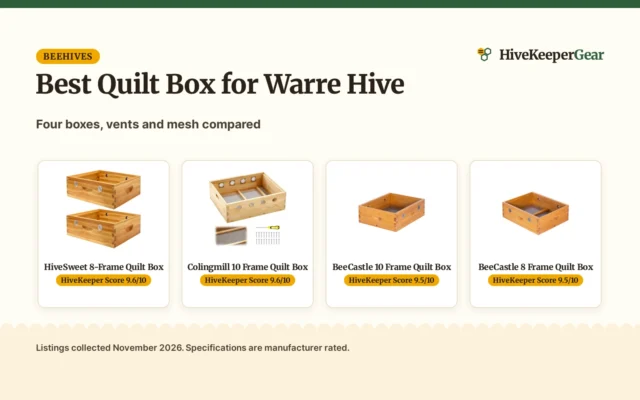
Fall and winter preparation: Remove the Flow super so bees winter in standard brood boxes. On a Warre hive, fill the quilt box with dry wood shavings to absorb moisture and insulate the cluster.
Useful gear for each hive design
- Hive tool: A J hook tool pries Langstroth frames, while a flat tool cuts Warre comb attachments during harvest. Our hive tools guide compares stainless options.
- Protective gear: See our bee suits guide and bee jackets guide for apiary protection.
- Gloves: Handling boxes requires a firm grip. Browse our beekeeping gloves guide.
- Smoker: Gentle smoke calms bees during inspections. See our bee smokers guide.
- Straining equipment: Filtering crushed Warre comb requires sieves. Our honey strainers guide covers filter options.
Maintaining clean equipment and logging inspections helps track colony progress throughout the season.
What neither hive will solve
Neither design eliminates core beekeeping duties. Keepers must monitor nutrition, confirm a laying queen, manage seasonal crowding, and ensure adequate winter stores. Equipment cannot replace attentive colony stewardship. For regional management guidelines, consult your local beekeeping club or agricultural extension office.
FAQs for beekeepers
Can a beginner start with a Flow hive or a Warre hive?
Yes. Flow hives suit beginners wanting simplified harvesting within standard Langstroth framing, while Warre hives appeal to those committed to natural comb stewardship and minimal inspections.
Do Flow hives hurt bees during extraction?
The internal matrix forms vertical channels that allow bees space to step away as honey drains. Operating the key slowly lets honey flow out without opening the hive.
How do you harvest a Warre hive without an extractor?
Remove the top capped box, cut comb from the top bars, and crush it into a bucket. Strain the crushed comb through sieves or a press to separate raw honey and wax.
How many auto frames do Flow hive starter kits include?
Starter capacities vary. Among reference listings, housappk supplies 4 auto frames or 7 auto frames, while Golden Palace and BeeHoneyFlow provide kits with 7 auto super frames.
Can you use Langstroth parts on a Warre hive?
No. Warre boxes are compact and square with top bars, so Langstroth frames, covers, and supers do not fit.
More hive guides
Browse every guide by category: beehives, protective gear, hive tools and honey harvesting.
More comparisons: see our guides to the Langstroth vs Warre hive, top bar vs Warre hive, beginner bee hives, and Langstroth beehive kits.