Full Bee Suit vs Bee Coveralls: Which One Should You Buy?
Compare full bee suits with bee coveralls to understand integrated veil security, fabric layers, and how to choose the right coverage for hive inspections.

On this page
Top picks at a glance
As an Amazon Associate I earn from qualifying purchases.
- 1
 Brutul Bee 3 Layer Beekeeping Ultralight Ventilated Suit withView on Amazon
- 2
 Flexzion Bee SuitView on Amazon
- 3
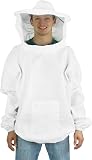 VIVO Professional L Beekeeping Suit WhiteView on Amazon
- 4VIVO Professional XL Beekeeping Suit JacketView on Amazon
- 5
 VIVO Professional White XXL Beekeeping SuitView on Amazon
- 6
 Humble Bee 410 Polycotton Beekeeping Suit with Round VeilView on Amazon
During a warm afternoon inspection at the height of the nectar flow, opening a crowded hive requires calm confidence and dependable protection. Choosing between a full bee suit vs bee coveralls comes down to how your protective layers seal against inquisitive guard bees. A full bee suit is the better choice for most apiary work because it integrates a secure, zippered veil directly into a continuous garment, closing the vulnerable gaps around the neck and collar where bees frequently crawl. Utility bee coveralls offer heavy fabric protection against propolis and dirt across your arms and legs, but they lack built-in head protection and require a separate veil that can shift or untuck while lifting brood boxes.
Other hives and gear to compare
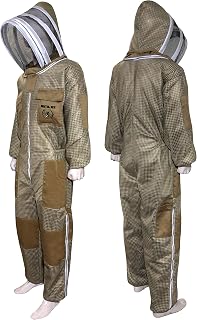 Brutul Bee 3 Layer Beekeeping Ultralight Ventilated Suit withCheck price on Amazon
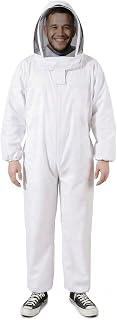 Flexzion Bee SuitCheck price on Amazon
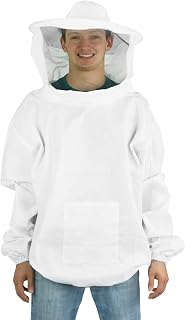 VIVO Professional L Beekeeping Suit WhiteCheck price on Amazon
- VIVO Professional XL Beekeeping Suit JacketCheck price on Amazon
 VIVO Professional White XXL Beekeeping SuitCheck price on Amazon
 Humble Bee 410 Polycotton Beekeeping Suit with Round VeilCheck price on Amazon
HiveKeeperGear earns a commission when you buy through links on this site, at no extra cost to you. As an Amazon Associate I earn from qualifying purchases. Affiliate disclosure.
Understanding the design differences
Working in the bee yard requires clothing that shields you from sudden defensive behavior while allowing you to move smoothly between boxes. A dedicated full bee suit is engineered specifically for beekeeping. It combines body covering with an integrated collar zipper designed to secure a protective veil, elastic closures at the cuffs and ankles, and often thumb loops that help keep sleeves anchored when pulling on beekeeping gloves. Many keepers compare a bee suit vs bee jacket or full suit to decide how much lower-body defense their yard routine requires.
In contrast, bee coveralls are typically general utility coveralls or heavy workwear garments pressed into apiary duty. While they provide full-length torso and leg coverage from durable twill or canvas, they are not designed around bee behavior. They feature open necklines without zipper tracks, standard leg openings without internal bee seals, and standard utility pockets rather than dedicated slots for hive tools. To use coveralls safely around active colonies, you must supply and secure your own headwear, tie down collar openings, and manually strap the pant hems.
Full bee suit vs bee coveralls: comparison overview
| Design Feature | Full Bee Suit | Bee Coveralls | Apiary Consideration |
|---|---|---|---|
| Veil Attachment | Integrated collar zipper | No integrated veil zipper | Secures collar opening where bees tend to crawl |
| Limb Closures | Elastic cuffs and ankles | Open hems or loose snaps | Blocks crawling bees from entering sleeves and legs |
| Fabric Spacing | Ventilated mesh or generous loose cut | Standard cotton twill or canvas | Maintains airspace between outer cloth and skin |
| Tool Storage | Reinforced pockets for hive tools | Standard chest and utility pockets | Carries pry tools without tearing pocket linings |
| Preparation Speed | Direct step-in with veil attached | Requires separate veil adjustments | Reduces setup time before opening hives |
Head and neck protection: integrated veils versus separate headwear
The head, face, and neck represent the most sensitive areas when working around colonies, making veil security a primary concern during inspections. A full bee suit incorporates a continuous perimeter zipper along the collar line that fastens the veil directly to the suit fabric. This closure creates a secure physical barrier around the neckline, helping keep bees out even when you tilt your head down to examine comb. To learn more about veil styles and mesh construction, read our guide on what is a veil in beekeeping.
When wearing utility coveralls, you must wear standalone headwear, such as an independent hat and veil combination or a pullover mesh hood. Standalone veils rely on elastic chest cords or underarm tie-down straps to hold the mesh against your chest and back. As you bend over deep boxes, lift honey supers, or reach across hive bodies, these cords can shift against your clothing as you move. This movement can pull the veil collar away from the neck, creating an opening that bees can discover. Comparing a fencing veil vs round veil helps illustrate how different hood frames hold mesh away from facial skin.
Fabric construction and sting defense
When defending a colony, honeybees target perceived threats around hive entrances and open boxes. If clothing pulls tight across your shoulders, elbows, or knees as you bend over a hive, a bee stinger can easily reach through thin, single-layer fabric. Purpose-built bee suits address sting defense through material depth or an oversized, relaxed cut that prevents cloth from resting taut against skin. Exploring a cotton vs ventilated bee suit demonstrates how fabric construction affects both sting defense and airflow during hot flows.
Published specifications demonstrate these different design paths. For ventilated protection, the GAIACOLMEIA listing specifies a 70% cotton and 30% polyester fabric weave designed to maintain a 4.5 mm safety gap away from the skin, with a stated garment weight of 1.79 pounds. Similarly, the USKEEPERS listing illustrates multi-layer construction with three layers of ventilated mesh fabric, eight pockets for hive equipment, two detachable veil styles, and 12-inch leg zippers to fit over work boots. For keepers choosing cloth suits, protection relies on a roomy fit rather than mesh thickness: the ECKXCH listing records a 65% cotton and 35% polyester blend with a listed weight of 2.8 pounds and a shoulder-to-bottom hem length of 69.3 inches, while the ANDES listing specifies a lightweight 65% cotton and 35% polyester blend weighing 1.5 lbs.
General work coveralls, by comparison, are typically tailored for standard workshop or field mobility rather than apiary sting defense. While durable against splinters, rough woodware, and propolis stains, standard twill or canvas coveralls lack the specialized mesh spacing of ventilated suits. When you kneel to inspect bottom boards or stoop over brood frames, standard workwear can pull tight across joints, allowing stingers to reach through if undergarments do not provide extra buffer.
Sealing entry points at wrists, ankles, and zippers
Bees that land on protective gear naturally walk upward toward light and hive odors. If a garment leaves gaps at the wrists or ankles, crawling bees will walk directly inside sleeves and pant legs. Full bee suits address this upward crawling instinct with reinforced elastic cuffs at the wrists and ankles, often backed by adjustable hook-and-loop closure tabs. Many designs also include elastic thumb loops and foot stirrups. Thumb loops keep sleeves from bunching upward inside gloves when reaching into hive boxes, while foot stirrups keep pant legs securely anchored inside apiary boots.
Work coveralls generally feature straight-cut pant legs and loose sleeve openings designed for workshop comfort over work boots and gloves. Without elastic bands, bees that land near the ankles can walk up the interior of the pant legs. Beekeepers who choose coveralls must manually seal these gaps by tucking pant hems into tall socks, wrapping seams with heavy tape, or using external ankle straps. While effective, adding these manual closures at each inspection adds extra preparation time and creates potential points of failure if a strap loosens in the field.
Pocket utility, mobility, and summer heat
A calm inspection depends on having hive tools immediately available without fumbling through deep pockets. Purpose-built bee suits feature dedicated, reinforced pockets sized specifically for J-hook hive tools, standard pry bars, and marking tubes. Because hive tools feature sharp scraping edges, bee suit pockets often use heavy canvas reinforcement to prevent sharp metal corners from wearing holes in the fabric. Standard coveralls have broad utility pockets, but metal hive tools can slide sideways, puncture unreinforced pocket linings, or fall out when leaning over hive bodies.
Mobility and sizing also differ significantly between garments. A properly fitted bee suit is cut with generous room through the shoulders, chest, and crotch to allow deep bending and heavy lifting without binding. Consulting a bee suit size chart ensures you select adequate room to wear light clothing underneath. Furthermore, summer apiary work can become sweltering during midsummer nectar flows. Ventilated bee suits allow breezes to pass directly through multi-layer mesh panels, carrying away body heat and perspiration. Heavy canvas coveralls, while durable, trap heat close to the body, making prolonged hive work exhausting on hot afternoons.
When to choose a full bee suit
Investing in a dedicated full bee suit is the ideal path for several common beekeeping situations:
- Beginner and growing beekeepers: New keepers who are building hive handling skills benefit from the complete security of an integrated collar veil and snug limb closures, allowing them to focus entirely on reading frames.
- Managing multiple colonies: When spending extended time in the apiary inspecting several hives in a row, the integrated design eliminates the need to constantly check whether separate veils or ankle ties have shifted.
- Working defensive colonies: Colonies can become defensive during honey harvesting, queenlessness, or autumn nectar dearths. A dedicated suit minimizes loose collar and cuff openings where agitated bees might enter.
- Hot summer climates: Keepers in warm, humid regions benefit from ventilated mesh suits that provide airflow through multi-layer fabric. Explore our roundup of full body bee suits for complete apiary coverage options.
When bee coveralls make sense
Utility coveralls can still serve a practical purpose in certain apiary management scenarios:
- Quick yard maintenance: When mowing around hives, clearing weeds, painting empty woodenware, or refilling entrance feeders, heavy coveralls provide durable protection against brush and propolis without requiring you to suit up in full apiary gear.
- Experienced keepers with calm stock: Seasoned beekeepers working exceptionally gentle colonies during mild weather may find standard coveralls paired with an independent veil sufficient for brief checks.
- Rough terrain and clearing: In out-yards overgrown with thorny briars or sharp brush, heavy duck canvas coveralls resist snags that could tear delicate mesh layers on ventilated bee suits.
- Secondary protective layer: Coveralls can serve as a backup outer layer kept in your vehicle for emergency yard chores, provided you keep a standalone veil and ankle bands stored alongside them.
FAQs for beekeepers
Can honeybees sting through standard work coveralls?
Yes. Standard work coveralls use single-layer cotton or canvas that can rest directly against your skin. When the fabric pulls tight across your shoulders, back, or knees while lifting heavy hive boxes, bees can push their stingers through the cloth unless you wear thick layers underneath.
Do bee coveralls come with an integrated veil?
Utility coveralls do not include a veil and require purchasing standalone headwear. In contrast, dedicated bee suits feature a matched collar zipper that fastens a fencing or round veil directly to the neckline, closing the collar against crawling bees.
How heavy is a full bee suit compared to standard coveralls?
Garment weight varies depending on material and layer construction. For example, the ANDES suit listing specifies a weight of 1.5 lbs in a lightweight cotton-poly blend, while the ECKXCH suit listing records an item weight of 2.8 pounds.
Can I safely adapt regular shop coveralls for beekeeping?
You can adapt heavy shop coveralls for apiary visits by pairing them with a standalone veil, sturdy gloves, and bands around your wrists and ankles. You should also wear loose layers underneath to prevent the cloth from pulling tight against your skin where bees could sting through.
What veil styles are available on full bee suits?
Full bee suits typically offer either a fencing veil or a wide round veil. Some options, such as the USKEEPERS suit listing, include two detachable veils with a round veil providing 360-degree mesh vision, allowing beekeepers to choose between styles for each inspection.
More hive guides
Browse every guide by category: bee suits, protective gear, beehives, hive tools and honey harvesting.