Single Deep vs Double Deep Hive: Which One Should You Buy?
One 10-frame deep box or two stacked: how brood space, inspections, weight and wintering change between single deep and double deep hive setups.

On this page
Top picks at a glance
As an Amazon Associate I earn from qualifying purchases.
- 1
 BeeCastle Heavy Wax Coated Langstroth Unassembled Deep/Brood9.6/10View on Amazon
- 2
 Hoover Hives Wooden Deep FramesView on Amazon
- 3
 8 Frame Deep Brood Bee Hive BoxView on Amazon
- 4
 10 Frame Deep Brood Box Langstroth Bee Hive Box 10 PackView on Amazon
- 5
 10 Frame Deep Brood Box Langstroth Bee Hive Box Dipped inView on Amazon
- 6
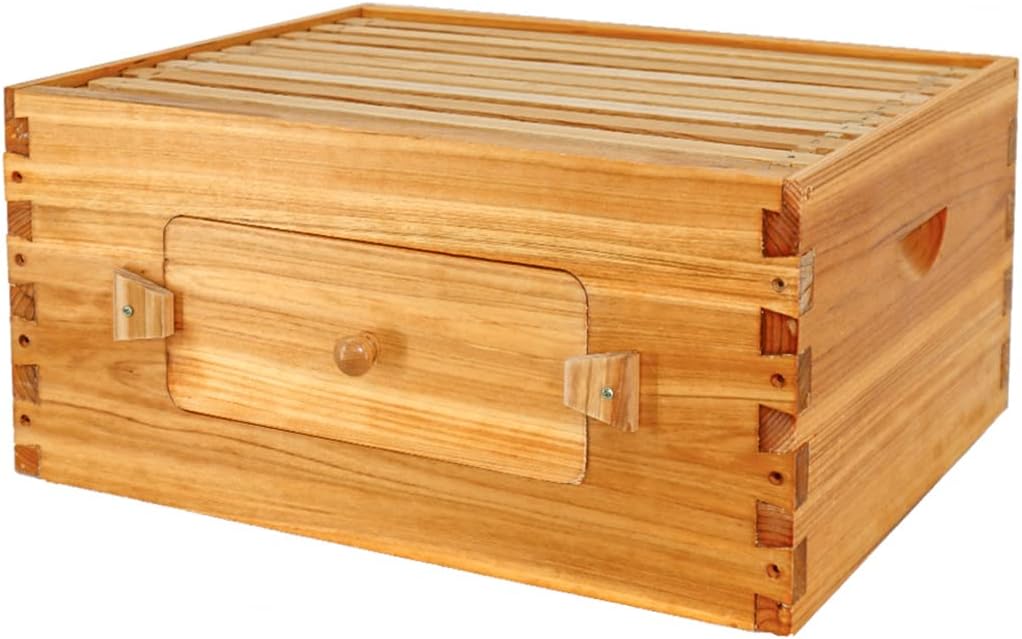 BeeCastle 10 Frame Deep Bee Hive BoxView on Amazon
- 7
 Honey Lake 10 Frame Langstroth Deep Brood Bee Hive Box DippedView on Amazon
The single deep vs double deep hive question comes down to this: a single deep hive runs the brood nest in one 10-frame deep box; a double deep stacks a second 10-frame deep box on top, giving the queen and the colony ten more frames of brood space. Neither setup is wrong. The single deep means fewer frames to inspect and less weight to lift, while the double deep gives the colony more room to grow and more space for winter stores. Which one you should buy comes down to how you want to manage inspections, lifting and the cold months.
Other hives and gear to compare
 Hoover Hives Wooden Deep FramesCheck price on Amazon
 8 Frame Deep Brood Bee Hive BoxCheck price on Amazon
 10 Frame Deep Brood Box Langstroth Bee Hive Box 10 PackCheck price on Amazon
 10 Frame Deep Brood Box Langstroth Bee Hive Box Dipped inCheck price on Amazon
 BeeCastle 10 Frame Deep Bee Hive BoxCheck price on Amazon
 Honey Lake 10 Frame Langstroth Deep Brood Bee Hive Box DippedCheck price on Amazon
HiveKeeperGear earns a commission when you buy through links on this site, at no extra cost to you. As an Amazon Associate I earn from qualifying purchases. Affiliate disclosure.
Below: what changes with the second box, how inspections differ, and which setup fits your apiary.
Single deep vs double deep hive: the short answer
Buy a single deep if you want the simplest inspection routine and you are willing to check for swarm pressure more often, since ten frames fill fast in a strong flow. Buy a double deep if you want the colony to have room to expand and you want the second box available for winter stores. Many beekeepers start with one deep box and add the second when the colony covers most of the frames: the Colingmill listing sells 2 deep brood boxes as a pack with 24 screws for exactly that path, and the BEEKNOWS listing pairs 1 deep box with 10 deep frames and foundations.
What the second box changes
A 10-frame deep box is the brood chamber. In a single deep, the queen’s laying space and the colony’s nursery are ten deep frames. In a double deep, a second box of ten more deep frames sits on top, and the brood nest can spread across both. The Colingmill deep box measures 19.88 by 16.26 by 9.65 inches, so adding the second box doubles the comb space while the hive’s footprint stays the same. More frames means more cells for brood and pollen, and in fall the upper box becomes the winter pantry. The tradeoff is that every inspection can mean working through two boxes instead of one.
Inspections: ten frames or two boxes
On a single deep, a full brood inspection means lifting and checking ten frames. On a double deep, reaching the bottom box means lifting the top box off first, then working ten frames in each. Single-brood-box management asks more of the beekeeper’s calendar: with less room, a strong colony congests sooner, so swarm checks come more often in season. Double-deep management spreads the colony out and forgives a missed week, but each inspection moves more equipment. See our deep vs medium hive boxes comparison if you are weighing box sizes as well.
Weight and wintering
A deep box full of honey is heavy, and a double deep asks you to lift a full box of frames to reach the brood below. If lifting is a concern, the single deep keeps every inspection at one box. For winter, the double deep has the edge: the extra box gives the cluster room to move up onto stores without leaving the brood area, which matters in long cold spells. In harsh climates, insulation helps too: the Apimaye listing is an insulated 10-frame hive set built to withstand extreme weather, though it ships with no frames included. Our best bee fondant for winter guide covers feeding when stores run short.
Which setup should you buy
Start with the colony you have, not the colony you imagine. A new package or nucleus grows into one deep box first; buy the second box when the bees cover most of the ten frames. The Colingmill 2-box pack is the ready-made double-deep starter, with wax coating and 24 screws for assembly. The BEEKNOWS box ships with 10 deep frames and waxed foundations included, so one purchase covers the brood chamber. Deep frames are standard Langstroth size: the Hoover listing describes wooden deep frames made to fit standard Langstroth deep boxes, and the HiveSweet listing sells them in a 20 pack. For the wider hive choice, see Langstroth vs Warre hive and our best Langstroth hive for small apiaries picks.
What the box listings actually include
Compare the listings before you buy, because a brood box and a complete setup are different purchases. The Colingmill listing sells a 2-piece pack of 10-frame deep brood boxes with wax coating and 24 screws for assembly, each box measuring 19.88 by 16.26 by 9.65 inches: that is the double deep in one box, frames not included. The BEEKNOWS listing sells 1 deep box with 10 deep frames and waxed foundations included, so one purchase covers the brood chamber of a single deep. For harsh climates, the Apimaye listing is an insulated 10-frame hive set built for extreme weather, but it ships with no frames included, so budget frames on top. On frames, the Hoover listing describes wooden deep frames made to fit standard Langstroth deep boxes, and the HiveSweet listing sells deep frames in a 20 pack, enough for two full boxes. Check whether your box listing includes frames before ordering, since an empty box and a boxed set solve different problems.
FAQs for beekeepers
Can I start with one deep and add a second later?
Yes, and most beekeepers do. Set up the first deep box, let the colony draw out the frames, and add the second box when most of the ten frames are covered. The Colingmill listing sells the two boxes as a pack for this exact path.
How many frames does a double deep hold?
Ten deep frames in each box, ten more in the second. The BEEKNOWS listing ships 1 deep box with 10 deep frames and foundations, so doubling the setup means doubling the frames.
Which is better for winter?
The double deep gives the cluster more room for stores above the brood, which helps in long winters. In extreme cold, an insulated option like the Apimaye 10-frame set adds protection, though frames are not included.
Is a full deep box heavy to lift?
Yes. A deep box full of honey is one of the heaviest lifts in the apiary, and a double deep inspection means lifting that weight off to reach the lower box. The single deep keeps every inspection to one box.
Do I need different frames for the second box?
No. Both boxes take standard Langstroth deep frames, like the Hoover wooden deep frames or the HiveSweet 20 pack, both sized for 10-frame deep boxes.
Related: our deep vs medium frames comparison and best wax foundation for deep brood boxes guide.