Pine vs Cypress Bee Hive: Which One Should You Buy?
Compare pine and cypress bee hives on rot resistance, weight, durability, and maintenance to decide which lumber fits your apiary setup.

On this page
Top picks at a glance
As an Amazon Associate I earn from qualifying purchases.
- 1
 Wooden Insect Hotel9.4/10View on Amazon
- 2
 BeeCastle 8 Frame Langstroth Bee Hive Boxes Coated with9.7/10View on Amazon
- 3
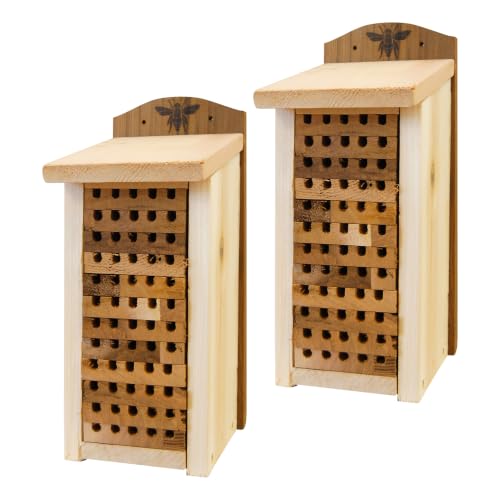 Woodlink Heavy Duty Cedar Mason Bee House9.5/10View on Amazon
- 4
 Gold Standard 10 Frame Bee Hive Beeswax Coated IncludesView on Amazon
- 5
 Bee Hive Winter Quilt Box 10 Frame Dipped in BeeswaxView on Amazon
- 6
 Mason Bee House with Feeding TraysView on Amazon
- 7
 Honey Keeper Bee Hive Smoker Stainless Steel with Heat ShieldView on Amazon
- 8
 HIVE ALIVE Liquid Bee Feed ConcentrateView on Amazon
- 9
 BeeCastle 10 Frame Langstroth Bee Hive Coated with BeeswaxView on Amazon
As late winter hive preparations begin and apiary plans take shape for spring buildup, deciding between a pine vs cypress bee hive comes down to your local climate and maintenance preferences. If your apiary sits in a humid, wet climate with frequent rainfall, buy cypress because its natural oils resist rot and insect decay without requiring paint. For beekeepers in drier regions or those on a stricter initial equipment budget, pine remains the practical standard when protected with paint, primer, or beeswax dipping. Below, we compare durability, weight, weather resistance, and yard upkeep.
Other hives and gear to compare
 Gold Standard 10 Frame Bee Hive Beeswax Coated IncludesCheck price on Amazon
 Bee Hive Winter Quilt Box 10 Frame Dipped in BeeswaxCheck price on Amazon
 Mason Bee House with Feeding TraysCheck price on Amazon
 Honey Keeper Bee Hive Smoker Stainless Steel with Heat ShieldCheck price on Amazon
 HIVE ALIVE Liquid Bee Feed ConcentrateCheck price on Amazon
 BeeCastle 10 Frame Langstroth Bee Hive Coated with BeeswaxCheck price on Amazon
HiveKeeperGear earns a commission when you buy through links on this site, at no extra cost to you. As an Amazon Associate I earn from qualifying purchases. Affiliate disclosure.
Before you buy: consider moisture and apiary conditions
Moisture inside and outside the hive is among the greatest challenges a colony faces. During winter clustering, bees generate warm, humid air that rises toward the inner cover, while rain and ground dampness attack exterior lumber.
Apiaries in low-lying fields, foggy valleys, or coastal areas experience prolonged dampness that encourages fungal growth and rot. In those environments, lumber with natural rot resistance provides a vital structural defense. In sunny, arid regions, painted pine boxes endure for many seasons with routine upkeep.
The pine vs cypress bee hive comparison
Both pine and cypress make functional Langstroth hive bodies, but they behave differently when exposed to weather and colony moisture. The comparison table below highlights key differences.
| Lumber feature | Pine bee hive | Cypress bee hive | Related guide |
|---|---|---|---|
| Natural rot resistance | Low; requires primer and paint or beeswax to prevent decay | High; natural cypressene oils repel rot, fungi, and insects | Wax dipped vs painted beehive |
| Exterior finish required | Must be primed and painted on exterior surfaces or wax dipped | Can remain unpainted, clear coated, or painted | Wax coated hive vs unpainted hive |
| Lumber weight | Light to moderate weight; honey stores dominate total load | Moderate weight; comparable to pine during hive handling | 8-frame beehive guide |
| Moisture stability | Absorbs moisture more readily; requires paint to prevent warping | Sheds moisture effectively; maintains dimensional stability | Cedar beehive vs pine beehive |
| Starter kit availability | Widely available across commercial suppliers and starter sets | Specialty option supplied mainly by regional apiary makers | Langstroth beehive kit guide |
| Frame compatibility | Standard Langstroth sizing; commonly paired with pine frames | Standard Langstroth sizing; commonly paired with pine frames | Beehive frames guide |
1. Rot resistance and wood durability
The primary advantage of bald cypress lies in its natural cellular chemistry. As the tree matures, heartwood produces cypressene, a preservative oil that repels moisture, fungal spores, and wood-boring insects. Because this protective oil permeates the wood grain, cypress hive boxes resist decay even in damp apiaries.
Pine contains soft, porous grain that absorbs moisture when exposed to the elements. If left untreated outdoors, pine boards soak up water, causing joint seams to expand and rot fungi to take hold around finger joints. However, when pine is sealed with exterior primer and paint, or immersed in molten beeswax, it forms an effective barrier against water penetration.
Reference listings show how makers protect hive lumber. For example, BEEINN lists deep brood boxes measuring 16-1/4 by 19-7/8 by 9-5/8 inches and medium super boxes measuring 16-1/4 by 19-7/8 by 6-5/8 inches, paired with pine frames. Hiveaura notes that dipping assembled boxes in boiling beeswax twice creates a moisture-resistant seal that safeguards the wood.
2. Weight and box handling
Beekeeping requires regular heavy lifting, especially during midsummer nectar flows. A full deep brood box or honey super weighs considerably more once comb is filled with brood, pollen, and honey. Between pine and cypress, the dry weight difference of the wood shell itself is modest compared to the weight of colony stores inside.
Published equipment weights illustrate how component counts determine kit weight. For example, VEVOR lists an assembled weight of 42.1 pounds for a kit containing 1 deep box and 1 medium box, while MayBee lists an 8-frame setup containing 2 deep boxes and 2 medium boxes at 49 pounds. Beekeepers seeking lighter equipment often choose narrower 8-frame boxes instead of 10-frame boxes to reduce lifting strain.
When selecting boxes, our assembled vs unassembled bee hive guide compares assembly time and corner durability for new apiary setups.
3. Exterior finish: paint, sealant, or beeswax
A major practical difference between pine and cypress is the preparation work required before placing boxes in the bee yard. Cypress contains sufficient natural oils that you can place assembled boxes outdoors without paint. Over time, unfinished cypress weathers to a silvery gray patina while maintaining structural integrity.
Pine requires diligent exterior sealing before outdoor use. Leaving bare pine exposed to rainfall causes wood fibers to raise, crack, and harbor mildew. A dependable finish begins with exterior primer, followed by exterior latex paint in white or light pastel shades to reflect summer heat.
Alternatively, factory wax-dipped pine boxes provide an exterior finish without paint. For beginners seeking complete kits with proven finishes, our best Langstroth hive for beginners review outlines popular pre-finished setups.
4. Joint stability and warping
Hive boxes must remain square so that supers stack tightly without gaps. If box walls warp, openings allow wind, rain, robbing bees, and hive beetles into the colony.
Cypress exhibits exceptional dimensional stability. Because it absorbs water slowly and evenly, it experiences minimal swelling and resists cupping across the grain. Pine expands and contracts more noticeably with seasonal humidity swings. If exterior paint chips and allows moisture into corner dovetail joints, pine boards can pull slightly away from assembly fasteners.
To prevent joint separation on pine equipment, use exterior wood glue along dovetail joints during assembly and secure corners with galvanized nails or screws. Elevating the hive on a sturdy base also protects lower box joints from ground splash. Our screened vs solid bottom board comparison explains how bottom board design influences lower box moisture.
5. Long-term cost and availability
Pine is the dominant commercial standard across the beekeeping industry. Because pine forests are abundant across North America, sawmills produce large volumes of standard hive lumber, keeping replacement boxes, supers, and frames economical and readily available at local supply shops.
Cypress is a regional specialty harvested mainly in southern wetlands. Due to limited supply, cypress equipment carries a premium price and may require ordering from specialty makers. However, in rainy or subtropical climates, cypress outlasts unpainted pine, saving hours of scraping and repainting.
Many beekeepers adopt a hybrid strategy: investing in cypress for bottom boards and outer covers, where exposure to soil moisture and weather is greatest, while using economical pine for upper supers and frames. Manufacturer listings show builders combine woods; Hiveaura includes 30 pine frames within its cedar hive kit, and MayBee supplies 10 deep pine frames with its deep brood box. To top off your hive, our telescoping cover vs migratory cover guide breaks down roof protection options.
Seasonal hive care for wooden equipment
Late winter: inspect stored hive boxes before spring buildup. Scrape propolis and burr comb from wooden frame rests with a hive tool. For pine equipment, inspect corners for paint flaking and touch up exposed end grain. Early spring: set up your hive stand in a sunny, well-drained spot and level the base. Install incoming bee packages into clean boxes raised above damp ground. Summer: monitor medium honey supers as nectar flows peak, ensuring box joints sit flush to deter robber bees. Fall: after harvest, clean box rims, reduce entrances, and install mouse guards to prevent rodents from chewing wooden entryways. Winter: ensure outer covers shed rain away from upper seams, tilt hives slightly forward so rainwater drains out the entrance, and store spare wooden boxes in a dry shed.
Tips for extending hive box life
- Elevate your hive stand on concrete pavers or treated timbers so bottom boards stay well above soil moisture.
- Use a metal-capped telescoping outer cover to shield top box joints from direct sun, heavy rain, and ice.
- Prime every end-grain finger joint thoroughly before painting pine boxes, as cut ends absorb water fastest.
- Never paint interior box surfaces or frames; honeybees varnish interior wood with propolis, creating a natural antimicrobial shield.
- Stack unused wooden supers crisscrossed in an airy shed so air circulates freely between seasons.
Implementing basic wood care early preserves hive boxes, keeping equipment square and serviceable for seasons of beekeeping.
What this guide covers
This guide compares hive lumber options for standard Langstroth equipment. We cover wooden boxes, bottom boards, and outer covers, not bees or colony management. We also do not give bee health or treatment advice. For colony health questions, contact your state apiary inspector or extension office.
FAQs for beekeepers
Does a cypress bee hive need to be painted?
No. Cypress contains natural cypressene oils that protect the wood against rot, fungal decay, and insects. You may apply an exterior finish or stain if desired, but exterior paint is not required to prevent rot.
Can you use pine frames inside a cypress bee hive?
Yes. Commercial kits routinely mix lumber species. Manufacturer listings, including MayBee and BEEINN, pair exterior hive boxes with pine wood frames, such as 10 deep frames or 16 pine frames in 8-frame setups. Standard Langstroth frames fit interchangeably regardless of box lumber.
What are standard dimensions for 10-frame and 8-frame hive boxes?
Published dimensions vary slightly among makers. For example, BEEINN lists 10-frame deep brood boxes measuring 16-1/4 by 19-7/8 by 9-5/8 inches and medium supers measuring 16-1/4 by 19-7/8 by 6-5/8 inches. For 8-frame equipment, MayBee lists deep brood boxes measuring 14 by 19-7/8 by 9-5/8 inches.
Is pine or cypress better for a beginner beekeeper?
Pine is typically the more practical starting choice for beginners because complete starter kits are widely available and budget friendly. In high-rainfall regions, investing in cypress boxes or a cypress bottom board saves maintenance effort over time.
Why do manufacturers coat pine and fir hives in beeswax?
Beeswax dipping seals exterior wood pores against rain and moisture without synthetic chemicals. Manufacturer specifications from Hiveaura note hive bodies dipped in boiling beeswax twice, and VEVOR coats fir wood measuring 0.74 inches thick to withstand outdoor weather.
More hive guides
Browse every guide by category: beehives, protective gear, hive tools and honey harvesting.