Cedar vs Cypress Bee Hive: Which One Should You Buy?
Compare cedar and cypress bee hives on rot resistance, wood weight, weather endurance, and standard Langstroth box dimensions to choose the right hive wood for your apiary.

On this page
Top picks at a glance
As an Amazon Associate I earn from qualifying purchases.
- 1
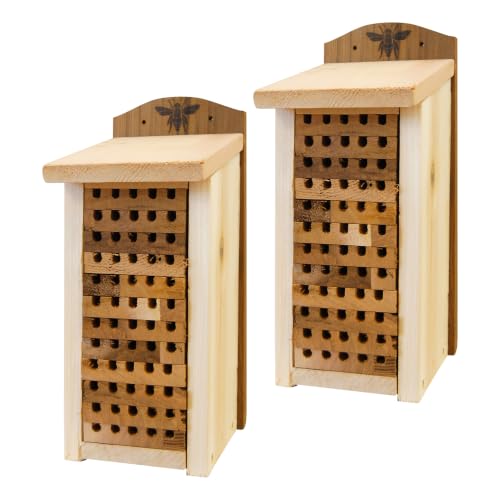 Woodlink Heavy Duty Cedar Mason Bee House9.5/10View on Amazon
- 2
 BeeCastle 8 Frame Langstroth Bee Hive Boxes Coated with9.7/10View on Amazon
- 3
 Wooden Insect Hotel9.4/10View on Amazon
- 4
 Gold Standard 10 Frame Bee Hive Beeswax Coated IncludesView on Amazon
- 5
 Bee Hive Winter Quilt Box 10 Frame Dipped in BeeswaxView on Amazon
- 6
 10-Frame Langstroth Medium Super Bee Hive Box with FramesView on Amazon
- 7
 Honey Keeper Bee Hive Smoker Stainless Steel with Heat ShieldView on Amazon
- 8
 HIVE ALIVE Liquid Bee Feed ConcentrateView on Amazon
- 9
 BeeCastle 10 Frame Langstroth Bee Hive Coated with BeeswaxView on Amazon
During spring inspections or fall winter prep, choosing between a cedar vs cypress bee hive determines how your boxes endure moisture and decay in the bee yard. Buy cedar if you want a lighter hive that is easy to lift during inspections and readily available in pre-cut, wax-coated kits; choose cypress if your apiary sits in a wet, humid southern climate where maximum natural rot resistance outweighs heavier box weight. We compared both timbers on natural oils, weight, stability, and Langstroth sizing.
Other hives and gear to compare
 Gold Standard 10 Frame Bee Hive Beeswax Coated IncludesCheck price on Amazon
 Bee Hive Winter Quilt Box 10 Frame Dipped in BeeswaxCheck price on Amazon
 10-Frame Langstroth Medium Super Bee Hive Box with FramesCheck price on Amazon
 Honey Keeper Bee Hive Smoker Stainless Steel with Heat ShieldCheck price on Amazon
 HIVE ALIVE Liquid Bee Feed ConcentrateCheck price on Amazon
 BeeCastle 10 Frame Langstroth Bee Hive Coated with BeeswaxCheck price on Amazon
HiveKeeperGear earns a commission when you buy through links on this site, at no extra cost to you. As an Amazon Associate I earn from qualifying purchases. Affiliate disclosure.
Before you buy: apiary climate and hive placement
Before choosing hive lumber, evaluate your apiary moisture. Boxes resting on damp ground absorb moisture and decay quickly without proper drainage. Elevating hives on stands keeps bottom boards dry and promotes airflow. Siting hives in a sunny spot with good air circulation speeds exterior drying after rain, protecting corner joints across all seasons.
Apiary conditions also guide your floor and roof choices. In humid regions where cypress thrives, a screened bottom board or solid bottom board provides summer ventilation. In colder areas where cedar is common, a solid board paired with an overhang on a telescoping cover or migratory cover shields entrances from driving rain and drafts. See our beehives hub for full setups.
Cedar vs cypress bee hive: core differences
Both cedar and cypress resist decay naturally without toxic chemical treatments. However, their density, weight, and market availability differ significantly.
| Comparison Factor | Cedar Bee Hive | Cypress Bee Hive | Related Guide |
|---|---|---|---|
| Decay resistance | High natural resistance from organic thujaplicin extractives | Superior natural resistance from dense cypressene wood oils | Pine vs cypress hives |
| Wood density and weight | Lighter lumber weight that eases lifting during hive inspections | Denser, heavier wood that adds physical weight to stacked boxes | 8-frame hive dimensions |
| Dimensional stability | Exceptional stability with minimal warping or shrinkage at joints | Stable when fully seasoned, though unseasoned stock may cup | 10-frame hive dimensions |
| Protective coatings | Frequently pre-coated with natural beeswax in factory packages | Often left bare to weather naturally or coated with exterior paint | Wax coated hives |
| Factory kit availability | Widely available online in complete pre-cut Langstroth assemblies | Primarily sourced through regional woodenware mills or specialty makers | Beginner hive kits |
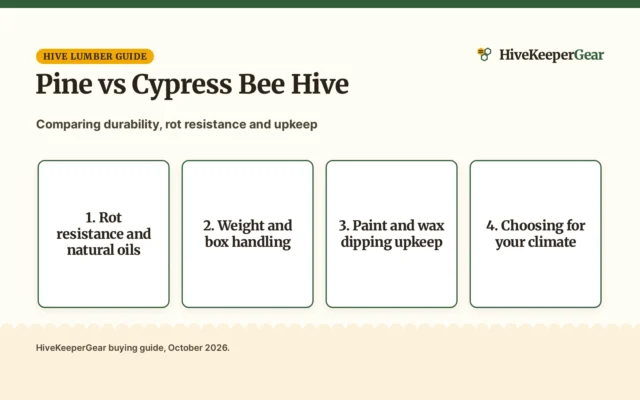
1. Rot resistance and natural preservative oils
Untreated pine boxes decay quickly when moisture penetrates painted seams. Cedar and cypress resist rot naturally through internal wood chemistry rather than chemical preservatives, which cannot be used around bees.
Cedar heartwood contains thujaplicins that inhibit fungal decay and insects. Maker QHZHANG lists a service life of up to 15 years for Nordic cedar treated with 30-minute wax dipping, protecting exterior wood without frequent repainting.
Cypress heartwood relies on natural cypressene oil developed in southern wetland environments. This dense oil resists ground dampness and standing water. For apiaries in wet, humid regions, seasoned cypress heartwood provides dependable raw durability under constant moisture.
2. Wood density, box weight, and hive handling
Lifting full honey supers and brood boxes during inspections makes tare weight an important ergonomic factor across multiple seasons.
Cedar is lightweight and easy to handle. For complete 10-frame kits with 2 deep boxes, 1 medium box, and 30 frames, Honey Lake lists a package weight of 57.5 pounds, and Hiveaura lists 59 pounds. For 8-frame gear, MayBee lists an 8-frame kit with 2 deep boxes, 2 medium boxes, and 16 pine frames per depth at 49 pounds. In contrast, an Aivituvin fir hive with metal framing, 2 deep boxes, and 1 medium box lists at 97.1 pounds.
Cypress is much denser and heavier than cedar. Package weights for cypress are not stated in the listings, but lifting full cypress boxes requires greater physical effort. Beekeepers wanting lighter equipment often choose cedar or smaller 8-frame beehive boxes.
3. Dimensional stability, warping, and joint fit
Tight joinery excludes drafts and pests while preserving correct bee space. If boxes warp, corner joints separate and expose the colony to cold drafts.
Cedar expands and contracts minimally across temperature swings, holding dovetail joints square. Stated cedar dimensions match standard Langstroth sizing:
- 10-frame boxes: POLLIBEE lists deep boxes at 19-7/8″ x 16″ x 9-5/8″ and medium supers at 19-7/8″ x 16″ x 6-5/8″, while BEEKNOWS lists 19-7/8″ x 16-1/4″ x 9-5/8″ and 19-7/8″ x 16-1/4″ x 6-5/8″. Honey Lake deep boxes measure 19.88 x 16.25 x 9.56 inches and medium supers measure 19.88 x 16.25 x 6.6 inches.
- 8-frame boxes: MayBee lists deep boxes at 14″ x 19-7/8″ x 9-5/8″ and medium supers at 14″ x 19-7/8″ x 6-5/8″, while BEEKNOWS lists 19-7/8″ x 14-1/4″ x 9-5/8″ and 19-7/8″ x 14-1/4″ x 6-5/8″.
Cypress also holds shape well once seasoned. However, unseasoned cypress boards retain swamp moisture and can cup under hot sun. Verify that cypress timber is properly air-dried before assembling boxes.
4. Finishing, wax dipping, and exterior protection
Both woods hold up unpainted, weathering to a natural silver-gray patina without rotting. However, exterior treatments prolong service life.
Commercial cedar hives are often beeswax dipped. Hiveaura lists boxes dipped in boiling beeswax twice, and QHZHANG specifies 30-minute wax dipping. MayBee, BEEKNOWS, and Honey Lake also include heavy wax coatings, letting beekeepers skip priming and painting. Compare finish styles in our wax dipped vs painted beehive guide.
Cypress absorbs oils and paint easily. Beekeepers often leave cypress bare, or apply exterior latex paint or pure tung oil to box exteriors. Never finish the interior, as bees coat internal walls with propolis.
5. Commercial kit availability and replacement parts
Cedar is widely available online as complete starter kits. Brands like MayBee, Hiveaura, POLLIBEE, BEEKNOWS, and Honey Lake sell full sets with covers, bottom boards, and pine beehive frames with foundation sheets, making replacement boxes easy to order during a nectar flow. Review starter bundles in our best Langstroth beehive kit guide.
Cypress hives are rarely sold by major online retailers. They are typically sourced from regional Southeastern mills, requiring freight shipping and longer lead times for replacement supers.
Seasonal hive management for woodenware
Seasonal maintenance protects wooden hive parts throughout the year:
Spring buildup: Check dovetail joints and frame rests, and scrape debris from bottom boards to ensure clear entrance ventilation.
Summer nectar flow: Keep supers aligned so exterior seams seal against storms. Screened bottom boards and open entrances help colonies ventilate heat.
Fall preparation: Check boxes for moisture damage and install entrance reducers to deter robbing and exclude mice.
Winter moisture protection: Cold temperatures rarely harm bees, but condensation dripping from covers chills colonies. Elevate hive stands, tilt hives forward slightly, and keep top ventilation open.
Which hive wood should you choose?
- Choose cedar if: You want lightweight boxes that reduce lifting fatigue during inspections, prefer pre-cut kits with factory beeswax coating, and need quick access to online replacement parts.
- Choose cypress if: Your apiary is in a hot, humid, or rainy southern climate, you want dense timber that resists rot outdoors without paint, and you can source from regional mills.
- Lower-cost alternatives: White pine or fir costs less initially if you paint exterior surfaces thoroughly. Compare our cedar beehive vs pine beehive and cedar vs fir beehive guides to evaluate all woods.
What hive wood cannot solve
Rot-resistant wood keeps boxes sound, but cannot replace proper colony care, hive stand elevation, forage, and ventilation. We provide equipment guidance only, not bee health, disease, or treatment advice. Consult your local extension office for colony management advice.
FAQs for beekeepers
Does a cedar or cypress bee hive need to be painted?
Neither requires paint to prevent rot. Cedar kits are often pre-coated with beeswax, while cypress can remain bare to weather naturally or receive exterior latex paint.
How much does a complete wooden bee hive weigh?
Kit weights depend on components and lumber. Honey Lake lists a 10-frame cedar kit with 2 deep boxes, 1 medium box, and 30 frames at 57.5 pounds, and Hiveaura lists 59 pounds. MayBee lists an 8-frame cedar kit with 2 deep boxes and 2 medium boxes at 49 pounds. Cypress weights are not stated in listings, but cypress is noticeably denser and heavier.
How long does a rot-resistant cedar hive box last?
Lifespan depends on wood grade and exposure. QHZHANG lists a service life of up to 15 years for Nordic cedar with 30-minute wax dipping. Durability figures for cypress are not stated in listings.
Can you mix cedar boxes with cypress or pine hive bodies?
Yes, standard 10-frame boxes measuring about 19-7/8″ in length stack together regardless of wood type. Never mix 10-frame and 8-frame boxes, as their widths differ.
Is cedar or cypress safe for honey bees?
Both seasoned woods are safe for bees and contain no toxic chemical treatments. Bees naturally line box interiors with propolis.
More hive guides
See every beehives guide and all beekeeping guides.
More picks: compare pine vs cypress bee hives, read our cedar beehive vs pine beehive guide, or explore best Langstroth hives and 8-frame beehives. New to beekeeping? Learn the basics with our guide on how to start a bee hive and our beekeeping supplies for beginners checklist.