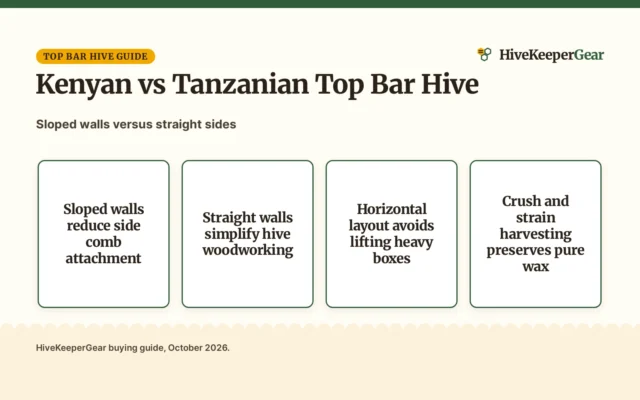
Kenyan vs Tanzanian Top Bar Hive: Which One Should You Buy?
A side-by-side guide to Kenyan and Tanzanian top bar hives, comparing sloped versus straight walls, comb building, comb stability, and yard management.


10-frame and 8-frame Langstroth hive kits and replacement frames compared by box count, frame size, wood and finish, and what each kit actually includes.
A side-by-side guide to Kenyan and Tanzanian top bar hives, comparing sloped versus straight walls, comb building, comb stability, and yard management.
A side-by-side comparison of polystyrene and wooden beehives covering thermal insulation, box weight, hive durability, weather protection, and yard maintenance.
Assembled vs unassembled bee hive, compared on three boxes: dovetail assembly, wood versus plastic, frame capacity and who each option suits.
Compare wax dipped and painted beehives across wood rot protection, paint drying time, long-term maintenance, and thermal performance to choose the right hive.
The key differences between cedar and fir beehives covering timber weight, weather resistance, outdoor durability, and box maintenance for your apiary.
A side-by-side comparison of cedar and pine beehives, weighing natural rot resistance, box weight, finish requirements, and long-term apiary durability.
Decide between an observation hive for indoor education and a Langstroth hive for honey yield, colony expansion, and practical backyard beekeeping.
A practical comparison of Layens and Warre hives, contrasting horizontal deep frames and vertical top bars for brood space, wintering, and low-intervention beekeeping.
Compare Layens and top bar horizontal hives by frame style, comb handling, winter insulation, and harvest work to decide which setup fits your apiary.
Compare Apimaye insulated hives and traditional wooden hives across thermal insulation, moisture control, feeding options, durability, and routine colony inspections.